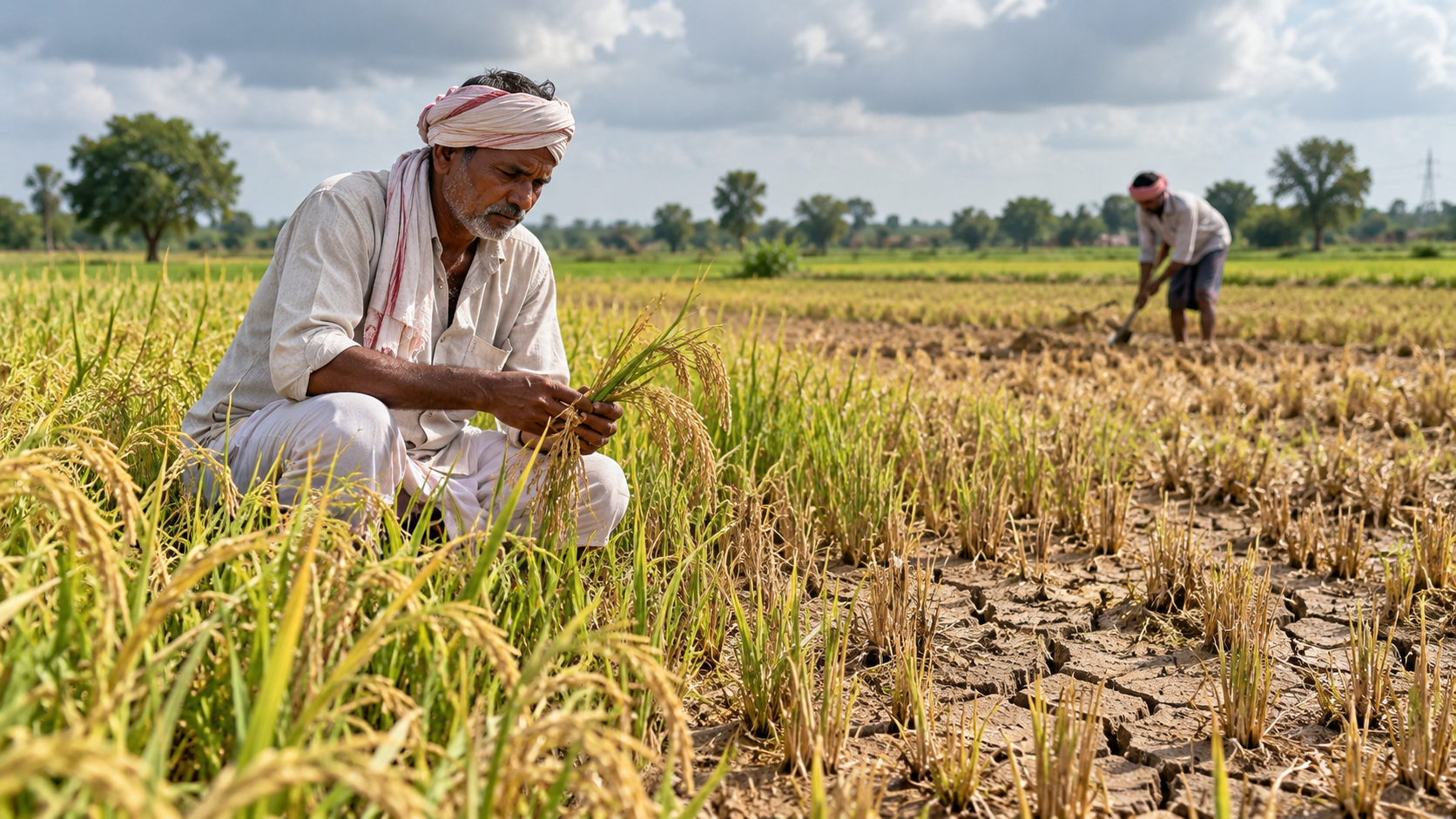
The government has set India’s foodgrain production target at 373.93 million tonnes for the 2026-27 crop year, lower than the estimated 376.56 million tonnes in 2025-26, as El Niño raises concerns over monsoon rainfall.
India has set a foodgrain production target of 373.93 million tonnes (mt) for the 2026-27 crop year, below the estimated output of 376.56 mt in 2025-26, as the government prepares for the possible impact of El Niño on the monsoon.
Agriculture Minister Shivraj Singh Chouhan said at the National Agriculture Conference-Rabi Campaign 2026 that the lower target reflects expectations of a deficient monsoon and risks to farm output.
India had set a foodgrain production target of 362.60 mt in 2025-26, but eventual output is estimated to have exceeded that level and reached 376.56 mt.
The government is looking at changes in cropping patterns in areas facing water stress. It is encouraging farmers to grow pulses and oilseeds instead of water-intensive crops while considering water availability, soil moisture and consultations with states.
Chouhan said the country’s pulses deficit has narrowed to around 14% from about 12% following rains over the past few days, while kharif sowing was around 1% lower than last year, largely because of a decline in acreage under maize, soybean and cotton. Sowing of several pulses, oilseeds and coarse cereals increased marginally.
The government also expects adequate fertiliser availability for the rabi season. States have estimated their requirement, including urea and DAP, at around 38 million tonnes, compared with fertiliser stocks of 16.3 million tonnes, including 12.2 million tonnes of urea, a year earlier.
Chouhan said the government is working to ensure sufficient supplies and has also directed states to establish effective arrangements to protect crops from diseases and pests.
The government has asked states to ensure that eligible farmers with Kisan Credit Cards conduct transparent crop-cutting experiments under the crop insurance scheme.