The Indian Air Force has signed a Rs 135-crore contract with Indian startup Threye Interactive to develop indigenous part-task simulators for its Mirage 2000 fighter fleet, strengthening ground-based combat training and reducing dependence on live flying hours.
New Delhi, Oct 2 — The Indian Air Force has signed a Rs 135-crore contract with Threye Interactive, an Indian startup and subsidiary of NewSpace Research & Technologies, to develop part-task simulators for Mirage 2000 fighter jets.
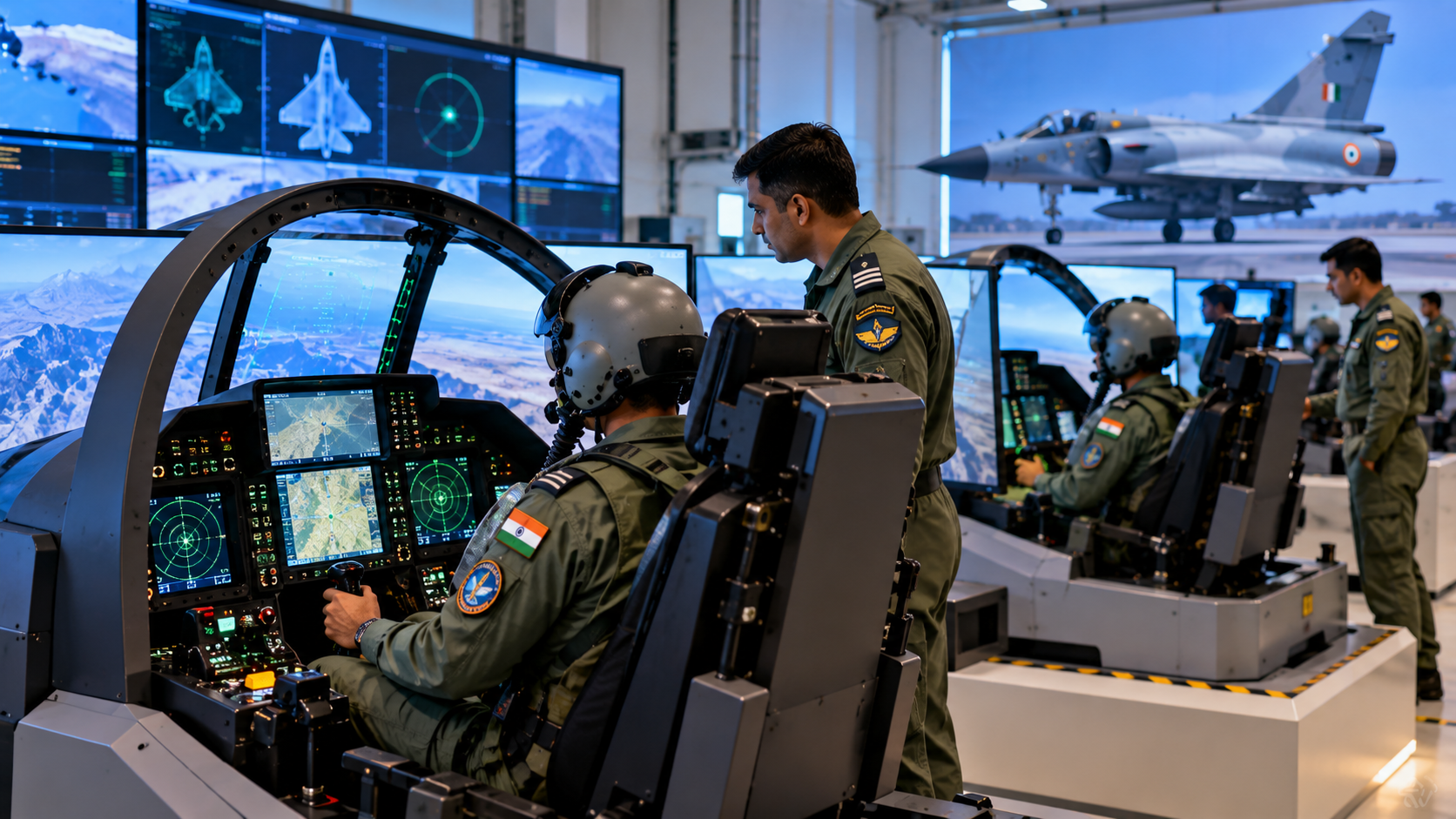
The Delhi-based startup will supply indigenous combat training simulators designed specifically for the Mirage 2000 fleet. The system is intended to allow fighter pilots to practise complex mission procedures on the ground without using an actual aircraft.
Unlike a full-flight simulator, a part-task simulator focuses on specific elements of a pilot’s mission. Pilots can practise functions such as radar operation, target identification, weapon selection and responses to threats, while reviewing mistakes and repeating difficult sequences.
The simulators are also designed to support real-time networking, allowing multi-crew exercises and coordinated combat scenarios that may be difficult or expensive to reproduce during actual flying missions.
The Mirage 2000 has been part of the IAF fleet for about four decades and has played an important role in India’s precision-strike capabilities, including during the 1999 Kargil conflict and the 2019 Balakot air strike. The fleet has also undergone upgrades involving Dassault Aviation, Thales and Hindustan Aeronautics Limited.
The Mirage 2000 part-task trainer had earlier been listed by the Department of Defence Production among the DISC-5 challenges assigned to the IAF. The requirement called for a simulator capable of supporting basic flying as well as simulation of the upgraded aircraft’s existing modes and functions.
The procurement indicates a broader shift towards structured simulator-based training for selected combat procedures and mission rehearsal, allowing pilots to preserve operational flying hours while repeatedly practising demanding scenarios.
The deal also highlights the growing role of Indian defence startups in developing specialised training and simulation technologies for the armed forces.