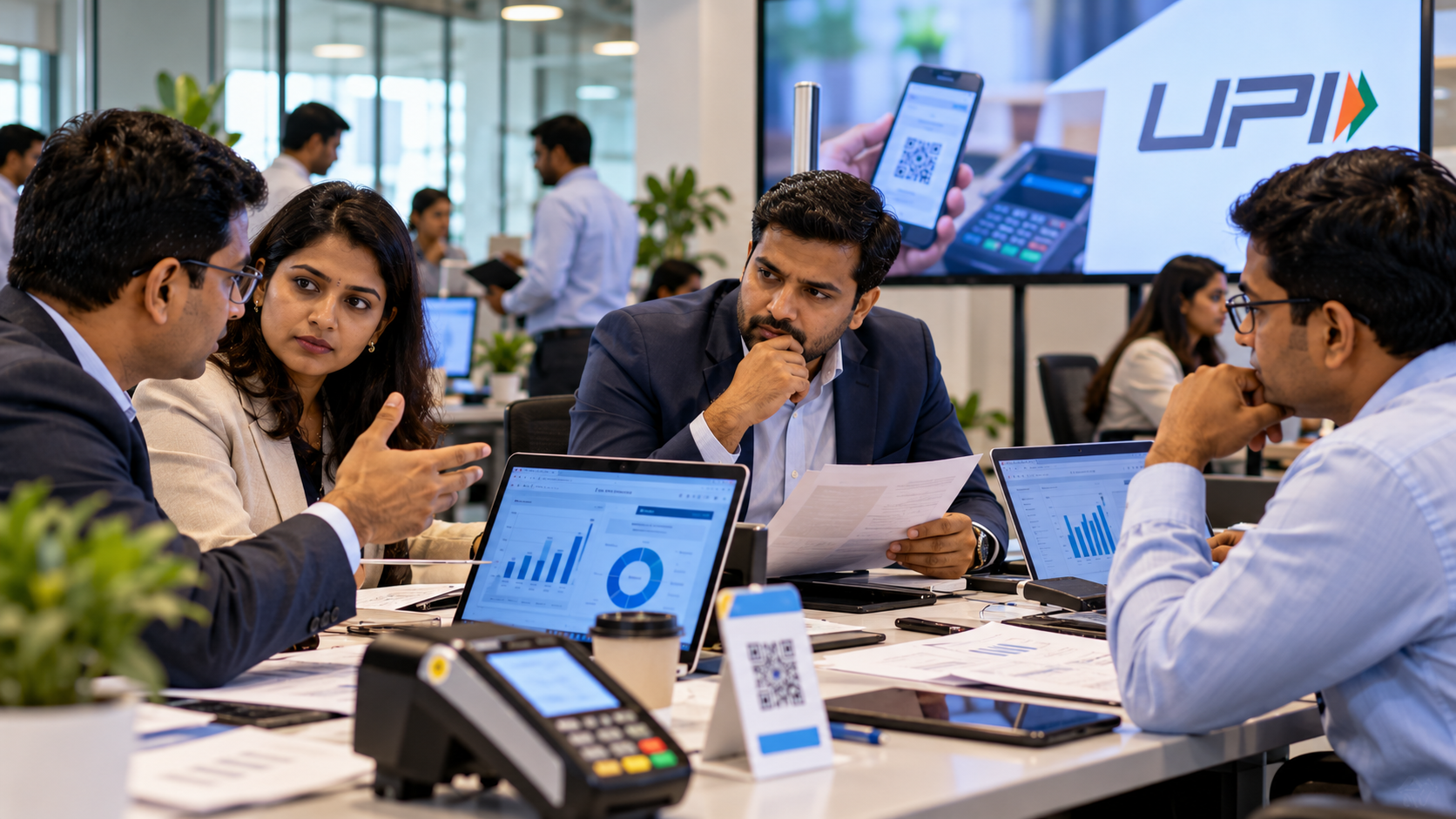
Payment aggregators are negotiating with sponsor banks for a larger share of the acquiring bank’s portion of the new UPI merchant discount rate, with discussions focused on retaining 50-80% of the bank’s share before the October 15 rollout.
New Delhi, Oct 2 — Payment aggregators are negotiating with sponsor banks for a larger share of the acquiring bank’s cut of the new merchant discount rate on UPI transactions, ahead of the framework taking effect on October 15.
Under the notified framework, merchants will pay an MDR of 0.4% on UPI transactions above Rs 2,000. Of this, 0.12% will accrue to the acquiring bank, while payment aggregators will have to negotiate their share from within the bank’s portion.
Industry discussions are centred on payment aggregators retaining between 50% and 80% of the acquiring bank’s share. On a Rs 10,000 UPI transaction, the total MDR would amount to Rs 40, of which the acquiring bank would receive Rs 12. Depending on the negotiated arrangement, the payment aggregator could retain between Rs 6 and Rs 9.60.
The framework does not provide a separate direct MDR allocation for payment aggregators, requiring individual firms to negotiate commercial arrangements with their sponsor banks.
Larger aggregators with high transaction volumes, sizeable merchant floats and deeper technology relationships with banks are expected to have stronger bargaining power. Payment aggregators that also provide payment-processing technology to sponsor banks could potentially secure the upper end of the 50-80% range.
Merchant mix will also influence revenue potential. Large e-commerce merchants dealing in higher-value purchases are likely to generate more transactions above the Rs 2,000 threshold and therefore more MDR income.
Categories such as railways, telecom, insurance and fuel, where the charge is set at a flat Rs 5 per transaction, could provide a more predictable stream of fee income for payment companies.
The new arrangement is expected to increase competition among major payment aggregators including Razorpay, Cashfree, PayU and Pine Labs, while smaller firms may have less flexibility in negotiations with banks.
Some payment aggregators are also considering seeking direct membership with the National Payments Corporation of India as acquirers. Such a move could allow them to retain the entire 0.12% acquiring-bank share instead of splitting it with a sponsor bank, although regulatory approval would be required.
Under the current structure, acquiring banks provide settlement accounts and connectivity to NPCI, while payment aggregators handle a significant part of the technology and payment-processing infrastructure.
Direct acquiring access, payment firms argue, could also allow them to launch products and payment innovations more quickly.