• Seventy-six WTO members have mutually agreed to commence discussions for finalizing rules for global e-commerce. • India has declined to be a part of the discussions, as it feels that the stalled Doha round must be completed first. • Some of India’s concerns regarding the rules include unfair market access to large foreign players, data sovereignty and taxation on cross border digital transmissions. • India has prepared its own draft e-commerce policy, which is currently open to inputs from stakeholders. A group of 76 members led by US, China, European Union and Japan have decided to start negotiating a new framework on e-commerce rules. Although the group is open-ended, India has declined to be a part of the discussions. India has previously opined that WTO must complete the stalled Doha round before bringing new issues to the table. All South Asian countries along with Indonesia, Philippines and Vietnam have also decided not to join the discussions. The same goes for all African countries except for Nigeria. E-commerce was not a part of the Doha round of talks, as it was just a budding sector at that time. But in the present milieu, e-commerce is well on its way to dominate the world of business. Global e-commerce sales reached US$ 29 trillion in 2017, growing by 13% yoy, according to UNCTAD. India holds the ninth position in terms of e-commerce sales at US$ 400 billion. Euromonitor International projects that e-commerce will become the world’s largest retail channel by 2021, accounting for 14% of global retail sales. Members feel that the growing prominence of e-commerce necessitates the formulation of rules to govern the sector. A study reveals that 70 regional trade agreements have already incorporated provisions related to e-commerce. On the other hand, 25 e-commerce proposals were submitted to the WTO in December 2018, but members have been unable to consolidate them. India’s reluctance stems from a number of issues. The first is its concern over unfair market access to large foreign e-commerce companies. India believes that the guidelines being framed will favour richer nations as they have more developed and well penetrated e-commerce systems. The country prepared its draft e-commerce policy to address concerns of smaller retailers pertaining to large foreign e-commerce players like Amazon and Flipkart, and to clarify its stance on e-commerce at the WTO. The draft is currently open to stakeholder consultations. India’s draft e-commerce policy clearly states that the government has a sovereign right over the data generated within its borders. It also makes the case for policy space in aspects such as ownership of data in emerging sectors like cloud computing and data storage as well as hosting of servers, big data analytics and M2M communication. Foreign e-commerce firms like Amazon and Flipkart (now a part of Walmart) will have to set up data centres and server farms within India, which will also boost computing as well as job creation. Interestingly, China has still opted to join the negotiations despite being strict on data localization. Ostensibly, this is because China is confident of its homegrown e-commerce companies benefitting from cross border flow of data. Furthermore, India does not favour the current moratorium on customs duties on electronic transmissions. Mexico and South Africa support India on this matter. Last year, India and South Africa jointly submitted a paper in the WTO, making a case for a rethink on the moratorium. But industrialised nations like US, China, Japan, Singapore and South Korea are demanding that the temporary moratorium be made permanent. India asserts that this will imply a major revenue loss for countries that have tariff schedules allowing them to impose duties on such products. It also wants policy flexibility to give preferential treatment to digital products produced within India. The Indian government has hinted that it could impose customs duties on electronic transmissions, given the changing digital economy and the increasing role of additive manufacturing. The Draft E-Commerce Policy cites a 2017 report by UNCTAD, which suggests that “it would be mostly developing countries which would suffer loss in revenue if the temporary moratorium on custom duties on electronic transmissions is made permanent”. India’s demand for provisions pertaining to data localisation and tech transfer has faced opposition from developed countries. The document also proposes providing infrastructure status to data storage services, which will ensure discounted borrowing rates, easy access to bank finance and tax concessions. WTO had released a study in 2016, citing that the share of trade of digitisable goods being traded in physical form is just 1% of the total goods trade. However, India has countered that the report does not account for trade in other digital products like video games, e-books, music and video downloads, software, etc. Moreover, the WTO study considers applied rates of customs duties for products, and does not consider the bound rates. In addition, developing countries and LDCs cannot impose internal duties like VAT or GST on these products. Large e-commerce firms are able to misuse gaps and mismatches in tax rules to shift profits to low or no-tax locations. Shri JS Deepak, Ambassador & Permanent Representative of India to WTO, has cited the example of Facebook, which “generates huge profits from its India operations where almost 20% of its global users are located, but pays an abysmal 0.06% of its total tax outgo to the Indian government”. Taxation of digital businesses is a daunting challenge for policymakers globally, because these businesses typically have their intellectual property assets present in/shifted to a low tax jurisdiction, but are able to extract enormous value from their customer base in markets across the world. OECD has prepared a discussion draft that seeks to ensure that the value generated by a business’s activity/participation in a user or market jurisdiction is recognised for allocation of profits. India has already applied an Equalisation Levy of 6% on payments made by Indian residents to non-residents that provide digital advertising services. It also introduced the concept of Significant Economic Presence (SEP) on the basis of revenue

WTO fisheries subsidies: India asks for differential treatment
• WTO members are in discussions to finalise an agreement to stop subsidies that have led to unsustainable fishing practices across the globe. • India agrees on the need for extensive prohibition of fisheries subsidies, but it has asked for special and differential treatment for developing countries. • India is among the largest producers and exporters of fish globally, and subsidies for the fisheries sector aggregated to Rs 7.5 billion in 2017-18. • However, India argues that its subsidies to small-scale fishers are necessary for their sustenance and are too small to contribute to the growing menace of overfishing globally. India is planning to submit a draft paper to protect the rights of its small and artisanal fishermen to subsidies for boats, nets and fuel. In this paper, India will make the case for special and differential treatment to developing and least developed countries on the matter, so that they can retain some subsidies critical for protection of the livelihoods of their small-scale fishers. China has found common cause with India on this matter. WTO members are in discussions to finalise an agreement to prohibit fisheries subsidies, which have led to a surge in illegal, unregulated and uncontrolled fishing across the globe. An informal group called ‘Friends of Fish’ – which includes Argentina, Australia, Chile, Colombia, New Zealand, Norway, Iceland, Pakistan, Peru and the US, is leading the discussions. At present, fishing subsidies are estimated at US$ 14-20.5 billion globally. US, Australia and Philippines have proposed that WTO members should negotiate on caps on their total fisheries subsidies, and the top 25 should make commitments to reduce subsidies over time. In India’s view, there should only be caps on non-specific fuel subsidies, like the subsidy provided by the US for the entire water sports/activities sector. EU supports special and differential treatment, but feels that exemptions and flexibilities should be decided according to the fishing capacity of a particular country. On the other hand, Argentina feels that it should be linked to the current size of a country’s fishing programme. More to it than meets the eye? India has also highlighted the likelihood of a bias against large developing countries during the discussions. A government official commented last month after a meeting on fisheries subsidies, “It (India) was getting a sense that the rhetoric that larger developing countries should give more commitments was having a bearing on the fisheries subsidies negotiation and should be avoided.” US has countered this by asserting that 14 of the top 25 countries in the fisheries sector are developing economies, and the list also has one LDC. While both India and China are talking about protection of small fishermen, it is also a fact that China already provides far higher subsidies to its fishermen compared to India. India’s fisheries subsidies aggregated to around Rs 7.5 billion in 2017-18, increasing by 23% yoy. Out of this amount, the central government’s contribution through MPEDA was Rs 227.1 million. Among the states, the highest subsidies for fishermen were given by Tamil Nadu (Rs 2.28 billion), Gujarat (Rs 2.11 billion) and Karnataka (Rs 1.48 billion). Assistance is provided for buying new nets & boats, life saving jackets, navigation systems and development of marine infrastructure. Fish production in India was estimated at 12.6 million metric tonnes in 2017-18, accounting for around 6.3% of global fish production. Marine exports from India reached US$ 7.1 billion during 2017-18, growing at a CAGR of 8.72% since 2014-15. The sector provides employment to over 14 million people and is a major contributor to India’s agri-exports. India is ranked 3rd in fisheries and 2nd in aqualculture globally. Are subsidies the only culprit? The World Wildlife Fund (WWF) estimates that around 53% of the world’s fisheries are completely exploited, while 32% are overexploited, depleted or recovering from depletion. It points out that many fishers now understand the need to address the growing crisis, but “the greed and waste of some large commercial fleets combined with modern developments in fishing technology have had an enormous effect on fishing worldwide”. WWF cites subsidies as just one reason for the problem. Other factors include: • Poor management of fisheries & destructive fisheries practices • Pirate fishers who have scant regard for any fishing laws/agreements • Huge bycatch of juvenile fishes and other marine species • Unfair Fisheries Partnership Agreements used by foreign fleets to overfish in waters of developing countries. During negotiations, India has also pointed out that the issue of unsustainable fishing is attributable to a number of countries exploiting oceans and providing enormous subsidies to industrial fishing. In the case of India, the beneficiaries of the subsidies are around 2 million fishermen who are operating at the subsistence level. Moreover, the benefit that accrues to them is less than US$ 1 per week. The need for WTO members to arrive at a consensus on stopping subsidies to curb overfishing is understandable. But India’s stance on supporting the cause of small-scale fishers in developing countries is logical and merits consideration. Apart from absolute numbers, the subsidies need to be viewed in context of their intended beneficiaries and actual impact. So a ‘one-size-fits-all’ approach will not be fair.

Indian audio visual industry: All the world’s a stage
• The size of the global film industry stood at US$ 39 billion, registering a CAGR of 8% during 2013-2017. • The Indian film industry grossed a total revenue of US$ 2.1 billion in 2015, with a global rank of 3 & a share of 5.4%. Going forward, the industry is expected to grow at 11.5% year-on-year, reaching a total gross realisation of US$ 3.7 billion by 2020. • Indian films, including both Bollywood and regional films are steadily improving their reach and popularity across overseas markets. • The Government of India has identified audio-visual services as a champion services sector, to enable the sector to achieve its long-term potential. India is home to the largest, and arguably the most diverse media and entertainment industry in the world. The country produces the maximum number of hours of content across the world – 2,000 films, 800+ TV channels, 250+ radio stations, 10,000+ newspaper and magazine editions and thousands of live events. It has the world’s largest film industry, both in terms of tickets sold and number of films produced. In terms of audio-visual exports, India is ranked 4th in the world. Overall, India’s media and entertainment exports are valued at US$ 1 billion currently, with the potential to reach US$ 10 billion in the coming years. TPCI in association with the economic division of Ministry of External Affairs organised a roundtable seminar on Export Promotion of Indian Cinema & Audio Visual Services on March 25, 2019 in Mumbai. The seminar was chaired by Shri Manoj K. Bharti, Add. Secretary (ED & States), Ministry of External Affairs, supported by Ms Sangeeta Saxena, Director, Department of Commerce and Mr Mohit Singla, Chairman, TPCI. Over 30 prominent distributors, producers and directors from the film fraternity attended the seminar. The participants broadly deliberated upon the avenues and hurdles experienced by the industry for exporting of films to CIS and other countries. During the discussion, Shri Manoj K. Bhartia asserted, “India is missing out on a huge segment of exporting films content, which is an immense market across globe.” He added that Indian films are still regarded and respected for their societal and emotional content. For promotion of the sector, market access and state facilitation funds are available, which missions are required to facilitate. The global film industry is estimated at US$ 39 billion, registering a CAGR of 8% during 2013-2017. Historically, the film industry in India has grown at a CAGR of over 10%. It grossed a total revenue of US$ 2.1 billion, with a global rank of 3 & share of 5.4%. Going forward, the industry is expected to grow at 11.5% year-on-year, reaching a total gross realisation of US$ 3.7 billion by 2020. India’s audio-visual exports stood at US$ 442 million in 2017, with global export share of 2.2% & ranking of 5. India is now the world’s fastest growing market for audio-visual equipment & the audio-visual sector. AV technology includes equipment in the areas of video, lighting, display and projection systems. The audio-visual (AV) market in India is expected to grow at a high CAGR of 25%, on the back of spending in sectors such as education, infrastructure and corporate information technology. The global AV market is projected to grow by 14% to generate US$ 185 billion by 2020. By that year, India is set to become the third largest market in the Asia Pacific. Dynamics of India’s audio-visual trade Audio-visual services is among the sectors where the number of WTO members with commitments is the lowest (50, as of January 31, 2019), even though most of the prominent producers have some commitments. Commitments are generally higher in movie-related services as compared to TV and radio-related services. Another major aspect that’s peculiar to the sector is the high number of exemptions to most-favoured nation (MFN) treatment in areas like film co-productions. This means that the AV sector is protected/restricted. The Indian GATS schedule of specific commitments only contains relevant commitments for motion picture or video tape distribution services as concerns under Mode 3. The number of import titles is restricted to 300 per year and the services can only be supplied through representative offices. The apparent purpose of such limitations is to both restrict the import of foreign films and to ensure the cinematographic quality of imports. India equally scheduled an MFN exemption for audio-visual services for promotion of cultural exchange. According to the exemption, the MFN obligation does not apply to measures, which define norms for co-production of motion pictures and television programmes with foreign countries insofar as they grant national treatment to motion pictures and television programmes co-produced with foreign countries, which maintain a co-production agreement with India. Audio-visual services commitments are strongly related to a country’s trade balance in the sector. A few countries, especially the US, have exploited bargaining leverage to extract assurances from PTA partners to ensure improved access. Cultural ties appear to play a role in commitment coverage Cross-border supply and commercial presence are the dominant modes of delivering audio-visual services. More than 70% of global AV services trade happens through mode 1 and mode 3. Indian films – growing appeal Films produced in India are getting increasing appreciation across the globe. Revenue from overseas theatricals reached Rs 14.8 billion in FY 2018, growing by 20.6% yoy. It is estimated to register a CAGR 10.3% during FY 2018-23 to reach Rs 24.3 billion in FY 2023 according to a report by KPMG. Over the past few years, the overseas market has witnessed a resurgence, particularly due to the entry in new markets like China. Bollywood has made a strong mark in overseas markets over the years, and regional films are also receiving appreciation of late. Even small and medium-budget movies are now being extensively promoted in overseas markets. Some of the major markets for Indian movies include US, UK, Canada, CIS region and Gulf countries. Revenue contribution of key overseas markets for Indian overseas theatricals Region Contribution Growth in FY 18 Middle East 30-32%
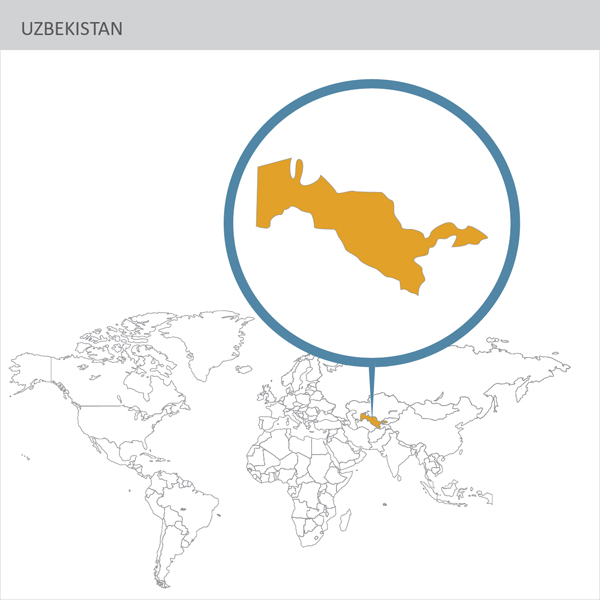
Country Profile – Uzbekistan
Uzbekistan spent most of the past 200 years as part of the Russian Empire, and then of the Soviet Union, before emerging as an independent state when Soviet rule ended in 1991. Under authoritarian President Islam Karimov, who ruled from 1989 until his death in 2016, Uzbekistan was reliant on exports of cotton, gas and gold to maintain its rigid, state-controlled economy. President Karimov’s successor, Shavkat Mirziyoyev, has made efforts to break Uzbekistan out of its international isolation and economic stagnation, but has yet to initiate any serious political liberalisation. S.No Parameters/Indicators Figures/Facts 1. Population in million 30.5 2. GDP at current prices in US$ billion 68 3. Per capita GDP at current prices in US$ 2,118 4. GDP growth rate in 2017 6.5% 5. Total trade in US$ billion in 2017 US$ 17 billion (exports at US$ 7.5 billion & imports at US$ 9.5 billion) 6. Major exports Gold, natural gas, polythene, natural uranium, cotton 7. Major imports Medicaments, petroleum oils, accessories for tractors, flat rolled iron, wheat & meslin, motor cars, vacuum pumps, telephone sets 8. Major export destinations (share of imports) Switzerland (38%), China (21.3%), Russia (10.1%), Turkey (9.4%), Kazakhstan (7.8%), Afghanistan (5.3%), Iran (1.3%)… India (0.6%) 9. Major importing economies from Uzbekistan (share of imports) China (21%), Russia (20.5%), South Korea (9.8%), Kazakhstan (9.6%), Turkey (5.5%), Germany (5.2%)… India (0.9%) 10. FDI Stock US$ 30 billion 11. Sectoral FDI Mining, agriculture, energy technologies, renewable energy, water management technologies, infrastructure on renewable 12. Major economies investing Russia, South Korea, Germany, USA Source: CATR Research Uzbekistan is the 89th largest export economy in the world and the 96th most complex economy according to the Economic Complexity Index (ECI). In 2017, Uzbekistan exported US$ 8.38 billion and imported US$ 11.2 billion, resulting in a negative trade balance of US$ 2.84 billion. In 2017, the GDP of Uzbekistan was US$ 49.7 billion and its GDP per capita was US$ 6.87k. Exports of goods and services represented 20% of GDP in 2017 (US$ 11.38 billion in 2017). The country primarily exports energy products, cotton, gold, mineral fertilisers, ferrous and non-0ferrous metals, textiles, food, machinery, and automobiles to Switzerland (35.1%), China (19.7%), Russia (9.3%), Turkey (8.7%), Kazakhstan (7.2%), Bangladesh (5.4%), and Afghanistan (4.9%). Uzbekistan is the fifth largest exporter and seventh largest producer of cotton in the world. Imports of goods and services represented around 20.5% of GDP in 2017 (US$ 11.44 billion). Imports include machinery and equipment, food, chemicals, ferrous and non-ferrous metals from China (22.2%), Russia (18%), South Korea (10.5%), Kazakhstan (10%), Turkey (5.8%), and Germany (5.2%). The economy of Uzbekistan has an Economic Complexity Index (ECI) of -0.847 making it the 96th most complex country. Uzbekistan exports 110 products with revealed comparative advantage (meaning that its share of global exports is larger than what would be expected from the size of its export economy and from the size of a product’s global market). Top Indian exports to Uzbekistan include pharmaceutical products, mechanical equipments, vehicles, service, optical instruments and equipment, while imports are dominated by fruit & vegetable products, services, fertilisers, juice products, extracts and lubricants. Exports from India to Uzbekistan stood at US$ 132.72 million during 2017-18, growing by 21.8% yoy. On the other hand, imports from Uzbekistan stood at US$ 101.67 million, growing by 118.45% yoy. Last year, India and Uzbekistan signed 17 agreements across a comprehensive range of sectors including defence training, nuclear energy and military medicine. The two sides set a bilateral trade target of US$ 1 billion. India-Uzbekistan Bilateral Trade India’s exports to Uzbekistan India’s imports from Uzbekistan Products Value in US$ million Tariff Products Value in US$ million Tariff All products 90.75 All products 46.5 Medicaments 24.6 5 Dried, shelled beans 17.9 8 Chassis fitted with engines 10.2 17 Potassium chloride 7.9 30 Pro-vitamins & vitamins 5.4 5 Lac; natural gums 5.2 5 Vaccines for human medicine 5.03 5 Urea 4.1 8 Antibiotics 3.77 5 Crude natural potassium salts 2.32 5 Cumin seeds, neither crushed nor ground 1.92 10 Unwrought zinc 1.9 0 Household refrigerators 1.61 11 Cotton, neither carded nor combed 1.4 10 Refractory bricks 1.5 5 Raw silk 1.05 5 Transmission shafts 1.5 5 Unwrought lead, refined 0.980 30 Road tractors for semi-trailers 1.5 26 Plants, parts of plants, incl. seeds and fruits 0.963 8

Basmati rice: Time for cautious optimism?
• Exports of Basmati rice from India are expected to grow to a record high of Rs 30,000 crore in 2018-19. • This export performance has been achieved despite several challenges including pesticide issues in EU and Saudi Arabia and payment issues with Iran. • Improvement in average realisations and increasing paddy prices have been critical factors driving growth. • However, prospects of peaking prices and overdependence on a few markets could pose challenges for exporters in the coming fiscal. India’s basmati rice exports are expected to reach a record high of Rs 30,000 crore in 2018-19, overcoming the previous peak of Rs 29,300 crore in 2013-14, according to a report by ICRA. Key factors driving the growth are strong demand from Iran, improvement in average realisations and consecutively increasing prices of paddy over the last three years. Exports reached Rs 24,919 crore (3.37 million MT) in the first 10 months of 2018-19, growing by 17% yoy. Average export realisations increased by 14% over the previous fiscal year, due to increase in paddy prices and rupee depreciation vis-à-vis the US dollar. Ironically, the fear of US sanctions also prompted aggressive buying by Iran in the first half. Basmati rice is expected to continue its growth momentum in 2019-20, with a projected growth of 4-5% yoy. In the current fiscal, production has come down by around 5% as some of the farmers shifted to non-basmati due to significant increase in its MSP. The increase in prices could continue upto the first half of FY 2020. Basmati rice exporters faced a number of challenges during the year, prominent among them being planned adoption of strict pesticide rules by Saudi Arabia, the pesticide residue issue in the EU, payment problems with some Iranian importers and imposition of trade sanctions on Iran by the US. European Commission had reduced the maximum mandated levels of Tricyclazole to 0.01 parts per million (ppm) as compared to 1 ppm from January 1, 2018. This is prominently used by farmers in PB1 and Pusa 1401, the Basmati rice varieties that have the maximum share in exports to the EU. The loss owing to EU pesticide rules was estimated at Rs 1,000 crore during the first nine months of FY 2018-19, as exports declined by 60% to reach 1.62 lakh tonnes during the period. Despite India’s request to permit a phased reduction of the pesticide over three years, authorities in the EU have been stringent on their position. Last year, Indian rice exporters had nearly Rs 1,000 crore stuck in Iran, primarily due to a default by an Iranian importer. In December 2018, India signed an MoU with Iran, wherein the latter agreed to accept payments in rupees. According to the arrangement, domestic oil refiners make their payments to Iran via a UCO Bank account of the National Iranian Oil Co. Iran then uses this money to pay for imports from India like medicines, medical devices and food grains. The loss in the EU market was compensated to some extent by Middle Eastern countries. The issues with Saudi Arabia also seem to have been sorted out, and the institution of the rupee payment mechanism between India and Iran should facilitate trade in the future. However, Indian basmati rice exports remain heavily reliant on a few markets. In 2017-18, Iran and Saudi Arabia accounted for over 40% of the exports of basmati rice from India by value. During April-February, 2018-19, Iran took nearly 1/3rd of the share of exports. Indian exporters are exploring some other markets including China, US and Latin America, but the response is not so significant. China is considered to be a highly lucrative market, which imports around 5 MT of rice annually. As of October 2018, Chinese authorities had cleared 24 rice mills in India for exports of non-basmati rice. Around 400-500 tonnes of Indian non-basmati rice has been exported to China so far. But the market would take some time to mature, and essentially imports non-basmati rice at present. Given that diversification in the export basket won’t come so quickly, basmati rice exporters who are carrying inventory face a significant risk of overdependence on a few markets. They need to be careful, as prices of the commodity also appear to be peaking, according to experts.

Product Profile: Dried Fruit Powder
• Estimated market size: US$ 13.52 billion. • Expected growth rate (2017-2025): 7.4% • HS CODES: 121190, 210690 & 330210 • Benefits of fruit powder: Flavour, nutrition & shelf life The global dried fruit powder market size is expected to reach US$ 23.96 billion by 2025 as a result of a positive outlook towards the nutraceutical industry. Consumers are continuously striving for the fulfilment of their nutritional intake through functional food and drinks. Rising awareness regarding the importance of micronutrients including vitamins, minerals and amino acids has resulted in increased product demand. With changing lifestyle patterns, consumers are inclined towards convenience foods meeting specific nutritional requirements. The aforementioned trends have led to a growth in the demand for nutraceuticals and in turn, will fuel the market for fruit powder. Europe was the major region for the fruit powder market, reporting a revenue exceeding US$ 3 billion in 2017. Favourable trends in the lucrative food segments such as superfood, probiotic supplements, and dietary fibers goods are expected to bode well for regional growth Geographically, the global fruit powders industry can be bifurcated by major regions, which include North America, Latin America, Europe, Asia Pacific, Middle East and Africa. Surging usage of fruit powders in the meat industry coupled with rising demand for natural colorants, has strengthened the growth of global fruit powders market and hence is expected to significantly expand the revenue contribution of the market over the estimate period (2017-2025). Rationale for Growth Rising health-conscious consumers who are tending towards a healthier lifestyle have been shifting their preferences from artificial ingredients to completely natural products. This in turn creates growth opportunities for the fruit powders market. Key players and manufacturers in the fruit powders market are planning to develop innovative fruit powders in order to cater to the rising needs of nutraceutical, pharmaceutical and food and beverage applications. Availability of customized fruit powders is a significant trend that is likely to gain traction in fruit powders market in the forthcoming years. Strawberry and apple fruit powders are observing notable popularity in the cosmetic industry. Super fruit powders are anticipated as the vital factor driving growth of the global market over the forecast period (2017-2025). There is an increasing demand for a variety of fruit powder-based health drinks that contain a high amount of vitamins, minerals and antioxidants. The fruit powders market is estimated to have growth potential in developing and developed countries as a result of consumer preference towards health drinks along with variety of fruit flavours in the drinks. Fruit powders are a convenient and economical substitute to fresh fruits in various applications. The use of fruit powders in infant formulas is seen to have robust growth due to consumer preference towards fruit flavoured infant formula, which also provides essential vitamins and minerals for infants. Along with increasing usage of fruit powders in various industries and economic potential due to increased fruit production in the market, the global fruit powders market is expected to observe robust growth over the forecast period. The Indian perspective With 100% FDI and various support measures by the Ministry of Food Processing Industries for value addition, it is essential for players to focus on value added exports for better revenue realisation. Dried fruit powder is one such segment where India has the potential to be a significant player in the international market. Known as the fruit and vegetable basket of the world, India produces a wide variety. It ranks first or second in most of the fruits produced. Currently, India exports around US$ 300 million worth of dried fruit powder, which is significantly below its potential. Some of the major fruit powders that India can export are apple, banana, amla, litchi, mango, guava and mixed fruit.

Why India Hasn’t Signed a Single Trade Agreement in Last Five Years?
• Regional trade agreements (RTAs) are now being increasingly leveraged in a world governed by an improved and disciplined multilateral trading system. • It is just the beginning of 2019 and two trade agreements have already come into force – EU-Japan and Hong Kong, China-Georgia. • However, the utilisation rate of regional trade agreements (RTAs) by exporters in India is very low. Most estimates put it at less than 25%. • According to the WTO, 80% of world trade among regions is merchandise trade — that is, only 20% of world trade is in services. The proliferation of regional trade agreements has continued unabated since the early 1990s. In recent years, this has led to widespread debate on the advantages or disadvantages of regionalism over multilateralism. The debate stems from the increased use of regional trade agreements (RTAs) in a world now ruled by an improved and disciplined multilateral trading system. It is just the beginning of 2019 and two trade agreements have already come into force, which are EU-Japan and Hong Kong, China-Georgia (as notified to the WTO). From 2015 till February 2019, 41 trade agreements came into force, none involving India. The structure of regional agreements varies hugely, but all have one thing in common — the objective of reducing barriers to trade between member countries. At their simplest, they merely remove tariffs on intra-bloc trade in goods, but more now go beyond that to cover non-tariff barriers and to extend liberalisation to trade and investment. On the whole, the newer agreements tend to have deeper coverage, extending into areas of domestic disciplines beyond the exchange of tariff concessions, and a number of agreements now also cover the services sector and other areas of cooperation. In this context, it is difficult to arrive at a clear conclusion on India’s stance on RTAs. To do so requires careful consideration of India’s place in the global economy, and the impact of potential trade diversion on its domestic industries. Traditionally, India has been a supporter of the multilateral system, but given the slow pace of negotiations and the developmental needs of its economy, it has also joined the RTA bandwagon, signing 16 trade agreements post-2000. India’s exports to its FTA countries have not outperformed overall export growth, or exports to the rest of the world, signalling demand-driven exports even with relatively unreduced tariff rates. India’s exports to the world grew at a CAGR of 5.52% from 2008 to 2017 and an almost similar growth rate was experienced in exports to those economies with which India had trade agreements for the same period. On the other hand, the growth rate of India’s imports from economies with which we have trade agreements from 2008-2017 was 6.2%, but with the world, it was 3.4%. In fact, by signing any trade agreement in the past, we have opened Indian markets to a greater extent as compared to getting access to the foreign markets. Utilisation rate of regional trade agreements (RTAs) by exporters in India is very low. Most estimates put it at less than 25% (V. K. Srivastava, 2017). India’s negotiations on RTAs India is negotiating several trade agreements including free trade agreements (FTAs) with countries such as Russia, Australia, EU and Peru that could provide gain in market share in these economies. The key lesson from free trade agreements (FTAs) is they offer greater preferential access to markets of other countries than is possible through the WTO framework. Big, medium, small – all countries are seeking such access across the world. But there has been procrastination in inking these trade agreements due to analogous reasons with most of the trade agreements which are under negotiations. For example, with EU, no consensus has been possible, as they are demanding market access for automobiles, dairy and wines, which we cannot afford to provide. Similarly with the India-Australia CECA, we cannot give access to our dairy and agricultural sector by opening up markets for them. It is logical for India to be wary of opening markets for these products, as livelihoods of the poorest will be affected and their economic condition will be exacerbated. But the real question that arises is, what do we have to offer even after signing the FTA apart from trading at preferential rates? Does technical know-how get affected after signing any FTAs/PTAs? Or why are most of our FTAs dormant? The issue of what has been termed the “deindustrialisation” of the developed world has kept academics and policy makers occupied at least since the 1980s. The shift came in a majority of industrial economies due to low productivity growth and the emergence of new challenger nations such as Japan and Taiwan. China’s Dominance Over the past two decades, the emergence of China as a global manufacturing powerhouse has further challenged the existing manufacturing base within other countries. This raises further concerns over whether or not it matters that an economy retains a manufacturing sector. A country can’t trade services for most of its goods. According to the WTO, 80% of world trade among regions is merchandise trade — that is, only 20% of world trade is in services. This closely matches the trade percentages that even the US, after allegedly becoming “post-industrial,” achieves. If in the extreme case an economy was composed only of services, then it would be very poor, because it couldn’t trade for goods; its currency would be worth very little. The dollar is also vulnerable in the long-term. A “post-industrial” economy is really a pre-industrial economy — that is, poor. Services are mostly the act of using manufactured goods. We can’t export the experience of using something. From 2014, India hasn’t signed any trade agreement or rather has been procrastinating on ones which are in the middle of negotiations. The expansion of markets gives rise to new businesses, so individual countries can earn more national revenue from business tax. Finally, trade agreements typically include investment guarantees, meaning investors — especially those from developed nations — can invest in

US-India trade war? Look before you leap
• India is firmly planning to counter the US move to withdraw GSP on Indian goods by imposing retaliatory tariffs from the coming month. • India’s total exports to USA in 2018 remained at US$ 51.6 billion, while agricultural exports remained at US$ 4.71 billion. • India was the largest beneficiary of the GSP program in 2017 with US$ 5.7 billion in imports to the US given duty-free status. Turkey was the fifth largest with US$ 1.7 billion in covered imports. • Even the US stands to benefit from the GSP regime, since the intermediary inputs provided by India help keep its industry competitive. India is planning to counter the US decision to withdraw GSP on its exports by imposing retaliatory tariffs from the coming month. If the Indian government goes ahead with retaliatory tariffs, twenty-nine items imported from the US, including walnuts, lentils, boric acid and diagnostic reagents, among others will face higher duties, cutting benefits to US exporters. The move will impose an additional burden of US$ 290 million per year on US items exported to India. Are we moving towards a new trade war as it happened with US-China last year? It’s crucial to analyze and assess the realistic scenario for both countries before taking action. India’s total exports to US grew at a CAGR of 9.6% from 2009 to 2018, while corresponding world exports to USA grew at 5.7%. Now it’s well-known that US is ending the preferential trade status granted to India and Turkey, asserting that India has failed to assure America of ‘equitable and reasonable’ access to its markets. The justification given is that India has implemented a wide array of trade barriers that create a seriously negative impact on US commerce as per USTR. India’s top exports to the US under GSP in 2017 included motor vehicle parts, ferro alloys, precious metal jewellery, building stone, insulated cables and wires. Out of US$ 36 billion of exports to the US by India, US$ 5.7 billion worth of exports will be affected, marginally impacting US trade deficit with India. India’s trade surplus for merchandise goods with the USA is around US$ 18-19 billion. Also, most of the exports are of intermediate goods not produced in the US. From 2015 to 2017, imports of capital goods (machinery, equipment, aircraft, semiconductors, engines, tractors, etc) and industrial equipment (lumber, chemicals, aluminium and copper, iron and steel, cotton and wool, plastics, fuels, etc) together accounted for 55% of the total imports of USA. Notably, over half of what enters the US as imports constitutes orders from US companies (e.g. manufacturers) for equipment, supplies, raw materials, commodities, and other imports that serve as direct inputs into the production process that takes places in American factories and businesses that employ millions of American workers. And the lower the price of inputs for US businesses (whether sourced internationally or domestically), the more competitive those companies are, the more of their products they can sell (both international and domestically), the greater market share they can achieve, and the more US workers they can hire. So higher prices of inputs actually work to the detriment of US companies. The loss to the US can easily cross the US$ 190 million burden on India due to the removal of GSP. How GSP has benefitted India Under the US GSP programme, nearly 2,000 products including auto components and textile materials can enter the US duty-free if the beneficiary developing countries meet the eligibility criteria The US GSP scheme was introduced in 1976, with India included in the list of beneficiary countries. However, it is subject to conditions and one of the criteria applied is whether the beneficiary concerned is providing equitable and reasonable access to its markets. The US government takes up a review of the beneficiary government’s practices every year. This year, the US trade representative (USTR) has commenced a review of the GSP eligibility of three beneficiary countries — India, Indonesia and Kazakhstan. According to the notice by USTR, the review has been launched against India based on complaints against trade barriers made separately by US dairy interests and the medical devices industry. It is evident that continuation of this benefit is going to involve a process of give and take. There are several trade issues between India and the US but the GSP review sets up a mini-agenda of three issues for intensive dialogue. Even though the MFN tariffs of the United States on industrial products have come down considerably after successive rounds of negotiations, duty free access under the GSP remains meaningful, as even low duties make a difference in an intensely competitive world. It gives beneficiaries a significant advantage over China and eliminates the disadvantage vis-à-vis countries like Korea and Mexico, which are the USA’s partners in FTAs. The rules of origin are relatively simple: if the product is not wholly produced in the beneficiary country, there should be at least 35% value addition in that country. As regards the benefit of the US GSP for India’s trade in recent decades, there is reason to be more than mildly positive. Total US merchandise imports from India have increased roughly three-fold from US$ 16.4 billion in 2000 to US$ 51.7 billion in 2018, while GSP imports rose by five times from US$ 1.1 billion to US$ 5.7 billion during the same period. From 6.9% in 2000, India’s share under GSP from all beneficiaries has grown to as much as 26.7% in 2017. Undoubtedly, India has been one of the largest beneficiary developing countries every year since 2011, but it always provided competitive intermediate inputs to the USA. Some of the benefited products are auto components, machinery and mechanical appliances and electrical machinery. The jewellery sector benefited in the past, with imports touching a high of US$ 2.4 billion, before their GSP treatment was curtailed under competitive need limits (CNLs). Clearly, GSP has helped push forward India’s exports to the US. In the trade dialogue, India should not be content only with the

India’s sweeteners for the sugar industry unfair?
• Guatemala has alleged that India’s sugar subsidies are not in line with WTO regulation. • The Central American nation’s complaint comes after Australia and Brazil accused India of causing a glut in the sugarcane market with its subsidies. • The Government of India has lent its support to sugar mills and farmers as oversupply has led to persistent liquidity woes in the sector. • India asserts that its subsidies are in line with WTO norms, and exports are too insignificant to cause a glut. Guatemala has initiated a complaint against India at the World Trade Organisation (WTO) Dispute Settlement Mechanism. In its complaint, the Central American nation has alleged that the sugar subsidies provided by India to its farmers are not in accordance with international trade regulations. Referring to specific articles within the WTO’s Agreement on Agriculture, Agreement on Subsidies and Countervailing Measures and the General Agreement on Tariffs and Trade 1994, Guatemala has complained against “domestic support measures maintained by India in favour of producers of sugarcane and sugar, and export subsidies for sugarcane and sugar.” Domestic support measures cited in the complaint include the system of administered prices for sugar cane (through Fair and Remunerative Price); minimum selling price for sugar; and financial support like production subsidies to mills and subsidies to maintain buffer stocks. India also gives export subsidies to sugar mills on a minimum quota system, apart from subsidies for internal transport, freight, handling and other charges, according to the communication. It says that the product-specific domestic support for sugarcane in India is above the 10% de minimis level. According to the rules under the dispute settlement mechanism of the WTO, Guatemala has sought consultations with India. If this consultative process does not result in a resolution, the complainant can ask for the setting up of a Dispute Settlement Mechanism. India is the second largest producer of sugar in the world. Earlier, Brazil and Australia have also complained against India’s subsidies to sugar producers. They have purported that these subsidies have created a global glut, leading to a sharp drop in sugar prices. According to the Brazilian trade ministry, India’s domestic support to farmers is possibly behind the drop in prices as well as production in the major production centres of Brazil, China and Thailand. Due to the drop in sugar prices, many Brazilian mills diverted sugarcane input to ethanol, thereby cutting down on their sugar production. The Brazilian government estimates that increase in supplies by India could cause a drop in global sugar prices by as much as 25.5% in the 2018-19 season, leading to losses up to US$ 1.3 billion for Brazilian exporters. Prices for New York-based raw sugar and London-based white sugar reached their lowest level in a decade at the end of 2018. EU, Thailand and Costa Rica also requested to be included in the consultations with India. India’s sugar mills are facing persistent liquidity problems due to the dual impact of excess carryover stocks as well as excess production. This has led to a ballooning of pending dues to farmers as well. In October last year, the Cabinet Committee of Economic Affairs chaired by the Hon’ble Prime Minister Shri Narendra Modi approved a comprehensive assistance package of around Rs 5,500 crore to support sugar mills as well as farmers. These measures included defraying expenditure towards internal transport, freight, handling and other charges as well as financial assistance @ of Rs. 13.88 per quintal of cane crushed in sugar season 2018-19 to offset the cost of cane. This initiative was taken to help sugar mills clear cane dues of farmers. Pending dues of sugarcane farmers have exceeded Rs 20,000 crore till February of the current marketing year (October-September). The CCEA also approved a soft loan of Rs 15,500 crore earlier this month to raise ethanol capacity in sugar mills. Interest subvention of Rs 3,355 crore will be borne by the government. Apart from this, a soft loan of Rs 8,000-10,000 crore at a subsidized interest rate of 7-10% for one year has been approved for sugar mills, to be paid directly to the farmers. The government has also increased the benchmark price of sugar at the factory gate from Rs 2 to Rs 31 per kg, which is expected to improve the liquidity of millers by Rs 5,000 crore. While arguing its case against these complaints, India has pointed out that the subsidies it provides are in the form of production subsidies, which are permissible under the WTO. Moreover, the export subsidies are given for production and marketing purposes, which is also permissible under the WTO rules. India also asserts that its exports of sugarcane are not significant enough to cause a glut in the global market, as is being alleged by other WTO members. In terms of volumes, India’s sugar exports were at around 2.14% of global exports in 2016. The Government of India has mandated a minimum export quota of 5 million tonnes for sugar mills in the current marketing year, out of which sugar mills had contracted to export 1.8-2 million tonnes as of February 2019.

India-Africa – Partners in progress
• Commerce Minister Shri Suresh Prabhu has proposed that India and Africa collaborate for a free trade agreement/preferential trade agreement. • India-Africa trade has grown rapidly from US$ 4.46 billion in 2000-01 to US$ 63 billion in 2017-18. • The bilateral trade is considered to be significantly below potential, and a number of possible avenues for trade expansion remain untapped. • As growing economies, India and Africa need to identify and explore mutual synergies, and bring down barriers to bilateral trade. During his address at the 14th CII-EXIM Bank Conclave on India-Africa Project Partnership, Commerce Minister Shri Suresh Prabhu proposed that India and Africa should consider finalizing a free trade agreement (FTA) or a preferential trade agreement (PTA). He stated, “We have a common future. We do not want to do anything at the expense of Africa. We want you to get into an FTA (with India) that will benefit Africa first.” He identified digital connectivity, logistics, agriculture & food processing, power projects, new and renewable energy and skill development as some of the key areas for deeper India-Africa bilateral cooperation and partnerships. Commerce Secretary Shri Anup Wadhawan informed the audience that the Government of India is presently laying the groundwork for a strategy for growing India-Africa trade. Both economies are exhibiting robust growth momentum. While India is recording growth rates of over 7%, Africa’s GDP is projected to grow to US$ 29 trillion by 2050 from US$ 2 trillion in 2017. With the current growth trends, most African nations are projected to reach middle-income status by 2025. Mr Wadhawan commented during his address, “It is extremely heartening to see that both India and several African countries have maintained high economic growth rate over the last two decades and today even as the global economy is faced with several debilitating trends, our two regions are seen as bright spots on the world map.” A win-win paradigm Trade between India and Africa has grown by around fourteen times from US$ 4.46 billion in 2000-01 to US$ 63 billion in 2017-18. Top Indian items of export for 2017-18 were petroleum products (US$ 4.09 billion), pharmaceutical products (US$ 2.9 billion), vehicles, parts and accessories thereof (apart from railway or tramway rolling stock, US$ 2.69 billion), cereals (US$ 1.78 billion) and nuclear reactors, boilers, machinery and mechanical appliances; parts thereof (US$ 1.65 billion). On the other hand, petroleum products (US$ 20.76 billion) dominated India’s imports from Africa in 2017-18. They are followed by gems & jewellery, edible fruits & nuts, inorganic chemicals, ores and copper. South Africa is the major export destination for India’s exports (US$ 3.82 billion), followed by Egypt (US$ 2.39 billion), Nigeria (US$ 2.25 billion), Kenya (US$ 1.97 billion) and Tanzania (US$ 1.62 billion). Indian companies have also made significant investments into Africa in the recent past. These investments have been largely directed towards construction, telecommunications, power, computer services, energy, infrastructure and automotive sectors. According to the UNCTAD World Investment Report, 2018, FDI stock by India into Africa stood at US$ 16 billion in 2016 compared to US$ 14 billion in 2011. Some of the major public and private sector companies that have made investments into Africa include ONGC Videsh, Reliance, Bharti Airtel, Varun Beverages Tata Group and Essar Group. Nineteen trade agreements are currently in place between Indian and African nations. Besides this, negotiations are ongoing for a trade agreement with the Common Market for Eastern and Southern Africa (COMESA), a PTA with the South African Customs Union (SACU) and a Comprehensive Economic Co-operation Partnership Agreement (CECPA) with Mauritius. The Government of India has taken several strategic initiatives over the years to boost trade and investment like Focus Africa (2002) and India-Africa Forum Summit (2008). Compelling arguments for a deeper partnership A joint report by African Export-Import Bank (Afrexim Bank) and the Export-Import Bank of India (Exim India) published in 2018 concluded that there are a number of avenues for trade expansion between the two trading partners, based on their respective competencies. Using an export potential assessment methodology developed by the International Trade Centre, the report identifies rice (over US$ 5 billion), pharmaceutical products (US$ 4.2 billion), motor vehicles and parts (US$ 3.7 billion) and machinery (US$ 2.9 billion) as the products with the highest potential. The export potential of the top 25 products identified in this analysis is in excess of US$ 35.1 billion. From Africa’s perspective, the top 25 products have an aggregate export potential of over US$ 7.3 billion. The list is led by nuts, followed by ferrous metals, wood and vegetable materials, and pulses. Some of the other major product groups are fertilizers, chemicals, plastics and leather products. India and Africa also need to sort out some major impediments to growth in bilateral trade and investment. Among the most prominent constraints is lack of sustainable finance support, with the Afreximbank-Exim India report pegging the trade finance gap in Africa in excess of US$ 120 billion. Weak infrastructure development continues to hamper business expansion, particularly in Africa. India faces issues of market for some products to Africa. On the other hand, many least developed countries (LDCs) in Africa have not been able to take advantage of the Duty Free Tariff Preference Scheme (DFTP) offered by India due to low awareness. The DFTP could be also extended to the entire African region to boost trade and investment. The India-Africa trade relationship is extremely critical in the present milieu, with growing protectionist policies in traditional markets necessitating diversification of the trade basket. Moreover, as growing economies, both India and Africa need to explore potential for exploiting mutual synergies. Exports from Africa have the potential to evolve beyond crude oil and primary commodities to manufactured, non-traditional and agro-processed products. With India moving up the value chain on technology, exports of technology and IP-based products from India to Africa could also witness an increase in the coming years.