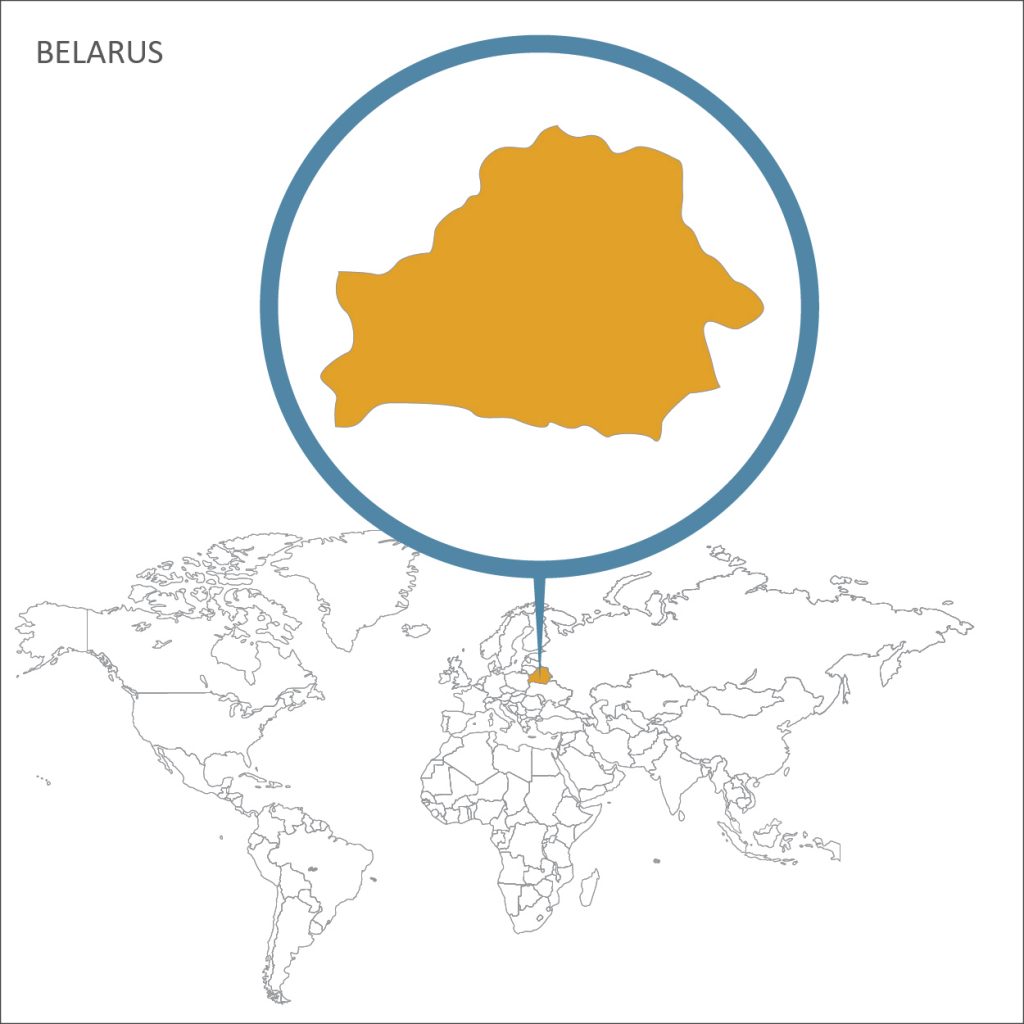
Photo by Artem Podrez from Pexels Belarus is the 63rd largest export economy in the world and the 30th most complex economy, according to the Economic Complexity Index (ECI). In 2017, Belarus exported worth $28.5 bn and imported worth $33 bn, resulting in a negative trade balance of $4.42 bn. In 2017 the GDP of Belarus was $54.5 bn and its GDP per capita was $18.8k. As of 2017, Belarus had a negative trade balance of $4.42 bn in net imports. Compare this to their trade balance in 1995 when they still had a negative trade balance of $468 mn in net imports. According to a preliminary estimate for 2018 national accounts, the economy expanded for the second consecutive year, with annual growth accelerating to 3.0% from 2.5% in 2017 amid upbeat domestic demand dynamics. Household spending remained chiefly in the driver’s seat through much of the year, although appeared to slow in the fourth quarter amid rising inflation. Meanwhile, industrial production shifted into a lower gear in 2018, dragged by cooling manufacturing activity through year-end. On a brighter note, Fitch Ratings affirmed a stable outlook on the country’s B credit rating, citing moderating inflation, increased income per capita, despite a still high exposure to foreign currency risks. India’s Trade with Belarus, in USD Million India’s Imports from Belarus India’s exports to Belarus TOTAL All products 188.191 TOTAL All products 44.895 3104 Mineral or chemical potassic fertilisers 141.631 3004 Medicaments 9.136 2926 Nitrile-function compounds 13.957 0304 Fish fillets and other fish meat 6.868 5402 Synthetic filament yarn 3.869 2401 Unmanufactured tobacco; tobacco refuse 5.318 4104 Tanned or crust hides and skins of bovine 3.377 2933 Heterocyclic compounds with nitrogen hetero-atom[s] only 2.477 3908 Polyamides, in primary forms 2.517 0306 Crustaceans, whether in shell or not 1.948 5902 Tyre cord fabric of high-tenacity yarn of nylon 2.467 2101 Extracts, essences and concentrates, of coffee, tea 1.937 2827 Chlorides, chloride oxides and chloride hydroxides; bromides and bromide oxides 2.434 2941 Antibiotics 1.327 4107 Leather further prepared after tanning or crusting “ 2.067 2934 Nucleic acids and their salts, 0.871 2825 Hydrazine and hydroxylamine and their inorganic salts; 2.037 1202 Groundnuts 0.776 2917 Polycarboxylic acids, their anhydrides, halides, peroxides and peroxyacids 1.896 2942 Separate chemically defined organic compounds 0.742

Next step towards globalization of Bollywood
India’s entertainment sector has historically enjoyed a special appeal in CIS countries, especially Russia, as the Indian cinema once had good access to markets of the erstwhile Soviet Union. Other than this, the traditional markets where Indian films are released are the UK, the US and Australia – the countries that have a large diaspora population from the subcontinent. However, with the success of ‘3 Idiots’ in China, and of films like ‘PK’, ‘Dangal’ and ‘Raees’ abroad, Indian film producers and distributors have started looking at markets that do not have substantial Indian presence. Big Bollywood producers who handle their distribution themselves and other distributors are increasingly focusing on less-explored markets. Late actor Sridevi’s ‘Mom’ was premiered in Moscow and Zoya Akhtar’s ‘Zindagi Na Milegi Dobara’ was shot in Spain which resulted in a many-fold increase of tourists to Spain. This success of Indian films abroad and the industry’s potential to earn foreign exchange for the country has prompted Indian government to further explore avenues to export Indian films to CIS and other countries. In this regard, Trade Promotion Council of India (TPCI) in association with Economic Diplomacy Division of the Ministry of External Affairs is organizing a closed door roundtable seminar on 15th March, 2019 at Videsh Bhawan (Mumbai), which will be chaired by Mr. Manoj K. Bharti, Addl. Secy (ED & States), Ministry of External Affairs (Govt of India) and represented by select producers and distributors of films, besides other stake holders and officials from I&B Ministry as well as Department of Commerce (Govt of India). The seminar is aimed at sharing and understanding the difficulties being faced in export of Indian films along with policy suggestions to catalyze the growth of the sector. Thus, we are looking a scenario where the popularity of Amitabh Bachchan, the Khans (Aamir Khan, Shah Rukh Khan, Salman Khan, Irrfan Khan and Saif Ali Khan) and of Hema Malini, Priyanka Chopra and Deepika Padukone is capitalized to promote films in relatively unexplored countries like the CIS and GCC countries, Far East and Europe, not only to bring in more revenue but also to leave a cultural impact through India’s cinema in these geographies. “Besides the economic angle, it helps position our country to establish a strong foothold. Culture and content play an undermined role in geo-politics,” says Mohit Singla, Chairman, TPCI. Bilateral Audio-Visual Services Trade: India-CIS and other countries The audio-visual services sector is among the fastest growing in the Indian economy. This is one of the 12 champion service sectors identified by the Department of Commerce (Govt of India) to take India’s share in global services exports to 4.2% by 2022 from 3.3% in 2015. Bollywood itself churns out over 1500 films every year in 23 languages which see more than 2 bn ticket sales, making it the most prolific film industry in the world. Besides, on an average, Bollywood also produces more than a thousand short films annually in 52 different languages and dialects. Similarly, India’s music industry is one of the largest in Asia. It is also one of the largest producers of original entertainment software. Indian radio and terrestrial broadcasting network took is one of the largest in the world. Personal, cultural, and recreational services exported by India was recorded at US$ 1.46 bn in 2016, out of which audio-visual services export is valued at US$440.8 million and the other related recreational non-audio-visual services were valued at US$ 1.02 bn. CIS imports of personal, cultural and recreational services were valued at US$ 1.70 bn in the same year, of which Russia alone imported US1.44 bn. India is a net exporter in the audio-visual services with a trade balance of US$210.6 mn. And with about 30 million non-resident Indians around the world, there is no reason why India should not eye the world market for its audio-visual services sector. TPCI is moving ahead to tap the immense potential that India needs to negotiate and push for audio-visual services export beyond reciprocal support of the national film festivals to the CIS countries, primarily Russia and Ukraine. The Bollywood Scenario The joyousness, colour, beautiful people and stunning locales of Hindi films is increasingly attracting the world audience as they offer viewers an escape into a dream world of shared values, something that the Western cinema doesn’t. There was a period when films like Raj Kapoor’s ‘Mera Naam Joker’ enjoyed an iconic status in the erstwhile USSR. Thereafter, around the turn of the century, Bollywood filmmakers like Karan Johar and Aditya Chopra first began wooing a global audience through films like ‘Dilwale Dulhaniya Le Jayenge’, ‘Kal Ho Na Ho’ and ‘Kuch Kuch Hota Hai’. In the later period, several producers and distributors started focusing on foreign markets. Films like the Aamir Khan-starrer ‘PK’, earned more than 30% of its box-office revenue from international markets, earning more than US$ 120 million dollars from outside India. Another blockbuster ‘Dangal’ too earned similar amount while the 2009 Rajkumar Hirani blockbuster ‘3 Idiots’ went on to become a big success in an altogether unexplored territory – China. The globalization of Bollywood has also led to strategic partnerships: Anil Ambani’s Reliance Big Pictures invested $325 million for a 50% stake in Steven Spielberg’s Dreamworks, besides other tie-ups with US production houses owned by the likes of Nicholas Cage, Jim Carrey, Tom Hanks, Brad Pitt, Julia Roberts and George Clooney. The company also acquired American movie theatres to showcase Indian films in areas with larger Indian communities. UTV Motion Pictures co-produced two films with Fox Searchlight and one with 20th Century Fox. And this is besides the several investments that global movie majors Walt Disney, Sony Pictures Entertainment Inc. and Fox Star Studios have continued to make in Bollywood films since 2007. More recently, Reliance Entertainment produced Indo-French movie ‘nOmber One’ with France’s Rogue International, and starring Julie Gayet. Governments and tourism boards across the world have of late also woken up to the revenue generation opportunity of Bollywood. The Visit Britain and Swiss Info tourism websites

Will Trump succumb to China in the tariff war?
A series of trade and geopolitical concerns continue to weigh on the markets in South East Asia, ranging from uncertainty around US-China trade to widening tensions between India and Pakistan. Though US President Donald Trump’s chief trade negotiator has said the US and China have settled on a process for enforcing a trade agreement between the countries, critics of the US President argue that Trump may capitulate to China in the tariff war, giving more for no sizeable returns. While the US President has announced that he may meet Chinese President Xi Jinping to announce a deal next month, the signs that he will yield to the Chinese in the ongoing tariff war are ominous. There is growing concern in Congress that President Trump will fail to resolve underlying disagreements over intellectual property and unfair trading prices and may play to the gallery that he has emerged victorious but may give away more in lieu for insignificant or smaller gains. Sensing this, the US Congress has warned the Trump administration that any trade deal with China should secure substantive policy changes. Chinese chief negotiator Vice Premier Liu He has emphasized that his country will reduce their large bilateral trade surplus by buying US soy beans and natural gas. This sharp reduction in the US trade deficit with China would enable Trump to claim victory and give him something to celebrate when Xi makes a visit to the US. There is no mention of the technology theft that China is doing, which was the key points of confrontation that initiated the trade war in 2017. The most important problem that needs to be resolved is not the trade deficit with China but the Chinese firs stealing US technology and using it to help Chinese companies compete with those same firms in China and around the world. The Chinese do it either by making US companies willing to trade in China to share their technology compulsorily or by entering the US firms’ computer systems to steal technology and blueprints. Some Chinese companies also use the reverse-dismantling process, making parts as per specifications and then mount them again. Urging a tough stand, both Republican and Democrat lawmakers, at a House Ways and Means Committee meeting, asked Trump administration’s top negotiator Robert Lighthizer to continue to take a tough approach. “This administration has chosen to take a path of high-risk confrontation,” said Rep Richard Neal, a Democrat from Massachusetts, adding further that now “it must hold out for a good deal.” It is to be remembered that President Trump had initiated the trade war in 2017 citing unfair trading practices, including accusations that Chinese companies were stealing intellectual property from the US firms by forcing them to transfer technology to China. In the aftermath, the US imposed tariffs on US$ 250 bn worth of Chinese goods. Retaliating, China put duties on US$ 110 bn of US products. President Trump had threatened further tariffs on an additional US$ 267 bn worth of Chinese products, thus putting duties on all Chinese imports into the US. The trade dispute had prompted concerns over global economic growth and had put immense pressure on China’s economy, already showing signs of strain. If President Trump bows down without getting much out of the deal, all efforts would go to waste. 2018: U.S. trade in goods with China NOTE: All figures are in millions of U.S. dollars on a nominal basis, not seasonally adjusted unless otherwise specified. Details may not equal totals due to rounding. Table reflects only those months for which there was trade. Month Exports Imports Balance January 2018 9,835.3 45,788.0 -35,952.8 February 2018 9,806.1 39,067.6 -29,261.5 March 2018 12,382.1 38,256.7 -25,874.6 April 2018 10,268.0 38,230.0 -27,962.0 May 2018 10,610.8 43,797.4 -33,186.6 June 2018 11,115.6 44,599.5 -33,483.8 July 2018 10,261.7 47,096.0 -36,834.3 August 2018 9,294.3 47,863.9 -38,569.6 September 2018 9,789.1 50,032.1 -40,243.0 October 2018 9,130.5 52,233.0 -43,102.5 November 2018 8,664.9 46,525.7 -37,860.8 TOTAL 2018 111,158.4 493,489.9 -382,331.5 Source: United States’ Census Bureau

Product Profile: Moringa Seeds
Moringa oleifera is indigenous to the sub-Himalayan regions of northern India and Pakistan. Moringa is the sole genus of the flowering plant Moringaceae and is indigenous to the Indian sub-continent. Currently, moringa is widely cultivated in India, the Philippines, African countries and in some parts of the US and the European Union. Moringa products are widely recognized for their health benefits. Besides, moringa products are available in various forms like moringa tea, moringa oil, moringa leaf powder, and moringa seeds. The plant is now distributed across tropical zones in Africa, Asia, islands in the Pacific and the Caribbean, and South America. The tree is cultivated and has become naturalised in the wild in many areas of the world. Products from the tree have multiple health, food and cosmetic uses. Health products including food supplements are the main market for moringa (leaf powder). Food product includes herbal tea (dried leaves) and vegetable (fresh seed pods). In cosmetics, main market for moringa seed oil, is called Behen or Ben oil. ITC Tariff line Code is: 0712.9090: Other dried vegetables, whole, cut, sliced, broken or in powder 1211.9086: Other medicinal plants and parts of plants 1515.9090: Moringa Oleifera seed oil The moringa leaves are rich in the following substances. Vitamins: A, B, C and E Minerals: iron, calcium, selenium, phosphorus and potassium Essential fatty acids: omega-3 and omega-6 Protein Fibre Based on this composition, moringa is commonly marketed as: Supporting immune health Improving general health Increasing energy levels. In addition, moringa is marketed for various other uses. These include weight management, improving digestion and helping to support normal sugar levels in the body. Market growth rate: Forecast of the global moringa products market is expected to grow at a CAGR of 9.53% during the period 2018-2022. The global market value of moringa amounted to about four billion U.S. dollars in 2015, and is forecasted to grow to about seven billion dollars by 2020. India’s growth rate of moringa’s products to the world from 2013-18 stood at 10.55% CAGR. Global moringa products market segmentation This market research report segments the global moringa products market into the following products (moringa seeds and oil, moringa leaves and leaf powder, and moringa fruits, tea, and pods) and key regions (the Americas, APAC, and EMEA). The moringa seeds and oil segment held the largest market share in 2017, accounting for nearly 48% of the market. The market share for this product is expected to increase nearly 3% by 2022. Asia Pacific (APAC) was the leading region for the Moringa products in 2017, accounting for a market share of 78%, followed by Europe, the Middle East and the Africa (EMEA) and the Americas. The key factor that is driving the sales of these products across all these regions can be attributed to the growing consumer awareness of the health-promoting benefits of consuming moringa products.

WTO focusing to help least developed countries gain more from trade
The new 2019-2022 Strategic Plan introduced by Enhanced Integrated Framework (EIF) is designed to better position LDCs in the global economy at a time of growing concerns about trade. The goals of the new plan are to improve the trade environment for LDCs so there is inclusive and sustainable growth, and to increase their exports and access to international markets. With an unstable global economy and high trade costs creating uncertainties across the world, the EIF will focus its work on fragile countries and providing the adaptability needed as well as increasing engagement and support for micro, small and medium sized enterprises (MSMEs) and women in trade. In today’s complex trade environment, the support for LDCs are needed now more than ever. Improving the economic prospects for the LDCs remains a key global challenge. Through critical diagnostic analysis, institutional and policy support, capacity development and coordination mechanism-building, the EIF has helped governments develop tailored national trade programmes. These programmes support producers, train officials to develop and implement home-grown trade agendas and build capacity among small businesses – many of which are owned by women. LDCs: Fragile global economy Economic growth in the LDCs, which as a group averaged 5% in 2017, continues to leave behind the countries that are dependent on raw materials and commodities. Growth forecasts for 2019, at an average of 5.5%, remain well below the 7% target set out in sustainable development goals. It is estimated that an additional investment of US$24 billion per year is needed to spur a 7% average annual GDP growth between 2016 and 2020. Amid escalating trade tensions and uncertain growth and trade trajectories in the world and, alongside, the declining consumption in many developed markets, continued positive momentum may be hampered. The LDCs need to further diversify their exports and increasingly look to expanding their presence in domestic and regional developing country markets for future growth and trade opportunities. As technology continues to drive the transition from the Third to the Fourth Industrial Revolution, the premium on skills and innovation has never been more important, and this offers both opportunities and challenges for the LDCs. Analytical work to define the dynamic comparative advantages of the LDCs in the digital economy followed by policies that promote skills development and upgrading, adoption of technology and innovation must be at the heart of any trade-led development strategy. Closing the skills and technology gap in the LDCs is not only essential for boosting productivity, building productive capacity, engaging in higher value-added activities and promoting longer term structural change, it also lays the foundation, alongside digital infrastructure, for leveraging emerging opportunities in e-commerce and digital trade. Opportunity Ahead With increasing regional and continental trade integration in Asia and Africa, regional markets are emerging as important export destinations for LDC goods and services, and regional production networks are on the rise. In addition, LDC trade in tourism as well as other commercial services, which include financial services and other highly dynamic technology-intensive activities, have been increasing. Alongside the expected demographic dividend in the LDCs, this opens up potential niche markets and opportunities to better engage in regional and GVCs. Unfortunately, such shifts are hampered by high trade costs in the LDCs, including those coming from regulatory differences and inadequate physical and digital infrastructure. High trade costs and constrained institutional capacities, including quality national infrastructure, remain stumbling blocks for the LDCs to tap into regional markets and get involved in regional value chains. This calls for intensified efforts from the LDCs, development partners and the private sector at national and regional levels to invest in trade infrastructure, skills development, regulatory reforms, institutional support, access to finance and trade facilitation, to name but a few. These needs are even more important in light of shrinking investment resources for LDC trade. Strengthening local expertise to deal with complex trade issues and a fast-changing trade environment through proactively providing training and capacity-building; and engaging research institutions, universities, sector associations, MSMEs, women’s groups and other key stakeholders are the imperative route to escalate the participation of LDCs in global trade. Also exposing producers and traders of the LDCs to international and regional trade opportunities and supporting them to take required training to acquire skills to build and harness the established international connections will corroborate the expected outcome.

Japan-EU inked the trade deal: Why India is waiting?
The EU and Japan are two highly developed economies that already have strong trade and investment links. In addition, Japan is an important strategic partner for the EU and a key ally in the Asia-Pacific region, standing already with second highest trade volume figures between the two. The EU has a bilateral deficit in goods and surplus in services (an overall positive trade balance). However, Japanese companies have a strong presence in the EU and serve the market through mode 3, multinational presence, in services especially. The majority of EU exports are in industrial goods although agri-food products already represent 10 percent of EU exports and thanks to the agreement there is further potential for expansion. Japan is currently exporting industrial goods (transport equipment and machineries and appliances in particular) to the EU and the reduction in trade barriers foreseen in the agreement will potentially yield an increase in this trade. The agreement has achieved a high degree of trade liberalisation. The EU has liberalised 99% of tariff lines and 100% of imports and Japan 97% of tariff lines and 99% of imports. However, on the 3% of tariff lines not fully liberalised, Japan has given significant concessions in terms of tariff rate quotas and/or tariff reductions as described below. Furthermore, the lower figure is also largely compensated by the significant effort made by Japan in addressing a large number of Non-Tariff Measures. This agreement has also the potential to benefit SMEs given the strong presence of these companies among EU exporters to Japan. For these smaller companies, the SME chapter commits each participant to transparency regarding access to its own market through the sharing of information. The reduction of tariffs and majorly non-tariff measures foreseen in the agreement are expected to add 33 billion euro (37.75 USD Billion) to the EU GDP by 2035. This corresponds to around 0.14% of additional GDP and is accompanied by an increase of about 13 billion euro of EU exports to Japan. For the EU, this agreement provides a positive overall outcome and leads to considerable gains in sectors that are not always the ones that benefit the most from Indian trade policy, e.g. agriculture, beverage, textile, apparel and leather products (as these sectors in India is relatively protected). No EU sector is foreseen to experience noticeable losses, including the motor vehicle sector which is expected to see its exports to Japan mainly due to the reductions in non-tariff measures achieved by the agreement. For Japan the main gains are in manufacturing industrial goods. It is often referred as “car for cheese trade agreement” Small Dent The EU currently imposes a 10% tariff on Japanese cars. Under the agreement, it will lower this to zero over eight years. Although cars and auto components account for about a fifth of Japan’s exports to Europe, Japanese carmakers’ share of the European market is only about 10%, much lower than in the U.S. or Asia. The agreement will allow Japanese carmakers to compete on a more even footing, but they are in for a fierce battle. As countries such as France have announced plans to halt the sale of gasoline- and diesel-fuelled vehicles by 2040, European automakers are investing heavily in the development of electric cars. Japanese manufacturers may not benefit much from the lower tariffs if they fail to respond to a rapidly changing market in Europe. Effect on India The deal also has symbolism for Asia, with many countries in the region involved in mega trade deal, the Regional Comprehensive Economic Partnership, an Asian trade deal that includes China and India which is expected to complete its negotiations by next couple of months. India has only nine free trade deals with various countries in the world, and not one with a Western trading partner. If we were to strike up any, it would be far more inclined to do so with the European Union. An EU-India Free Trade Agreement (FTA) is far more appealing as trade between Europe and India has tripled since 2000. So far, from last five years India hasn’t signed any trade agreements, as it is negotiating/reviewing 22 trade agreements, including with Israel in West Asia and African countries like Mauritius. The government has largely adopted a “conservative” policy on some industrial products and most farm items by maintaining a large number of products in the negative list which makes other economy incurious.

Mega Food Parks to add value and reduce food wastage
With a view to grow agriculture sector exponentially, become a major contributor to doubling the farmer’s income and ‘Make in India’ initiative of the Government a major success, the Government of India is working vigorously to boost the food processing industry. This is important so as to add value and reduce food wastage at each stage of the supply chain, which is a major source of concern. Giving value to the food processing industry is important because for long we have been focusing on exporting commodities and there is a limit to it. When exporting commodity, we only export what is in excess. And we only export what comes cheaper to importers from all the options that they have in hand. This puts a cap on the growth based on commodity export, as there is a limit to the excess product available at competitive price, and beyond that we cannot export any further. Though we are yet to reach our full potential as far as export of commodities goes and there is still lot that can be done not only to have more harvest but to have harvest of products fetch a better price, focus on value-added products is sure to give us far greater income. It is here that centralized food parks gain importance as they enable us to provide the much-needed value to the commodities we export, bringing in greater profits. They also help in reducing food wastage at various ends to a significant extent. India had only two food parks in existence till 2014. Upon coming to power and understanding the great value that food parks can bring to our agri exports, Prime Minister Mr. Narendra Modi announced that he would open 40 more special food parks in the country. The Mega Food Park Scheme was announced by the Ministry of Food Processing Industries with an aim to create modern infrastructure facilities for food processing along the value chain from farm to market with strong forward and backward linkages through a cluster based approach. This would entail creating common facilities and enabling infrastructure at Central Processing Centre and creating facilities for primary processing and storage near the farms in the form of Primary Processing Centres (PPCs) and Collection Centres (CCs). The recently announced Agri Export Policy 2018 by Mr. Suresh Prabhu, Minister of Commerce & Industry also stresses on clusters and food parks to benefit agri export from India. Resultantly, a good number of mega food parks, out of the envisaged 40, have already became operational while work is on for others. Tripura has recently inaugurated its first food park at an investment of Rs. 85 crore that is expected to generate employment for around 30000 people. This was the 18th mega food park to become operational. Earlier in February 2019, Union Minister of Food Processing Industries Mrs. Harsimrat Kaur Badal inaugurated India’s first Mega Aqua Food Park operationalized exclusively for fish and marine products processing in the state of Andhra Pradesh. Set up at a cost of Rs. 122.60 crore on a 57.81 acre of land, the park – known as the Godavari Mega Aqua Food Park Pvt. Ltd. – include pre-processing line for fist of 1.5 TPH, pre-processing line for shrimp of 1.5 TPH, freezing of fish of 1.5 TPH, freezing of shrimp of 1.5 TPH, cold storage of fish of 2000 MT, cold storage for shrimp of 1000 MT, ice plant, food testing laboratory besides state of art enabling infrastructure. Cremica Food Park, set up in 52.40 acre of land at a cost of Rs. 107.34 crore, became Himachal Pradesh’s first mega food park when Mrs. Harsimrat Kaur Badal inaugurated it in the presence of the State’s Chief Minister Mr. Jai Ram Thakur. The facilities being developed at Central Processing Centre (CPC) of this Mega Food Park include Multi-crop pulping line with bulk aseptic packaging, frozen storage of 1000 MT, deep freeze, dry warehouse, QC Laboratory and other food processing facilities. The Park will provide direct and indirect employment to 5000 persons and benefit about 25000 farmers in the CPC and PPC catchment areas. The modern infrastructure for food processing created at the Park will benefit the farmers, growers, processors and consumers in the State and the adjoining areas and prove to be a big boost to the growth of the food processing sector in the state of Himachal Pradesh. Another Mega Food Park being developed by Punjab Agro Industries Corporation in Ladhowal is scheduled to be inaugurated soon in which international-level investors such as Godrej Tyson Foods, Iscon Balaji Foods and Meat Masters have already completed their projects, while other investors are in the process of complementing the necessary formalities after the purchase of plots. Mrs. Harsimrat Kaur Badal has also laid the foundations for a Mega Food Park at Mathura wherein the facilities would include Multipurpose Cold Storage – 2000 MT, Individually Quick Frozen (IQF) with Frozen Storage – 2 MT/Hr and 4000 MT, Dry Warehouse – 10000 MT, Raw milk packaging line – 2 LLPD, pulses and grain packaging line – 2 MT & Food testing lab. This Park too is likely to provide direct or indirect employment to 5000 people and benefit about 25000 farmers in the CPC and PPC catchment areas. Creation of such Mega Food Parks aims to bring together farmers, processors and retailers and link them with the market so as to ensure maximization of value addition, minimization of wastages and improving of farmers’ income. The Government has sanctioned a total of 42 MFPs to be set up throughout the country. MFP projects are also coming up in Maharashtra, Himachal Pradesh, Punjab, Bihar, Tripura, Mizoram, Telangana, Chhatisgarh, Andhra Pradesh, Madhya Pradesh, Haryana, Odisha and two in Kerala. MFPs are already operational at Chttoor (Andhra Pradesh),, Haridwar and Udham Singh Nagar (Uttarakhand), Tumkur (Karnataka), Fazilka (Punjab), Nalbari (Assam), Khargone (Madhya Pradesh), Ranchi (Jharkhand), Murshidabad (West Bengal), Rayagada (Odisha), Satara (Maharashtra), Ajmer (Rajastan) and Surat (Gujarat). Several countries from Middle East have lately expressed desire to purchase agri

Emerging markets leading global tourism growth
The world is fast becoming smaller and smaller with a rapid growth in global tourism. According to a UN World Tourism Organization report, international tourist arrivals increased by 6% in 2018, to 1.4 billion arrivals worldwide. Experts opine that there is a discernable trend visible in this rapid growth of world tourist arrivals. A sizeable portion of this growth has been driven by rising demand for travel destinations in emerging markets, with India and China leading the way. Tourists are not only thronging in large numbers to the emerging markets but the trend shows that more and more people from these emerging markets are traveling, thereby contributing towards travel spending and investment. These affluent travelers from emerging markets have changed the international trends in travel and tourism, altering the very dynamics of related industries. Companies in travel, tourism, hospitality and aviation are diverting their budgets to these new emerging economies which are home to nearly one third of affluent global households, with minimum income of US$100,000 or more. Significantly, the number of households earning a minimum of US$100,000 annually is expected to increase by 30 million, thereby meaning that the emerging markets will have about 10 million more potential tourists during the next decade. As said, these travelers from emerging markets are having a significant impact on the shape of travel destinations and infrastructure investment. It is these markets who are boosting the air travel. Hotel chains are now diverting much of their investments in these emerging markets, like in many Asian countries, with properties being opened in all price tiers, in particular luxury brands. Looking at the IATA data, we find that while air traffic in the US is growing at an annual rate of 2%, growth in the emerging markets, like the countries in Asia-Pacific region and Africa, has been 6%-7%, and in the Middle East, it has been more than 10%. Most of the investments in airports too are now focused on emerging market cities, as the top 10 fastest growing airports in the world are in these countries. Other than China and India, Saudi Arabia has shown great surge in tourism export with tourists from the royal kingdom being the top per capita spenders in all the G20 countries. To stop this outward movement of an increasingly large affluent class, the Saudi Crown Prince Mohammad bin Salman is now focusing on developing tourist destinations within the country. This includes opening of Saudi Arabia to films and other modes of entertainment. There are plans to develop an entire entertainment city viz. Qiddiya Entertainment City merely 40 km from Riyadh, the Saudi capital. The trend is also visible in the United States. In 2014, more than half of all overseas travelers (excluding Canada and Mexico) to the US originated in emerging markets – versus the early 2000s when only a third of overseas travelers coming into the US came from these countries. Tourists from India and China who have visited the US and the Western Europe are now exploring new unexplored destinations like Vietnam, Sudan, Turkey and CIS countries. It has been seen that the tourists from emerging markets are heavy spenders compared to their counterparts from traditionally affluent countries. They have been seen to spend chiefly on luxury goods, a trend which is disproportionately more than their counterparts from affluent country. Another remarkable trend is that the spending of travelers from emerging market show far less a fall than compared to that of travelers from the affluent countries. The overall tourism market is expected to show rapid growths even in future, now more because of tourists from the emerging markets. This high growth of emerging affluent tourists is reshaping all the sectors including the travel and tourism, hospitality, aviation and other related service industries. Future is likely to see greater investments and infrastructural focus on new regions and new business models, very much like the emerging Qiddiya city that is seeing investments from across the world in this entertainment city, likely to be far bigger in size, grandeur and entertainment options than Disneyland.

Up close with Mohammad bin Salman
Prime Minister Mr. Narendra Modi broke the protocol yet again to welcome Saudi Crown Prince Mohammad bin Salman (MBS). The Crown Prince too, in a welcome gesture, decided not to make his trip to India as a continuation of his trip to Pakistan but returned back to Riyadh only to travel to India the next day. This was India’s diplomatic win vis-a-vis Saudi Crown Prince with India ensuring that it was not hyphenated with Pakistan. The Saudi Crown Prince announced investment opportunities worth US$ 100 billion in various sectors in India. He further said that if India eases its land-purchase norms, including agri-land, for foreigners, huge Saudi investments would start flowing into India. Interestingly, a similar offer was made during TPCI’s flagship event – IndusFood – held in January 2019, by the visiting UAE Food Security Delegation, which too wanted to purchase huge blocks of farmland in India – but the proposal was rejected by the Government representatives from Indian side, as not being feasible. MBS informed that Saudi Arabia has already invested US$44 billion on refinery in India since the PM’s visit in 2016. Other than mentioning opportunities for investment of more than US$ 100 billion in India, the Saudi Crown Prince talked of increased cooperation and economic ties. He even talked of his kingdom’s commitment to meeting India’s growing needs for crude oil and petroleum products and substitute for any shortages that may arise in future. Amin Al-Nasser, CEO of Saudi major, Aramco – billed as the world’s most profitable company and also the world’s biggest crude oil producer – who accompanied the high profile Saudi business delegation to India, has begun talks with Indian refining giant Reliance Industries and other companies for investing in refineries and petrochemicals projects in the country. This investment plan will be over and above the proposed US$ 44 billion Ratnagiri refinery and petrochemical project being set up by Aramco and India’s public sector oil companies in Maharashtra. The Saudi Arabian General Investment Company (SAGIA) too is looking at investing more than US$ 28 million in the near future. This was revealed by Ibrahim Al-Omar, Governor SAGIA, on the sidelines of MBS’s visit. SAGIA signed four investment agreements and II memorandum of understanding (MoUs) covering a range of partnerships across strategic growth sectors, including energy and water, technology, arts and entertainment, healthcare, trade and investment. This reflects the strength and diversification of the Saudi economy, besides the opportunities being unlocked for private sector businesses by widespread economic and social reforms as part of Vision 2030. The 11 MoUs signed related to strategic growth sectors between several government entities including the Ministry of Communications and Information Technology, the General Entertainment Authority, the National Industrial Clusters Development Program (NICDP) and SAGIA with leading Indian firms including TCS, Wipro, Glenmark and ION Exchange. Licenses were also granted to AWJ Energy, SecurEyes, Carnival Cinemas and Red Sea Arabia Company to begin operations in Saudi Arabia. The license to Carnival Cinemas is significant as Saudi Arabia is opening up to entertainment in a big way, with several entertainment options including the much-publicized Qiddiya Entertainment City coming up in the desert, about 40 km away from Riyadh. This city is envisaged to be about 2.5 times bigger than Disneyland. And last, but not the least, in a significant step, Saudi Arabia decided to join the International Solar Alliance, being propagated by India. About three million Indians live and work in Saudi Arabia, which is also the source of 17% of India’s crude oil and 32% of LPG requirement. Bilateral trade between the two countries exceeds US$25 billion, second highest next to UAE in the GCC region. India has also been put on the Saudi’s preferred list of countries for doing business. These mutual interests and the need to enhance engagement became the chief motive for Prime Minister Mr. Narendra Modi to break protocol to get up close with Saudi Crown Prince who too, like good friends, decided to travel extra but didn’t give India an opportunity for a blush, had he come directly from Pakistan.

Foxnuts – Global prospects and opportunities
Makhana (Foxnut), also known as Gorgon Nut, grows in India, Korea, Japan and Russia. It comes from the lotus seeds. Foxnut (Makhana) can be mixed with vegetables, popped like corn and made into yummy porridge. Makhana has been proven to be high nutrients food which is rich in medicinal properties and good for daily health diet. The nutrients contained are vitamin, minerals and fibers. HS code of foxnut at six-digit is 190410 & India’s tariff line nomenclature is 19041090. India’s exports of fox nuts grew at 11.2% annually from 2013 to 2017. In FY 2017-18, India exported US$ 21.2 Mn worth of fox nuts to the world Foxnuts have several health benefits which are boosting its popularity among consumers who prefer healthy and natural food products. Foxnuts are gluten-free and rich in protein, carbohydrates, calcium, magnesium, and antioxidants. It also has a low glycemic index and low in calorie and fat content. These factors make it an ideal food product for people suffering from high blood pressure, diabetes, chronic inflammation, and body stress. The health benefits of fox nuts are expected to increase its popularity and thereby boost market growth. Foxnuts are highly popular in countries of APAC such as India, China, Japan, and Thailand. However, the potential of the foxnuts market in Western countries such as the UK and the US is still untapped. With growing consumer awareness about the several health benefits of foxnuts, its demand is expected to increase rapidly in these countries. To tap into this high growth potential of the market, various start-ups have started offering foxnut products in these countries. The presence of a large number of untapped markets will also encourage new players to enter the market. This, in turn, will drive the growth of the foxnuts market at a CAGR of almost 7% during the forecast period of 2019-2023. The global foxnuts market size will grow by USD 72.5 million during 2019-2023. Export Promotion Strategy APEDA proposes to interact with the State Governments of Makhana producing states and ICAR institutions to collate production data and identify specific pockets for inducing development programs for export growth. APEDA also proposes to conduct export awareness programs for Makhana. Assistance under Agriculture Export Promotion Plan Scheme of APEDA will be extended to potential export units in the producing states. APEDA proposes to get geo mapping conducted to estimate the number of ponds, district wise production, and productivity calculation. APEDA also proposes to interact with ICAR RCER Research Centre for Makhana located at Darbhanga, Bihar for assistance in promoting production and processing technology for Makhana.