In this episode of Food Frontiers, we spoke with Mr. Subhajit Sinha, the Founder of GrowPod, a company that’s reshaping agriculture with urban farming. GrowPod is a consumer brand under NATUREX AI that promotes food security, urban farming, and access to healthy, nutritious, pesticide-free food for all via micro-farms. Through this conversation, we explore the challenges and opportunities in hydroponic farming, the role of AI-driven solutions in urban agriculture, and how GrowPod is making sustainable food production more accessible. Mr. Sinha shares his insights on the future of urban farming, the impact of smart technologies, and practical advice for aspiring agripreneurs. IBT: What inspired you to start GrowPod, and how does it address urban food farming and the demand for healthy, pesticide-free food? Subhajit Sinha: We started GrowPod about a year and a half ago, driven by two critical challenges: urban foo security and access to healthy, pesticide-free food. As cities continue to expand and populations grow, traditional farming struggles to meet the demand for fresh produce due to limitations such as land scarcity, water shortages, and climate change. GrowPod was created to address these issues by focusing on urbanization, food safety concerns, and sustainability. Our concept revolves around micro-farming, enabling direct-to-consumer households, corporate spaces, canteens, and individuals to grow their own food conveniently. IBT: How does hydroponic farming compare to traditional agriculture in terms of efficiency, resource management, and yield quality? Subhajit Sinha: Hydroponic farming is an age-old technology, dating back to the 1800s in Babylon. Compared to traditional farming, hydroponics offers several advantages across multiple parameters. Firstly, hydroponic farming enables plants to grow 30-50% faster. Secondly, it is highly resource-efficient, using up to 90% less water than traditional farming. Additionally, it eliminates the need for fertile soil, as plants grow in nutrient-rich water. Another major benefit is the minimal to zero use of pesticides or herbicides, as crops are grown in a controlled environment. In terms of yield, hydroponic farming produces 2-3 times more output than traditional methods due to optimized nutrient delivery and maintenance. Moreover, its environmental impact is significantly lower. Since food is grown hyper-locally—often within homes or nearby spaces—transportation is minimized, reducing the carbon footprint of food production and consumption. IBT: What are the key challenges you have faced while implementing this technology? Subhajit Sinha: Hydroponics is still an emerging industry in India, currently in its infancy. One of the biggest challenges is knowledge accessibility. While many people have heard of hydroponic farming, few understand the correct processes and standard operating procedures (SOPs) required for successful implementation. Another challenge is the initial capital expenditure, which is higher compared to traditional farming. Hydroponic setups require specific infrastructure investments to ensure proper yield and efficiency. To bridge these gaps, we introduced the micro-farm concept, integrating hydroponics into lifestyle solutions and STEM education. By exposing children to hydroponic farming at an early age—similar to practices in the U.S. and Europe—we aim to cultivate awareness and adoption. Additionally, we conduct webinars, podcasts, and educational programs to further inform consumers. IBT: What advice would you give to individuals or entrepreneurs interested in starting their own hydroponic or urban farming ventures? Subhajit Sinha: There is a wealth of online information available, which is a good starting point. However, I strongly recommend enrolling in properly vetted courses on vertical farming and hydroponics. Additionally, choosing the right vendor or knowledge partner is critical for success. For those looking to scale their operations, collaborating with professional players who specialize in hydroponic farming can provide the necessary expertise in farm setup and management. IBT: What role do AI and technology play in GrowPod’s systems, and how do you see them shaping the future of urban farming? Subhajit Sinha: Artificial Intelligence (AI) and the Internet of Things (IoT) have become industry standards, though access to such technologies was limited just five years ago. At GrowPod, we integrate sensors and automated controls to simplify the farming process. Our system provides a seamless experience, enabling users to grow food with minimal effort. Users simply plant the seed pods provided by us, select the crop type through our mobile app, and press ‘start.’ From there, the system manages lighting, irrigation, and nutrient distribution automatically. This ensures optimal growth even if the user is away from home. The ultimate goal of our technology is to guarantee a successful harvest in one to two months while making the process hassle-free. IBT: With emerging hydroponic startups in the market, what innovations set GrowPod apart from other urban farming solutions? Subhajit Sinha: The hydroponics industry in India is still in its early stages, unlike Western Europe and Singapore, where the technology is more developed. While several solutions exist globally, end-to-end hydroponic systems tailored for the Indian subcontinent are still rare. There are barriers in terms of customer awareness and expansion, but as education around hydroponics improves, we expect broader adoption. By providing a comprehensive solution that integrates smart farming technologies with consumer education, we aim to bridge this gap and promote sustainable urban farming. IBT: What steps are you taking to make GrowPod more affordable and accessible, especially for middle- and lower-income households? Subhajit Sinha: One of our major initiatives is the launch of DIY hydroponic setups for home use. These systems incorporate the same IoT and AI technology as our larger models but are priced affordably between ₹15,000 and ₹25,000. In terms of output, a single GrowPod setup can yield produce worth ₹5,000-₹6,000 per month. This means users can break even on their investment in five to six months. We are also making these products available on Amazon, Flipkart, and other direct-to-consumer e-commerce platforms to increase accessibility. IBT: What impact has GrowPod had so far, and how are you responding to customer feedback? Subhajit Sinha: Since launching our sales cycle last month, we have installed around 15 units. The impact has been significant in two key areas. First, consumers now have direct access to fresh, pesticide-free food, promoting healthier eating habits. Second, the environmental benefits are notable—growing food locally reduces carbon

India to build Asia’s longest hyperloop track
India is making strides in Hyperloop development, with IIT Madras hosting Asia’s longest test facility. Originally introduced by Elon Musk, Hyperloop uses levitating pods in vacuum tubes to enable ultra-fast and sustainable travel. Despite regulatory and safety challenges, global standardization efforts are in progress. With increasing investments and government support, large-scale implementation is becoming more feasible. Image Source: Pixabay Union Minister Ashwini Vaishnaw recently visited the Hyperloop testing facility at IIT Madras, announcing that its 410-meter-long test tube will soon become the world’s longest. Currently, it is the longest Hyperloop test facility in Asia. On March 15, he witnessed a live demonstration and highlighted that the entire testing infrastructure has been developed using indigenous technology. He commended young innovators for their contributions and expressed confidence in India’s readiness for Hyperloop transportation. The Railway Ministry is funding the project, and ICF Chennai will develop its electronic technology, leveraging expertise gained from Vande Bharat trains. This initiative marks a significant step in India’s push toward next-generation transportation solutions. Hyperloop is an ultra-high-speed ground transportation system for passengers and cargo, offering the speed of an airplane, the efficiency of a train, and the flexibility of a taxi. It operates using an electromagnetically levitating pod that moves through a vacuum tube, eliminating friction and air drag to enable speeds over 400 km/h. The system connects mobility hubs through a network of tubes, using magnetic levitation to keep the pod suspended above the track, reducing resistance. Combined with an advanced propulsion system, this technology ensures a quiet, smooth, and energy-efficient travel experience. Evolution of Hyperloop The Hyperloop concept gained attention in 2013 when Elon Musk, the founder of SpaceX and Tesla, introduced it as a high-speed transportation system capable of reaching 1,200 km/h—close to the speed of sound. His vision involved floating pods levitating in a low-pressure environment within steel tubes, either underground or elevated on pillars. Musk made the project’s technology and details publicly available, emphasizing that it was an open initiative for anyone interested in its development. This openness has led to multiple Hyperloop projects worldwide, including Virgin Hyperloop One and Hyperloop Transportation Technologies (HyperloopTT) in the U.S., Hardt Hyperloop in the Netherlands, TransPod in Canada, and Spain’s Zeleros, founded by students from Universitat Politècnica de Valencia, who won Musk’s competition for the best Hyperloop prototype design. Advantages of Hyperloop Ultra-high speeds: Hyperloop pods achieve exceptional speeds by leveraging contactless levitation, advanced propulsion systems, and a low-pressure environment, ensuring efficient and rapid travel. Increased connectivity: With its ultra-fast speeds, Hyperloop significantly reduces travel time by covering vast distances in minutes, enabling seamless door-to-door connectivity between mobility hubs. Sustainable mode of transport: Being fully electric, Hyperloop can operate on renewable energy, making it a sustainable and climate-neutral transportation system throughout its lifecycle. Future of Hyperloop Despite its potential benefits, Hyperloop faces several challenges before large-scale implementation. A dedicated regulatory agency, similar to those in aviation and rail, must be established to oversee safety and operations. Safety remains a critical concern, with risks varying based on different system designs, particularly the pressure levels at which Hyperloop operates. To mitigate risks, all mechanisms are being designed with the highest safety standards and system redundancy, ensuring reliability in emergency scenarios. A major step toward standardization has been taken with the formation of the Hyperloop Standardization Committee, led by Spain. This initiative, driven by the Spanish Association for Standardization (UNE) in collaboration with the Netherlands Standardization Institute (NEN), aims to enhance safety, interoperability, and sustainability while preventing costly compatibility issues across European transport networks. Standardization will also define compliance requirements to ensure the safe movement of passengers and cargo. Funding for Hyperloop development has already exceeded 300 million euros from private sources, with several countries planning viability studies. The European Commission has also provided initial financial support through the Shift2Rail initiative, exploring synergies with the rail sector. Financial backing is expected to increase significantly in the coming years, with both corporate and public-sector investments. As India continues to advance Hyperloop research, the success of its large-scale implementation will depend on overcoming safety and infrastructure challenges. With strong government backing and increasing private investments sustainable hyperloop transportation is steadily moving closer to reality.

India achieves record US$ 7.2 bn deal value in February 2025
India recorded a historic spike in deal activity in February, closing 226 mergers, acquisitions, and private equity transactions worth US$ 7.2 billion — marking the highest monthly deal volume in the past three years, as per Grant Thornton Bharat’s Dealtracker report. Image Credit: Pixabay India’s mergers and acquisitions (M&A) and private equity (PE) landscape witnessed a record-breaking surge in February 2025, with 226 deals amounting to US$ 7.2 billion, according to the latest Dealtracker report by Grant Thornton Bharat. This marks the highest monthly deal volume in the past three years, signaling strong momentum in India’s deal-making ecosystem despite global economic headwinds. The report highlights a sharp 67% increase in deal volumes and a staggering 5.4-fold jump in deal values compared to February 2024. Additionally, the numbers reflect a 14% rise over January 2025, indicating continued strength in the country’s corporate activity. In February alone, 85 M&A transactions worth US$ 4.8 billion were sealed. Domestic deals dominated the M&A space, contributing 68% of the volumes and 78% of the overall transaction values. The report noted that outbound deals saw robust growth, while inbound deal values experienced a notable decline. “Despite global uncertainties, such as reduced foreign investments in Indian public markets and the threat of trade tariffs, India’s deal market remained resilient, buoyed by solid domestic demand,” Grant Thornton Bharat stated. Key Deals and Sectoral Highlights Among the headline-making deals, ONGC-NTPC Green Energy’s US$ 2.3 billion acquisition of Ayana Renewable Power stood out as the largest transaction, significantly bolstering the energy and natural resources sector. Another prominent deal was the Praana Group’s US$ 755 million acquisition of Owens Corning’s glass reinforcement business, which accounted for a dominant share—nearly 89%—of the manufacturing sector’s total deal value for the month. The media and entertainment segment also saw a notable uptick, particularly in sports and gaming. A standout deal was Torrent Group’s US$ 872 million acquisition of Irelia Sports, the owner of IPL franchise Gujarat Titans, signaling rising interest in India’s growing sports economy. Zen Technologies and Nitco Ltd were particularly active, with each company acquiring four businesses, contributing significantly to the spike in M&A volumes. Private Equity Sees Strongest Momentum Since 2022 Private equity activity was equally robust, with 141 deals worth US$ 2.4 billion, marking the highest PE deal volume since May 2022. The report notes that PE activity has been on a consistent upward trajectory since November 2024. Early-stage investments (Seed to Series A rounds) remained the key driver, accounting for nearly 50% of total PE deal volumes. Sectors like retail and consumer, IT & ITES, banking and financial services, and pharmaceuticals, healthcare, and biotech collectively contributed 60% of the total PE deal volumes. Among the key PE transactions was Cube Highways’ US$ 487 million investment in two major road infrastructure projects — the Quazigund Expressway and the Athaang Jammu Udhampur Highway. Another significant deal was Multiples Alternate Asset Management’s USD 200 million investment in Qburst Technologies, reflecting confidence in the IT and IT-enabled services space. Contrasting Trends in M&A and PE The report outlined divergent patterns between M&A and PE activity. While M&A deal volumes have been steadily rising for the past four months, total deal values have been on a downward trend since December 2024. In contrast, PE deals have seen a steady rise in both volumes and values month-on-month. Outbound M&A deals witnessed significant increases in both volume and value, while inbound transactions saw a sharp decline in value terms. This trend underscores the growing appetite of Indian companies to pursue international acquisitions amid a volatile global market. Traditional sectors such as energy and natural resources, media and entertainment, manufacturing, and infrastructure management drove value growth, accounting for 66% of total deal values. On the other hand, volume growth was largely driven by new-age and consumer-centric sectors, including retail, IT & ITES, and financial services. Budget 2025 Expected to Fuel Further Activity Looking ahead, Grant Thornton Bharat highlighted that India’s Union Budget 2025 is likely to serve as a catalyst for continued deal momentum. The Budget includes tax incentives for start-ups and MSMEs, increased capital expenditure outlays, and sector-specific initiatives targeting manufacturing, infrastructure, energy, and banking sectors. “The Union Budget’s pro-growth measures will likely enhance deal-making in sectors aligned with India’s economic priorities,” the report said. These include renewable energy, industrial capacity expansion, infrastructure development, and fintech, among others. India’s deal making landscape continues to demonstrate resilience and adaptability, even amid global economic headwinds. The robust domestic economy, coupled with strategic government interventions, is expected to fuel sustained M&A and PE activity in the months ahead. “As the Indian deal landscape continues to evolve, it will be interesting to see how these trends play out through the rest of 2025,” the report concluded. This record-setting month positions India as one of the most active deal markets globally, reflecting optimism across sectors and investor confidence in the country’s long-term growth story.
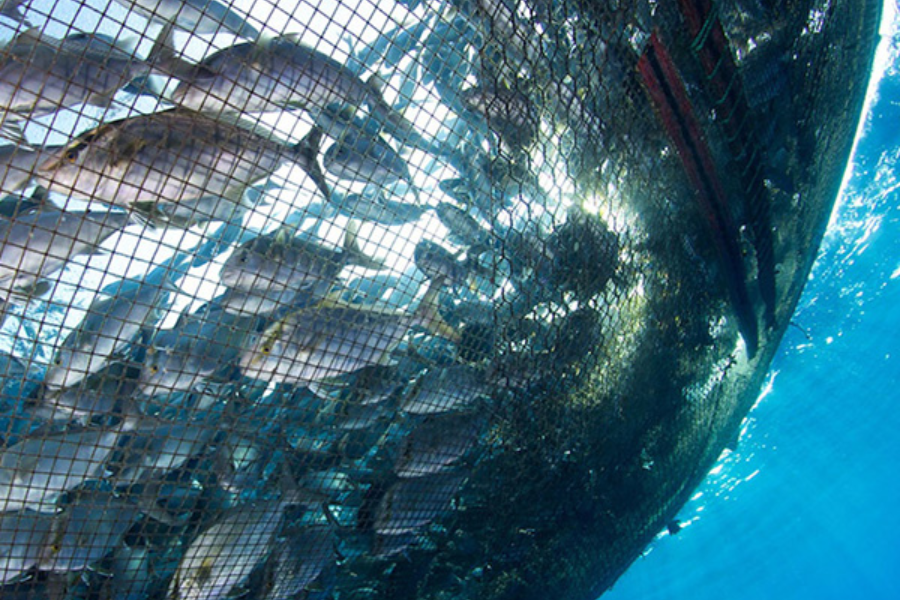
India’s fisheries suffer US$ 2.2 bn blow from wastewater
India is facing a severe environmental and economic crisis due to untreated wastewater polluting its rivers and oceans. A recent global study has revealed that this pollution costs India’s fisheries sector over US$ 2.2 billion annually, while also threatening public health, agriculture, and food security. India’s fisheries sector suffers an annual loss of US$ 2.2 billion, primarily due to water pollution caused by untreated sewage contaminating rivers and coastal areas, according to a recent study unveiled at the World Ocean Summit in Japan. The report, jointly published by the Ocean Sewage Alliance and Back to Blue, assessed the financial impact of poor wastewater management in five countries—India, Brazil, Kenya, the Philippines, and the UK. Among these nations, India faces the steepest economic blow, losing 5.4% of its fisheries’ value each year. As a major seafood exporter, the country’s polluted waters not only threaten domestic fish supply but also disrupt global seafood markets. The problem extends beyond fisheries. The report revealed that India incurs an additional US$ 246 million annually in healthcare expenses linked to diarrheal illnesses caused by contaminated drinking water. With only 21% of its wastewater currently treated, India’s public health and food systems remain vulnerable to widespread pollution. Agriculture also bears the brunt. Nearly 10% of farmland in developing countries, including India, uses untreated wastewater for irrigation. This water often carries harmful levels of heavy metals such as zinc, chromium, and iron. While nutrients like nitrogen and phosphorus in wastewater can temporarily boost crop yields, prolonged use damages soil health and reduces long-term productivity. Experts highlighted the urgent need for infrastructure upgrades and policy reforms. Amelia Wenger, who leads the Water Pollution Programme at the Wildlife Conservation Society, emphasized that failure to act comes at a high cost. “Investing in effective sewage systems is the only viable way forward,” she said. Nitin Bassi, Senior Programme Lead at the Council on Energy, Environment, and Water (CEEW), added that improving wastewater treatment could also help combat India’s growing water scarcity. “Capturing, treating, and reusing wastewater enhances both water quality and availability,” Bassi noted. The report also outlined alternative approaches to address the issue. Decentralized wastewater treatment facilities, especially in rural and peri-urban areas, could serve as effective local solutions. In addition, repurposing treated wastewater for uses like organic fertilizer production, biogas generation, or even renewable energy offers sustainable benefits. With escalating environmental and economic consequences, the study urged India to prioritize investments in wastewater management. Experts agree that strengthening infrastructure and embracing innovative treatment methods will not only protect public health and agriculture but also revive India’s critical fishery sector.

From cane to clean: India’s ethanol push reshapes sugar trade
India lifted restrictions on sugar exports this year in January, allowing millers to ship one million tonnes during the 2024-25 season (October-September). This move is expected to benefit 5 crore farmer families, 5 lakh workers. Additionally, it will improve the liquidity of sugar mills, ensuring timely cane payments while maintaining price stability and adequate supply for consumers. India’s decision to allow sugar exports comes when stocks are expected to fall this season following crop problems. Earlier, India exported over 6 MT of sugar in the 2022-23 season and since then the government had not allocated any quota for sugar export. Sugar plays a vital role in food processing, particularly in baking and food production. Common types of white sugar include granulated, caster, icing, and jam-setting sugar. With the rising global demand for sugar, countries like India and Brazil have emerged as leading suppliers of sugar. India is a major producer, consumer, and exporter of sugar and its related products. As the world’s second-largest sugar exporter, India’s success is attributed to strong production standards and favourable agricultural policies. Additionally, increasing global sugar demand, especially in Southeast Asia and Africa, has further boosted India’s sugar exports. Among others, India exports sugar to Indonesia, Bangladesh and the United Arab Emirates. Rising from US$ 1.97 billion in 2019, India’s sugar exports reached US$ 6.32 billion in 2022. Subsequently, due to concerns over a reduced harvest caused by erratic monsoon rainfall and the need to regulate domestic prices, India extended its sugar export ban, initially imposed in June 2022, beyond October 2023. Consequently, the sugar exports witnessed a decline in the year 2023. Major export destinations in the year 2023 included Sudan (US$ 655.52 Million), Bangladesh (US$ 393.03 Million), Sri Lanka (US$ 322.46 Million), Somalia (US$ 233.74 Million), and Djibouti (US$ 229.27 Million). For the 2023–24 marketing year (October–September), India had restricted sugar exports to stabilize retail prices and boost domestic supply. This decision aligned with the government’s efforts to maintain affordability for local consumers. However, exports to the US and the European Union remained exempt under the TRQ quotas and concessions issued in 2023. Despite the restrictions, India’s sugar exports reached nearly 3 million metric tons in the fiscal year 2024. As of July 17, 2024, India leads the world in sugar exports with 69,781 shipments, followed by Ukraine with 157 shipments and China in third place with 147 shipments. In January 2025, the government decided to allow exports of 1 million metric tons of sugar during the current season. This decision seeks to help sugar mills reduce their surplus stock, stabilize domestic prices, and supporting the sugar industry amid declining local rates. “Export quotas of 1 MT have been pro-rated amongst those sugar mills which operated in at least one sugar season amongst the last three sugar seasons by taking into account their average production of sugar during the last three operational sugar seasons — 2021-22, 2022-23 and 2023-24,” as per the notification by Ministry of Consumer Affairs, Food & Public Distribution. According to Industry sources, “the central government has approved the export of 10 lakh tonnes of sugar for the 2024-25 season, with deals finalized for 5 lakh tonnes and 2 lakh tonnes already exported. This move has benefited sugar mills, as export prices have reached Rs 44,000 per tonne. Export deals are being made at this price, with Maharashtra mills leading the exports. Sugar is being shipped to nearly a dozen countries, including African nations, Afghanistan, and Sri Lanka. With an additional 3 lakh tonnes of deals finalized, active price negotiations by mills have driven rates up. As a result, many sugar mills in Maharashtra are expected to offer farmers payments exceeding the Fair and Remunerative Price (FRP) for sugarcane this season.” However, the decision to allow sugar export comes amid declining sugar production and the government’s push to expand ethanol production, aligning with its broader energy independence goals. Why sugar production is declining? Sugar is an essential item under the government’s classification of commodities and is a controlled item. Around 90% of the sugar produced in the country is used in commercial food products like biscuits and beverages. In the 2025 season, India’s sugar production is expected to witness a significant decline, with estimates falling below 27 million metric tons (MMT), down from 31.8 MMT in the previous year, according to a report by Centrum. This marks a sharp 12% drop in output, primarily due to the increased diversion of sugarcane for ethanol production and reduced cane availability across key producing states. As of January 31, 2025, India’s sugar production has declined to 16.5 MMT, compared to 18.8 MMT during the same period last year. The All-India Sugar Trade Association (AISTA) has revised its closing stock estimate to 4.5 million tonnes as of September 30, 2025. If this projection holds, it will mark the first time in many years that carryover stocks from one season to the next will fall below the two-month domestic consumption requirement. AISTA also highlighted that net sugar production includes the diversion of around 4 million tonnes of sucrose for ethanol production. The industry estimates the October-November demand at 4.8-5 million tonnes, driven by festival consumption. Maharashtra has witnessed a sharp decline in sugarcane availability, falling nearly 15% year-on-year, which has significantly affected overall sugar production. Farmers in the state have reported lower yields due to irregular rainfall and crop flowering issues. AISTA noted that many sugar factories in Maharashtra are likely to close early, as crushing capacities have increased considerably even though the number of operational mills is lower than last year. According to AISTA Chairman Praful Vithalani, the decline in sugar production in Uttar Pradesh this season is primarily due to the spread of red rot disease in the western region and flooding in the eastern region, along with lower cane polarisation (POL), resulting in reduced sugar recoveries. State-wise data reveals that sugarcane crushing across the country has declined by 3.9% year-on-year, totaling 186 MMT by the end of January, compared to 193
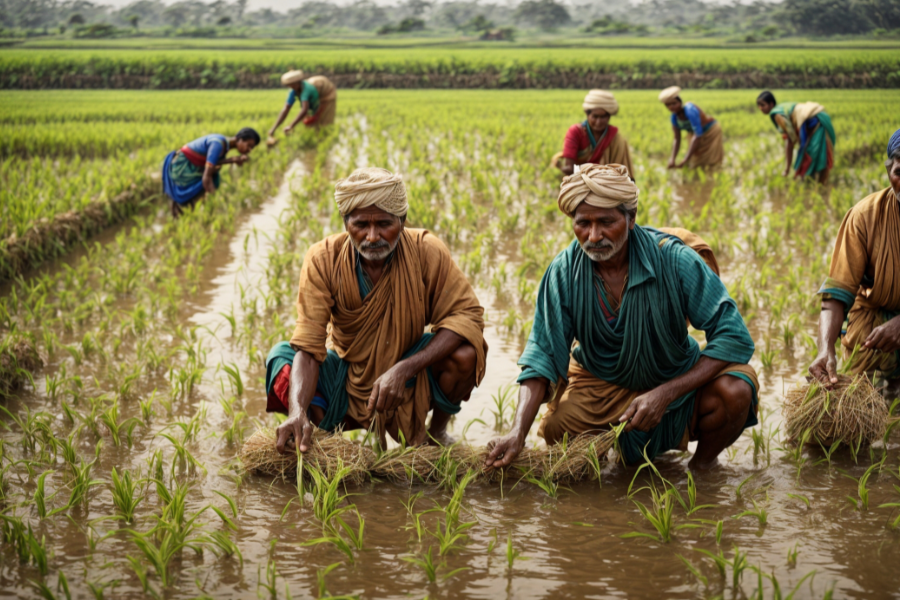
Rethinking rice: A shift to climate-resilient crops
A recent study published in Nature Communications highlights that shifting from rice cultivation to alternative cereals like millets, maize, and sorghum can enhance farmers’ incomes while reducing climate-induced production losses by up to 11%. Conducted by experts from the US, India, and Italy, the research emphasizes that farmers’ crop choices are closely tied to price fluctuations, and economic incentives could accelerate this transition.The study also calls for policy reforms, including revised pricing structures and support for climate-resilient crops, to ensure a more sustainable and profitable agricultural system in India. A recent study published in Nature Communications highlights that shifting from rice cultivation to alternative cereals like millets, maize, and sorghum can enhance farmers’ incomes while reducing climate-induced production losses by up to 11%. Conducted by experts from the US, India, and Italy, the research emphasizes that farmers’ crop choices are closely tied to price fluctuations, and economic incentives could accelerate this transition. The study also calls for policy reforms, including revised pricing structures and support for climate-resilient crops, to ensure a more sustainable and profitable agricultural system in India. Challenges in rice cultivation in India Traditional rice farming in India is becoming increasingly unviable due to economic and environmental challenges. Farmers, particularly smallholders, face high production costs, mounting debts, and fragmented landholdings, making rice cultivation less profitable. Poor irrigation facilities in several regions force reliance on unpredictable monsoons, adding to production risks. The unavailability of quality seeds, limited access to modern equipment, and inadequate storage facilities further hinder productivity. Many farmers continue to use traditional tools, increasing labor costs while restricting efficiency. Additionally, weak market linkages and inefficient transportation networks prevent them from securing fair prices, often compelling them to sell their produce at lower rates to intermediaries. Shift to alternate crops Published in Nature Communications, the study suggests that reallocating rice-growing areas to climate-resilient cereals could reduce production losses by up to 11%. These crops, which require less water and withstand erratic weather better than rice, also offer higher profitability in the long run. Given that farmers’ sowing decisions are driven by market prices, the study suggests that economic incentives could accelerate this transition. Conducted jointly by institutions from the US, India, and Italy, the research underscores that Indian farmers traditionally prefer rice due to its economic advantages. However, climate change has significantly impacted rice production, making it less reliable. In contrast, alternative cereals such as millets, maize, and sorghum exhibit higher resilience to climate fluctuations and hold strong economic potential. According to Dongyang Wei, lead author of the study, “Our research shows that by strategically reducing rice cultivation and increasing cultivation of alternative grains, India can achieve greater stability in grain production and reduce the cost of farmers. This can improve profitability. And this can be achieved without affecting overall calorie production.” The study highlights that current pricing structures often favor rice cultivation due to government support policies. Addressing this imbalance through well-designed crop pricing schemes and incentives for climate-resilient cereals could encourage farmers to diversify their crop choices. The research was conducted by Dongyang Wei and Kyle Frankel Davis from the Department of Geography and Spatial Sciences, University of Delaware; Leslie Guadalupe Castro from Columbia University’s Department of Ecology, Evolution, and Environmental Biology; Marta Tuninetti from the Department of Environment, Land, and Infrastructure at Politecnico di Torino, Italy; and Ashwini Chhatre from ISB. Given India’s heavy reliance on rice and the growing unpredictability of climate conditions, these findings provide valuable insights for policymakers seeking to build a more resilient and sustainable agricultural system.
Race to 600 GW: Can India power its future without fossil fuels?
India is facing a growing energy demand challenge, driven by rapid consumption and rising temperatures. To meet this surge sustainably and affordably, the country must scale up its non-fossil-fuel energy capacity to 600 GW by 2030, according to a new report by the Council on Energy, Environment and Water (CEEW). The report highlights the economic, environmental, and social benefits of a high renewable energy pathway while warning of potential power shortages if targets fall short. India must significantly ramp up its non-fossil-fuel energy capacity to 600 GW by 2030 to meet rising electricity demand reliably and affordably, according to a new report by the Council on Energy, Environment and Water (CEEW). This target would include an estimated 377 GW of solar power, 148 GW of wind, 62 GW of hydropower, and 20 GW of nuclear energy. The report highlights that falling short of this goal could leave portions of power demand unmet. If India only achieves 400 GW of non-fossil capacity, around 0.26% of electricity demand may go unfulfilled, prompting the need for an additional 10 GW of coal-based power and significant transmission infrastructure upgrades. Even reaching 500 GW would not eliminate shortages, about 0.32% of demand would still remain unserved, requiring further coal investments. The urgency is amplified by the prospect of higher-than-expected demand growth. If electricity demand rises at a compound annual growth rate (CAGR) of 6.4%, as opposed to the projected 5.8%, then existing and planned generation capacity will fall short. In this scenario, India would face increasing strain on its power systems, and fossil-fuel-based solutions would become necessary to bridge the gap. CEEW’s analysis recommends the 600 GW renewable energy pathway as the most economically viable option. This strategy would reduce the cost of electricity by 6 to 18 paise per unit, potentially saving between ₹13,000 crore and ₹42,400 crore by 2030. In addition to economic benefits, this transition could create 53,000 to 100,000 additional jobs and slash carbon emissions and air pollutants by 13% to 23%, making it a socially and environmentally beneficial move. Meanwhile, India’s energy needs continue to surge. Unseasonably high temperatures in February 2025 drove peak solar-hour demand to 238 GW, surpassing projections and last year’s peak of 222 GW. Electricity consumption in the month rose 6% year-on-year to 79.3 billion units. Government estimates suggest that March could see peak solar-hour demand rise further to 240 GW, while non-solar hours could reach 223.1 GW. However, electricity generation is not keeping pace with demand. In 2024, power production rose only 5.8%, its slowest rate since the pandemic—reaching 1,824.13 billion kWh. This lag reflects a broader economic slowdown, with India’s GDP growth hitting a two-year low in the second quarter of 2024. As power consumption grows amid sluggish generation, scaling up renewable energy becomes not just necessary, but urgent, to meet the country’s future energy needs sustainably.
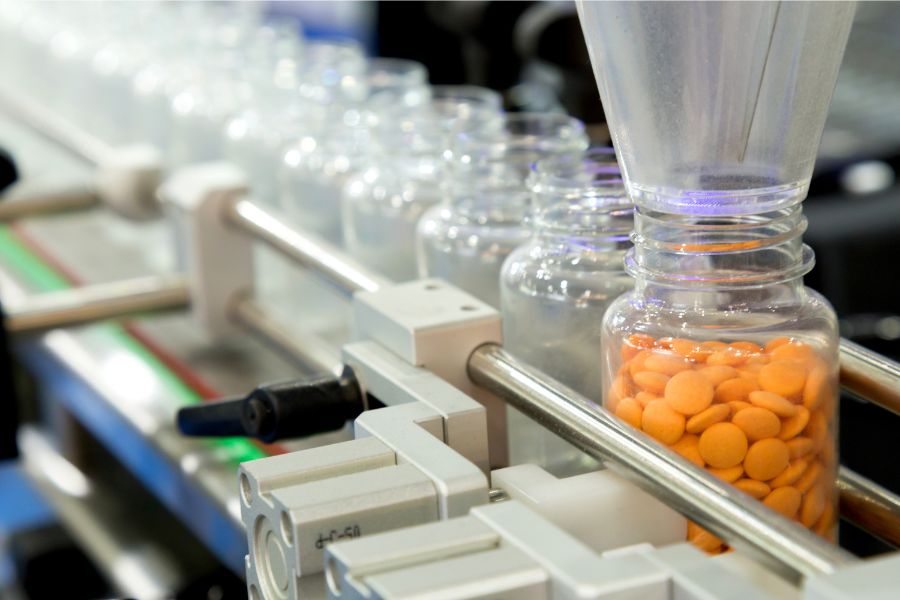
Department of Pharmaceuticals invites EoIs under the PRIP scheme
The Department of Pharmaceuticals has called for Expressions of Interest (EoIs) from interested entities (including proprietary firm or partnership firm or limited liability partnership, startups or a company /Group of companies registered in India) for project funding under the PRIP scheme, which is designed to position India as a global leader in pharmaceutical and MedTech R&D. Launched on August 17, 2023, the scheme has a total budget of ₹5,000 crore, with ₹4,250 crore specifically allocated for research and development initiatives. The EoIs must be submitted in digital format, with the final deadline for submission being April 7, 2025. The Indian Pharma MedTech sector is set to undergo a profound transformation. The Department of Pharmaceuticals has invited Expressions of Interest (EoIs) from interested entities for project funding under the Promotion of Research and Innovation in Pharma MedTech (PRIP) scheme. This initiative aims to position India as a global leader in research and development within the Pharma MedTech sector. The notification issued by Department of Pharmaceuticals (DOP) stated, “this EoI is issued for the sole purpose of obtaining preliminary information from interested entities regarding their potential participation under Component B of the PRIP scheme. At this EoI stage, the information provided will NOT be used for evaluating the entity/ project. Formal call for applications will follow soon.” Launched by the Department of Pharmaceuticals on August 17, 2023, the PRIP scheme has a total financial outlay of ₹5,000 crore, with ₹4,250 crore specifically allocated to boost R&D investments in the sector. The DoP has invited Expressions of Interest (EoIs) from interested entities—including proprietary firms, partnership firms, limited liability partnerships, startups, or companies/groups of companies registered in India—for project funding under the PRIP scheme. It stated, “This EoI has been designed to provide you with an opportunity to co-shape India’s journey towards becoming an R&D innovation hub, by soliciting your inputs.” The PRIP scheme According to the Ministry of Chemicals and Fertilizers, the PRIP (Promotion of Research and Innovation in Pharma-MedTech) is a Research Linked Incentive (RLI) scheme designed to transform the Indian pharmaceutical sector from cost-driven to innovation-led growth. The scheme focuses on strengthening the country’s research ecosystem, fostering industry-academia collaboration in key research areas, and promoting a culture of high-quality research. With a total budget allocation of ₹5,000 crore, the scheme is divided into two components: Component A: ₹700 crore is allocated for the establishment of seven Centres of Excellence (CoEs) at NIPERs (National Institutes of Pharmaceutical Education and Research) in specific, pre-identified domains. Component B: ₹4,250 crore is designated to support research initiatives in the pharmaceutical and MedTech sectors. In the recent Union Budget for FY 2025-26 the Ministry of Finance has allocated ₹250 crores towards the PRIP scheme. Key Funding Priorities Under the PRIP scheme, the six priority areas that are eligible to receive the funds include- new chemical entities; Complex generics and Biosimilars; Precision medicine; Medical devices; Orphan Drugs and; Drug development for AMR. According to the department’s order, R&D projects aligned with one or more priority areas will be eligible for funding of up to 35% of the total project cost or ₹125 crore, whichever is lower. To qualify, the applying entity must have an annual revenue of less than ₹1,000 crore for pharmaceutical companie s or ₹250 crore for MedTech firms. The Expressions of Interest (EoIs) must be submitted in digital format, with the final submission deadline set for April 7, 2025.
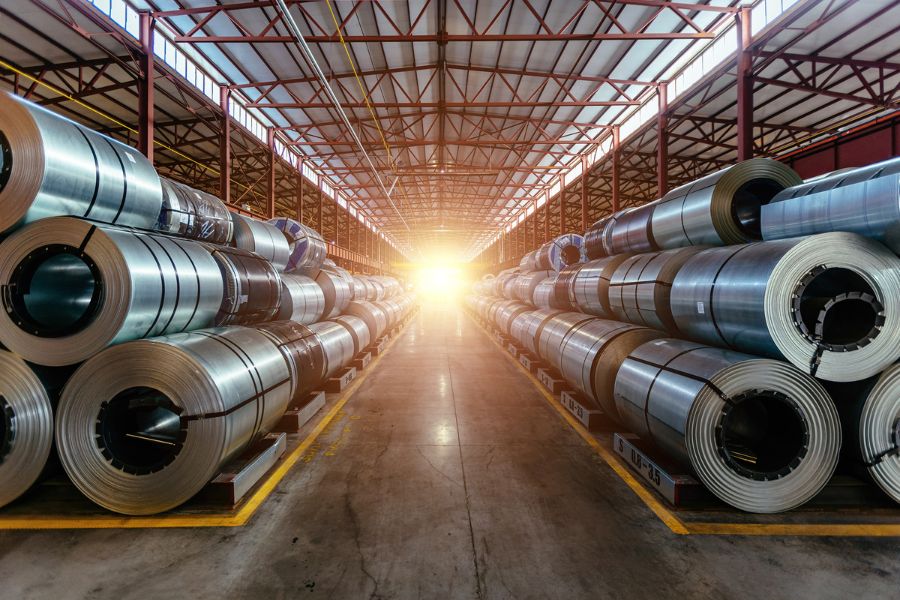
India’s steel imports hit record high amid supply constraints
India’s finished steel imports from China, South Korea, and Japan surged, turning the country into a net importer. Rising demand, fueled by infrastructure projects and urban expansion, contrasts with slow domestic supply growth. Imports from major Asian exporters soared, while India’s steel exports dropped to a seven-year low. The government is exploring safeguard duties to manage increasing imports. India’s finished steel imports from China, South Korea, and Japan reached a record high in the first ten months of the financial year, according to provisional government data reviewed by Reuters. As the world’s second-largest crude steel producer, India saw a surge in finished steel imports between April and January, making it a net importer during this period, as previously reported by Reuters. Key drivers of rising steel demand The growing demand for steel is primarily driven by an increasing shift toward metal-intensive construction in residential and infrastructure projects. Modern buildings and large-scale developments are reshaping the industry, reinforcing steel’s role as a key material for long-term economic expansion. Government-led initiatives, such as the Pradhan Mantri Awas Yojana (Housing for All) and the Gati Shakti Master Plan, are expected to be major catalysts for this growth. These programs aim to accelerate urban development and infrastructure expansion, boosting steel consumption in roads, bridges, housing, and public facilities. Beyond infrastructure, several industries are fueling steel demand. Sectors like engineering, packaging, and industrial manufacturing are relying more on steel for production, driven by the need for durable and high-performance materials. Analysts also highlight rapid urbanization as a key factor. As cities expand and modernize, the demand for sustainable and long-lasting construction materials continues to rise. The shift toward eco-friendly and resilient structures has strengthened steel’s position as a preferred material for builders and developers, ensuring its continued significance in construction and manufacturing. Challenges in domestic steel supply Despite strong demand, India’s domestic steel supply faces persistent challenges. Analysts report that while Indian steel plants recorded a 5.2% year-on-year increase in supply in 2024, production was hampered by prolonged periods of planned and preventive maintenance. The country’s seven largest steel producers saw almost no growth, with total steel production rising by just 0.05% year-on-year. Rolled steel output grew marginally by 0.5%, reflecting limited capacity expansion. In contrast, medium and small steel manufacturers outperformed larger players, registering a 4% rise in overall steel production and an impressive 11.3% increase in rolled product output. Surge in imports from key Asian exporters Imports from South Korea, India’s largest supplier of finished steel, totaled 2.4 million metric tons, an 11.7% increase from the previous year. Steel shipments from China stood at 2.3 million metric tons, reflecting a 3.4% year-on-year rise. Meanwhile, Japan’s finished steel exports to India surged to 1.8 million metric tons—an 88.6% jump from the previous year. Collectively, imports from these three countries accounted for 78% of India’s total finished steel imports. Additionally, steel imports from Indonesia surged nearly threefold year-on-year, reaching 0.3 million metric tons. Among imported steel products, hot-rolled coils or strips dominated, while bars and rods led shipments in the non-flat steel category. Government response and declining steel exports In December, India launched an investigation to determine whether a safeguard duty or a temporary tax was necessary to curb the surge in steel imports. Last month, Steel Minister H.D. Kumaraswamy stated, “The government could impose a safeguard duty of 15% to 25% on steel imports.” While imports continued to rise, India’s finished steel exports fell to their lowest level in at least seven years during April-January. Italy, the country’s top export destination for finished steel, saw shipments nearly halve during the period. Exports to Belgium, Nepal, and Spain also declined, according to government data.
Omnivore backs agri-tech startups to transform farming
Omnivore, an agritech venture capital firm, is set to increase its investments in FY26, targeting startups that create specialized hardware solutions for key agricultural challenges. The firm plans to invest in 4-6 new startups, with funding amounts between US$2 million and US$ 7 million. It sees strong potential in startups advancing precision farming, water management, and sustainable agricultural practices. India’s agritech sector has seen rapid growth, driven by digital adoption, supply chain shifts, rising consumer demand, and increased funding. Omnivore, an agri-tech venture capital firm, plans to increase investments in FY26, focusing on start-ups developing specialized hardware for agricultural challenges. The firm plans to make 4-6 new investments, with cheque sizes ranging from US$ 2 million to US$ 7 million. It is particularly optimistic about start-ups driving innovation in precision farming, water management, and sustainable agricultural practices. In FY25, the firm made nine investments from its third fund, the Omnivore Agritech & Climate Sustainability Fund. Mark Kahn, managing partner at Omnivore stated, “Advanced domestic manufacturing capabilities are accelerating the development of scalable solutions, positioning these innovations as strategic interventions for food security and climate resilience. Within our portfolio, Ecozen and Niqo Robotics are developing climate-smart technologies that enhance agricultural efficiency and productivity.” Having raised US$ 150 million for the fund’s first close in June 2023, Omnivore aims to support 25-30 Seed and Series A agritech startups and MSMEs. The fund, launched in April 2022, has secured backing from investors including KfW, Self Reliant India (SRI) Fund, FMO, SIFEM, International Finance Corporation (IFC) with support from the Bill & Melinda Gates Foundation, Inclusive Agritech Facility, Louis Dreyfus Company Ventures, and the Dutch Good Growth Fund (DGGF). Additionally, Omnivore recognizes India’s manufacturing resurgence as a significant investment opportunity. Beyond its traditional strength in low-cost production, India’s manufacturing sector is being driven by strategic government policies, robust technological infrastructure, and a thriving startup ecosystem. With emerging technologies and a highly skilled workforce, the country is rapidly positioning itself as a global manufacturing hub. (Omnivore, an India-based impact venture capital firm, funds entrepreneurs driving innovation in agriculture and food systems. A pioneer in agri-tech investing, Omnivore has backed over 40 start-ups since 2011 and currently manages Rs. 24 billion (around US$ 300 million) across three funds. As a “financial-first” impact investor, the firm aims at positively transforming the lives of smallholder farmers and rural communities. Through its portfolio companies, Omnivore fosters agricultural prosperity, enhancing profitability, resilience, sustainability, and climate adaptability in India’s farming sector.) Agri-tech in India AgriTech (agricultural technology), refers to the application of technology in farming and agriculture to enhance productivity and efficiency across various value chains. It encompasses advanced innovations that are driving the ‘fourth agricultural revolution,‘ much like the Industry 4.0 movement, shaping the future of the sector. In India, AgriTech has witnessed rapid growth, with startups leveraging digital solutions such as precision farming, quality management, production optimization, supply chain integration, market linkages, and digital traceability, among others. Over the past three years, the Agri-Tech industry has experienced an impressive tenfold expansion, driven by four key factors: increasing digital penetration across India, supply chain disruptions caused by COVID-19, rising consumer demand for high-quality agricultural produce, and growing investment from private equity and venture capital firms. The Indian agritech sector is thriving, with start-ups revolutionizing farming through– organic methods, equipment rentals, integrated supply chains, and cloud-based analytics. Furthermore, the advanced technologies including big data, IoT, AI, drones, and machine learning are enhancing decision-making, precision farming, and insurance evaluations. As of December 31, 2023, nearly 2,800 Agri-Tech start-ups have been recognized by Start-up India. These start-ups are regarded as a “ray of hope,” fostering innovation and transforming traditional agricultural practices in India. From 2014 to 2024, Agri-Tech start-ups in India secured 116 seed-stage funding deals, raising approximately US$146 million. In comparison, funding deals at the growth and late stages were significantly fewer. Over this period, Indian Agri-Tech start-ups raised a total of around US$2.4 billion. Recognizing the potential of Agri-Tech, the Indian government actively supports start-ups through financial and technical assistance under the “Innovation and Agri-Entrepreneurship Development” program, part of the Rashtriya Krishi Vikas Yojana (RKVY). Since 2018, this initiative has played a crucial role in fostering the startup ecosystem, with 5 Knowledge Partners and 24 RKVY Agribusiness Incubators mentoring and incubating Agri-Tech start-ups. (Between 2019-20 and 2023-24, Rs. 111.57 crores were distributed to 1,554 Agri-Tech start-ups.) India’s agri-tech sector is poised for significant growth, with nearly 10,000 startups expected by 2030. This rapid expansion is expected to generate millions of jobs in rural areas while enhancing agricultural productivity and sustainability. With sustained government support and increasing private investment, the adoption of agri-tech solutions is set to accelerate further.