From heritage to modern luxury: India’s diamond market evolves

India’s diamond jewellery market is entering a dynamic phase of growth, driven by strong economic fundamentals and evolving consumer behaviour. According to the De Beers Group’s 2025 India Diamond Acquisition Study (DAS), the natural diamond jewellery (NDJ) market is projected to reach ₹1,50,000 crore by 2030, expanding at a robust pace.

Rising incomes, greater financial independence among women, and changing preferences among younger consumers are emerging as key drivers of growth. Notably, millennials and Generation Z already account for 86% of market value, reflecting a generational shift in demand. The DAS also points to growing adoption beyond metro cities and a rise in self-purchase trends, indicating that natural diamonds are increasingly seen as symbols of personal expression, not just traditional investment or bridal assets.
India's diamond market_TPCI

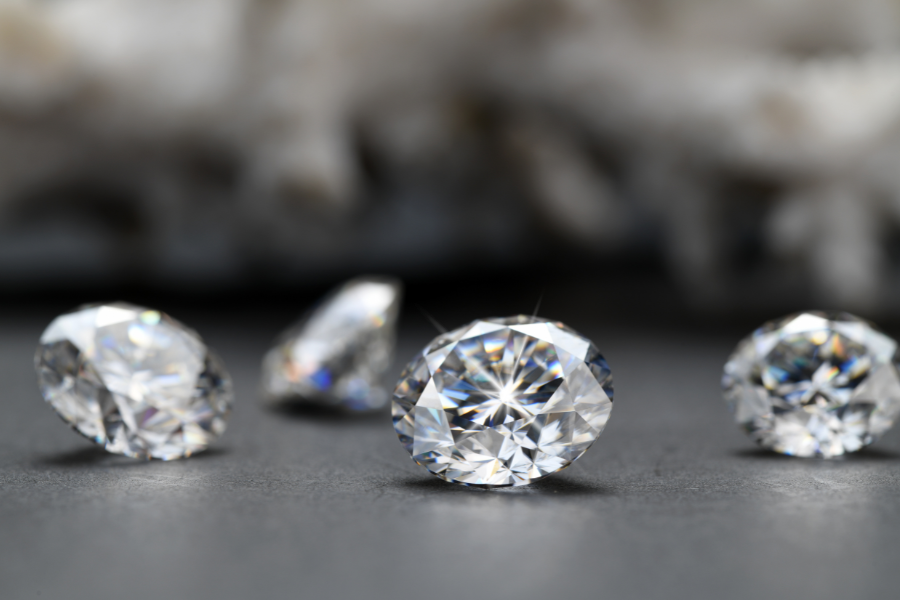
Diamonds are among the most prized gemstones globally, valued for their exceptional brilliance, strength, and rarity. They are widely used across multiple sectors, including jewellery—such as rings, necklaces, and earrings—particularly in weddings and high-end fashion. Beyond adornment, diamonds play an important role in industrial applications like cutting, drilling, and polishing due to their unmatched hardness, as well as in technology for precision instruments and electronics.

While the global diamond market is evolving with the growing presence of lab-grown alternatives, natural diamonds continue to retain strong emotional and investment appeal.

Consumer preference for natural diamonds in India

Natural diamonds continue to enjoy strong favour among Indian consumers, with recent trends showing that their appeal remains intact despite the increasing presence of lab-grown alternatives. This is largely due to the cultural and emotional significance attached to natural diamonds in India, where they are associated with heritage, investment, and lasting value, particularly in bridal jewellery.

Industry experts note that buyers perceive natural diamonds as rare and authentic, unlike lab-grown stones, which are seen as mass-produced. Although lab-grown diamonds are more affordable, natural diamonds continue to be favoured for their-

  • Perceived rarity,
  • Stronger emotional and resale value, and
  • Importance in weddings and heirloom pieces.

In the Indian market, lab-grown diamonds are typically viewed as fashion accessories rather than true substitutes. Additionally, declining global prices of lab-grown diamonds have raised concerns about their long-term value, further reinforcing the appeal of natural diamonds as a more enduring asset.

India’s natural diamond jewellery market enters high-growth phase

India’s natural diamond jewellery market is poised for significant expansion, with its value projected to reach Rs 1,50,000 crore by 2030, according to De Beers Group’s 2025 India Diamond Acquisition Study (DAS). The report highlights that strong macroeconomic fundamentals, including an anticipated 11% annual growth in GDP and personal disposable income (PDI), are driving this upward trajectory and placing the sector firmly in a high-growth phase. This growth reflects a broader structural transformation within the domestic market.

Natural diamonds are increasingly moving beyond their traditional association with bridal heirlooms and are emerging as a preferred choice for everyday wear. The shift is being fuelled by changing consumer dynamics, particularly the rising financial independence of women and evolving preferences among millennials and Generation Z.

Importantly, demand is no longer confined to metropolitan centres. Tier II and III cities are becoming key growth drivers, supported by rising aspirations, improved access to luxury products, and expanding retail networks.

India’s long-standing relationship with natural diamonds is thus evolving into a more contemporary and expressive form. As disposable incomes rise, consumers are placing greater emphasis on authenticity, rarity, and emotional value. This transformation not only strengthens the domestic market but also reinforces India’s position as a central force in the global diamond industry.

Global market presence and consumer patterns

India has emerged as the second-largest diamond jewellery market globally, accounting for 12% of global demand, up from 10% in 2019, and trailing only the United States at 53%. It has surpassed both China and Japan, each holding 5%. The country’s natural diamond jewellery (NDJ) market is currently valued at ₹785 billion, reflecting steady expansion supported by rising incomes and changing consumer behaviour.

As per the report (2025 De Beers India Diamond Acquisition Study (DAS)), the share of Indian women owning natural diamond jewellery has risen to 15%, compared to 11% in 2022, while the annual acquisition rate has remained steady at 3%. The addressable market includes around 67 million women across SEC A/B segments in Tier 1–5 cities, with an average spend of approximately US$ 1,700 (₹1.4 lakh) per diamond piece.

Looking ahead, the number of households earning above US$ 20,000 annually is projected to grow by 16%, doubling from 32 million in 2025 to 67 million by 2030, which is expected to significantly boost luxury consumption.

The report indicates that demand for natural diamond jewellery is expected to grow at a strong CAGR of 12% between 2024 and 2030. A key driver of this growth is the increasing influence of younger consumers. Generation Z (aged 18–28) contributes 51% of total market value, driven by higher acquisition rates and the highest average spending per piece at ₹1.98 lakh, while Millennials (aged 29–44) account for 35%, together controlling 86% of the market value.

Geographically, while Tier 1 and Tier 2 cities continue to generate over half of the market value, Tier 3–5 cities are gaining importance, indicating deeper market penetration. The affluent SEC A segment dominates consumption, accounting for 66% of total market value.

Consumer behaviour has also evolved significantly over time. Diamonds are no longer reserved for special occasions—52% of acquired jewellery is now worn daily, compared to just 27% earlier, while occasion-only usage has dropped sharply to 10%. Additionally, outside weddings, 64% of diamond jewellery is self-purchased, often to mark personal milestones or for self-indulgence.

The wedding segment remains a major contributor, accounting for 29% of total market value, with 79% driven by self-purchasing brides.

However, affordability continues to be the primary barrier to purchase, cited by 24% of non-buyers, followed by a preference for gold at 19%.

Lab-grown diamonds (LGDs) are gaining traction but remain a complementary segment rather than a substitute. In 2024, LGD jewellery accounted for over 20% of total diamond market value, with an acquisition rate of 1.0. The average price of an LGD piece stands at ₹1.04 lakh, about 26% lower than natural diamonds. LGD demand is concentrated among affluent households (88%) and Tier 1 cities (60%), with Delhi and Mumbai contributing 39% of the market value. Overall, while LGDs are growing, natural diamonds continue to dominate India’s evolving diamond landscape.

India’s global diamond footprint

India’s association with diamonds dates back to ancient times, with evidence suggesting that mining and polishing activities began as early as 500 BCE. It plays a pivotal role in the global diamond industry, accounting for nearly 75% of the world’s polished diamond exports. This dominance is driven by the country’s extensive network of diamond cutting and polishing centres, supported by a highly skilled workforce.

Over the centuries, Indian diamond traders have expanded their reach across global markets via land, sea, and air, building deep expertise and establishing a strong presence in major trading hubs. At present, global diamond trading is largely centred in key hubs such as Dubai and Antwerp, where Indian businesses have built a strong and influential presence.

As per a report by Grand View Research, India held a 7.9% share of the global diamond market in 2024, with the domestic market generating US$ 3,264.2 million in revenue during the year. The report further highlights that India’s diamond market is expected to reach US$ 4,053.3 million by 2030, growing at a compound annual growth rate (CAGR) of 3.7% from 2025 to 2030.

India’s export basket in the diamond sector is largely driven by cut and polished diamonds, with a growing share contributed by lab-grown (synthetic) diamonds. However, during April 2025 to February 2026, exports of cut and polished diamonds declined to US$ 11,321.07 million from US$ 12,135.83 million in the corresponding period of the previous year (Apr-2024 February 2025), registering a year-on-year contraction of 6.71%. Similarly, polished lab-grown diamonds also witnessed a decline, falling to US$ 1,037.48 million from US$ 1,134.81 million, reflecting a sharper drop of 8.58% over the same period.

 Conclusion

India’s diamond market is transitioning into a sustained high-growth phase, driven by rising disposable incomes, evolving consumer behaviour, and enduring cultural value attached to natural diamonds. While lab-grown alternatives are expanding, they remain complementary rather than disruptive. The shift toward everyday wear, self-purchasing, and growing demand beyond metros signals market maturation. Coupled with India’s global leadership in diamond processing, these trends position the country not only as a key consumption hub but also as a decisive force shaping the future dynamics of the global diamond industry.

 Read more

India Diamond Market Size & Outlook, 2025-2030

FAQ

  1. Why do Indian consumers prefer natural diamonds over lab-grown diamonds?
    Indian consumers favour natural diamonds due to their cultural significance, perceived rarity, and higher emotional and resale value. They are often associated with weddings, heritage, and long-term investment, unlike lab-grown diamonds, which are seen more as fashion accessories.
  2. What is the growth outlook for India’s diamond jewellery market?
    India’s natural diamond jewellery market is projected to reach around ₹1,50,000 crore by 2030, driven by rising incomes, increasing urbanisation, and changing consumer preferences.
  3. How are younger consumers influencing the diamond market in India?
    Millennials and Generation Z together account for a major share of demand, driving trends such as self-purchase, everyday wear, and preference for modern, lightweight jewellery designs.
  4. What role do smaller cities play in the diamond market’s growth?
    Tier II and III cities are emerging as key growth drivers due to rising aspirations, improved access to luxury products, and expanding retail networks beyond metro areas.
  5. How is India positioned in the global diamond industry?
    India is a major global hub, processing nearly 75% of the world’s polished diamonds and ranking as the second-largest diamond jewellery market, supported by a strong workforce and established trade networks.
Previous Post
Next Post

Most Recent Posts

  • All Post
  • 8th Pay Commission
  • Aadhar
  • Aditya Birla Capital
  • Advertising Standards
  • Affordable Housing
  • Agriculture
  • Agriculture & Food
  • AI in Healthcare
  • AI Technology
  • Airlines
  • alcohol industry
  • Android
  • APEDA
  • Apple
  • Artificial Intelligence
  • Ashwini Vaishnaw
  • Asset Management
  • Atmanirbhar Bharat
  • Audio Devices
  • Audio Products
  • Auto Industry
  • Automobile
  • Automobiles
  • Automotive
  • Automotive Industry
  • Aviation
  • Bain Healthcare Report 2026
  • Bank
  • Banking
  • Banking Technology
  • Battery Industry
  • Beverage Industry
  • Beverages
  • Bihar
  • biotechnology
  • Bitcoin
  • BMW Group India
  • Brand Insight
  • BRICS
  • Bullion Market
  • Business
  • Business & Economy
  • Business & Trade
  • Business Leadership Post COVID-19
  • Business News
  • Business Terminology
  • Business Utilities
  • Buyback
  • Capital Goods
  • Capital Markets
  • CarsBusiness
  • CBIC
  • CCI
  • Child Investment
  • China
  • China technology news
  • Citizen Services
  • Clean Energy
  • Clean Technology
  • Cloud Computing
  • coal
  • Commerce
  • Commerce and Industry
  • Commercial Real Estate
  • Commercial Vehicles
  • Commodities
  • Communications
  • Companies
  • Competition Law
  • Compliance
  • Computer Accessories
  • connected cars
  • Consumer Affairs
  • Consumer Electronics
  • Consumer Finance
  • Consumer Goods
  • Consumer Health
  • Consumer Markets
  • Consumer News
  • Consumer Protection,
  • Consumer Rights
  • Consumer Spending
  • Consumer Trends
  • Content Creation
  • Copper
  • Corporate
  • corporate affairs
  • Corporate Earnings
  • Corporate Governance
  • Corporate News
  • Corporate Social Responsibility
  • Cost of Living
  • Country
  • CRED
  • Credit Cards
  • CREDIT RATING
  • Crude Oil
  • Cryptocurrency
  • CSR
  • Culture
  • Currency
  • Customs Duty
  • Cyber Security
  • Cybersecurity
  • Dairy Industry
  • Data & Analytics
  • Defence
  • Delhi Government
  • Delhi-NCR
  • Demographics
  • Derivatives
  • DGCA
  • DGFT
  • DigiLocker
  • Digital Assets
  • Digital Economy
  • Digital Health India
  • Digital Identity
  • Digital India
  • Digital Infrastructure
  • Digital passport for robots
  • Digital Payments
  • Digital Platforms
  • digital services
  • Diplomacy
  • Dixon Technologies
  • DPIIT
  • E Commerce
  • E-commerce
  • E-Governance
  • Ease of Doing Business
  • Economic Growth
  • Economy
  • Edible Oil Industry
  • Editor Choice
  • EdTech
  • Education
  • Electric Mobility
  • Electric Vehicles
  • Electronics
  • Employment
  • ENERGY
  • Engineering
  • Entertainment
  • Environment
  • EPFO
  • Ethanol Economy
  • EV Industry
  • EV Technology
  • Exports
  • EXTER
  • Farmers
  • Fashion
  • FINANCE
  • Finance Ministry,
  • Financial Marketing
  • Financial Markets
  • Financial News
  • Financial Planning
  • Financial Results
  • Financial Services
  • Fintech
  • FnTech
  • Food & Beverage
  • Food & Beverages
  • Food Exports
  • Food Industry
  • Food Manufacturing
  • Food Processing
  • Food Regulations
  • food safety
  • Foreign Exchange
  • Foreign Investment
  • Foreign Policy
  • Foreign Trade
  • Forex Reserves
  • fssai
  • FTA
  • Fuel
  • Fuel Prices
  • Future Energy
  • Gadgets
  • Gadgets & Apps
  • Gaming
  • GDP
  • Generative AI Healthcare
  • Geopolitics
  • GI Products
  • Global Brand Alliance
  • Global Economy
  • Global Markets
  • Global Politics
  • Global Tech
  • Global Trade Policy
  • Global Trends\
  • Gold
  • Gold Market
  • Gold Prices
  • Gols & Silver
  • Government
  • Government & Policy
  • Government Affairs
  • Government Bonds
  • Government Data
  • Government Initiatives
  • Government Policy
  • Government Policy & Regulation
  • Government Scheme
  • Government Schemes
  • Government Services
  • Green Energy
  • Green Mobility
  • GroupGlobal
  • GST
  • GST Council
  • GST Counsil
  • Hair Care
  • Hardware
  • Hatchback Segment
  • Health Supplements,
  • Horticulture
  • Housing
  • HSBC
  • Human Resources
  • humanoid robot market
  • Hyundai
  • IBT Infographics
  • iinvestment
  • Imports & Exports
  • Income Tax
  • India
  • India Auto Market
  • India Business News
  • India Inc
  • India News
  • India Retail
  • India-Canada Relations
  • India-China
  • India-Japan Relations
  • India-Russia Relations
  • India-South Korea Relations
  • India-US Relations
  • Indian Economy
  • Indian Navy
  • Industrial Pollution
  • Inflation
  • Infra
  • Infrastructure
  • Innovation
  • Instagram
  • Insurance
  • international
  • International Affairs
  • International Cooperation
  • International Relations
  • International Trade
  • Internet & Connectivity
  • Internet Policy
  • Internet Regulation
  • Interview
  • Investing
  • Investment News
  • Investments
  • iPhone News
  • IPO
  • IT Industry
  • Jewellery
  • Jio Platforms
  • JioBlackRock
  • Jobs & Careers
  • Joint Ventures
  • Kim Kardashian
  • Labour
  • Latest
  • Launches
  • Leadership
  • Leaderspeak
  • Lending
  • Lifestyle
  • Lifestyle Tech
  • List
  • Loans & Credit
  • Local News
  • Logistics
  • LPG
  • Luxury Cars
  • Machinery
  • Macroeconomics
  • Macroeconomy
  • maharashtra
  • Maharashtra News
  • Make in India
  • Makhana
  • Managed Workspaces
  • Manufacturing
  • Market Outlook
  • Markets
  • Maruti Suzuki
  • Mergers & Acquisitions
  • Meta
  • Microsoft
  • Middle East
  • Mobile Apps
  • Mobile Industry
  • Mobile Launch
  • Mobility
  • Monetary Policy
  • Monsoon
  • MoSPI
  • MSME
  • Mutual Funds
  • Nano Tech
  • National
  • National news
  • NEET 2026
  • NewsElectric
  • NewsTata
  • NPCI
  • NPS Vatsalya
  • Office Market
  • Oil & Gas
  • Oil and Gas
  • Others
  • OTT
  • Packaged Drinking Water
  • Packaged Foods
  • Packaging Industry
  • Packaging Innovation
  • Passenger Vehicles
  • Paytm
  • Pension & Retirement
  • Pensions
  • Personal Care
  • Personal Finance
  • Perspectives
  • Petroleum
  • PFRDA
  • Pharmaceuticals
  • PM Modi
  • PMAY-G
  • PMAY-U
  • PMAY,
  • PMI
  • policy
  • Population
  • PORTS
  • Positive News
  • PPF
  • Precious Metals
  • Pricing
  • Product Labeling
  • Product Labelling
  • Product Launch
  • Property Market
  • PSU
  • PSU Banks
  • Public Health
  • Public Policy
  • Public Safety
  • Public Sector
  • Public Services
  • Public Welfare
  • Quarterly Results
  • Railways
  • Rajasthan
  • Raksha Bandhan
  • Raksha Bandhan Gifts
  • Rare Earths
  • Ratings Agencies
  • RBI
  • Real Estate & Realty Sector
  • Recycling
  • Regulation
  • Regulatory Action
  • Regulatory Affairs
  • Regulatory Updates
  • REIT
  • Reliance Industries
  • Renewable Energy
  • RERA
  • Research
  • Retail
  • Retirement Planning
  • Road Infrastructure
  • Robotics & Automation
  • robotics standards
  • Rupee
  • Rural Development
  • Rural Housing
  • SAIL
  • Salaries
  • Samsung
  • Savings
  • Science & Technology
  • Sebi
  • Security
  • Semiconductor
  • Semiconductors
  • Services Sector,
  • SHIPPING
  • Silver Prices
  • Skill Development
  • Skills Development
  • Small Business
  • Smart Devices
  • Smart Home
  • Smart Mobility
  • Smartphones
  • Social Impact
  • Social Media
  • Society
  • Software Development
  • Solar Energy
  • Space Technology
  • Startups
  • Statistics
  • Steel Industry
  • Stock Market
  • stocks
  • streaming
  • Sugar Industry
  • Sukanya Samriddhi Yojana
  • Sustainability
  • SUV
  • Tamil Nadu Pollution Board
  • Tariffs
  • Tariffs & Duties
  • Tata Group
  • Tata Motors
  • Tata Sons
  • Tax Planning
  • Taxation
  • Tech
  • Tech Branding
  • Technology
  • Telecom & Technology
  • Telecom Industry
  • Top Story
  • Tourism
  • Trade
  • Trade Agreement
  • Trade Basket
  • Trade Partner
  • Trade Policy,
  • Transportation
  • Travel
  • Trending
  • Two-Wheelers
  • UIDAI
  • UPI
  • Urban Development
  • US-Iran Conflict Economic Impact
  • US–India Relations
  • Uttar Pradesh
  • Vaccines
  • VehiclesLuxury
  • vivo
  • Wastewater Management
  • Water Quality,
  • Wealth Management
  • Wearables
  • Wellness
  • WhatsApp
  • Wheat
  • Workplace
  • World
  • World News
  • Worldview
  • Yamaha
  • zLead Slider
    •   Back
    • Healthcare
    • Auto
    • Fmcg
    • Hospitality
    •   Back
    • Cash Crop
    • Organic
    • New Era Agri
    • Processed Food
    •   Back
    • Construction
    • Power
    • Mining
    • Telecom
    •   Back
    • ENERGY
    •   Back
    • Export/Import
    • Trade Deal
    • Trade Fair
    •   Back
    • Policies
    • Industry
    • Finance
    •   Back
    • Others technology
    • Mobile phone
    • Gadgets
    •   Back
    • Manufacturing
    • Services
    • Startup

India Business & Trade is a national media platform decoding the ideas, decisions and shifts shaping India’s growth story—across plicy, business, global commerce and a rapidly evolving marketplace.

Reach Us

India Business & Trade
M-62, Saket, New Delhi-110064, India

Subscribe To Newsletter

Stay ahead in the dynamic world of trade and commerce with India Business & Trade’s weekly newsletter.

Copyright © 2026 India Business & Trade. All Rights Reserved


Fatal error: Uncaught TypeError: Unsupported operand types: string * int in /var/www/sites/indiabusinesstrade.in/wp-content/plugins/royal-elementor-addons/admin/includes/wpr-templates-modal-popups.php:192 Stack trace: #0 /var/www/sites/indiabusinesstrade.in/wp-content/plugins/royal-elementor-addons/admin/includes/wpr-templates-modal-popups.php(128): WprAddons\Admin\Includes\WPR_Templates_Modal_Popups::get_template_settings() #1 /var/www/sites/indiabusinesstrade.in/wp-content/plugins/royal-elementor-addons/admin/includes/wpr-templates-modal-popups.php(106): WprAddons\Admin\Includes\WPR_Templates_Modal_Popups::render_popup_content() #2 /var/www/sites/indiabusinesstrade.in/wp-content/plugins/royal-elementor-addons/admin/includes/wpr-templates-modal-popups.php(64): WprAddons\Admin\Includes\WPR_Templates_Modal_Popups::display_popups_by_location() #3 /var/www/sites/indiabusinesstrade.in/wp-includes/class-wp-hook.php(341): WprAddons\Admin\Includes\WPR_Templates_Modal_Popups->render_popups() #4 /var/www/sites/indiabusinesstrade.in/wp-includes/class-wp-hook.php(365): WP_Hook->apply_filters() #5 /var/www/sites/indiabusinesstrade.in/wp-includes/plugin.php(522): WP_Hook->do_action() #6 /var/www/sites/indiabusinesstrade.in/wp-includes/general-template.php(3224): do_action() #7 /var/www/sites/indiabusinesstrade.in/wp-content/plugins/royal-elementor-addons/admin/templates/wpr-canvas.php(64): wp_footer() #8 /var/www/sites/indiabusinesstrade.in/wp-includes/template-loader.php(132): include('...') #9 /var/www/sites/indiabusinesstrade.in/wp-blog-header.php(19): require_once('...') #10 /var/www/sites/indiabusinesstrade.in/index.php(17): require('...') #11 {main} thrown in /var/www/sites/indiabusinesstrade.in/wp-content/plugins/royal-elementor-addons/admin/includes/wpr-templates-modal-popups.php on line 192