Why long-haul freight holds the key to India’s net zero future

India’s net-zero pathway will not be shaped by urban electric cars alone—it will be shaped just as decisively by what moves on its highways. Long-haul freight, the backbone of industrial and consumer supply chains, remains deeply dependent on diesel even as freight demand is set to surge alongside economic growth. Yet policy attention to freight decarbonisation remains fragmented and underdeveloped.

The challenge is no longer whether India must green its freight ecosystem, but whether it can do so in a manner that strengthens energy security, industrial competitiveness, and supply chain resilience rather than undermining them. This demands a shift from viewing freight decarbonisation as a narrow transport issue to treating it as a strategic national infrastructure and industrial policy priority—one that sits at the intersection of climate ambition, trade competitiveness, and long-term economic planning.
India_net zero_Freight

Transport accounts for around one-sixth of India’s energy-related CO₂ emissions and is also a major contributor to ambient air pollution. Within the sector, road transport is responsible for about 94% of the total emissions, followed by civil aviation (4%), railways (1%), and waterborne navigation (1%). The sector accounts for roughly 12% of the total final energy consumption, largely driven by oil and gas. Recent developments in West Asia have highlighted the sector’s vulnerability, as the country imports nearly 85% of its crude oil needs, underscoring the energy security risks of transport fuel dependence.

While India has increasingly focused on electric mobility for urban passenger transport, long-haul freight cannot remain a peripheral issue if India is to achieve transport energy resilience and its net-zero goals.

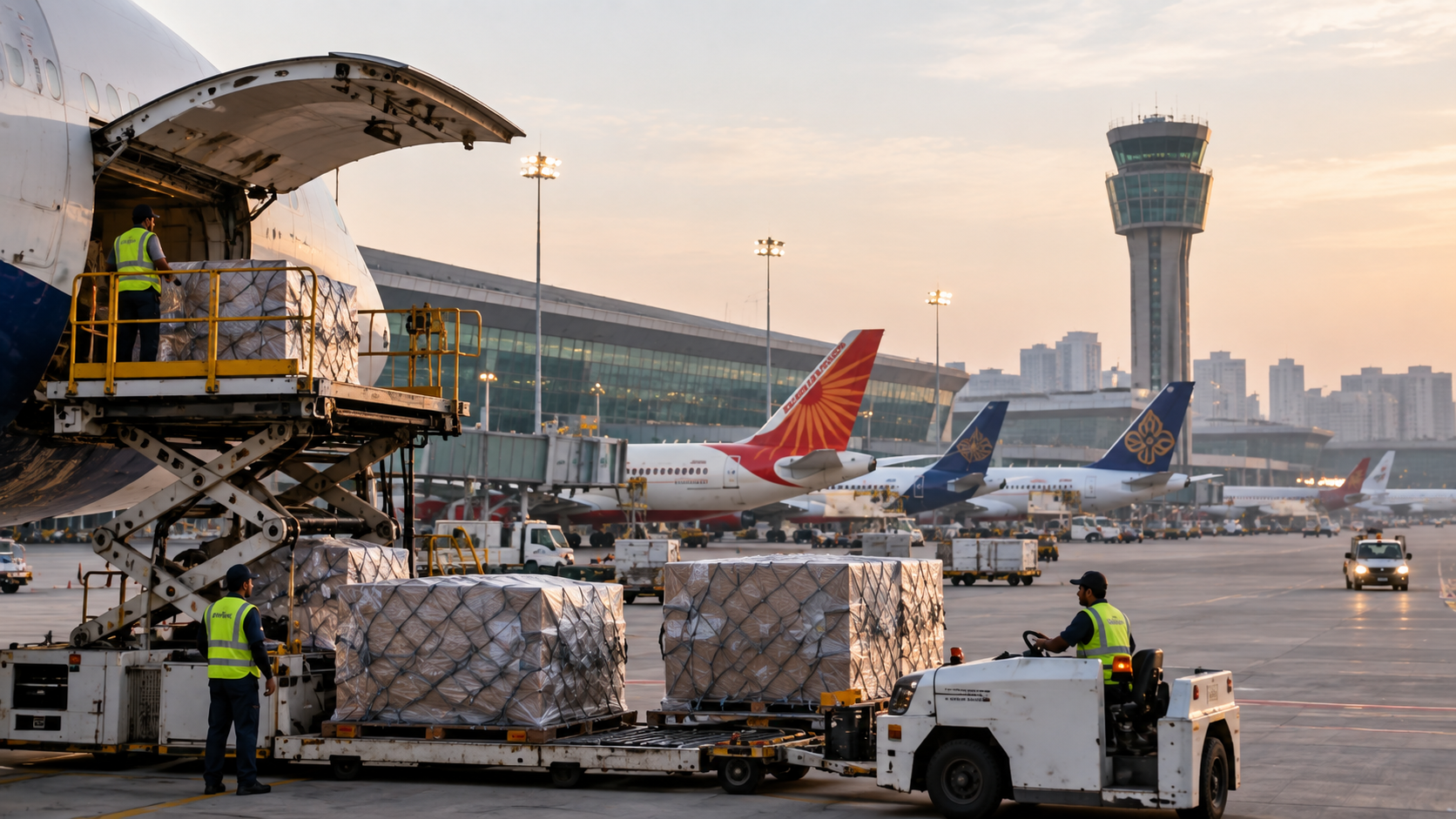
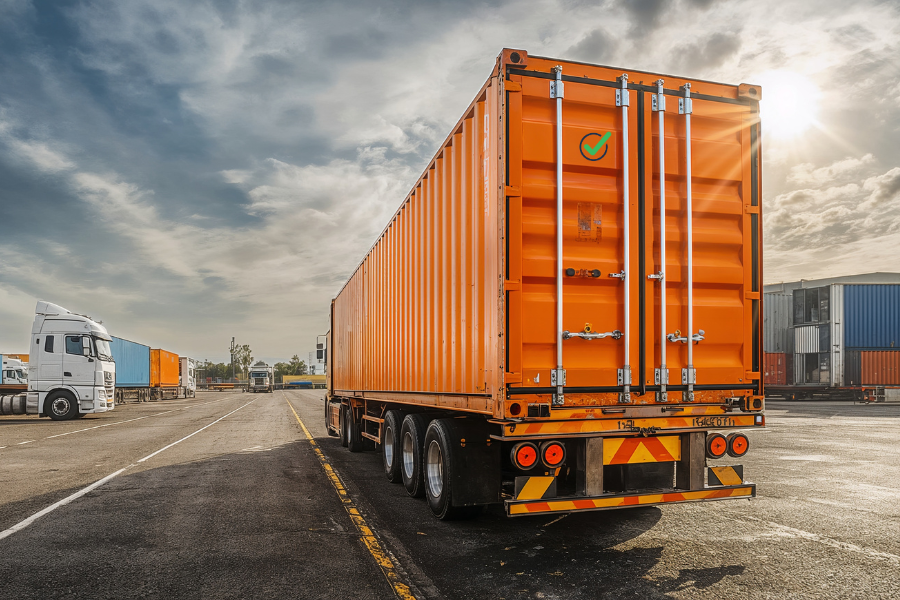
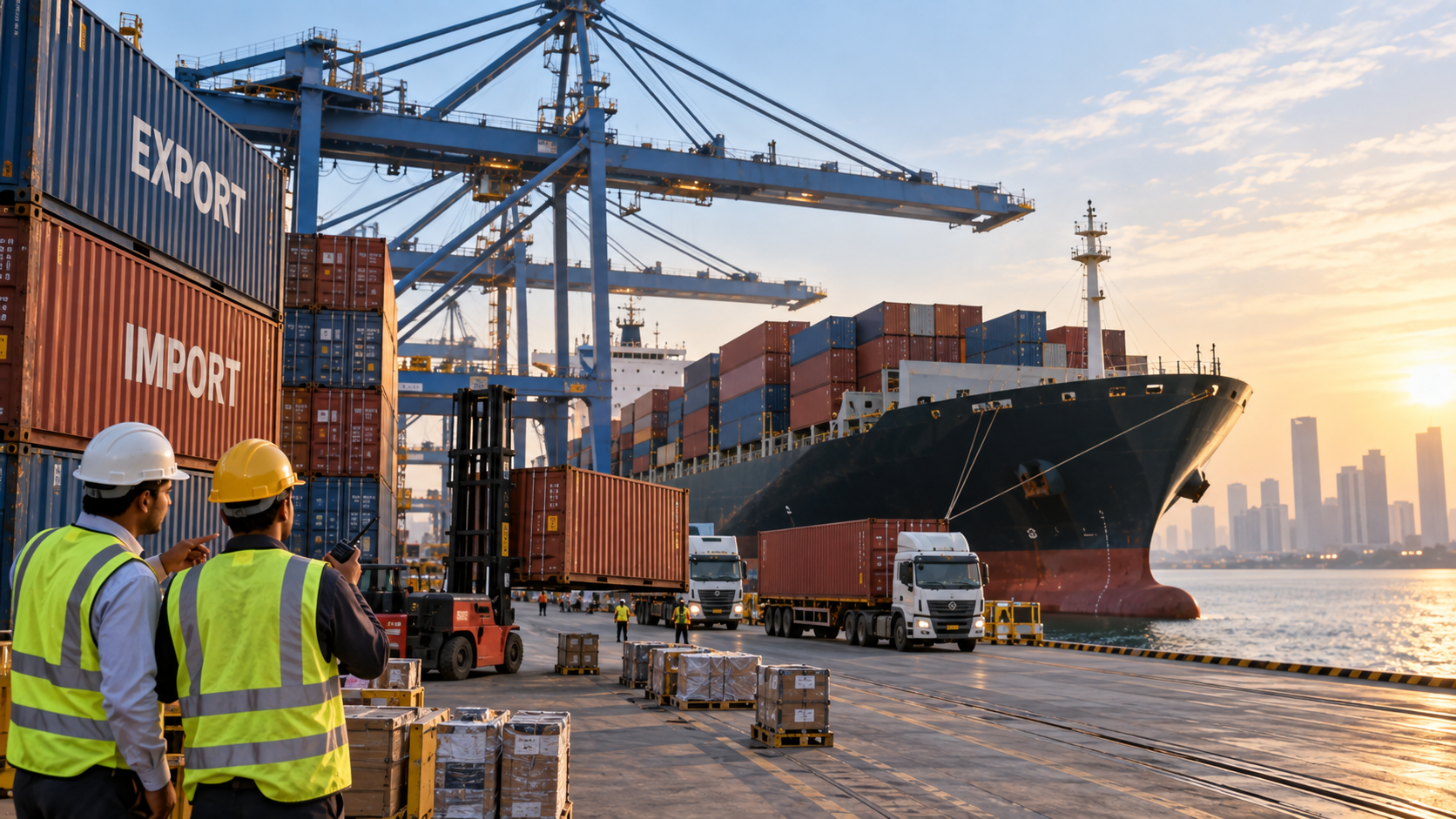
Heavy-duty trucks form the backbone of the economy. They transport coal to power plants, cement to construction sites, food to cities, and finished goods to ports. As GDP grows and Atmanirbhar Bharat strengthens domestic manufacturing, freight demand will inevitably rise. Yet the sector remains overwhelmingly diesel-dependent, and trucks typically remain operational for well over a decade.

Studies indicate that freight service demand will grow five times from nearly 2,000 billion tonne-kilometres (tkm) in 2020 to more than 10,000 billion tkm by 2050. If freight emissions expand unchecked, the eventual transition could become abrupt and economically disruptive. The real policy challenge is therefore not whether to decarbonise freight, but how to sequence the shift pragmatically – moving from business as usual to cleaner sources of energy, and ultimately to deep decarbonisation.

Regulatory certainty beyond fragmented pilots

Beyond pilots, a clear, long-term regulatory signal is needed. Investors will not commit serious capital if policy remains uncertain.

India needs progressive fuel efficiency standards for heavy-duty vehicles, evolving into carbon intensity norms over time. It must also signal a phased adoption pathway for zero-emission trucks and integrate freight into the emerging carbon market. Close coordination across ministries handling transport, highways, power, renewable energy, and electric mobility, along with NITI Aayog, will be critical for coherent policy and regulation. Without this clarity, investments will remain tentative, risking stranded assets as competing technologies emerge without a clear roadmap.

Currently, multiple ministries promote EVs, biofuels, CNG, hydrogen, and hybrids – each with separate policies and targets. A unified transport policy covering freight and passenger movement across urban and long-distance segments, and spanning electricity, LNG, CNG, hydrogen, and biofuels, along with vehicle and safety standards, would reduce uncertainty and avoid costly sunk investments.

Dedicated green corridors and not just green vehicles

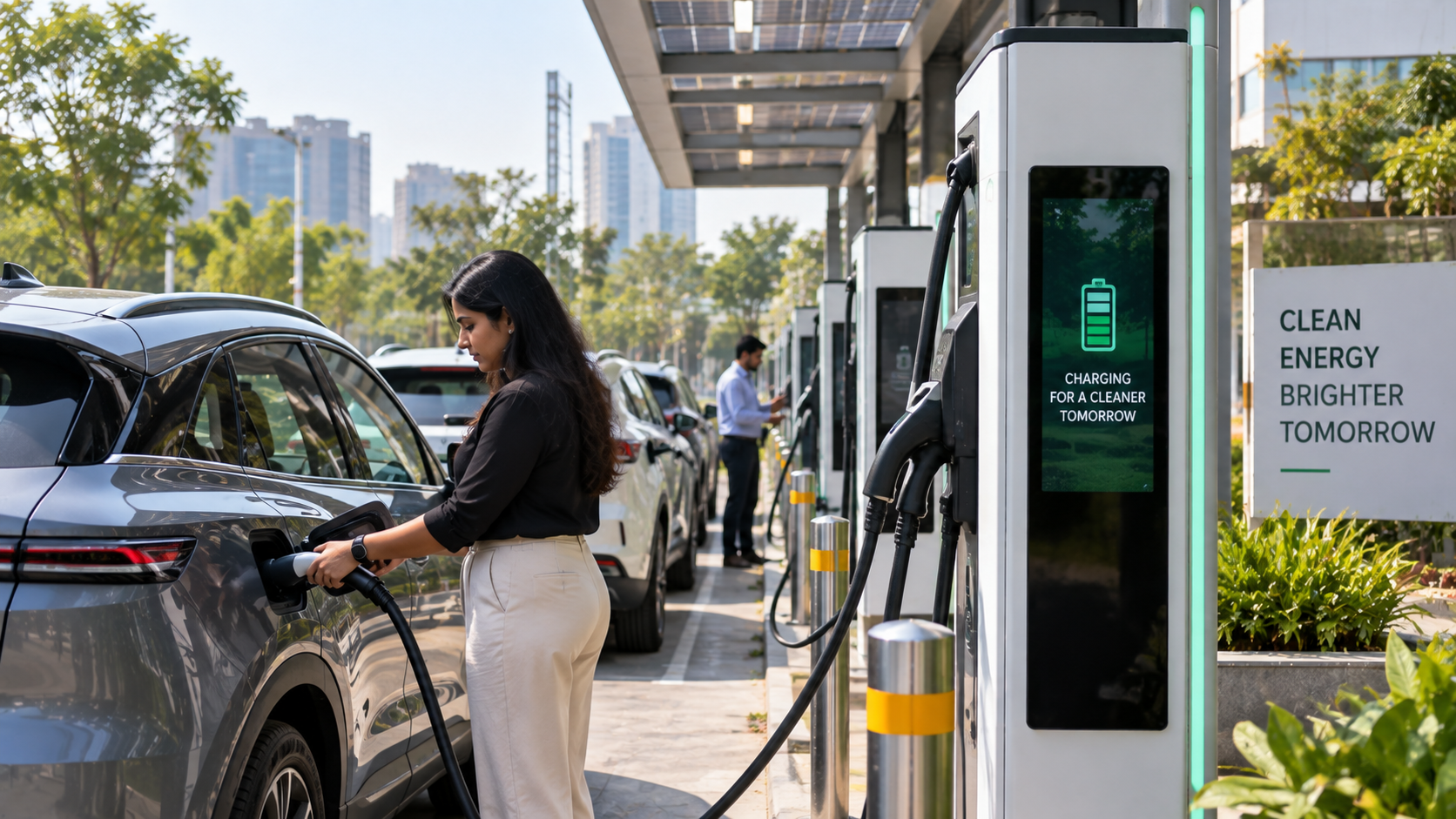
Long-haul freight will not decarbonise vehicle by vehicle; it can decarbonise corridor by corridor. India should identify high-density freight routes and systematically develop them as green freight corridors. Along these routes, electrified truck fleets can be supported by megawatt-scale charging infrastructure, coupled with solar plants, and green hydrogen refuelling hubs. At the same time, freight planning must integrate electrified rail corridors and waterways to lower overall carbon intensity.

Existing investments provide a strong starting point. The work of the Dedicated Freight Corridor Corporation of India is already reshaping rail logistics. Linking road freight decarbonisation with rail expansion and waterways is not just transport reform; it is infrastructure planning aligned with long-term low carbon industrial strategy.

Technology-agnostic, but carbon-accountable

While decarbonising transport will require the rapid development of green mobility corridors, a proper planning to integrate hydrogen, electric mobility, and energy storage at scale will be key to its success. Battery-electric trucks could be considered for medium-haul routes, while hydrogen may serve longer distances. Bio-CNG and LNG could play transitional roles. Furthermore, all these co-located vectors must be digitally integrated to manage peak loads, ensure reliability, and enable low- carbon mobility.

However, policy should avoid prematurely picking winners. Instead, the government should establish declining lifecycle carbon benchmarks aligned with the net zero trajectory. The objective is cost-effective decarbonisation based on life-cycle assessment rather than just cost comparisons. Green fuel should be used where it delivers the highest climate value, not indiscriminately across all applications.

Innovative finance to speed up transition

Even the best policy signals will fall short without financial innovation. Zero-emission trucks currently cost more than diesel. India’s trucking industry is highly fragmented and dominated by small operators who have limited access to affordable capital.

To accelerate adoption, India will need credit guarantee mechanisms that reduce lender risks, blended finance instruments that lower the cost of capital and viability gap funding for early green freight corridors. Freight decarbonisation must be embedded within the green finance and carbon market ecosystem. Without deliberate financial support, adoption will remain slow and confined to niche segments.

Climate action as energy security and trade strategy

The freight transition is not solely about emissions. It is also about energy security and economic competitiveness. Reducing diesel consumption lowers India’s import dependence and improves energy resilience. At the same time, scaling domestic manufacturing of batteries, electrolysers and fuel cells strengthens industrial capacity. As global markets increasingly impose climate-related standards and carbon border measures, green freight will eventually become a supply chain requirement. Early movers can turn regulatory compliance into competitive advantage.

The roadmap ahead

For India’s 2070 pathway, long-haul freight must shift from incremental efficiency improvements to structural transformation. Though India’s per capita emissions from the transport sector are the lowest among G20 countries, it is prudent to keep the emissions low with clear timelines aligned with the NetZero goal. Modal rebalancing toward rail and waterways can significantly reduce emissions intensity. Segment-specific zero-emission targets for trucks and logistics fleets can provide direction to industry. Infrastructure for charging and alternative fuels must expand rapidly along freight corridors. Financial and market reforms must reduce investment risk in zero-emission technologies.

India’s climate ambition will not be decided only in solar power plants, renewable energy parks or electric mobility in cities. It will also be determined on its highways. If long-haul freight becomes central to climate, energy and industrial strategy today, the transition can be orderly, competitive and growth-enhancing. If it remains peripheral, the eventual adjustment will be far more difficult and costly.


Dr. Debajit Palit is the Centre Head of the Centre for Climate Change and Energy Transition at Chintan Research Foundation. Views expressed are personal.
Previous Post
Next Post

Most Recent Posts

  • All Post
  • 8th Pay Commission
  • Aadhar
  • Aditya Birla Capital
  • Advertising Standards
  • Affordable Housing
  • Agriculture
  • Agriculture & Food
  • AI in Healthcare
  • AI Technology
  • Airlines
  • alcohol industry
  • Android
  • APEDA
  • Apple
  • Artificial Intelligence
  • Ashwini Vaishnaw
  • Asset Management
  • Atmanirbhar Bharat
  • Audio Devices
  • Audio Products
  • Auto Industry
  • Automobile
  • Automobiles
  • Automotive
  • Automotive Industry
  • Aviation
  • Bain Healthcare Report 2026
  • Bank
  • Banking
  • Banking Technology
  • Battery Industry
  • Beverage Industry
  • Beverages
  • Bihar
  • biotechnology
  • Bitcoin
  • BMW Group India
  • Brand Insight
  • BRICS
  • Bullion Market
  • Business
  • Business & Economy
  • Business & Trade
  • Business Leadership Post COVID-19
  • Business News
  • Business Terminology
  • Business Utilities
  • Buyback
  • Capital Goods
  • Capital Markets
  • CarsBusiness
  • CBIC
  • CCI
  • Child Investment
  • China
  • China technology news
  • Citizen Services
  • Clean Energy
  • Clean Technology
  • Cloud Computing
  • coal
  • Commerce
  • Commerce and Industry
  • Commercial Real Estate
  • Commercial Vehicles
  • Commodities
  • Communications
  • Companies
  • Competition Law
  • Compliance
  • Computer Accessories
  • connected cars
  • Consumer Affairs
  • Consumer Electronics
  • Consumer Finance
  • Consumer Goods
  • Consumer Health
  • Consumer Markets
  • Consumer News
  • Consumer Protection,
  • Consumer Rights
  • Consumer Spending
  • Consumer Trends
  • Content Creation
  • Copper
  • Corporate
  • corporate affairs
  • Corporate Earnings
  • Corporate Governance
  • Corporate News
  • Corporate Social Responsibility
  • Cost of Living
  • Country
  • CRED
  • Credit Cards
  • CREDIT RATING
  • Crude Oil
  • Cryptocurrency
  • CSR
  • Culture
  • Currency
  • Customs Duty
  • Cyber Security
  • Cybersecurity
  • Dairy Industry
  • Data & Analytics
  • Defence
  • Delhi Government
  • Delhi-NCR
  • Demographics
  • Derivatives
  • DGCA
  • DGFT
  • DigiLocker
  • Digital Assets
  • Digital Economy
  • Digital Health India
  • Digital Identity
  • Digital India
  • Digital Infrastructure
  • Digital passport for robots
  • Digital Payments
  • Digital Platforms
  • digital services
  • Diplomacy
  • Dixon Technologies
  • DPIIT
  • E Commerce
  • E-commerce
  • E-Governance
  • Ease of Doing Business
  • Economic Growth
  • Economy
  • Edible Oil Industry
  • Editor Choice
  • EdTech
  • Education
  • Electric Mobility
  • Electric Vehicles
  • Electronics
  • Employment
  • ENERGY
  • Engineering
  • Entertainment
  • Environment
  • EPFO
  • Ethanol Economy
  • EV Industry
  • EV Technology
  • Exports
  • EXTER
  • Farmers
  • Fashion
  • FINANCE
  • Finance Ministry,
  • Financial Marketing
  • Financial Markets
  • Financial News
  • Financial Planning
  • Financial Results
  • Financial Services
  • Fintech
  • FnTech
  • Food & Beverage
  • Food & Beverages
  • Food Exports
  • Food Industry
  • Food Manufacturing
  • Food Processing
  • Food Regulations
  • food safety
  • Foreign Exchange
  • Foreign Investment
  • Foreign Policy
  • Foreign Trade
  • Forex Reserves
  • fssai
  • FTA
  • Fuel
  • Fuel Prices
  • Future Energy
  • Gadgets
  • Gadgets & Apps
  • Gaming
  • GDP
  • Generative AI Healthcare
  • Geopolitics
  • GI Products
  • Global Brand Alliance
  • Global Economy
  • Global Markets
  • Global Politics
  • Global Tech
  • Global Trade Policy
  • Global Trends\
  • Gold
  • Gold Market
  • Gold Prices
  • Gols & Silver
  • Government
  • Government & Policy
  • Government Affairs
  • Government Bonds
  • Government Data
  • Government Initiatives
  • Government Policy
  • Government Policy & Regulation
  • Government Scheme
  • Government Schemes
  • Government Services
  • Green Energy
  • Green Mobility
  • GroupGlobal
  • GST
  • GST Council
  • GST Counsil
  • Hair Care
  • Hardware
  • Hatchback Segment
  • Health Supplements,
  • Horticulture
  • Housing
  • HSBC
  • Human Resources
  • humanoid robot market
  • Hyundai
  • IBT Infographics
  • iinvestment
  • Imports & Exports
  • Income Tax
  • India
  • India Auto Market
  • India Business News
  • India Inc
  • India News
  • India Retail
  • India-Canada Relations
  • India-China
  • India-Japan Relations
  • India-Russia Relations
  • India-South Korea Relations
  • India-US Relations
  • Indian Economy
  • Indian Navy
  • Industrial Pollution
  • Inflation
  • Infra
  • Infrastructure
  • Innovation
  • Instagram
  • Insurance
  • international
  • International Affairs
  • International Cooperation
  • International Relations
  • International Trade
  • Internet & Connectivity
  • Internet Policy
  • Internet Regulation
  • Interview
  • Investing
  • Investment News
  • Investments
  • iPhone News
  • IPO
  • IT Industry
  • Jewellery
  • Jio Platforms
  • JioBlackRock
  • Jobs & Careers
  • Joint Ventures
  • Kim Kardashian
  • Labour
  • Latest
  • Launches
  • Leadership
  • Leaderspeak
  • Lending
  • Lifestyle
  • Lifestyle Tech
  • List
  • Loans & Credit
  • Local News
  • Logistics
  • LPG
  • Luxury Cars
  • Machinery
  • Macroeconomics
  • Macroeconomy
  • maharashtra
  • Maharashtra News
  • Make in India
  • Makhana
  • Managed Workspaces
  • Manufacturing
  • Market Outlook
  • Markets
  • Maruti Suzuki
  • Mergers & Acquisitions
  • Meta
  • Microsoft
  • Middle East
  • Mobile Apps
  • Mobile Industry
  • Mobile Launch
  • Mobility
  • Monetary Policy
  • Monsoon
  • MoSPI
  • MSME
  • Mutual Funds
  • Nano Tech
  • National
  • National news
  • NEET 2026
  • NewsElectric
  • NewsTata
  • NPCI
  • NPS Vatsalya
  • Office Market
  • Oil & Gas
  • Oil and Gas
  • Others
  • OTT
  • Packaged Drinking Water
  • Packaged Foods
  • Packaging Industry
  • Packaging Innovation
  • Passenger Vehicles
  • Paytm
  • Pension & Retirement
  • Pensions
  • Personal Care
  • Personal Finance
  • Perspectives
  • Petroleum
  • PFRDA
  • Pharmaceuticals
  • PM Modi
  • PMAY-G
  • PMAY-U
  • PMAY,
  • PMI
  • policy
  • Population
  • PORTS
  • Positive News
  • PPF
  • Precious Metals
  • Pricing
  • Product Labeling
  • Product Labelling
  • Product Launch
  • Property Market
  • PSU
  • PSU Banks
  • Public Health
  • Public Policy
  • Public Safety
  • Public Sector
  • Public Services
  • Public Welfare
  • Quarterly Results
  • Railways
  • Rajasthan
  • Raksha Bandhan
  • Raksha Bandhan Gifts
  • Rare Earths
  • Ratings Agencies
  • RBI
  • Real Estate & Realty Sector
  • Recycling
  • Regulation
  • Regulatory Action
  • Regulatory Affairs
  • Regulatory Updates
  • REIT
  • Reliance Industries
  • Renewable Energy
  • RERA
  • Research
  • Retail
  • Retirement Planning
  • Road Infrastructure
  • Robotics & Automation
  • robotics standards
  • Rupee
  • Rural Development
  • Rural Housing
  • SAIL
  • Salaries
  • Samsung
  • Savings
  • Science & Technology
  • Sebi
  • Security
  • Semiconductor
  • Semiconductors
  • Services Sector,
  • SHIPPING
  • Silver Prices
  • Skill Development
  • Skills Development
  • Small Business
  • Smart Devices
  • Smart Home
  • Smart Mobility
  • Smartphones
  • Social Impact
  • Social Media
  • Society
  • Software Development
  • Solar Energy
  • Space Technology
  • Startups
  • Statistics
  • Steel Industry
  • Stock Market
  • stocks
  • streaming
  • Sugar Industry
  • Sukanya Samriddhi Yojana
  • Sustainability
  • SUV
  • Tamil Nadu Pollution Board
  • Tariffs
  • Tariffs & Duties
  • Tata Group
  • Tata Motors
  • Tata Sons
  • Tax Planning
  • Taxation
  • Tech
  • Tech Branding
  • Technology
  • Telecom & Technology
  • Telecom Industry
  • Top Story
  • Tourism
  • Trade
  • Trade Agreement
  • Trade Basket
  • Trade Partner
  • Trade Policy,
  • Transportation
  • Travel
  • Trending
  • Two-Wheelers
  • UIDAI
  • UPI
  • Urban Development
  • US-Iran Conflict Economic Impact
  • US–India Relations
  • Uttar Pradesh
  • Vaccines
  • VehiclesLuxury
  • vivo
  • Wastewater Management
  • Water Quality,
  • Wealth Management
  • Wearables
  • Wellness
  • WhatsApp
  • Wheat
  • Workplace
  • World
  • World News
  • Worldview
  • Yamaha
  • zLead Slider
    •   Back
    • Healthcare
    • Auto
    • Fmcg
    • Hospitality
    •   Back
    • Cash Crop
    • Organic
    • New Era Agri
    • Processed Food
    •   Back
    • Construction
    • Power
    • Mining
    • Telecom
    •   Back
    • ENERGY
    •   Back
    • Export/Import
    • Trade Deal
    • Trade Fair
    •   Back
    • Policies
    • Industry
    • Finance
    •   Back
    • Others technology
    • Mobile phone
    • Gadgets
    •   Back
    • Manufacturing
    • Services
    • Startup

India Business & Trade is a national media platform decoding the ideas, decisions and shifts shaping India’s growth story—across plicy, business, global commerce and a rapidly evolving marketplace.

Reach Us

India Business & Trade
M-62, Saket, New Delhi-110064, India

Subscribe To Newsletter

Stay ahead in the dynamic world of trade and commerce with India Business & Trade’s weekly newsletter.

Copyright © 2026 India Business & Trade. All Rights Reserved


Fatal error: Uncaught TypeError: Unsupported operand types: string * int in /var/www/sites/indiabusinesstrade.in/wp-content/plugins/royal-elementor-addons/admin/includes/wpr-templates-modal-popups.php:192 Stack trace: #0 /var/www/sites/indiabusinesstrade.in/wp-content/plugins/royal-elementor-addons/admin/includes/wpr-templates-modal-popups.php(128): WprAddons\Admin\Includes\WPR_Templates_Modal_Popups::get_template_settings() #1 /var/www/sites/indiabusinesstrade.in/wp-content/plugins/royal-elementor-addons/admin/includes/wpr-templates-modal-popups.php(106): WprAddons\Admin\Includes\WPR_Templates_Modal_Popups::render_popup_content() #2 /var/www/sites/indiabusinesstrade.in/wp-content/plugins/royal-elementor-addons/admin/includes/wpr-templates-modal-popups.php(64): WprAddons\Admin\Includes\WPR_Templates_Modal_Popups::display_popups_by_location() #3 /var/www/sites/indiabusinesstrade.in/wp-includes/class-wp-hook.php(341): WprAddons\Admin\Includes\WPR_Templates_Modal_Popups->render_popups() #4 /var/www/sites/indiabusinesstrade.in/wp-includes/class-wp-hook.php(365): WP_Hook->apply_filters() #5 /var/www/sites/indiabusinesstrade.in/wp-includes/plugin.php(522): WP_Hook->do_action() #6 /var/www/sites/indiabusinesstrade.in/wp-includes/general-template.php(3224): do_action() #7 /var/www/sites/indiabusinesstrade.in/wp-content/plugins/royal-elementor-addons/admin/templates/wpr-canvas.php(64): wp_footer() #8 /var/www/sites/indiabusinesstrade.in/wp-includes/template-loader.php(132): include('...') #9 /var/www/sites/indiabusinesstrade.in/wp-blog-header.php(19): require_once('...') #10 /var/www/sites/indiabusinesstrade.in/index.php(17): require('...') #11 {main} thrown in /var/www/sites/indiabusinesstrade.in/wp-content/plugins/royal-elementor-addons/admin/includes/wpr-templates-modal-popups.php on line 192