Highlights:
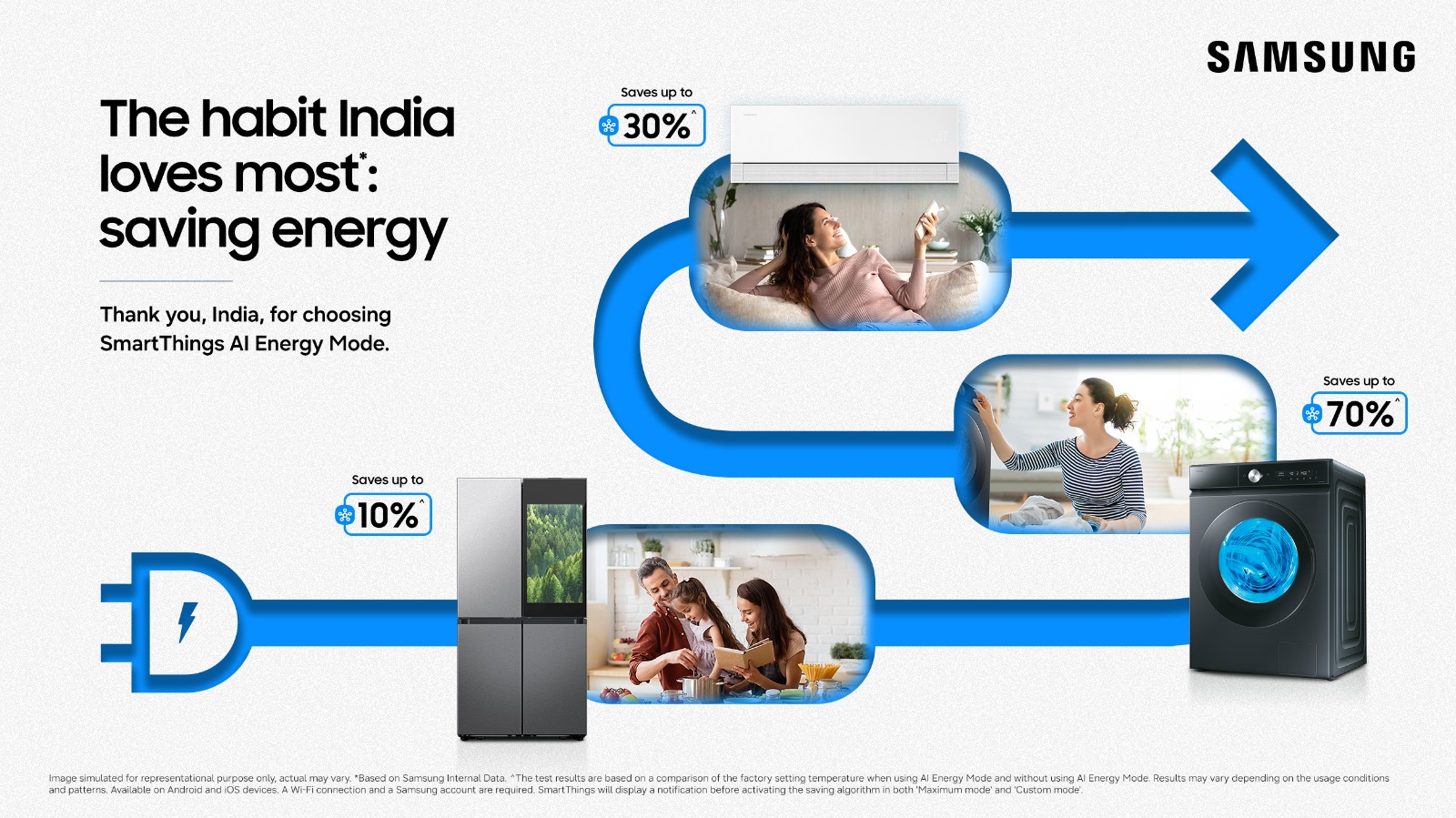
• India ranked second globally in energy savings through AI-powered appliances.
• Samsung’s SmartThings AI Energy Mode enables automated energy optimization.
• Air conditioners can save up to 30% energy.
• Washing machines and washer dryers can save up to 70% energy.
• Rising consumer awareness is driving smart-home adoption in India.
Gurugram, June 4: Indian consumers are increasingly adopting energy-efficient technologies and sustainable lifestyle practices, making the country one of the world’s leading markets for energy-conscious households, according to a new internal study conducted by Samsung.
The study found that India ranked second globally in energy savings achieved through the effective use of artificial intelligence (AI), reflecting the growing adoption of AI-powered home appliances among Indian consumers. The findings are based on usage data from Samsung’s Bespoke AI appliance ecosystem, which includes smart Air Conditioners, Washing Machines, Washer Dryers, and Refrigerators equipped with SmartThings AI Energy Mode.
According to Samsung, the technology uses advanced AI algorithms to analyze consumer usage patterns and optimize appliance performance to reduce electricity consumption without compromising convenience or functionality. The system is integrated into the Samsung SmartThings platform, enabling users to monitor and manage energy usage across connected devices through a single mobile application.
The study highlights the increasing awareness among Indian consumers about energy conservation and the role of technology in reducing household electricity bills. With electricity demand rising across urban and semi-urban areas, particularly during peak summer months, consumers are turning to intelligent home solutions to improve efficiency and reduce energy waste.
Samsung said SmartThings AI Energy Mode can deliver energy savings of up to 30 percent in compatible air conditioners and as much as 70 percent in washing machines and washer dryers. The platform also provides real-time energy monitoring, personalized recommendations, and automated adjustments based on user behavior and environmental conditions.
Industry experts believe the findings reflect a broader trend toward smart home adoption in India, driven by rising environmental awareness, increasing energy costs, and the growing availability of connected devices. AI-enabled energy management solutions are expected to play a critical role in helping households reduce their carbon footprint while maintaining comfort and convenience.
As India continues to pursue sustainability goals and improve energy efficiency across sectors, smart technologies are emerging as an important tool for consumers seeking practical ways to conserve resources. Samsung said the growing popularity of SmartThings demonstrates how digital innovation can support everyday sustainability and contribute to a greener future.
The study underscores India’s position as a rapidly evolving smart-home market, where technology and environmental responsibility are increasingly going hand in hand.