Key Highlights
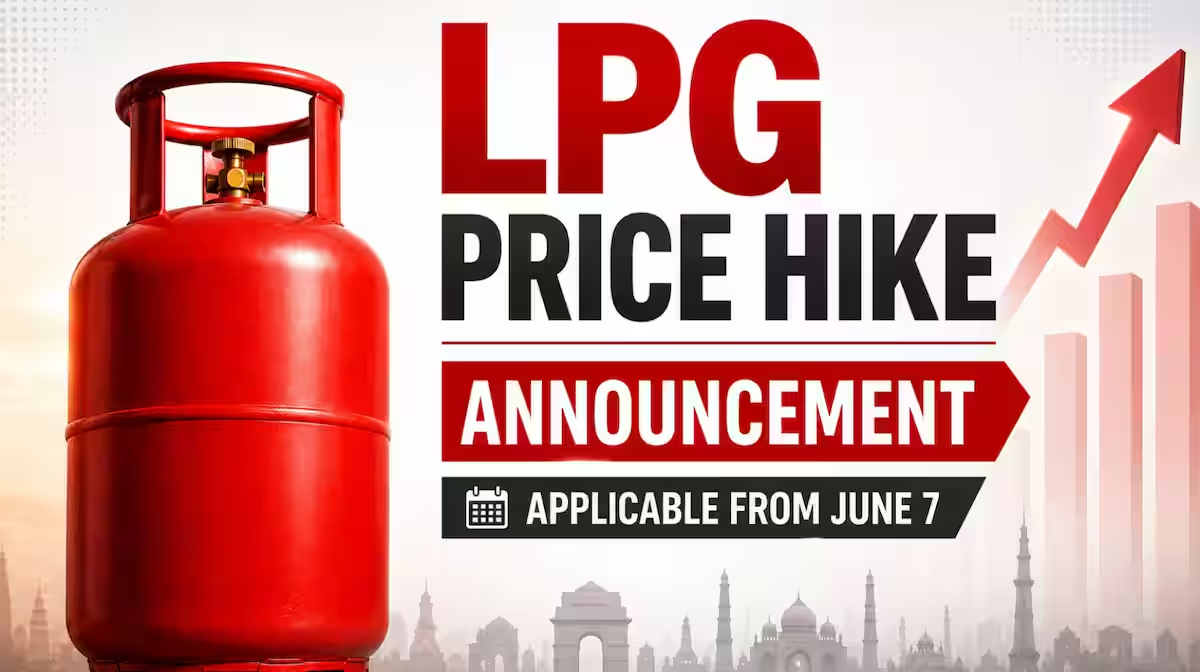
- Domestic LPG cylinder prices have been increased by Rs 29 across India.
- A 14.2 kg household LPG cylinder now costs Rs 942 in Delhi.
- The latest revision marks the second major LPG price hike amid global energy market disruptions.
- Government says the actual supply cost of a cylinder has crossed Rs 1,600.
- Oil marketing companies are reportedly incurring a loss of around Rs 700 per cylinder.
- PM Ujjwala Yojana beneficiaries continue to receive subsidized cylinders at Rs 642.
- International LPG prices have surged nearly 46% since February due to geopolitical tensions and supply disruptions.
LPG Prices Rise Again as Global Energy Costs Surge; Government Highlights India’s Competitive Rates
New Delhi, June 7, 2026: Domestic cooking gas prices have increased once again, with state-owned oil marketing companies raising the price of household LPG cylinders by Rs 29. The latest hike takes the cost of a 14.2 kg non-subsidized LPG cylinder in Delhi to Rs 942, adding further pressure on household budgets already impacted by rising living expenses.
The increase comes amid continued volatility in global energy markets and follows an earlier hike linked to escalating tensions in West Asia. According to government estimates, the cumulative increase in domestic LPG prices over recent months has reached Rs 89 per cylinder.
Following the announcement, the Ministry of Petroleum and Natural Gas issued a statement defending the revision, arguing that Indian consumers continue to receive cooking gas at significantly lower prices than consumers in many other countries despite the sharp rise in international LPG costs.
Government Says LPG Remains Affordable in India
The ministry stated that the actual cost of supplying a domestic LPG cylinder has risen substantially and currently exceeds Rs 1,600 per cylinder. However, retail prices remain considerably lower due to government support and pricing interventions.
According to official estimates, a regular consumer in Delhi now pays Rs 942 for a 14.2 kg cylinder, while beneficiaries of the Pradhan Mantri Ujjwala Yojana (PMUY) receive the same cylinder at Rs 642 after subsidy support.
Officials said oil marketing companies are absorbing losses of approximately Rs 700 on every domestic LPG cylinder sold, highlighting the financial burden being carried to shield consumers from the full impact of global price increases.
Comparison With Global LPG Prices
To support its claim that LPG remains relatively affordable in India, the ministry released comparative pricing data from several countries.
According to the government, the approximate cost of a 14.2 kg LPG cylinder in various countries is as follows:
| Country | LPG Cylinder Price (Approx.) |
|---|---|
| India | Rs 942 |
| Pakistan | Rs 1,046 |
| Nepal | Rs 1,207 |
| Bangladesh | Rs 1,225 |
| Sri Lanka | Rs 1,241 |
| United States | Rs 1,755 |
| Australia | Rs 1,765 |
| Canada | Rs 2,411 |
The government argues that even after the latest revision, Indian households continue to benefit from some of the lowest LPG prices among major economies and neighboring nations.
Global Factors Driving Price Increase
Officials attributed the latest hike primarily to rising international LPG prices caused by geopolitical instability in West Asia and disruptions in global energy supply chains.
India imports a significant portion of its LPG requirements, making domestic prices sensitive to international market trends. LPG import pricing is largely linked to the Saudi Contract Price (CP), a benchmark used across global energy markets.
According to ministry data, the international benchmark LPG price stood at approximately $543 per tonne in February 2026. Following supply disruptions and uncertainty surrounding shipping routes in the Gulf region, prices climbed sharply to around $775 per tonne in April and further increased to nearly $790 per tonne in June.
This represents an increase of nearly 46 percent compared with pre-crisis levels, significantly raising the cost of imported LPG for Indian oil companies.
Continued Support for Ujjwala Beneficiaries
Despite rising costs, the government said it remains committed to protecting economically weaker households from energy inflation. Under the PM Ujjwala Yojana, eligible beneficiaries continue to receive direct benefit transfers on LPG refills, ensuring that cooking fuel remains accessible and affordable.
Officials indicated that subsidies and pricing support mechanisms would continue to play an important role in balancing consumer interests with the financial realities of global energy markets.
As international crude oil and LPG prices remain volatile, market observers expect policymakers to closely monitor global developments before making further revisions to domestic fuel pricing.