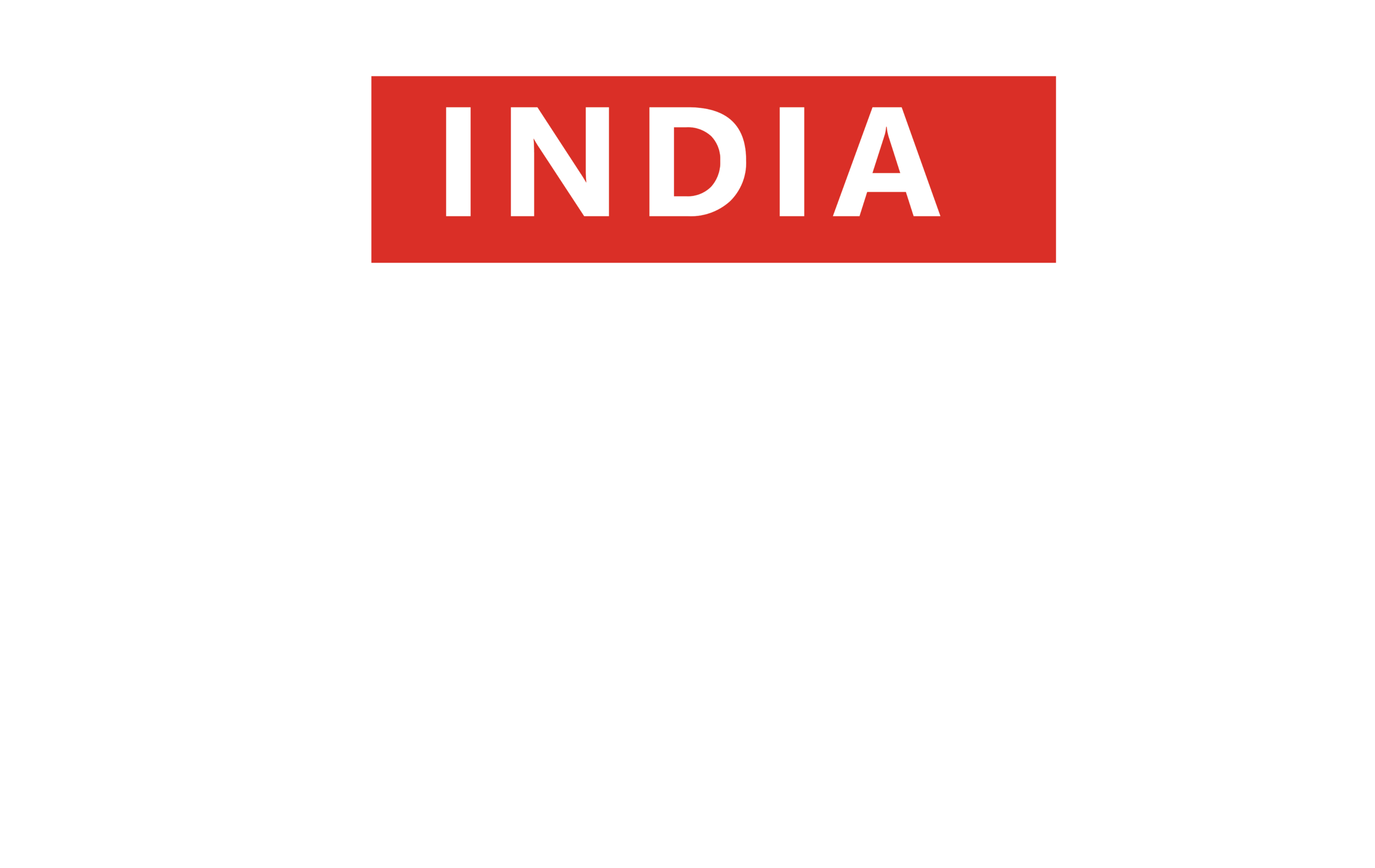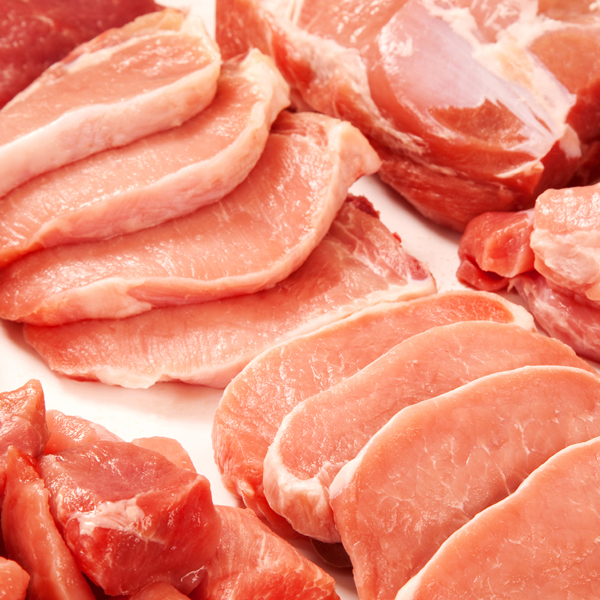
On an average per year, average value of livestock products constitutes 6 % of Indian agricultural export earnings and 1% of total export earnings. Influx of foreign goods to the Indian market has raised some concern about the country’s livestock sector and dairy industry in the regime of WTO. Further, nutrient rich and high moisture fresh and frozen foods like livestock products pose food safety risks and affect the safety, health and regulatory measures. The safety of the food is of utmost significance and has gained worldwide attention. Various issues associated with the product rejection on the basis of food safety and health standards are a matter of more concern today rather than earlier. The reason behind is the developing countries are implementing risk analysis methodology, rigorous MRLs for chemicals, restrictions on the use of harmful chemicals and giving due attention to consumer health and food safety regulations. In western industrialized countries the concerns about safe food have been replaced with those of adequate food. International trade in food sector is governed by the agreement on the application of Sanitary and Phyto-Sanitary Measures (SPS agreement) and Technical Barriers to Trade (TBT). The agreements allows member nations to impose all measures or standards to protect human, animal, plant life and health, harmonize with the international standards, environmental protection, protection of consumers against deceptive practices and prevention of unjustifiable barriers to international trade. The continuous increase in international trade in food sector has been achievable partly through advances in food manufacturing and processing technology along with improvement in handling and transport facilities. The food safety issues are of major concern while exporting food commodities from India, particularly to the developed countries. Major markets such as the US, EU and Japan have progressively stringent food safety requirements thereby emerging as a key challenges in the export of food commodities from the developing countries. Food safety measures proliferated and strengthened both in public and private sector during the last decade mainly in the industrialized countries. These are also becoming more stringent, especially SPS requirements such as maximum residue limit and levels of contamination. The number of SPS measures notified to the WTO has increased exponentially. These standards progressively evolve in the national, international and individual supply chains. Regional trade agreement and overall impact of Uruguay round agreements have reduced many tariffs and subsidy related constraints to free trade, encouraging increased production and export from the countries with the most cost effective production means. However, many exporting countries do not have the infrastructure to ensure high levels of hygienic food manufacture. Milk products Quantity in MT US$ Million % Growth on previous year %age share in 2017-18 Melted Butter (Ghee) 7,844.51 54.89 41.58 29.59 Butter 7,963.83 37.81 403.46 20.38 Skimmed Milk powder 11,307.88 33.53 -15.77 18.08 Other Cheese 4,028.26 17.74 -2.74 9.56 Processed Cheese 2,043.97 10.99 121.57 5.92 Other Milk Cream 1,692.38 6.77 27.50 3.65 Milk And Cream of A Fat Content Exceeding 1% not 6% 6,073.08 4.88 57.93 2.63 Other Milk And Cream Containing Added Sugar Or Other Sweetening Matter 1,260.87 4.64 -12.45 2.5 Fresh Cheese, Incl. Whey Cheese, & Curd 825.92 3.07 9.25 1.66 Other Fats & Oils Derived From Milk 569.76 2.95 161.06 1.59 Butter oil 176.00 1.05 854.55 0.57 Overall, the country-wise export data shows that the animal products are exported to a number of developed and developing countries. In this view, India’s exports of various animal products are well-widen across different countries. This also implies that while exporting livestock products, India strictly follows the requirements and standards laid down by all its importing partners. Still, India is a small player in global market in terms of livestock trade, although India ranks in the top tier of producers of various livestock commodities the contribution of Indian livestock products to world export is does not even 1 percent (exception are bovine meat and eggs). India’s exports are spread across developed and developing country markets and it is facing issues even in developing country markets. Therefore there is a need to identify and analyze the food safety issues raised by different markets Not much information is available regarding the potential adverse effects of standards and technical regulations. Further, if the information on traded product is incomplete, the SPS and TBTs can enable trade by signaling that products are safe to the consumer. However, if these measures are used in a protective way, they have trade impeding effects (Disdier et al., 2008). Despite of that various steps should be taken vigorously to get compliance with the SPS measures to boost livestock export to the developed countries like USA, EU and Japan. Export of livestock product can be enhanced by accessing the markets in the countries having less stringent food safety and quality standards. Growing awareness among consumers about the importance of food safety, emergence of disease by consuming unsafe food, and consumers increasing paying capacity in both domestic and international market could further tackle this issue. Further, to enhance livestock exports – the cost of compliance, investment required, handling, processing and traceability of the products are some of the points that need to be emphasized. The rigorous efforts made by the government by prioritizing the livestock sector to achieve the desired growth in agri-sector have certainly enhanced the country’s exports of various livestock products to newer heights. India has been net exporter of meat and meat products over the past two decades with negligible dependence on import. To fill the gaps in implementing SPS measures the Indian government has made some submissions in the SPS Committee.These are: Unproductive Transparency provision of the SPS Agreement Not enough time is given for raising objections to certain member countries Inadequate information is given through notification procedure A standard under what situation should be considered as an international standard is not correctly disclosed in the SPS Agreement Standard setting procedures at CODEX, OIE and IPPC should be identical Developing countries do not get adequate opportunity to respond to the proposed SPS measures and has advocated for reasonable
Safeguard duty on steel: India appeals against WTO’s panel ruling
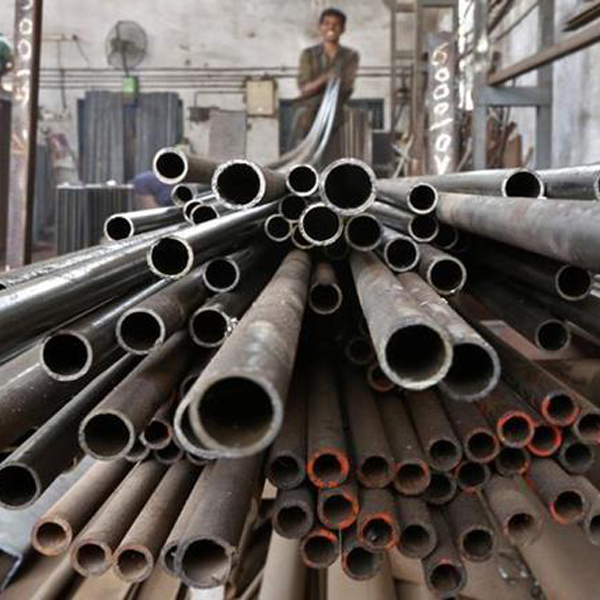
India has challenged the WTO dispute panel’s ruling that the country’s move to impose safeguard duty on some iron and steel products was inconsistent with certain global trade norms India notified the WTO’s dispute settlement body of its decision to appeal to the Appellate Body on certain issues of law and legal interpretations in the panel report. The issue pertains to a case filed by Japan in December 2017 against India’s decision to impose safeguard duty on some iron and steel products. The Geneva-based appellate body can uphold, modify or reverse legal findings and conclusions of WTO’s dispute panel and its reports. If the body’s ruling goes against India, the country will have to comply with the order in six-seven months. In September 2015, India imposed provisional safeguard duty. Safeguards are emergency measures in the form of tariffs, quotas or both, that are intended to address serious injury or the threat of serious injury caused by an unforeseen increase in imports. Unlike the rules that allow WTO Members to derogate from their trade liberalizing commitments to address unfair trade practices like dumping or subsidization, safeguards are derogations to address increased volumes of fairly traded imports and are exceptional in that important sense. It therefore is not surprising that the WTO rules governing safeguards carefully limit when they are permitted and hold members imposing them to a very high standard to demonstrate that they are justified. A WTO Member contemplating a safeguard on more than a provisional basis (i.e. beyond 200 days) is required to assess whether the proposed safeguard is warranted. It must demonstrate the existence of unforeseen developments and must show through “reasoned and adequate explanations that the unforeseen developments have resulted in increased imports of the specific products targeted by the safeguard, and that there is a causal link between the increased imports and serious injury or threat of serious injury to the relevant domestic industry. To establish the existence of serious injury or threat, the WTO Member must examine all relevant factors, including those listed in the WTO’s Agreement on Safeguards relating to the scale of the increase in imports, the share of the market captured by them, and factors relating to the performance of the domestic industry. If the trends in only some factors are positive, there must be a compelling explanation as to how and why the domestic industry is nevertheless injured. Care must also be taken to distinguish between other factors that may be injuring the domestic industry and the injurious effects of the increased imports. Japan launched the dispute settlement proceedings against India last year challenging the “definitive” safeguard duties imposed on imports of hot-rolled steel flat products by the revenue department of the Indian finance ministry during September 2015 and March 2018. It argued that the definitive safeguard duties of 20% ad valorem minus anti-dumping duty imposed by the Indian revenue department from September 2015 to September 2016, 18% ad valorem from September 2016 to March 2017, 15% from March 2017 to September 2017, and 10% ad valorem from September and March 2018, are inconsistent with several core provisions of the WTO’s Safeguards Agreement. Japan said India’s definitive safeguard measures violated several provisions of the World Trade Organization’s Agreement on Safeguards. Tokyo had maintained that the Indian measures also violated the most-favoured-nation agreement and the rules on quantitative restrictions. Several countries, such as the US, Australia, China, the EU, Indonesia, Kazakhstan, South Korea, and Russia, joined as third parties in the dispute. In its ruling, the panel said India’s safeguard duties are inconsistent with several core rules of the global trade as they failed to “demonstrate that the unforeseen developments and the effect of GATT (General Agreement on Tariffs and Trade) obligations resulted in an increase in imports” of the steel products. India also violated several other provisions of the Safeguards Agreement, according to the panel The Steel Ministry is in favour of contesting the WTO ruling as it believes that the decisions going against India could be challenged at the WTO with the country submitting more evidence to establish its case. It feels that getting the verdict changed could help India score a larger point. While the Commerce Ministry believes that there is no need for such a move as the safeguard duties that have been found violate of existing rules do not exist anymore. Now we need to wait and watch how, well India defends this case in second chance.
Bilateral trade with Maldives presently low but immense opportunities exist
Bilateral trade between India and Maldives is not much at present, standing at a mere USD 222.68 million with a surplus in favour of India. This rather modest trade does not bespeak of the good India-Maldives relations that exist, characterized by close friendship, understanding and cooperation. An enormous opportunity exist for enhancing cooperation in the fields of hospitality, tourism, real estate, water treatment, medical tourism, airlines, etc. and Maldivian President Mr. Ibrahim Mohamed Solih’s visit to India recently was an important step in that direction. This visit of Mr. Ibrahim Mohamed Solih was of strategic importance as it was his first overseas visit after taking over as the President of the Maldives. It has only been about three months since he ousted the former President Yameen, who had ruled Maldives in a heavy-handed manner for several years. When Mr. Ibrahim Mohamed Solih had won the elections convincingly, TPCI’s Publicity Division which brings out this TPCI Newsletter had written in an article titled “Maldives Election Results: What it means for India as new dawn emerges on Maldivian archipelago” (published on October 1, 2018) that “Winds blowing from across the mighty Indian Ocean have brought a great change in the Maldivian archipelago. A new dawn has emerged in this tropical nation comprising of palm-fringed islands, merely 523 km southwest of India’s southern tip. The win of opposition candidate Ibrahim Mohamed Solih in the Presidential election in the Maldives is being seen as a new era of democratic revival that could push the island country closer to India. The Presidential elections were to elect the Head of Government in Maldives but they have been so consequential and of such strategic importance that some analysts are already seeing it as India’s diplomatic win over China.” That Mr. Ibrahim Mohamed Solih chose India for his first overseas visit is a justification of our statement and is an indicator of better days ahead where India and Maldives will surge ahead in enhancing their relations further; laying their foundations on sound business footing. We had prophesied about the turn India and Maldives relations was likely to take upon Mr. Solih winning the election, when we had written: “After two years of tetchy relations between India and the Maldives, the recently concluded elections could open new chapter in bilateral ties. But it is easier said than done. Despite Solih’s promise to “reassess” Chinese projects, his hands are to be tied due to the huge debt trap that Maldives has fallen into, under five years of Yameen’s rule. Presently, 70 per cent of Maldives’ external debt is to China. China has got deeply entrenched in Maldives during the last five years and it can easily take unseating of Yameen in its stride. Though Solih would definitely attempt to restore normalcy in India’s age-old ties with Maldives, he cannot wane away China easily considering the massive debt that his country owes to China, due to which it has to pay $92 million a year in repayments to China, roughly 10 per cent of Maldives entire budget. It is not possible for India to indulge in cheque-book diplomacy which China practices that has enabled it to create debt-traps for countries with weak economies. China will surely try to put both sticks and carrots in Solih’s way to prevent Maldives from veering back into India’s sphere of influence. It is likely that this ongoing head-to-head fight for gaining influence in Maldives is sure to spill out of the confines of this tiny archipelago and become a major factor in the great power game. A choice for India is that it could take help of the US’s planned setting up of a $60 billion agency to counter China in developing world and use this to assist the new government in infrastructure development and meeting its foreign debt obligations, including by extending low-interest credits to pay off Chinese loans. Maldives’ autonomy from debt entrapment will be vital for India’s neighbouring country to take independent decisions.” Mr. Solih, during his visit to India, termed India as Maldives’ closest friend and invited the Indian businessmen to invest in his country. In a meeting organized by India-Maldives Business Forum on behalf of the Economic Diplomacy Division of Ministry of External Affairs, Govt. of India, Mr. Solih said his country was working on various infrastructure projects and assured Indian business leaders that there are no obstacles in investing in the island nation. “India is not only our closest friend it is also our largest trading partner. The economic success India has achieved after liberalizing its economy is worthy of the highest praise,” Mr. Solih said. Terming the Maldives as a fast-growing emerging economy, he added the country continues to develop its tourism industry. Mr. Solih added the country is fully committed to providing “protection and legal cover” that overseas investors need to grow their business.”In short, the Maldives is really able and open for business,” he said. Speaking on the occasion, Mr. Suresh Prabhu, Union Minister for Commerce & Industry said India and the Madives could work together in various sectors like the fisheries, agri-products and services. He added that he would also like to send a delegation of high-level officers from his ministry to figure out various areas of cooperation between the two countries. The Minister also talked of the need to increase number of flights to Maldives. Significantly, TPCI had sent a group of chief executives belonging to travel trade industry to the India-Maldives Business Forum meeting, who are looking at enhancing travel and tourism to Maldives. As mentioned earlier, enormous opportunity exist for enhancing cooperation in the fields of hospitality, tourism, real estate, water treatment, medical tourism, airlines, and related segments.
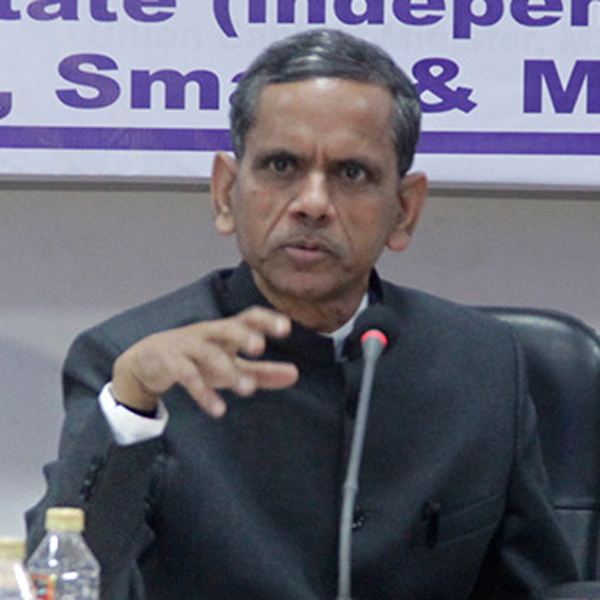
MSME to take sustainable development initiatives till grass root level: Development Commissioner Mr. Ram Mohan Mishra
The Ministry of Micro, Small & Medium Enterprises (MSME) is poised to take its sustainable development initiatives till the grass root level, by empowering women even in remote villages through creating livelihood for them, tells Mr. Ram Mohan Mishra, Development Commissioner & Additional Secretary, MSME. He said the MSME Ministry has launched a scheme for supporting and harnessing the social enterprise segment as they are the key growth drivers for creating and sustaining new MSMEs. Mr. Ram Mohan Mishra was speaking at the Social Enterprise Conclave – 2018, wherein the Union Minister of State (Ind. Ch.), Ministry of Micro, Small & Medium Enterprises Mr. Giriraj Singh was the Chief Guest who addressed hundreds of women entrepreneurs who had come from various remote Indian villages. Empowering of women by creating livelihood for them is essential to attain India’s growth objectives, he said, adding that his ministry was already working in that direction. To make all round development, India needs more indigenously developed technologies for the optimum utilization of resources of the country for the sustainable development, emphasized the Minister adding further that for him women and the produce that is obtained from the cow are key to the development of villages in the country. Emphasizing that overall social development will ensure a greater India, Mr. Giriraj Singh said that the Prime Minister’s vision of doubling farmers income is an achievable goal only when we utilize all the resources available in rural areas like cow-dung, cow-urine, discarded human hair and agri waste products by turning them into bio-compost or utility products. MSME is aggressively promoting Prime Minister’s employment generation program aimed at generating self-employment opportunities through establishment of micro-enterprises in the non-farm sector by helping traditional artisans and umemployed youth in rural as well as urban areas. Moreover, the Ministry has launched several schemes and programmes for skill development of youth so that they may be gainfully employed, tells Ms. Jyotsna Sitling, Joint Secretary, M/o Skill Development and Entrepreneurship. As far as women entrepreneurs go, the Government has provided financial assistance to women entrepreneurs in setting up 14,768 projects in 2016-17, belonging to both rural and urban areas of the country. All these efforts are being undertaken so as to create a sound economic base at the grass root levels, even in the remote villages of the country. “MSMEs play a crucial role in providing employment opportunities and are complimentary to big industries, contributing greatly to the socio-economic development of the country,” adds Ram Moham Mishra. Some other schemes worth talking about include Solar Charkha Mission, which aims at contributing to the Green Economy by providing solar charkha units. Another innovating scheme is the Sweet Revolution aimed at increasing the production of honey. Attempt is also being made to revive the sick khadi units, which will produce hand-spun and hand-woven khadi fabric. Some of the important people present on the occasion included Ms. Jyotsna Sitling (Jt. Secy, MSME), Ms. Alka Arora (Jt. Secy., MSME), Lt. Gen. J.S. Ahluwalia (President, Institute of Directors), Mr. Atul Bhagat (Head, UN Environment Country Office, India), Mr. S.R. Gupta (ED, Lupin Foundation), Ms. Malavika Chauhan (Tata Trust), Ms. Kalpana Pant (ED, Chaitanya), Mr. P. Satish (ED, Sa-Dhan), Dr. D.P. Kar (Smart Village), Mr. Harsh Kumar (Niswarth), Dr. Jagadish Hiremut (Ace Embedded Intensiv Care Units), Mr. Manoj Chaturvedi (Sarvodaya Ashram), Ms. Kanchan Tai Parulekar (Swyamsiddha), Prof. Suryaprakash Goud (National Institute of MSME, Hyderabad), Mr. Prasad Dahpute (Varhad Capital), Mr. Abhijit Sharma (Rural Finance Market), Mr. Kalyan Basu (Invoice Mart), Mr. SJ Bharali (Asomi Finance), Dr. R.B. Barman (Former Chairman, National Statistical Commission), Mr. Raghunathan (D4E Networks), Dr. K. Jayakumar (IAS, Addl. Chief Secy. Sikkim), Ms. Atreyi Choudhury (Partner and Group Head, NRI Consulting & Solutions). Social activists, representatives of NGOs, entrepreneurs, research organizations, finance and business experts from different parts of the country, who work in the field of micro, small and medium entrepreneurship, deliberated upon issues related to social enterprises during the day long conclave.
Analytical Study of India’s Agricultural Exports Policy 2018
India’s agri-export so far has been a story of untapped potential. India is second in global agricultural production, but its share of world agricultural exports is as low as 2%. Agricultural exports’ contribution to India’s GDP is also as low as 2%, lower than other developing agrarian country. Brazil and Indonesia, for example, the 3rd and 6th respectively in terms of world agri-exports contributed 4% each to their respective GDPs and Argentina, 7th in world agro-export ranking, as per 2016 figures, contributed 7% to its GDP. Why is it so? India’s GDP was the highest in 2016, totaling US$ 2264 bn while the GDP of Brazil and Indonesia was US$ 1796 and 932 respectively and that of Argentina was US$546 bn. Can this situation be attributed to the presence of several more important contributors to India’s GDP than mere agri-exports? Or is it because India has a huge population to feed its agro-produce, limiting the contribution of agri-exports to a meager 2% of its GDP despite having the second highest global agricultural production in the world? This doesn’t seem to be a correct presumption since India’s export value in 2016 was 34 compared to Argentina and Indonesia’s export value at 37 and 38 respectively. Though Brazil’s export value stood at 77, far higher than the rest, Thailand had an export value of 37 compared to India’s 34 even if its world agri-export ranking was 8th, as compared to India at the 10th place. Figure 1: Comparison of Some of Top Agricultural Exporters’ Contribution to Domestic GDP India’s agricultural trade performance will provide the answer. India is the top tenth exporter of agricultural product in the world, as per WTO figures. Top exports comprise of sugar, beef, rice and shrimp. Export of principal agricultural products including rice, wheat, sugar, cotton, fruits and vegetables are ‘free’ (i.e. no quantitative restriction is in place) whereas export of pulses (excluding chickpea) and edible vegetable oil in bulk (excluding coconut and rice bran oils) are ‘restricted’ to meet domestic demand. Since the economy opened up in 1991, India’s agricultural trade surplus reported more than ten-fold increase between 1991-92 and 2013-14. The brisk pace at which exports increased offset the corresponding increase in imports. However, in the last three years, agricultural exports fell by 22% while imports increased by 62% thereby resulting in a significant decline of trade surplus of 70%. Figure 2: Agri-Trade Performance (source – CMIE Economic Outlook) There is a need to analyse these figures in the light of the recently launched Agri-Export Policy 2018. For the first time since India’s independence the Executive has seriously deliberated upon enhancing agri-exports and come up with a policy for the same. Despite producing the highest, and exporting nearly as much in value as many other countries, agriculture exports have seen a steep fall. We will have to look at the commodities being exported from India to solve the issue. India exports sugar to the world and has huge stocks of wheat with it but there is no international brand from India for biscuits, which require only sugar and wheat. Likewise, India exports shrimps to other countries, which in turn add value to them by processing it to international tastes, and earn several times more than India. Likewise, being a top exporter of beef doesn’t help – we have no setup or international brand which makes ready-to-eat processed beef using Indian spices and sauces, for international consumption. Sadly, this situation reminds us of the grievances of producers and consumers during the British Empire with raw textile crops and other materials. The most commendable part of India’s export policy is that it has tried to find the solutions to the problem instead of dwelling much on the issues at stake. If implemented full-heartedly, there is no way that that India won’t achieve the Agri-Export target of US$ 60 billion by 2022. With focus only on commodity export, stagnation in agri-export was bound to occur; something that Mr. Mohit Singla of TPCI had been stressing upon since some time. In a welcome step, Union Commerce Minister Mr. Suresh Prabhu has announced that in accordance with the new Agri-Export Policy 2018, export restrictions on most organic and processed agricultural products will be removed; barring commodities other than those identified as essential from the food security perspective, such as onions. The idea is to assure that organic or processed agriculture products will not be under any export restrictions such as export duty, export bans and quota restrictions. The agri-related exports from the country this year are expected to be worth around US$37 billion, which was US$ 7 billion more than that in the last fiscal. Considering that there was 20% growth in exports this year, achieving US$ 60 billion by 2022 seems possible. Mr. Prabhu has envisaged US$100 billion to be the export target in the next few years. The Cabinet has also approved the proposal for establishing a monitoring framework at the Centre, the Ministry of Commerce being the nodal department and representation from various lined Ministries/Departments, Agencies and representatives of concerned State Governments, to oversee the implementation of the agriculture export policy. The Ministry predicts total outlay for implementation of the policy to be 1400 crore, already existent under different schemes. Besides, the Centre would work closely with the State governments to help them make good use of the policy. The policy seeks to diversify the country’s export basket and destinations, by boosting high value and value-added agricultural exports, including focus on perishables. This will change the focus from the current scenario as per which rice, meat and marine products account for more than 50 per cent of Indian agri-exports, though these commodities will continue to be exported. The emphasis, as announced by the Union Minister, would also be given to promote the export of novel, indigenous, organic, ethnic, traditional and non-traditional agro products. It is here that Indusfood assumes importance! Being promoted as the World Food Supermarket of India, Indusfood has witnessed great enthusiasm from leading
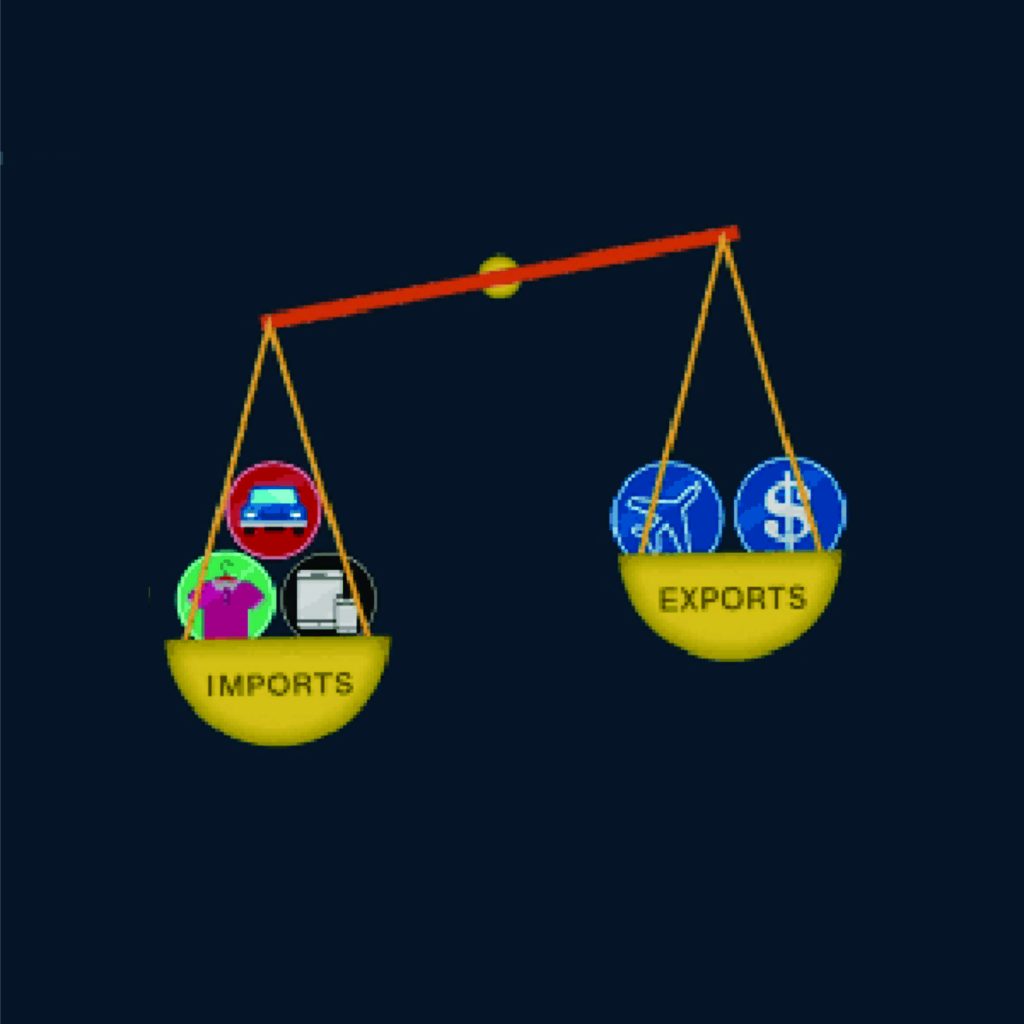
Is India’s widening trade deficit a reason for concern?
India’s trade deficit is rising! During the April-October period of the current fiscal, exports grew by 13.27% to $191 billion while imports jumped by 16.37% to $302.47 billion, leaving a trade deficit of $111.46 billion during the first seven months of the current fiscal. The deficit was $91.28 billion in April-October 2017-18. India’s Current Account Deficit (CAD) is seen at 2.8% of GDP this year against 1.9% last year. In FY18, the merchandise trade deficit stood at $156.8 billion (6.0% of GDP) and it is feared that this will widen to a four-year high of 6.4 percent of GDP in FY19 ($178.1 billion). Trade pundits in TPCI see this as a cause of concern. While some people see the crude price hike and India’s fetish for gold import as the cause, TPCI sees the cause of the problem is not due to this but the solution lies elsewhere. Though there is no denying the fact the India is the world’s third-biggest crude importer, and buys 80% of its oil needs from overseas markets. In October 2018, oil imports totaled $14.21 billion, up 52.64% from the import in corresponding month in 2017. What is the cause? Is it escalation in commodity prices, particularly oil and gold, is it sluggish external trade, is it rising protectionism or is it the falling rupee? Sluggish external trade is undoubtedly one of the reasons! External trade that had emerged as a critical component in India’s growth engine, accounting to 55.8 percent of India’s GDP in FY13, decreased to 40.6 percent of the GDP in FY18. Private consumption and government spending supporting the growth momentum were attributed as the chief cause. On import side, a 25.7 percent surge in petroleum/petroleum product imports coupled with a 32.1 percent rise in gold, silver and precious stones imports, led to the overall import registering a growth of 19.7 percent to $459.7 billion in FY18. The proportion of these two commodities in total import during FY14-FY18 was 41.4 percent. Organic/inorganic chemicals and engineering goods exports registered a 10 percent year-on-year growth to $302.8 billion in FY18 led by the surge in petroleum products. Despite this double-digit growth, exports in FY18 were lower than FY15. Apparently, those who blame high oil prices as the chief reason for trade deficit are not in the know of figures. Crude oil prices in 2013-14 were more than double the average for 2017-18. Despite this, the trade deficit was at $134 billion in 2013-14, which shot up to $161 billion in 2017-18. Those who give gold and silver imports as cause too need to see the figures! Gold and silver imports in FY2017-18 were merely three-fifths of the peak reached in FY2011-12. While the import was $31.9 billion in 2013-14 and increased to $369 billion in 2017-18, they were never close to the peak import achieved in 2011-12 amounting to $61.4 billion. It is thus clear that neither crude oil nor gold are the chief contributor for increased fiscal deficit. The real contributor is the non-oil, non-gold trade deficit which has shot up from mere 0.4 billion in 2013-14 to 53.3 billion in 2017-18. This happened because export of non-oil merchandise didn’t grow on desired lines. Between 2013-14 and 2107-18, India’s non-oil merchandise exports’ compound annual growth rate (CAGR) was only 1.36%, increasing from $252 billion to $266 billion. During the corresponding period, India’s non-oil, non-gold imports increased from $252 billion to $319 billion, a CAGR of 6.07%. While the deficit on account of the oil trade, or crude oil and petroleum products, fell from $102 billion to $71 billion between 2013-14 and 2017-18, the deficit on account of the non-oil, non-gold trade went up from $0.4 billion to $53.3 billion. It is thus clear! The merchandise trade deficit is not due to high oil prices or an increase in bullion imports, but it is on account of a sluggish export growth and a remarkable deficit in non-oil, non-gold trade. It is here that TPCI and its flagship event Indusfood comes into picture. Barely in its second year, Indusfood has already attained a reputation of India’s own World Super Food Market. Through inviting nearly 700 leading buyers including big wholesalers, supermarket chains catering to G&B products, Government’s F&B procuring bodies and through identifying value-added and organic products which have capacity to sell from international shelves, TPCI is seeing to it that India’s export figures grow and the target of USD60 billion export in F&B sector by 2022, as envisaged by newly launched Agri-Export Policy becomes achievable.
“Indian businessmen should see Iraq themselves”
Iraq is the biggest consumer market in the Gulf region. India had a burgeoning trade going on with Iraq till 2002. This trade got affected when political condition changed in Iraq. Afraid and having security concerns, the Indian businessmen shunned the Iraqi market. It is now that the Indian business delegations have started going to Iraq and started participating in trade shows there. Mr. Khaldoon Tareq Yaseen, the Commercial Counselor of the Embassy of the Republic of Iraq in New Delhi knows truly that unless interaction happens between Indian and Iraqi businessmen, the bilateral trade will not pick up. B2B meetings and face-to-face interactions are important for instilling confidence on both sides. Mr. Khaldoon, therefore, is working to reinitiate and rejuvenate business visits on both sides. Spearheading the commercial section in a dynamic manner, he is providing all possible help to Indians willing to trade with Iraqi companies. TPCI’s Media and Communication Department interviewed Mr. Khaldoon Tareq Yaseen and sought his views on various related issues. Present here are the excerpts from the interview Q: Give your views on the Indo-Iraq relations prior to 2002? Mr. Khaldoon Tareq Yaseen: Iraqi-Indian relations have traditionally been friendly and collaborative. Both the countries signed treaty of friendship in 1952, and another agreement on economic, scientific, technical and cultural cooperation was signed in 2000. On the whole, ties between the two countries have remained strong and nothing can adversely impact these relations. Q: How can our trade relations go back to the level of 2002 or stronger? Mr. Khaldoon Tareq Yaseen: The Iraq-India economic relations were hit because of war against terrorism which was meant to destroy our country and due to this, most Indian companies were afraid to enter Iraqi market, either from point of view of sale or investment. It is now clear that the battle has been won and peace has returned to Iraq. Several Indian companies are now eager to enter the thriving Iraqi market. Iraq is a big and growing market. When we talk about Iraqi market, we talk about more than 34 million consumers whose per capita income is growing by the day as the Iraqi economy grows. Iraqi market is the biggest in the region, more than 330 billion USDs and bigger than all neighbouring countries including Israel, Turkey and Lebanon. If we look at the trade exchange statistics between Iraq and India, we find that the total trade exchange exceeded 19 billion dollars in 2017-18 and Iraq is ranked 10th in the list of India’s trading partners. Ever since I have been here since July 2017, it has been my honour to witness a lot many of these companies changing their mind and getting interested in tapping the business opportunities in Iraq. 46 big Indian companies visited Iraq for Baghdad International Fair in November 2018. This was a major event after 2003. Recently, TPCI took the first delegation of Indian businessmen aimed at generating confidence and enhancing business opportunities. The delegation met the Minister for Trade and Industry and got an opportunity to interact with various business chambers and key business persons. Q: What now? Mr. Khaldoon Tareq Yaseen: I can say confidently that Iraqi relations with India will be ideal model of cooperation for all countries all over the world, especially with assistance of our friends TPCI, whom I prefer to deal with. As you know, Iraq now has a new Government and after defeating ISIS, our new Government is very keen to open all the doors to all foreign investors, especially Indian investors. We have good impression about the Indian businessmen and investors from the previous projects done by them in Iraq in various sectors like railway, power stations, electricity, computer systems, IT, roads, constructions, water, sewage and more. Q: What is the present status of bilateral trade and what are the areas where trade is mainly taking place? Mr. Khaldoon Tareq Yaseen: As mentioned, the total of trading exchange between India and Iraq exceeds US$19 billion. Main product of trade from Iraq is petrol. Iraq has now exceeded Saudi Arabia in supplying petrol to India. At the same time, Iraq is importing a lot of Indian goods especially food stuff like buffalo meat, rice, beans, sugar and also items such as steel, pipelines, electrical items, motors, rickshaws, cycles, construction materials such as tiles, granites, sanitary wares, etc. TPCI has done a lot in enhancing bilateral relations between sellers and buyers of food stuff by inviting more than 30 Iraqi businessmen from Iraq to Indusfood 2018, which was held in Greater Noida in January 2018. We are also expecting a high ranked official delegation from Ministry of Trade in Iraq to participate in Indusfood 2019 to get advantage of this opportunity and to hold in-depth discussions with the Indian side in order to increase the volume of trade exchange between Iraq and India. Q: How and in which area do you see future focus of trade between India and Iraq? Mr. Khaldoon Tareq Yaseen: When we are talking about Iraqi market, we are referring to promising opportunity in all fields because Iraq now depends on imports to satisfy the majority of local demand but on the other hand Iraq is well-known as a virgin land as a result of long period in the past during which foreign investment was considered as a second type of imperialism. We are aware of the fact that Iraq is full of natural and human resources and have huge number of trained engineers and technical staff available in the Middle East. So focusing on only sale for the Iraqi market is not the best choice, but the best choice for them is to set up production units that aim to maximize value-added products. The completion in Iraq is low and the challenges presently are not big. According to my opinion and according to the opinion of experts on Iraqi economy, Iraq is most suited to establish these production units. ‘Make in Iraq’ is a slogan that will catch
Product Profile: Sweet biscuits
The word biscuit is derived from an old French word ‘bescuit’ which means “twice-cooked”. This is because biscuits were originally cooked in a twofold process: first baked, and then dried out in a slow oven. The popularity of biscuit may be attributed to its characteristics such as nutritious, easy-to-store, easy-to-carry, and long-lasting. It is primarily used as a snack. For India, Sweet Biscuit is an important commodity owing to its large demand in primarily European and American market which India so far has not been able to tap despite availability of adequate raw materials such as wheat and sugar. Its significance is also driven by the push for value added commodity export. World Trade: Sweet biscuit’s total trade worth is over US$ 16 billion in 2017. Global exports of Sweet biscuit in 2017 was valued at US$ 7.9 billion with Germany leading the list and its total import is valued at US$ 7.9 billion with USA leading the list. India exported US$ 169.5 million in 2017 primarily to USA and African nations such as Angola. India imported sweet biscuits of worth US$ 6.1 million in 2017 Primarily from ASEAN countries. Using various indicators such as untapped market value, Trade complementarity index and trade openness index the potential markets derived for India for exporting sweet biscuits are the following. A brief overview of ad valorem tariff in the potential markets show that this product does not entail very high tariff. Tariff structure across the potential markets is as follows. Sweet Biscuits are very high potential product for India based on India’s trade balance and RCA. India is competitive to export the same.
Immediate steps needed to rejuvenate trade with Iraq
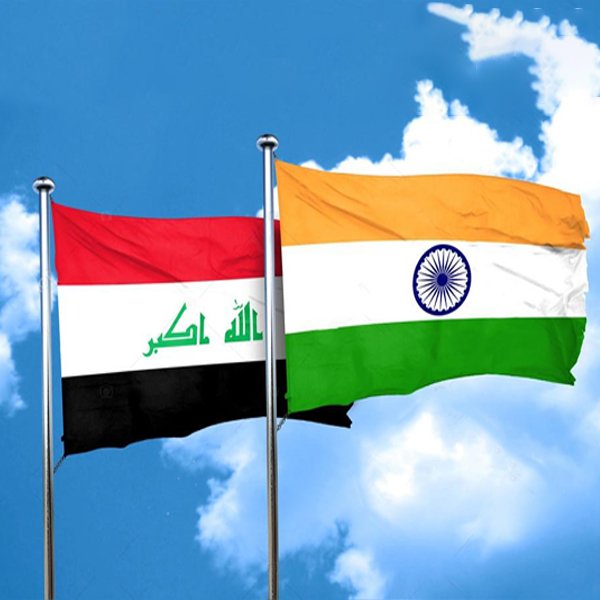
Political uncertainty, fear and security concerns, coupled with lack of direct sea and bank route, kept away the Indian businesses from Iraq since 2002. With the bilateral trade touching $19 billion between 2017-18, there are huge opportunities for Indian companies in various sectors including commodities, infrastructure and crude oil. In an effort to reclaim the lost markets, in association with the Department of Commerce, Trade Promotion Council of India (TPCI) led a delegation of Indian exporters to four Iraqi cities of Baghdad, Najaf, Karbala and Erbil, for rebuilding confidence and to restart trade with that country. The delegation had exporters of tea and other commodities like confectioneries, spices, ready to eat food, fresh & frozen fruits & vegetables and pulses. Let us discuss the tea scenario: India was exporting 52.46 million USD worth of tea to Iraq when the country went into turmoil in 2002. This constituted 73.35% of the overall tea import by Iraq from foreign countries. Sri Lanka, then, was far behind, exporting 19.06 million USD worth of tea with 26.64% market share. This means that only two countries fulfilled Iraq’s entire requirement of tea. By the year 2009 when democracy returned to Iraq, Sri Lanka had overtaken India by a large margin with exports worth 37.02 million USD accounting to 57.88% of the market share. India had fallen behind exporting 26.93 million USD worth of tea accounting to 42.11% of the tea being imported by Iraq. The figures speak for themselves! Though there had been significant drop in tea import by Iraq during this period, Indian exporters of tea had chosen not to enter the risky territory while Sri Lankan exporters continued to send their cargoes. With Iraq falling into turmoil yet again after 2009, this time due to ISIS-backed terrorism, Indian exporters shunned the risky Iraqi territory furthermore to the extent that when apex trade promotion organization Trade Promotion Council of India (TPCI) took a BSM delegation comprising of tea and other commodities like confectioneries, spices, ready to eat food, fresh & frozen fruits & vegetables and pulses, to Iraq last month, trade figures of tea exports had fallen to nadir with India accounting to meagre 2.93% of tea being imported by Iraq (worth 4.17 million USD) and the Sri Lankan exporters accounting to 97.06% of total tea import to Iraq (amounting to 138.02 million USD). Baghdad, Najaf, Karbala and Erbil were the 4 cities where the Indian embassy in Iraq had arranged BSM of Indian company representatives with prominent buyers from Iraq. The delegation also met the Minister of Trade in the Iraqi government Mohammed Hashim Al Ani, in the company of senior officials of Ministry of Trade and of Foreign Economic Relations of Iraq. Meetings with representatives and members of Iraqi Indian Economic Cooperation Council, Iraqi Indian Business Council, Federation of Iraqi Chamber of Commerce and Najaf Chamber of Commerce were also held besides meetings with key buying companies. Indian companies were jubilant at the vast size of market that was there to tap. However, it will take a great amount of time and effort to regain the lost ground in Iraq. Was it due to the hype surrounding the disappearance of Indian group of nurses that Indian traders shunned Iraq while their Sri Lankan counterparts continued to gain on business? Khaldoon Tareq, the Commercial Attache in the Iraqi Embassy in New Delhi says most of the Indian companies were afraid to enter the Iraqi market. Says he: “After 2003, most of Indian companies were afraid to enter Iraqi market but now when the perception about security risk has changed, Indian companies are eager to enter into the Iraqi market with 34 million consumers and an increasing per capita income annually due to positive economic growth.” Jointly planned in association with the Department of Commerce, Govt of India, this TPCI delegation to 4 Iraqi cities created the necessary confidence building among the Indian delegation, many of whom built sufficient contacts to recommence the lost trade. Bottlenecks, however, are still many and need to be sorted out. One of the key hindrances is lack of a banking route with Iraq due to which the existing trade is dependent on the hawala route. There existed good banking trade with Iraq prior to 2002 which is non-existent at the moment. This problem will get sorted out when an Indian bank opens up a branch in Baghdad. Lack of direct sea route is also a matter of concern with most of the trade being diverted through Dubai. But that is not such a great problem hindering business, says Mohit Singla, Chairman TPCI. If Sri Lankan businessmen can do trade in the existing set-up, so can India. The major issue was fear and this first of its kind delegation since 2002 acted as a confidence building exercise and helped change the perception of Indian businessmen towards the Iraqi market.
Why global value chains matter?
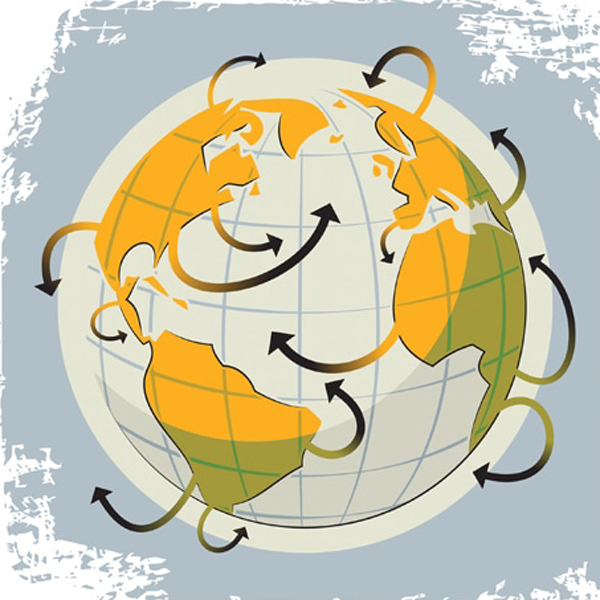
One of the most important impediments for developing countries is trade costs. Non-tariff trade costs in today’s world like freight, insurance, and other cross-border related fees which tend to be much larger than any remaining import tariffs as products travel through the various stages of production. Those trade costs have a monetary dimension (for example, transportation, insurance, and other fees), but also a more intangible dimension: information costs, nonmonetary barriers (regulation, licensing, and so on), market intelligence platforms and weak trade governance leading to uncertainty. The role of GVCs in boosting a country’s export competitiveness is a widely debated topic in economics. Organisations such as the WTO, OECD (Organisation for Economic Co-operation and Development) and the World Bank have been arguing that GVCs can support a country to boost its manufacturing exports, provided right kinds of reforms accompany them. Such policy prescriptions have focused more on labour market reforms and improvement in ease of business rankings, and remained critical of attempts to force domestic content requirements on players involved in GVCs. On the other hand, many developing countries have lamented the fact that thanks to GVCs, they have become stuck at low value addition activities without much income generation. GVC has become all the more necessary because selling products that are labour intensive are becoming difficult for many developing countries and they are facing falling returns unless the producers are able to upgrade the quality of products through higher value addition. This problem is particularly relevant to SMEs of developing countries which generally have limited pricing power and limited capabilities and options for upgrading their products. The way they can export is to link up with international production networks but then they have to meet a wide range of increasingly stringent global standards with respect to quality, price, timely delivery and flexibility. Only some countries have been successful in integrating themselves in the GVC and China is on the forefront. Almost all big retail chains of the world get their products made in China even though shifts to other locations can be seen in recent times. India has been able to participate in GVC in gems and jewellery, automotive parts and services. But why is it that India is not able to integrate into GVC in more items? The reasons could be many ranging from lower wages like in the garment industry of Bangladesh to reasons such as logistics, infrastructure and ability to deliver consignments on time due to lesser regulations. Instead of entering the GVC, India could easily enter a Regional Value Chain (RVC) in garments and in many other items with neighbouring countries, especially when there is a Free Trade Agreement with the countries within the region in place. For Regional Value Chain to take off, India will have to improve its cross-border infrastructure, remove tariff and non-tariff barriers, speed up the implementation of rules for harmonisation of regulations and technical standards which could make the trade between countries of the region more fluid. Ironically, 70 per cent of India’s export earnings come from the small basket products. India has a high share of world exports in the following such products: small diamonds (19.8 per cent), jewellery (12.7 per cent), rice (39.1 per cent), buffalo meat (19.1 per cent), shrimps (17.7 per cent). Other major products are petroleum, cotton, yarn, ladies’ suits, medicines, auto components. The small size of the global basket limits the potential for future growth. Also, most products face intense competition from low-cost countries such as Bangladesh and Vietnam. India has a weak global export share in these commodities such as mobile phones (0.19 per cent), integrated circuits (0.01 per cent), computers (0.04 per cent), solar-powered diodes, transistors (0.14 per cent), LCDs (0.04 per cent). Compare these shares with India’s 1.7 per cent share of global merchandise exports. India has an insignificant presence in large basket products that have become important in world trade. Most large basket products are infra critical products whose parts are manufactured in several countries. The facts given above show that although increasing integration to the global economy has brought gains to a section of Indian manufacturing, India has ended up importing more from the rest of the world rather than exporting to it. India is not the only economy which is facing such problems. Unless India undertakes holistic reforms which equip its manufacturing sector to fully exploit the advantages of integration to the global economy, it is unlikely to realize the dreams of the becoming the next global factory.