Expected to become a US$ 10 billion industry by end of 2020, influencer marketing is adopted by an increasing number of brands and marketers due to the way it impacts people. Creating and executing a campaign could be challenging at times, but data-driven influencer marketing platforms can help brands simplify the process. Image credit: Single Grain The Coronavirus pandemic has brought the world to a standstill. Individuals and businesses are impacted severely as people are forced to stay in and the outside world became a distant luxury. Due to a lack of studio or office space, brands were forced to rethink business strategy entirely. Where traditional methods of marketing and advertising products were no more feasible, we noticed a shift towards digital and Influencer Marketing, which offered a more sustainable and cost-friendly way to market a product to a wider audience with great efficiency. According to Wobb, 97% of marketers have noticed lower in-person marketing arrangement with 84.8% increment in openness towards digital offerings. Influencer Marketing offered brands a relatively cost-friendly way to reach out to their target audience through a network of Influencers. Brands were able to get an exponentially higher reach among their target groups as they reach out to people on a platform where they are the most active, social media. So, who is a Social Media Influencer? There is a notion floating around that a large social media following is all it takes to be an influencer, which is untrue. There are factors like credibility or knowledge of a particular industry, engaged audience and quality of content, which play a much more important role. The ability to leverage all these factors and create content, which keeps your audience engaged, while at the same time results in growth, is something that sets a quality influencer apart from the rest. How can brands benefit from Influencer Marketing? Let us take the case of health and wellness brands during the Coronavirus pandemic. A deadly virus infecting people all over the world was a strong enough incentive for people to focus on health and cleanliness. Due to a spurt in demand, there was a void on the supply end, as existing brands could not produce goods fast enough. This led to a sizeable influx in the number of health and wellness focused brands flooding the market to fill the void. This was an opportunity for new brands to shine, but on the flip side, it was followed by intense competition. Staying ahead of the competition Multiple brands like Tatva Health, Dr Vaidyas and Sirona, among others, stood out and turned this crisis into an opportunity. So how did they do it? A closer look at their approach brings out one common strategy that helped them immensely – Influencer Marketing. They were able to reach a wide set of audiences and raise brand awareness as well as promote their products and services through a network a nano and micro-influencer across all forms of social media. Due to the pandemic, there was a huge uptick in the engagement of health and wellness influencers on social media platforms, which these brands were able to leverage. With the help of Influencer Marketing Platforms, these brands were able to run multiple campaigns with hundreds of nano and micro-influencers, thus resulting in higher reach and brand awareness, eventually converting to better Return on Investment (ROI). Post-Covid – a new dawn for marketing Thinking out loud, things will never be been the same again, at least for marketing. The bar has already been set; the transition to digital is in motion and more efficient ways to market are already being adopted. The time for brands has come, to either go digital or lose out on a huge chunk of the market that is growing at a rapid pace. Digital spaces are getting crowded and it’s all about standing out. Brands need to adapt and experiment with every strategy possible to discover what works for them. Influencer marketing has stood the test of time and is as impactful as it was, if not more. It can be a great way for brands to reach out and make a mark for themselves on social media platforms. Leveraging brand value for higher social impact Legacy brands are adapting to the digital revolution by leveraging their brand value to make a larger social impact. Their name carries a lot of value and any campaign with their name association catches the attention of people much faster. Multiple legacy brands are using this leverage in conjunction with influencer marketing to reach the widest audience possible. Pepsico India can take credit for being the flag bearer of the phenomenal rise of influencer marketing in India. Over the past couple of years, they have run campaigns, which turned into social media movements or a cultural phenomena in their own right. In 2019, Pepsi pushed its #SwagStepChallenge through a huge network of influencers, primarily on TikTok and Instagram, which became the next cool challenge to partake from general public and celebrities alike. It generated an unbelievable 5.4 billion impressions and over 100,000 user-generated videos being created across social media platforms with #swagstepchallenge. Another subsidiary of PepsiCo, Lays India has repeatedly launched social media campaigns with a wide network of influencers to grab eyeballs and get people engaged. Campaigns like #Smiledekedekho became a gigantic success along with #Heartwork campaign earlier in June this year, generating hundreds of millions of impressions. Once, a brand gets recognized for its campaigns, people look forward to more campaigns from them in future. Simply put, going viral is what brands aim for and influencer marketing is an expressway to achieving this goal – as influencers possess something that’s difficult to generate quickly – an engaged audience! Challenges with running an influencer marketing campaign Expected to become a US$ 10 billion-dollar industry by the end of 2020, influencer marketing is being adopted by an increasing number of brands and marketers, due to the way it impacts people. However, creating and executing a
Indian whisky industry: Too early to say cheers?
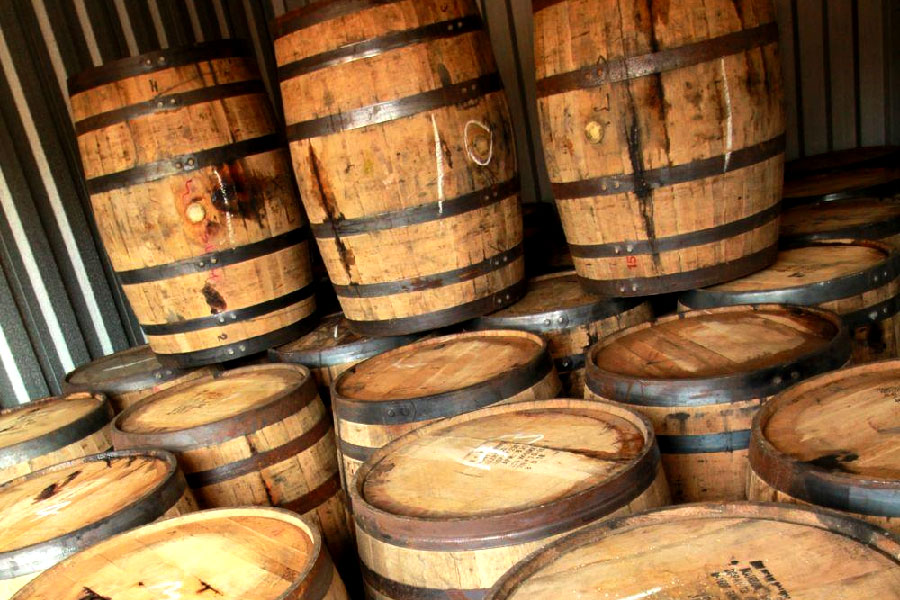
A number of Indian origin packaged aged blended/single malt spirits are taking the world by storm. This is due to the efforts of three brands – Amrut, Paul John and Rampur – that are changing the face of Indian whisky industry. Yet, the country lags behind the likes of UK which is famous for its Scotch or the USA which is known for its Bourbon in the global spirits race. At the same time, the popularity of Indian single malts is yet to pick up in the domestic market as many luxury consumers are more compelled by the wonders of high-end blended scotches. Policy support through measures like Prime Minister Narendra Modi’s ‘Vocal for Local’ campaign, innovative marketing strategies and acquiring the prestigious GI recognition are some of the ways to help the segment grow in the domestic & international markets. Image credit : https://bit.ly/3ki5kNn 2020 has been a milestone year for the Indian whisky industry. Amrut Fusion was conferred the title of the best Indian whisky in the world at the highly coveted International Wine and Spirits Competition while Mithuna by Paul John was declared the world’s third-finest whisky by acclaimed Jim Murray’s Whisky Bible 2021. Clearly, a number of Indian origin packaged aged blended/single malt spirits are taking the world by storm. The international success that these Indian single malts have fetched raises some questions – How distinct are these concoctions from other whiskies in the Indian Made Foreign Liquor (IMFL) category? What let to their success? What lessons can other brands aspiring to enter the business draw from their success? What is the future of Indian single malts? This blog offers insights into these questions. Carving an Indian niche on the world whisky map In 2019, India emerged as the world’s 15th largest whisky exporter, lagging behind the likes of UK which is famous for its Scotch or the USA which is known for its Bourbon in the global spirits race. But this is not to steal away from the charm of the Indian single malt. Albeit still in its infancy, Indian single malt is a rich and exciting playground for whisky lovers all across the globe. This is due to the efforts of three brands – Amrut, Paul John and Rampur – that are changing the face of Indian whisky industry. Source: ITC Trade Map (All figures in US$ billion) The reason why these brands are the vanguards of change lies in the alchemy of their composition. Thus, in contrast to IMFL – a broad term used to refer to whiskies, rum or vodka – which are typically made by reducing neutral spirit made of molasses and the mixing it with flavors, other spirits (usually Scotch whisky) and caramel, these three brands use malts or grains as raw materials. (It must be mentioned here that such drinks such drinks are not recognised as whiskies in the European Union.) However, even after their international success, the popularity of Indian single malts is yet to pick up in the domestic market as many luxury consumers are more compelled by the wonders of high-end blended scotches. Anuj B. Patel, a Chicago-based connoisseur and collector of Indian whiskies. “I don’t have a lot of friends or family members back in India purchasing Amrut a lot. This is the harsh truth from Indians who love their whiskey: We would rather drink [Johnnie Walker] Blue Label.” Thus, India has till date not warmed up to the idea of selling indigenous aged malt spirits to its consumers as a branded product. This raises the questions what can be done to create demand for Indian single malts in India (- the second largest market in the world in terms of volume and seventh largest market in terms of volume of whisky consumed) and international markets and what are the challenges that it can encounter while doing the same. Source: Euromonitor International Source: Euromonitor International A long ride ahead? Firstly, those venturing into the Indian single malt whisky need to fight a battle of perception. Mr. Vijay Rekhi, Founder Chairman, Vizanar Alcobev & FMCG Advisors, explains “the perceived quality of scotch is regarded as being superior by the local consumers. That is why it is preferred either as a blended product or single malt or that is why it is used by the local producers to mix their products along with scotch”. Secondly, in a price sensitive market like India, building brand loyalty is not an easy process. As Paul P John, Chairman & Managing Director, Paul John Single Malts asserts, “India has been selling indigenous aged malts since the late `90’s as a branded product but never really focussed in building brands as we know today. Creating a global brand is one of the toughest and most expensive missions to embark on with continuous deep investments that pose a big challenge.” Thirdly, Indian whisky makers are also grappling with the rising cost and the complexities of doing business in India. There exist a plethora of different nomenclatures of taxes and entry barriers created by 28 State Governments and 8 Union Territories in the country. Further, the new brands introduced in high tax license States, are unable to take the burden of such one-time hefty license fees. This high licensing fee, ultimately increases the cost of the brew, thereby rendering uncompetitive. For example, Amrut sells single malt for Rs3,300 in its home state of Bangalore, while bottled-in-India Scotch starts at around R1,800. Lastly, another area which India needs to work on is its barrel management. Murray opines that “if you put a good spirit into a poor cask, guess what you end up with? Poor whisky. It’s really important that they start putting their money in wood management, and understand it better. Use different types of casks and marry different styles to get structure”. In other words, if the nation wants to up its whisky game, Indian distilleries need to work on their wood management skills. How to win the whisky game?: Marketing the Indian
Digital payments: A game changer for Indian MSMEs?
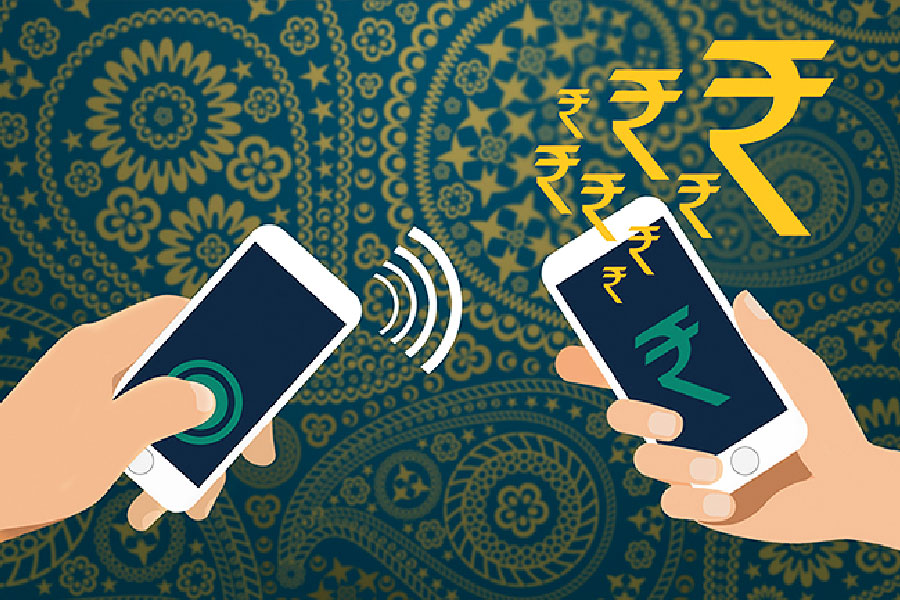
India is stepping on the gas in terms of digital transactions, much in line with other major economies who are already experiencing the benefits of going cashless. The trend is proving beneficial for India’s MSME sector in particular, enabling them to ensure transactional convenience and widen their customer base. India has been adopting digital payments at a rapid pace over the last few years. Transaction volumes have been growing at a CAGR of 55.1% since 2015-16 to reach 34.3 billion in 2019-20. In terms of value, digital payments stood at Rs. 1,623.05 lakh crore in 2019-20, growing at a CAGR of 15.2% during the same period. In between 2018 and 2019, as per Razorpay’s report, growth of digital transactions has been 338%. Razor-Pay Co-founder and CEO Harshil Mathur affirmed that a major factor in the growth of digital payments has been the Unified Payments Interface (UPI), which has dominated all transaction modes. Sectors at the front line in terms of adoption of digital payments were food and beverages, transportation and financial services. In April 2020, the number of digital payments through UPI declined to 999.6 million from 1,325.7 million in February 2020. However, the volume rebounded to 1,336.9 million in June 2020. Similarly for BBPS and NETC, the volume fell to 12.7 million and 10.3 million in April 2020, with a rebound to 17.6 million and 81.9 million respectively in June 2020. The inflexion point for the surge in digital payment methods including UPI, mobile banking and wallets was demonetisation, when 86% of the currency in circulation in the Indian economy was scrapped. Before demonetization, the main purpose of debit cards was to withdraw cash from ATMs. However, after the policy action, there was a surge in debit card payments. As per RBI data, the debit card’s use at point of sales increased by 83% between November 2016 and August 2019. The Indian government has been taking more steps focused on making the country a cashless economy. For instance, it has introduced low cost digital payment modes including BHIM UPI, Aadhaar Pay, NEFT, RTGS and many more. Furthermore, it has included a provision in which firms having a turnover of more than Rs 50 crore a year should provide low cost digital payment modes to their customers. Also, Merchant Discount Rate (MDR) would not be imposed on merchants who abide by this provision. This provision’s purpose is to boost UPI and Aadhaar-based transactions in the organized retail sector. Furthermore, RBI has also played an important role in making the economy cashless. Some recent initiatives of the bank to increase confidence of customers in digital payments include EMV chip and PIN-based cards, facilitation of switch off/on cards and tokenization. Following policies by the government and increased digitization of businesses, it is projected that digital payments in India would grow 3 times to Rs. 7,092 trillion by 2025. Mirroring a global movement Going cashless has become a norm for countries across the globe, to reduce burden on currency printing and bring down black money inflows. Sweden is expected to be the first country to go cashless, with 87% of the citizens in the country having access to internet banking in 2019. The country is tech savvy with almost every buyer accepting digital payments. Swish, the digital payment app, has 6.8 million users in the country with total population of 10.9 million. Sweden’s move to go cashless has played a major role in the reduction of cash robberies. Cash-in-transit robbery dropped from 58% in 2009 to 1% in 2018. Similarly, bank robberies have reduced from 77% in 2009 to 11% in 2018. In China, around 86% of the citizens use digital payments over cash. The country’s advanced technology ecosystem has complemented the rising use of digital payments. In 2019, China possessed more than half of the world’s 4G base stations. Also, innovations including QR code, AliPay, WeChat Pay and many others have helped China bring down its dependence on cash payments. India has a lot in store if it accelerates digitisation of transactions. The progression towards a cashless economy offers convenience in terms of ease of transactions at a high speed from any location, saving of time and paperwork, automatic generation of digital footprint and reconciliation of human errors. It is also easier for the government to track evasions in tax payment when transactions are getting recorded. Arguably, the most transformative impact of digitisation is on India’s enormous MSME sector. By plugging in to e-commerce platforms, they can access a large customer base. Missing the digital bus gets all the more untenable considering that customers are now increasingly preferring digital modes of transactions. Also, digitization provides a record of the MSMEs’ credit history, which makes it easier for them to get credit. On top of that, frauds and duplication in payments would reduce as the economy shifts more toward digitization. The ‘Indian MSME Impact Report, 2019’ by fintech company Instamojo concluded that transactional convenience and monetary incentives to customers were creating value for about two-thirds of the MSMEs surveyed. Another 20% saw value from customer preference for digital payment technology, data security, and synchronization. It is evident that the benefits of becoming a part of a robust digital payment ecosystem are recognized by MSMEs. From that perspective, COVID-19 is simply accelerating a shift to digital payments that were already underway, and more and more companies are realising the cost of not taking the leap. Going forward, MSMEs that leverage digital technology will be better positioned to ride the wave of economic recovery and lead growth from the front.
Promoting Indian malt whisky globally will take a lot of work
Given its food security issues with barley, India defied global whisky conventions to successfully build an industry from molasses. Paul P John, CMD, Paul John Single Malts admits that while they are managing to export small quantities for private bottling/blends, Indian aged malt whisky companies will have to work on consistent quality for the next few years to be in the reckoning. IBT: India has not adopted the concept of selling indigenous aged malt spirits to its consumers as branded products till date. Why is this so? Paul P John: India has been selling indigenous aged malts since the late 1990’s as branded products, but never really focused on building brands as we know today, and as Paul John Single Malt has done. Creating a global brand is one of the toughest and most expensive missions to embark on with continuous deep investments that pose a big challenge. IBT: What are the reasons for the high popularity of the IMFL segment and Indian players not following the process of whisky making like other leading producers, i.e. using malt spirits and ageing process? Paul P John: Alcohol is made from a source of sugar that is abundant. Scotland-made whisky from barley as it was grown in abundance there, Americans make whisky from corn and so on. We, in India, found our sugar source from molasses and hence, created an IMFL industry. At that time, barley was a food grain necessity for the country with priority for alcohol being relatively low. This may not have conformed to the world’s definition of whisky-making but has worked for us in building an industry. Further, India is a very price sensitive market and hence making grain, malt or cereal based whiskies would not have been economically feasible back then. Even locally aged whiskies are in the premium segment and not mass market. Yes, it has taken time, but we are finally here. IBT: What are the key challenges in the development of the malt spirit industry and the major reasons for dependence on scotch imports? Paul P John: We are an agrarian economy and still dependent on monsoons, and price fluctuation of ingredients is still driven by supply and demand vagaries. Till the time this is streamlined with near guaranteed source of continuity, it will continue to be a major challenge. Scotch imports bring in amplified value and hence have found its merit through ‘blended with Scotch’ products in India. Further, Scotch bottled in India is another important segment of the market and is considered a stepping stone on the quality ladder for the consumer. IBT: Foreign companies have promoted the concept of “Blended Scotch Whisky” to their benefit to promote exports of scotch to India. Can it be the other way round for Indian malts? Paul P John: We have been supplying aged malt in bulk in small quantities for private bottling or for blends. But it is too early to say if the world will start importing Indian Malt to blend in their products because of one recent worldwide recognition. We have lots of work to do, especially in the area of consistent quality for the next few years to be in the reckoning. IBT: Do Indian origin packaged aged Blended/Single malt spirits have good export prospects? Paul P John: Of course, we are now available in 40+ countries, several Duty Free stores and some cruise lines in India and overseas and see bright prospects, with lot of headroom for growth. An entrepreneur by choice, Paul P John was born in Kerala and ventured into the alcohol beverage industry in 1992. His zeal to surpass the ordinary led him to create a range of exceptional single malts, fine whiskies & wines through his brand, John Distilleries. Established in 1996, within a short span of just over a decade, under the commanding guidance of Mr. Paul P John, its reach spread from his headquarters in Bangalore, Karnataka to all neighbouring states. Today, the company is the 4th largest liquor company in the country by volume with a production spread across 8 locations & 7 states in India and an annual turnover exceeding Rs. 700 crore. The brand is also globally acclaimed and has to its merit several international awards. To this end, Mithuna by Paul John, was declared the world’s third finest whisky by the famous English writer & whisky connoisseur, Jim Murray.

Indian edtech: Are we celebrating too soon?
Indian edtech has seen a surge in fortunes post-COVID, but beyond a few success stories, startups must factor in unique intricacies of the business model to be able to outlive the pandemic. Besides, companies have to devise ways to coexist with the traditional education ecosystem, which enjoys the faith of parents over several generations. A number of edtech startups have mushroomed across India in the past few years. VC funding in these startups has grown from US$ 81 million in 2015 to US$ 404 million in 2019. The sector has created quite a buzz after digital learning witnessed huge traction post the shutting down of schools due to COVID-19. VC funding in edtech for the first half of 2020 has exceeded the entire amount for 2019 by nearly 150%. However, the funding patterns of edtech startups are quite skewed. Only around 4.17% of startups that launched between January 2014 and September 2019 have managed to raise funds, while Byju’s alone has grabbed 65% of the funds raised in this period. This raises questions on how dynamic and sustainable the sector will be, once the COVID era is behind us. Startups in this sector have to manage a difficult trade off between scale objectives and building a strong edtech brand. Also, they need to find ways to coexist with the existing education ecosystem, that enjoys the faith of parents over generations. In 2018, the World Bank mentioned in its ‘World Development Report 2018: ‘Learning to Realise Education’s Promise’, that schooling without learning is a wasted development opportunity. The study noted that India ranks second after Malawi in a list of 12 countries wherein a grade two student could not read a single word of a short text. India also tops the list of seven countries in which a grade two student could not perform two-digit subtraction, something that the bank defines as a learning crisis. The higher education sector is equally challenged. For instance, not a single Indian university found a spot in the top 300 universities on The Times Higher Education World University Rankings 2020. Similarly, Indian institutes have seen an average decline of 12 ranks in the latest QS World University Rankings. Clearly, there is much ground to cover if India wants to achieve its stated aim of becoming a global repository of knowledge and attract foreign participation in the sector. Beyond the rankings, the key concern is that a large numbers of students are unable to make use of the knowledge channels available to them. This has been attributed to problems such as a one size fits all approach, lack of innovation, skewed teacher-population ratio and lack of variety in courses. Sensing opportunity for value creation in the sector, a number of Indian edtech startups have emerged that promise to revolutionise the education landscape. Over the past few months there is a sudden wave of enthusiasm for these platforms, given the restrictions placed on the good old halls of learning. There seems to be a widespread consensus that this model is rewriting the script for the classrooms of tomorrow. But is the overexuberance truly justified? Edtech startups: At the cusp of the hockey stick curve The onset of the pandemic has been a particularly opportune time for Indian edtech startups, ushering in a phenomenon known in business & finance parlance as the ‘hockey stick curve’. This situation refers to sudden dramatic rise — in sales, profits, EBIDTA, etc. — after a relatively flat period. The mass shift to online mode of education served as an inflexion point. Investments in edtech startups were growing at a CAGR of 49.4% between 2015 and 2019. In just the first half of 2020, they have grown by nearly 150% as compared to the entire calendar year 2019. Several startups, which earlier struggled to entice consumers, recorded robust growth in new users, traffic, engagement, renewal, and course completion rates during this period. According to a recent report by RedSeer and Omidyar Network India, edtech users – both paid and free unique users – in K12 and post K-12 segments have doubled from 45 million to 90 million. While there was a massive 83% jump in the paid user base, there was a 40% rise in willingness to pay. The study estimates that online education offerings across Classes 1 to 12 are projected to increase by 6.3 times by 2022 to reach US$ 1.7 billion; while the post-K12 market is set to grow by 3.7 times to reach US$ 1.8 billion. Source: Venture Intelligence The sector has emerged a key area of focus for investments, with several venture capitalists seeing it as the next big thing. From 26 deals in 2015 amounting US$ 81 million in 2015, the sector witnessed 31 deals in the first half of 2020 amounting to US$ 998 million (till July 31). As on June 26, edtech was the leading sector in terms of venture capital (US$ 795 million), thereby superseding travel (US$ 722 million), real estate tech (US$ 597 million), fintech (US$ 597 million), food and beverages (US$ 437 million), e-commerce (US$ 393 million) and healthcare (US$ 376 million). The rise in investments was led by Byju’s, Vedantu, Unacademy and Toppr. Top edtech startups receiving VC investments in H1 2020 Company Investor Amount (US$ mn) Byjus Classes Tiger Global & General Atlantic 500 Unacademy Steadview Capital, Blume Ventures, Nexus Venture Partners, Sequoia Capital India, General Atlantic 110 Vedantu GGV Capital, Coatue Management, WestBridge, Omidyar Network, Tiger Global 100 Toppr Foundation Holdings, Kaizen PE 47 Source: Media reports Dispelling the shadows of darkness In theory, the edtech sector has adopted a number of m0dels, which are showing promise in terms of improving learning outcomes for students. Through personalised learning algorithms that allow services to adapt to each user’s pace and needs, companies like Vedantu allow tutors to draw insights about every student’s progress and hence undertake corrective interventions. Besides expanding reach of education across the country, another challenge they can potentially help tackle is the low teacher-student ratio. According to a
Single malt whisky business requires careful study of the economics
Vijay Rekhi, Founder Chairman, Vizanar Alcobev & FMCG Advisors, emphasises that Indian single malts are not necessarily inferior, and brands like Paul John and Amrut have garnered acclaim in the global whisky market. But Indian companies face a major constraint in terms of investments and getting a return on capital, besides climate conditions that do not allow long maturing cycles. He further suggests a complete relook at the regulatory framework of various State Governments when it comes to taxation of liquor, wherein the non-revenue regulations are made uniform across the country. This is important for encouraging an ecosystem, which can contribute to the flourishing of the liquor sector in the country. IBT: Why does India need to import scotch whisky and can this import be partially replaced by home-grown malt spirits? Vijay Rekhi: While India is already producing a significant amount of malt spirits, the perceived quality of scotch is regarded as being superior by local consumers. That is why it is preferred either as a blended product or single malt and used by the local producers to mix their products. Another point that needs to be acknowledged is that the process of manufacturing of malt spirits presently is not exclusive to Scotland. A lot of malt is being produced in Ireland, Japan, India and Australia. What has contributed to the global predominance of Scotch is the perception, saleability and protection, which the scotch industry provides through mechanisms like Geographical Indication (GI) that preserves the perception of quality. This, however, does not imply that Indian malts are inferior in any way. Indian single malts like Paul John and Amrut have garnered international acclaim. In fact, a lot of Indian companies are now bottling single malt, but they are not able to age it for as many years as in Scotland, because of the higher temperatures and therefore, the rapid leaching of wood, after the distillate is put in the cask. At the same time, owing to the intense heat, Indian single malts are usually not matured beyond 4 years, since they will be very heavy on the palate. So, the age and the Scottish heritage is what makes scotch a preferred blend or a single malt. Thirdly, Indian brands are not as old into the whisky making business as their Scottish counterparts. For example, McDowell’s started 20 years back and the Scottish malt has been around for 400-500 years. So, it takes time to change, Indian malt is still very successful, notwithstanding the age constraint – it’s a matter of time and patience and commercial viability of the entire project. IBT: How can Indian manufacturers be encouraged to produce single malt whisky? And what are some of the challenges they are likely to encounter if they undertake production of Indian aged malt spirits? Vijay Rekhi: Brands like Paul John Distilleries and Radico Khaitan are already garnering a lot of interest and attention in the international market. However, the only major constraint that these brands face is in regard to their ability to invest and a get a return on capital. It is also important to be able to match the pricing expectation in the marketplace. So, it’s an economic question, not a technical constraint. India can produce a lot of malt, which it does in any case. Single malt can be produced, but one has to work out the economics carefully to be able to launch single malts in India. IBT: What challenges are Indian whisky manufacturers likely to encounter if they undertake the production of an Indian aged malt spirits? Vijay Rekhi: The country’s liquor industry will have to keep evolving to the future conditions as they develop within the country or internationally. I would like to suggest a complete relook at the regulatory framework of various state governments, wherein the non-revenue regulations are made uniform across the country, much like the reform brought up in clustering various state taxes under GST; but keeping revenue aspects under the control of state legislatures. The top most challenges to liquor industry in India can be bucketed in the following points: First is the myriad state-wise regulations. The ever increasing plethora of different nomenclatures of taxes and entry barriers created by 29 state governments and 8 union territories is a major challenge. These regulations are against the interest of all sizes of players in the industry small, medium and large and dominant. It would be most desirable if there was a common set of regulations and procedures pan India, so that on the regulatory front, namely the non-revenue aspects of running Beverage Alcohol business, the rules would be the same all over India. This would be in conformity with the Constitution of the country, but will make regulations understandable. This sort of a change will ensure ease of doing business while leaving the right of taxation to each State Government. Secondly, there is a challenge of both intra and inter State discrimination. In the intra State cluster, different absolute amounts of licence fees are charged by States for bottling and distribution of products. The advantage works out in favour of large volume companies having established mega brands selling in most of the State in lakhs of cases, wherein the incidence of such fees works out in single digit per case and can be easily absorbed and justified by brands’ P&L. On the reverse, the new brands introduced in such high tax license states, are unable to take the burden of such one-time hefty license fees. So, these new brands are either adding losses in their brand P&L or have to be withdrawn before having a chance to offer choice to the consumers and becoming a commercial success. The prime example in this regard is in the National Capital of India – Delhi, where Indian whisky brands have to pay an annual license fee of Rs 25 lakh, whereas imported brands pay prorated only Rs 3 lakh per brand. Some IMFL brands in Delhi have an incidence of license fee of only

Google playing ‘smart’, but not ‘fair’?
Google has come face to face with its fourth regulatory challenge in India, this time in the smart TV market. Meanwhile, numerous startup developers led by Paytm are planning to join forces to combat its ‘anticompetitive practices’ vis-a-vis its app store. It’s time for Google to play a facilitative role in building a competitive market ecosystem, rather than suppressing it. Google has been accused of exploiting its dominant share in the smart TV operating system. As per the allegations, manufacturers of television using operating system of Google have to agree to terms and conditions that prohibit them from manufacturing devices on any forked version of android. This implies that manufacturers using Android TV would also have to manufacture other devices based on Google platform. The allegations have been imposed by Kshitiz Arya and Purushottam Anand, two antitrust lawyers, in a complaint filed with the Competition Commission of India (CCI). They conclude that Google is engaging in anti-competitive practices by using Android’s dominance, which would prevent competitors such as Amazon Fire TV OS from gaining share in the smart TV market. As per statcounter data, share of Google’s Android in the Indian smartphone market between September 2019 and September 2020 is at 95.85%. Even prior to this, Google has been accused of practicing unfair trade in India. CCI found that certain conditions imposed by the company on India’s manufacturers are unfair practices. In particular, Google made it mandatory for manufacturers to preinstall certain Google’s proprietary apps in the device. The CCI said, “Google reduced the ability and incentive of device manufacturers to develop and sell devices operated on alternate versions of Android.” Also, in February 2018, the CCI imposed a penalty of Rs. 136 crore on Google for abusing its market position and involving in practices like search bias and manipulation. The search engine giant has also been accused of unfair promotion of its app. In February, 2020, it was alleged that Google was unfairly promoting its Google Pay app, by prominently showing it on its app store and gaining an unfair advantage over its competitors. Furthermore, Indian start-ups are also seeking an alternative play store in order to combat the monopolies of Google and Apple. This came up after Google introduced a new billing system for apps with ‘in-app purchases’, with the purpose of earning a 30% commission. However its enforcement has been postponed to April 2022. In its defence, Google has also stated that the app developers have other options to sell their subscriptions as well. However, the Internet and Mobile Association of India (IAMAI) said in a release that Google has control over many layers between customers and their service providers as more than 90% use Android phones. Indian startups feel that the tech giant is misusing its large market share to earn maximum profit. Thus, they are planning to form an association of app developers to advocate their causes. In a notable move, Google also removed Paytm, India’s largest fintech app for hours before reinstalling it, saying that the latter’s UPI cashback campaign violated its anti-gambling policies. Paytm CEO Vijay Shekhar Sharma has termed the move arbitrary and biased, and even launched its own mini app store. In other countries also, the technology company faces similar allegations of unfair trade practices. In US, Google is expected to face a lawsuit by the US Justice department. These include depriving its rivals of data on users and their preferences. Also, it is said to favour products like YouTube and eBay in the search function. In the European Union, Google has been fined three times since 2017. It was charged a US$ 2.7 billion fine for involving in anti-competitive search engine practices in 2017. Later on, the EU charged a fine of US$ 5 billion to practice trade activities involving pre install requirement of Google’s products in the devices. Also, a fine of US$ 1.69 billion was imposed on Google in March 2019 for restricting its competitors’ ads on the AdSense service. Allegations of unfair trade practices against Google India Prohibits smart TV Manufacturers from using any forked Android version CCI fined Google for Rs. 1.36 billion for “search bias”. Unfairly compelling manufacturers to preinstall certain Google proprietary apps US Accused of using its dominance in search engine market and online advertising to stifle the competition. European Union Fined US$ 2.7 billion for unfair trade practices in search engine market. Fined US$ 5 billion for unfairly compelling manufacturers to preinstall certain Google’s proprietary apps. Fined $1.69 billion for restricting its competitors’ ads on the AdSense service The share of Google in search engines in the European Union member countries varies between 92 to 93% and in some cases it’s over 95%. Its share in the US search engine market is 86.86%. As per the allegations, Google is misusing its dominant position to gain a monopoly in markets. Less competition in a market drives up the prices, halters growth of new players and also reduces innovation, which is key to market evolution. Thus, it is obligatory for governments to have a watchful eye on tech mega giants. With Indian startups now coming together, this may just be a tipping point for Google in one of its most lucrative markets. Google needs to play an enabling role towards fuelling a dynamic, competitive and entrepreneurially driven market, which was the basis of its own genesis over two decades ago.
Is the automotive sector back on the road to recovery?
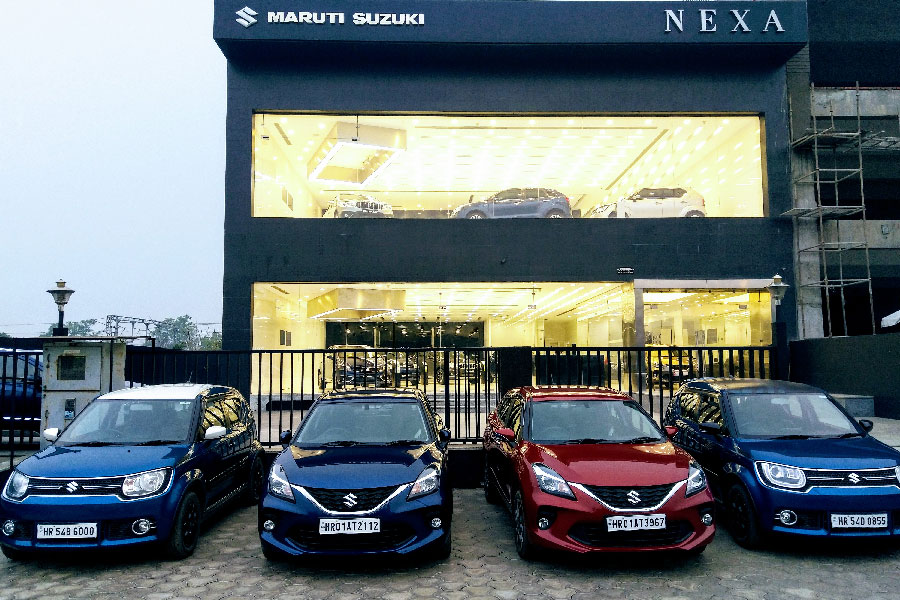
Auto companies have been experiencing a positive growth in Q2, post the protracted lockdown of the first quarter of FY 2020-21. However, industry leaders are still skeptical about the future growth pattern. Sales of auto companies are picking up pace in the second quarter of the fiscal year 2020. While sales of passenger vehicles (PVs) grew by 17%, two wheeler vehicle (2Ws) sales grew by 2-5%. The significant growth rate is partly highlighted due to the low base to compare the Quarter 2 sales with on a YOY basis. In September 2020 particularly, the recovery of the automobile industry is also visible through the positive growth in whole sale volume. Based on the volumes of Original Equipment Manufacturers (OEMs), it is estimated that the growth in wholesale for PVs was 28-30% YoY in September. The rate of wholesale growth in case of 2Ws has been estimated to be 11-13 % and tractors at 15-17%. However, wholesale volumes for medium and heavy commercial vehicles (M&HCV) are estimated to be declined by 16-20% YoY in September. Changing consumer behaviour is one of the reasons driving increased demand for PVs and 2Ws. People in rural areas and middle class families are preferring private vehicles to avoid public transportation, given the threat of the COVID-19 pandemic. Therefore, there is also an increase in demand from first time buyers. The festival season is also expected to bring an uptick in the sales in the automobile sector. Lasting around 45 days, the festive season usually brings twice the level of monthly sales for the industry. Vikas Jain, National Sales Head of Hyundai Motors Ltd. said that the company expects YOY growth of 16% for the industry in September 2020, with 10,000 deliveries for its vehicles on Dhanteras alone. When talking about tractor companies, a significant share of their capacity has been utilised during June-July when the whole economy was in the midst of a slowdown. Exemption to farming activities by the Indian government is one factor that has protected tractor makers from the impact of the lockdown. Also, the good monsoon, higher crop sowing and higher support prices by the government are other factors that have boosted the sentiments of tractor manufacturers. The industry has seen some positive growth after the setback it faced in the past few months of fiscal year 2020. The automobile industry was already facing the impact of the new GST regime, impending shift to BS 6 norms, Kerala floods and rise in insurance costs of vehicles in 2019. The disruption in demand and supply due to the COVID pandemic further impacted sales in the auto industry negatively. As per Federation of Automobile dealers Associations (FADA), retail sales of auto industry dropped to 88.87% in May 2020 YoY. In August 2020, the total vehicle registrations at the RTOs, which is a proxy for sales, fell by 26.81% YoY. Even after the positive growth in sales in September, auto industry leaders are skeptical for the future growth pattern, as the downward trend of the COVID-19 pandemic is uncertain. Furthermore, the year over year comparison is on the low base of last year. Dealers have admitted that the enquiries and footfalls are good, but they are not necessarily leading to sales conversions. Future sales growth is heavily linked to how the economy progresses going forward, as well as how it impacts the sentiment in the consumer and institutional markets.
Case of sour mangoes? The unremarkable foray of Harley-Davidson in India
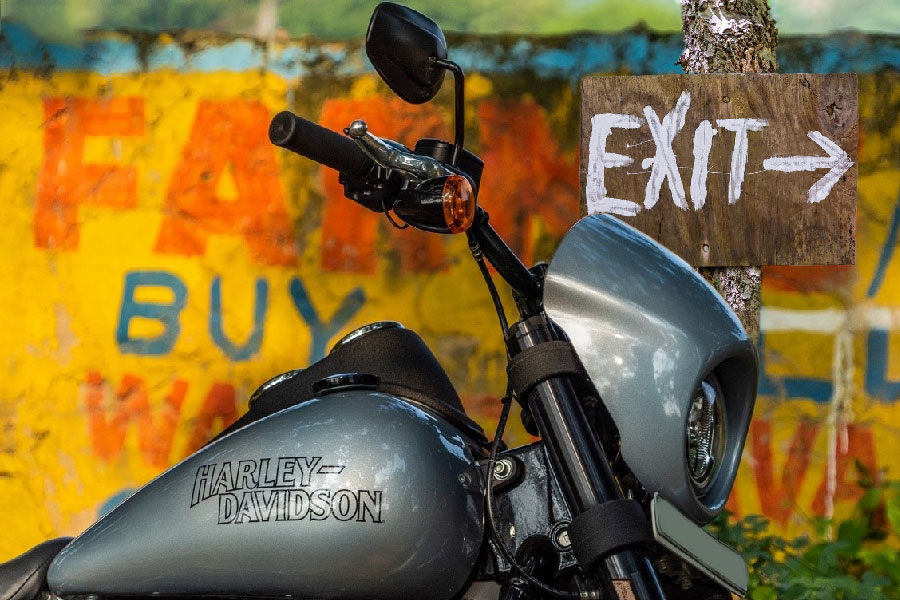
Despite starting with much fanfare, Harley-Davidson’s brief presence in India only seemed to benefit its competition. Beyond being a bargaining chip in Indo-US trade relations, its stint is a ready reckoner on how brands should not execute their India strategy. Harley-Davidson entered the Indian market in 2007, with US securing its entry in exchange for lifting an 18-year old ban on export of mangoes from India. Initial projections were quite bullish and the brand relied heavily on its strong lineage and potential of the Indian market. It set up a manufacturing base in Bawal, Haryana, which was only its second outside the US. Sales have been lackadaisical, however, and decreasing over the years to reach 2,470 units in 2019-20. Harley-Davidson has been clearly unable to convert its equity into sales. Even its loyal fan base seems to have opted for cheaper and more practical alternatives when it came to the actual buying decision. While the company blames high duties for making its products uncompetitive, the inability to get into local tie ups and bring in customised products has cost it dear in India. Competitors, on the other hand, have been quicker to launch a range of attractive products and provide customers with attractive and more affordable options. Over the past 2-3 years, US president Donald Trump raised a hue and cry over the high customs tariffs imposed by India on Harley Davidson motorcycles. This came out as one of the major issues in the Indo-US bilateral trade relationship, as the latter lifted GSP benefits under the pretext that it was not getting fair access for its companies into the Indian market. Call it a twist of fate or a remarkable coincidence – as India and US are said to be on the brink of a rather elusive trade deal, Harley-Davidson has decided to exit the country by discontinuing its sales and manufacturing operations. This is part of a global restructuring to leave markets where the luxury two-wheeler company has been unable to earn expected revenues and profits. Harley-Davidson entered India in 2007 as the result of a ‘mango’ deal – in return for granting it market access (with relaxation of emission and testing norms), when the US lifted an 18-year old ban on mango exports from India. There was a spring in its stride at that time; and Harley-Davidson even committed more to India than it would otherwise, considering that the Bawal plant was only its second outside the US (the other one in Brazil). But the company has been unable to step on the gas ever since. Sales figures at 2,470 units in 2019-20, are a far cry from the annual target of 10,000 units. Royal Enfield, recognised as the Indian ‘Harley-Davidson’ in biker parlance, sold 6.6 lakh units in comparison. For a better context, Harley-Davidson’s total sales in its India stint are around half of Royal Enfield sales in a month! To set the record straight, the company isn’t exactly making great strides in the US either. Its market share is shrinking, the company did not post sales growth for 14 quarters in a row and it employs just around 5,000 Americans. But on the other hand, it apparently has fans among Trump’s voter base. Furthermore, with its American lineage, Harley is automatically critical to his ‘America First’ policy approach. After repeated demands by the US, India reduced the import duties on completely built units (CBUs) to 50% from 100%, but it increased the duty on completely knocked down units (CKUs) from 10% to 15%. The latter accounted for 13 out of the 17 models that Harley Davidson sold in India, so the decision actually went against its interests. But it was expected that the reduction in duties for CBUs could prompt it to bring more such bikes into India. In February this year, Indian officials had reportedly committed to lower tariffs for bikes with displacement over 1,600 cc. The company has often blamed high import duties for its lackadaisical performance in India. Even though they did play a role, a closer analysis of Harley Davidson’s stint debunks this theory. Major causes of its failure are provided below: 1. Largely an assembler Harley Davidson had a manufacturing plant at Bawal in Gurugram that started in 2014. However, it was largely an assembly plant where bikes were assembled from the imported parts. If parts are imported, they have to bear not only domestic GST (28%) but also customs duty (25%) and a 3% cess, taking the total tax burden to 56%. With a value conscious Indian customer, the tax burden added to the already high premium being charged by the brand, building a recipe for disaster. Faced by competition from other players with a strong supply base and lower taxes (28% GST and 3% cess), Harley dived into losses. Had it focused on expansion of manufacturing and building a domestic supplier base, chances of success would have grown manifold. 2. Missing the virtue of patience? Hero MotoCorp, Honda, TVS Motor, Bajaj Auto, and Suzuki dominate the 2-wheeler segment in terms of sales. This is visible from the domestic sales in 2019-20 April-March data as shown below: Domestic sales of 2-wheeler manufacturers in India (2019-20) Brand Name Sales in units Bajaj Auto 2,078,348 H-D Motor Company 2,470 Hero MotoCorp 6,231,458 Honda Motorcycle & Scooter 4,706,589 Kawasaki Motors 2,628 Yamaha Motor 579,227 Mahindra Two Wheelers 1,038 Piaggio Vehicles 62,638 Royal Enfield 656,651 Suzuki Motorcycle 685,223 Triumph Motorcycles 591 TVS Motor Company 2,410,755 Source: SIAM Report, figures in units But this success has not come overnight. Players like Honda started working on building the Indian market right from the 1980s. Hero Honda was a highly successful joint venture before the two companies split in 2010. Even post the split, Honda has been able to independently script its success story and emerge the market leader. Its Activa model is well known for fuel efficiency, and Honda has continued to develop new models in tune with the Indian market’s demands. Both UK’s Triumph
Poultry Sector: Count your chicken before they hatch!
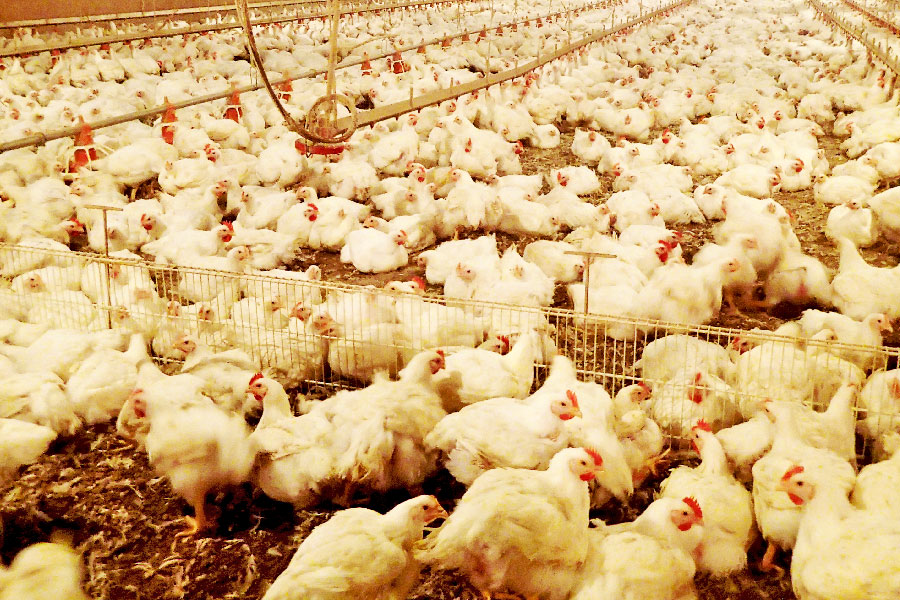
To address challenges faced by the poultry sector in international trade, India needs to scale up skill development programmes, improve cost competitiveness by boosting production of animal feed and build robust processing infrastructure. Poultry is one of the fastest growing segments of the agricultural sector in India, recording a 16.8% growth from 21 million during 2012 to 851.81 million in 2019. Consequently, India has catapulted itself as the world’s third-largest egg producer, after China and US; while it is the fourth-largest chicken producer in the world after China, Brazil and US. This impressive growth in poultry production has been accompanied by a modest export performance, especially due to concerns over quality. COVID-19 has added to the woes of the industry, as consumers chickened out, considering animals to be the vectors of the contagion. Few priority areas to be considered are looking for alternate sources of protein for the birds and having a robust poultry infrastructure that can be done to make the sector more vibrant. Poultry sector in India contributes over Rs 100,000 crores per annum to India’s GDP and generates direct employment for over 2 million small and marginal farmers in the interior rural villages and indirect employment for over 5 million rural households. According to the Food & Agriculture Organisation, poultry is one of the fastest growing segments of the agricultural sector in India today, driven by growth in per capita income, a growing urban population and falling real poultry prices. It notes that the production of agricultural crops has been rising at a rate of 1.5 to 2% per annum, while that of eggs and broilers has been rising at a rate of 8 to 10% per annum. This production comes from three kinds of farms: (a) Breeding farms which hatch and raise poultry for sale to other farms; (b) Broiler farms that rear chickens for their meat; and (c) Layer farms that keep hens to produce eggs. These findings are substantiated by the latest livestock census, according to which in 2019, the total poultry in India is 851.81 million, recording a 16.8% growth over the previous census. Of this, backyard poultry constituted 317.07 million (registering a rise by around 46%) while commercial poultry contributed 534.74 million (increasing by just 4.5%). Tamil Nadu, Andhra Pradesh, Telangana, West Bengal, Maharashtra, Karnataka, Assam, Haryana, Kerala and Odisha are the top poultry producing states in India according to the census. Category Population (2012) Population (2019) % Change Total poultry 729.21 851.81 (+)16.81 Backyard poultry 217.49 317.07 (+)45.48 Commercial poultry 511.72 534.74 (+)4.50 Source: Department of Animal Husbandry & Dairying; figures in million unless specified Given its impressive growth, India has catapulted itself as the world’s third-largest egg producer, after China and the USA; while it is the fourth-largest chicken producer in the world after China, Brazil and the US. According to APEDA, India exported 3,50,817.80 MT of poultry products to the world for the worth US$ 80.34 million during the year 2019-20. The primary destinations for its exports are Oman, Maldives, Indonesia, Russia and Vietnam Soc Rep. The figure, however, is quite low as compared to India’s poultry exports in the 2018-19 period (US$ 98.44 million) and 2017-18 (US$ 85.72 million). We look at some of the major challenges contributing to relatively weak poultry exports for India: Source: APEDA; Value in US$ million Stumbled by the stumbling blocks? The poultry sector in India is fraught with a number of challenges: a) Unhygienic breeding conditions The production strategies followed by Indian farmers are not in line with international standards, since a substantial number of poultry farms are congested and under regulated environment. Further, they are kept under continuous lighting so that they lay more eggs daily. What makes the situation problematic is that the farms where these birds are reared are licensed by the municipal officials who lack the knowledge, expertise and human resources to strictly enforce quality standards. At the same time, chemicals and substances like baking soda and ammonium chloride are added to the food. This is due to the fact that Indian farmers want to attain high production, with a minimum of money. Owing to unhygienic rearing practices and lack of quality control measures, Indian eggs often face rejections. b) High use of chemicals and drugs Another cause of concern in the poultry sector is that chemicals and medicines are added to animal feed to in order to boost yields and obtain better looking eggs. Ammonium chloride, potassium chloride and baking soda are some of the substances commonly added to poultry feed for these reasons. This is leading to the high predominance of antimicrobial drug resistance (AMR) among animals. According to Ramanan Laxminarayan, director of the Centre for Disease Dynamics, Economics and Policy (CDDEP), India and China have the highest levels of antimicrobial resistance (AMR) in animals. Not only does this negatively impact animal health and farmer productivity, it also has serious repercussions on human health. c) Uncompetitive prices of poultry in India Indian poultry sector is quite uncompetitive when compared to other countries like the US. This is attributed to the high cost of inputs – corn and maize – which are a part of animal feed. One reason for this is that US and Brazil roll out huge for corn and soybean. CBOT prices for corn are at US$ 170/175 i.e. Rs.12,000 per MT against Rs 18,600 MSP in India and De Oiled SOYA Cake is at US$ 325 i.e. Rs 24,000, against Rs. 32,000 in India. When the US government urged the Indian government to slash customs duty on chicken legs, domestic poultry farmers panicked at the prospects of dumping of these legs (which are way less consumed in the US as compared to chicken breast) in India at a throwaway price. They were also apprehensive that this will create an adverse sentiment in the domestic market, resulting in loss of livelihoods and put lakhs of farmers to insurmountable financial difficulties. d) Lack of adequate logistical & processing facilities Studies have found that birds