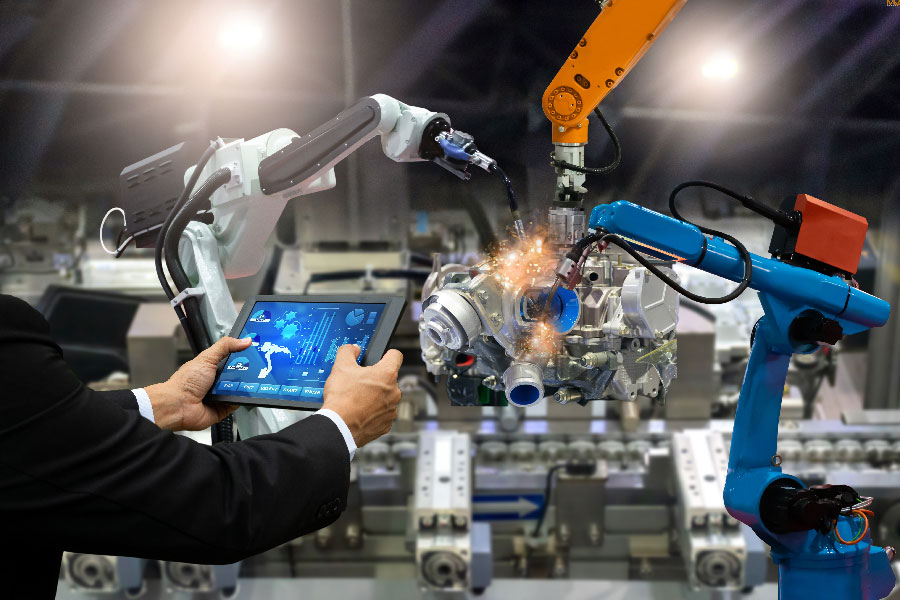
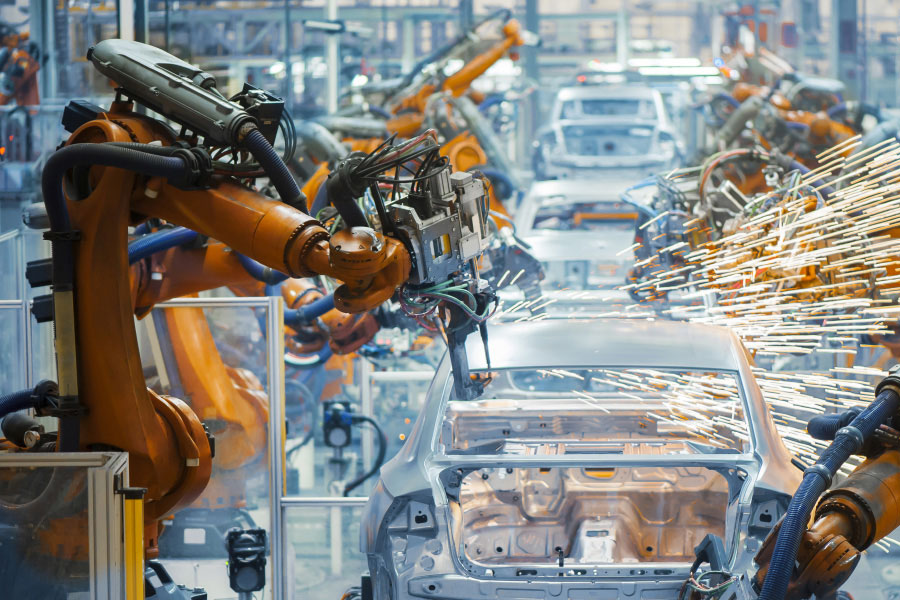
NThe onset of coronavirus set the stage for companies around the world to realize the need to not put all their eggs in one basket and diversify their supply chains. This development augers well for India since foreign investment would augment the GDP, churn employment in the country and increase foreign wealth. For this vision to materialize, the country needs to assume greater self-control over its national value chain by embracing a shift towards digital manufacturing. From manufacturing to distribution, this entails a complete overhaul of the production line to save time, reduce inventory, expedite process and gain the best out of this scenario. Image credit : https://bit.ly/2DHAxcJ The proliferation of COVID-19 is leading to the unprecedented crumbling of global supply chains resulting from mandated lockdowns across the global ecosystem. As assembly lines are forced to halt or curtail operations, manufacturers around the world realised that they can no longer depend upon price as the primary criterion to source components globally. In the meanwhile, the association of China with the germination of this contagion has led to simmering of international hostility towards China for the economic carnage caused by the virus. All these factors, coupled with the volatility of this situation, have expedited the shift in global trade relations. Industry experts believe that once the world recovers from this massive jolt created by the pandemic, there will be a shift toward a more fragmented and protectionist global economy, with restrictions on trade, investment and technology transfers. As localization of production or reshoring takes place all over the globe, trade system is likely to become more regionally focused. Each major region – Asia, Europe and the US – will likely have its own set of suppliers mapped out for strategically important products. “Asian countries ex-China will stand to benefit from diversification away from China provided that these countries have sound economic fundamentals, reliable infrastructure, sufficient human capital stock, and low geopolitical and supply security risk,” notes Moody’s Investors Service. Going digital! This creates the perfect window of opportunity for India for emerge as one of the preferred centres for manufactured products vis-a-vis China for India has a lot to gain from it. Foreign investment would boost the GDP, generate employment in the country and increase foreign wealth. But this opportunity can be leveraged only if India embraces the Nehruvian approach of ‘core self-sufficiency,’ or what Prime Minister Modi calls as a truly ‘Atma Nirbhar Bharat’. For this vision to materialise, the country needs to assume greater self-control over its national value chain by enhancing domestic value addition in its manufacturing industry. One way to turn this dream into reality is to harness digital channels to their fullest extent to become an economy of scale and hence, an ideal production choice for the world in the post-COVID scenario. According to Infosys, digitally mature companies have greater resilience during the pandemic, particularly in employee engagement and seamless supply chain operations. “Manufacturers that have moved critical applications to the cloud have been able to function more smoothly as their employees access what they need from their homes. Concerns about data security and performance have been either disproven or outweighed by the flexibility cloud applications provide. Enterprises that invested in advanced analytics make even better use of these capabilities,” it notes. How to make manufacturing smart & digitally sound? The move towards digital manufacturing will entail: 1. A digital factory floor – According to the Ministry of Electronics and Information Technology (MeitY), manufacturing automation will become increasingly pervasive across businesses and sectors in the coming decades. Manufacturing automation will encompass the reorganisation of human work amid advances such as robotics, artificial intelligence, and machine learning. Nothing has made this more apparent than the current health exigency which will force manufacturers to plan their operations to improve productivity and performance management in real time. Coupling the IoT with advanced analytics can help to maximise the yield and manage assets, leading to an improvement in overall productivity by 7 to 11% by 2025. A case in point is Indian global two-wheeler company, Bajaj Auto Limited, which is the first Indian company to implement use of collaborative robots in automotive assembly lines in 2010. Its Universal Robots offered numerous benefits such as diminishing the challenge of space constraint in a manufacturing facility by the use of ceiling-mounted cobots, reduced redundancy of work by completing repetitive movements that require precision standardisation and catered to multi-modelling adaptability. Consequently, productivity at Bajaj Auto has grown from 507 to 804 vehicles per person per year, 58.5% increase year-on-year, while costs have reduced by 30-40%. 2. A digitally smart workforce – Imparting intelligent and innovative technologies to enhance cognitive reasoning and knowledge is a strategy to create a digitally smart workforce. Specialising in Intelligent Process Automation (IPA) services on an industrial scale, this workforce according to the Deloitte Global Human Capital Trends report from 2017, is rated as being very important. Be it in reception, HR or in the R&D department analysing data, digital colleagues, with greatly developed digital skill sets, will be ubiquitous in companies in a smart factory. For example, IBM, a global company with over 400,000 people, is leading the transition to digital HR, by deploying Checkpoint, its performance management process. The new feedback process is radically increasing engagement, alignment and goal management. Within HR, IBM leveraged the company’s AI investments in Watson to pilot the use of CHIP (Cognitive Human Interface Personality), an intelligent chatbot (available through computer, text messages, and soon voice) that recognizes the 200 most frequently asked employee questions. These range from queries like “Tell me about my vacation benefits” or “Find me an expert in digital marketing.” 3. A digital distribution network – Digitizing distribution through robotics, AI & IoT and effective use of data lowers costs for the whole economy. One of the fundamental requirements of a digital distribution network is an integrated data platform that can capture data on inventory and goods flow from vendors to manufacturers, then to wholesalers, and finally to retailers and

Germany and India are perfect partners to collaborate for Industry 4.0
Boris Alex, Director, Germany Trade & Invest is confident that the strong foundations for economic cooperation between India and Germany will help accelerate revival of trade and investment post-COVID. He believes that Germany’s leadership in machinery and automation, coupled India’s stature as an IT powerhouse make them perfect potential partners in the field of Industry 4.0. IBT: What is your perspective on the current stature and future trajectory of Indo-German trade relations? How can these be bolstered in the future? Boris Alex: Over the past years, trade between India and Germany has been steadily increasing and peaked in the fiscal year 2018-19 at US$ 24.1 billion. Germany is India‘s main trading partner in the European Union and usually ranks among the top ten countries in exports as well as imports from an Indian standpoint. Having said that, in the last fiscal year, the bilateral trade has lost its trajectory. Indian exports to Germany went down by 7% to US$ 8.3 billion and imports from Germany even suffered a loss by 12% to US$ 13.4 billion compared to 2018-19. Since more than 90% of the trade volume falls into the pre-COVID-19-time, there are other reasons to consider for this setback. If you look at the trade structure between our two countries, Germany‘s main exports to India are machinery and equipment as well as intermediate products for the industry. With India‘s industrial production slowing down over the past 1-2 years, there are growing overcapacities in certain industry sectors. Companies are cutting down on capital investments due to difficulties with financing their expansion projects. German manufacturers of machinery are especially vulnerable. This development is reflected in the last fiscal’s trade numbers where these catagories were hit the hardest. On the other hand, India’s exports of industrial goods to Germany remained stable while textiles, ready made garments, leather articles and other consumer goods declined substantially. This was caused by the deteriorating demand for these products in the EU due to growing uncertainty with the start of the COVID-19-pandemic in the Spring of 2020. Currently there is very little room for bolstering bilateral trade – global uncertainty amidst COVID-19, sinking consumer confidence and many companies putting investments on hold in both our countries will continue to have a negative impact on the trade betweeen India an Germany in the coming six to twelve months. But especially in this time of crisis, it’s important to keep the trade relations intact and stay in close contact with your business partners, so that trade can be re-started quickly if our economies improve again. IBT: What impact has COVID-19 had on bilateral trade? What areas can the two countries explore to reconstruct their economies in a mutually beneficial manner? Boris Alex: With April 2020 being the first complete month of the lockdown in India, trade between our two countries was severly impacted. Exports to Germany went down by 60%, while imports from Germany fell by 65% compared to April 2019. This comes as no surprise since physical trade routes were heavily disrupted. Since then, numbers have gradually improved but it’s difficult to say when we will reach pre-COVID-level. Over the past years, India and Germany have deepened their economic ties and expanded the areas of cooperation to a broad range of industries and services. More and more German companies consider India an important – though not easy – market with a high growth potential. Especially the German Mittelstand – small and medium sized family owned businesses – have ventured into the Indian market over the past 20 years with great success in many cases. So the foundation for a close economic cooperation is already there and in the long run, trade between India and Germany will pick up again. For now, it’s very important that although business is slow, companies maintain their relations with their partners in India and Germany and support each other. Trying to find common solutions, for example, if the supply chain is disrupted or if one of the business partners faces legal or financial problems, will help get them through these challenging times. IBT: What are the major sectors where Germany is looking to enhance exports to India? Conversely, what are the critical sectors where you see scope for Indian companies to enhance trade and investment with Germany? Boris Alex: German companies have ventured into a broad range of industry sectors like automotive, machinery, chemicals and energy as well as services like ICT, banking and insurance over the past years and will continue to do so in the future. With the modernisation of India’s industrial base and investments in infrastructure, new business opportunities are evolving. Parts of the demand for industrial and construction machinery, for example, need to be met by imports and German companies are well positioned to fill this gap. The Indian government has announced that it will rev up its investments in the healthcare sector. Since Germany is one of the leading manufacturers of medical technology, this would be an area that offers growth potential in the next years. Indian investments in Germany have shown a substantial increase in the last few years. Besides trading, Indian companies have set up value chain activities in Germany, manufacturing goods and services as well as engaging in R&D and innovation activities. Indian companies are operating in Germany, mainly in the sectors of IT, automotive, pharma, biotech and manufacturing. The presence of Indian software companies in the German market is growing and major providers like HCL, TCS, Infosys, and Wipro, have operations in Germany. Companies like Bharat Forge, Mahindra & Mahindra, Tata Steel, Novelis, Ranbaxy, Lupin Pharma, Hinduja Group, Piramal, Essar, Kirloskar, Dr. Reddy’s Laboratories or Biocon have either acquired German companies or started their own subsidiaries. From an Indian point of view, I would say it’s necessary to bring more value added products to the table in areas that have not been in focus so far. One example would be the food industry where there is a lot of room for growth for Indian companies
Indian manufacturing firms must invest in product & process R&D
Jishnu Hazra, Professor IIM Bangalore, feels that Indian companies must take inspiration from the rise of South Korean and Chinese companies in the mobile handset space on their quest to be globally competitive in manufacturing. It is important to move from the traditional mindsets of buying and selling to creating product and process technologies. IBT: How is the global manufacturing ecosystem distributed in the present day, and how do you view the potential for developing countries? Prof. Jishnu Hazra: There are two aspects to manufacturing: component fabrication and final product assembly. While component assembly, for example, in electronics industry, are concentrated in few advanced countries and East Asia, assembly is more spread out across the globe. The investment required in fabrication is quite high and the process technology used is also quite advanced. For example, India is the second largest mobile phone assembler; we now need to attract the component manufacturing companies to India. This will also lead to diffusion of knowledge of process technology and will have positive spillover effects across multiple industries. Degree of automation is much higher in component manufacturing. However, assembly also plays an important role in the manufacturing ecosystem as they provide employment to large segment of non-college graduates. IBT: How has the competitive landscape between countries transformed in your view, especially considering the rise in prominence of new destinations like Vietnam and Philippines? What factors have driven the choice of destination for investing companies? Prof. Jishnu Hazra: The basics of business have not changed and countries across the globe. Governments are providing several incentives, especially in South East Asian nations. These include land, water, cheap energy, logistical infrastructure and consistent policies. These are known to everyone and there is nothing new about it. However, what is important to note is that the moment a few companies from specific industries move into a country, there is a domino effect. More and more companies will join the bandwagon to set up manufacturing plants in the country. There is another positive outcome: productivity of workers will also start going up which in turn will attract more companies. This is a virtuous cycle. That is what has happened in places such Thailand and Vietnam. India, however, has an added advantage: a large consumer market. The size of market is another factor that can attract manufacturing investments. IBT: What are the major positives for India over this decade in terms of evolving as a global manufacturing hub? What are the key areas for improvement? Prof. Jishnu Hazra: For me, a big positive has been the fact that India has come from behind and became a major assembler of mobile phones globally and we have also attracted the two premium players in this industry: Samsung and Apple (actually Apple’s vendors). When companies in other industries observe these global giants bringing assembly to India, they tend to follow. I hope this will be a positive impetus to other industries as well. IBT: In what ways has COVID-19 disrupted the manufacturing landscape globally? How are companies responding, and what impact is this expected to have in the near term? Prof. Jishnu Hazra: COVID-19 is likely to change the global manufacturing supply chain. From a highly scale intensive cost-efficient manufacturing, we may move to more redundant manufacturing networks. By this, we will have higher capacity cushions, which are globally spread out. Governments will compel manufacturers to set plants in their countries. Atmanirbhar Bharat will not be unique to India. Countries/blocs such US and European Union are already questioning their dependencies within the pharma supply chain, which is primarily based in China (API) and India (formulation). IBT: How are the dynamics of global manufacturing expected to change in the coming decade, especially with the rise of Industry 4.0, automation, technologies like AI, IoT, etc and the disruptive impact of COVID-19? Prof. Jishnu Hazra: Government and industry bodies should incentivize companies to adopt digital technologies. Adoption of such technologies will also create Indian start-ups, which can lead to the transformation of traditional manufacturing companies to a digital enterprise. As mentioned earlier, productivity of Indian workers is critical to attract manufacturing investments. I believe this is one of the factors that can impact our competitiveness. IBT: How is this shift expected to pan out for SME firms in particular, and how would they need to adapt? Prof. Jishnu Hazra: SMEs must adopt new process technologies. Most SMEs are Tier 3, Tier 4 companies in the supply chain. It is imperative for Tiers 1 and 2 to help in the transformation of the SMEs. At the same time, SMEs must not be reluctant in investing in process technologies and adoption of digital manufacturing tools. For example, 3D printing is no longer simply used for very low volume manufacturing such as for prototypes. Instead, many mid-volumes outputs are now churned out through 3D printing. With multiple software hubs in the country, such as Bangalore, Hyderabad, Pune, etc, the synergy between SMES in the digital manufacturing space and Indian software companies can create new business models. IBT: How well placed is India for this shift? What major steps are needed to capture a greater share in global manufacturing (production and trade) in the post-COVID era? Prof. Jishnu Hazra: I will only say one thing on this issue. It is time for Indian companies to invest in both product and process R&D. Today, four out of the top 5 companies in the mobile space are Chinese. What happened to the Indian companies? We must move away from the mentality of simply buying and selling to creating process and product technologies. Just check where Samsung was in 2007 when the first Apple iPhone came out and where Samsung is today. Many Chinese companies have undergone the same evolution as Samsung. Over the next two decades how can we create a global dependency on Indian companies in a few select industries? This is the question we need to ask. Jishnu Hazra is a Professor in Production & Operations Management at
Companies now realise the importance of digital transformation
Suresh Shankar, CEO, Crayon Data, discusses how the company is helping clients understand changing consumer preferences and deliver the most optimal solutions post-pandemic. He emphasises that with the proliferation of digital, companies are struggling with two key problems – how to build more intelligent, digital customer journeys and how to improve employee’s performance and collaboration. IBT: What were the major disruptions faced by Crayon Data due to the onset of COVID-19 in its global business operations? How have you managed these disruptions, and how are you navigating ongoing challenges vis-à-vis the pandemic? Suresh Shankar: Crayon’s core value proposition for maya.ai is to create personalized lifestyle experiences. Be it in dining, retail or travel, we had it all covered. Until COVID-19 changed the world. Worldwide dining and travel came to a standstill. Brick-and-mortar shopping now feels like a distant past, with all non-essential retail shifting online. The categories that we were established in were rendered irrelevant in the new stay-home landscape. That meant that we needed to quickly find new categories that we could compete and become relevant in. Priorities of our clients and prospects changed – Business Continuity Planning (BCP) kicked in for them and operations became their top priority. Our clients placed more pressing business continuity issues over lifestyle personalization and came to us with a set of operational problems. The same problems arose with clients across several geographies. These emerging trends prompted us to design a solution to meet the same set of challenges across our clients. IBT: How is Crayon helping its clients manage the business impact of the pandemic and script a revival through its proprietary solutions in terms of AI and Big Data Analytics? Suresh Shankar: From industry reports and our clients in the US, Middle East and India, we observed a 20-30% decline in overall spending. With discretionary spends in travel (-90%), lodging (-80%) and apparel (-70%), these industries are the worst hit. Consumer lifestyles have clearly changed. We saw an obvious opportunity to help revive our client’s portfolios and build them back stronger in the post-COVID-19 recovery period. We used maya.ai, our AI platform to predict new trends in consumer tastes even before they happen, and to recommend the right products, services and offers to their customers to cash in on them. Second, to help with crisis management and BCP operations, we designed a new AI-led data solution for our clients — the COVID BCP dashboard (https://maya.ai/covid19-bcp-dashboard/). We developed a web-based, online-form interface, which standardized data flows. This reduced the time to process data and reduced overall complexity. The form-filling interface is easy to customize; fields can be added or removed, which allows us to meet the demands of different banks and enterprises. Standardized input of data also meant that visualization on a dashboard was simpler. Lastly, we built it on scalable architecture, which meets the load of a bank of any size. This solution was deployed for our client in Myanmar, for over 15,000 employees and close to 500 bank branches. The entire process from development to deployment took less than 72 hours. Since then, we have also onboarded over 76,000 employees from the Retailers Association of India for employee tracking. IBT: What is your view on how the landscape for AI and Data analytics has changed post-COVID for companies in the realm of marketing? Suresh Shankar: Before COVID-19, buzzwords were being thrown around in the marketing industry – words like AI, big data and hyper-personalisation. But implementation was always lagging, and “the walk was always the behind the talk”. With the onset of the pandemic, three key mindset changes happened in our clients: • Increased understanding of the importance of digital transformation • Decreased resistance to implementing them • Increased urgency to do things immediately. I’ve seen an image going around LinkedIn and Twitter asking people who led their company’s digital transformation; was it their 1. CEO 2. CTO or 3. COVID-19? Most companies are now realizing that if they don’t transform themselves in one way or another, they are not going to survive. To this end, people are recognizing the existing ways things are done – especially in customer management and engagement – no longer flies. Examples of this include credit card offer portals from banks that continue to display irrelevant offers in this climate. We still see banks put out irrelevant offers on their credit card portals such as the ones below: Irrelevant offers* • Travel: 10% cash back on flights • Dining: 20% off at select restaurants • Transportation: 30% off on car bookings • Lodging: 30% off on hotel booking • Movie: 25% off on movie tickets • Spa: 20% discount *Source: Actual offers from bank websites in APAC and ME For these credit card providers, processes are not set up to reflect changes in real time. Companies must now constantly stay on top of their games by being relevant at every point in time to their consumers. This is the most important in marketing messages and communications. IBT: What new opportunities does this open up for Crayon Data? Also, how does it change the medium-term outlook and growth projections of the Big Data and Analytics market? Suresh Shankar: Clients are struggling with similar problems which can be broadly categorized into: 1) How to build more intelligent, digital customer journeys 2) How to improve employee’s performance and collaboration. They are both fundamentally driven by the shift to digital in both consumers and employees. As customers increasingly adopt digital channels over brick-and-mortar ones, banks must ensure that not only do they have an omni-channel strategy, they need to have an intelligent one. That means connecting the customer experience across all digital touchpoints to ensure customers have a seamless, unified journey. And this is difficult for most marketing and CX teams today. Most omni-channel strategies are fragmented and impersonal. This represents a huge opportunity in personalized marketplaces that Crayon plans to explore. Second, as employees are now working-from-home (WFH) indefinitely, traditional companies are struggling with managing a remote workforce.

COVID-19: Driving new shifts in India’s ride hailing ecosystem
• Cities all over the globe were in the midst of a mobility renaissance as new forms of shared mobility became the lifelines of transportation networks of bustling cities. • However, the onset of COVID-19 pandemic has jeopardized the sector’s performance in India, like the rest of the world, and might have a disruptive impact on its future. • Research reveals that respondents have developed a fear of travelling in public transport and showed a preference for their private vehicles for commuting. • In this kind of a scenario, shared mobility providers should focus on building consumer confidence as well as device strategies for cost optimisation. Besides this, they need to be cognisant of ways in which the pandemic could impact consumer behaviour dynamics. Only a couple of months back, cities all over the globe were in the midst of a mobility renaissance as new forms of shared mobility became the lifelines of transportation networks of bustling cities. With the steady increase in urbanization, rising population of millennials, and government initiatives, the popularity of ride sharing and ride hailing apps such as Ola and Uber surged in the country. Within a short span of time, these commuting apps emerged as convenient & eco-friendly solutions for urban travel, thereby augmenting overburdened public transport systems in smart cities. In fact, a study by Frost & Sullivan, Strategic Assessment of Shared Mobility Market in India, 2019, estimated that the market for shared mobility services in India could grow at a CAGR of 9.7% between 2019 and 2025 to reach US$ 4.7 million. It also adds that total revenue from ride-hailing services is valued at US$ 22.4 billion, and is likely to grow at a CAGR of 13.7% over the 2019-25 period. COVID-19: Sabotaging shared mobility in urban transit systems? The onset of COVID-19 pandemic has jeopardized the sector’s performance in India, like the rest of the world, and might meddle with its promising future. When lockdowns halted the normal fast-paced everyday life in a bid to contain the spread of the virus, commuting and leisure trips for millions of people came to an abrupt halt. One of the consequences of people being placed under a quarantine at home was that urban transportation usage was not only disrupted, but it plummeted to its lowest level in decades. The International Energy Agency, for instance, observes in the case of China that during lockdown, shared micromobility use plunged to near zero and operators reduced or suspended services. As Uber’s rides business fell by 80% in India, it fired 600 employees in the country. Similarly, Uber’s main rival Ola also sacked 1,400 employees as its revenue took a hit amid lockdown. Ola CEO Bhavish Agarwal said, “Our revenue has come down 95 per cent over the past 2 months. Most importantly, this crisis has affected the livelihoods of millions of our drivers and their families across India and our international geographies.” Post-lockdown trends in urban mobility Slowly and steadily, however, different states and cities are exiting lockdowns and economic activities are resuming. As people across the country return to work and the lull in road traffic is beginning to fade, there is an attitude shift in consumer behavior. Now with the government propagating social distancing guidelines in order to avoid coming in touch with the virus, there is an understanding that there needs to be more space around a person, whether at work or while commuting. Further, what adds to the complexity of this situation is the shrinking disposable income as millions in the country lose their jobs or suffer pay cuts. In this kind of a scenario, questions arise on the future of mobility as a service and what trends will develop in urban mobility in a post pandemic scenario. According to a survey of major cities in the US, China and Western Europe (France, Germany, Italy, Spain, and the UK), the travel modes perceived as riskiest were those offering little physical distance from fellow passengers. It observed that 40-60% of respondents in all three regions said they will be using public transit less or much less frequently, in favor of walking, biking or driving their own car. Other shared-mobility modes, such as ride hailing and cab sharing, will also be used less often than before. However, it notes that they won’t experience as sharp declines. The study added that as more people resume their daily commute and regular routines, cost could resume its place as their top priority criteria in terms of travelling. Another interesting trend that this research revealed was that more than 60% of Chinese respondents were more likely to buy a car post-lockdown than they were before the crisis. This high demand was attributed to relatively low car ownership in China as compared to other regions; for many, a car is an aspirational purchase. It concluded that public transit and shared mobility could make a comeback, as the crisis dissipates, their safety concerns won’t be nearly as acute. Studies show that India reverberates the same sentiment. A recent report by TERI titled Impact of COVID-19 on Urban Mobility in India indicates that the urban transportation landscape is likely to undergo significant changes due to the pandemic. About 35% of respondents expressed that they are likely to change their mode of transport for work trips post COVID-19. “A sharp decrease has been reported in the usage of bus and metro services, and instances of shared mobility have dropped as well. This is expected to shift to the use of private vehicles and intermediate public transport (IPT) such as taxis and autorickshaws. Share of non-motorized modes may also increase, especially for short distance trips,” it observes. Further, findings from the recent Deloitte Global State of the Consumer Tracker Survey reveal that with the fear of using public transportation (82%) or ride-hailing services (75%), the intent of respondents to buy their next vehicle online has seen an upswing. Also, around 87% of the Indian respondents expressed a positive sentiment towards vehicle
European businesses see long-term benefits of investing & manufacturing in India
Poul V. Jensen, Managing Director, European Business & Technology Centre, is confident that the coming years will account for interesting times for the partnership between the European Union and India – paving the way for increased business cooperation. IBT: How can India and EU bolster their trade as they look to reconstruct their economies in a post COVID-19 scenario? Poul V. Jensen: The EU and India are both severely hit by the recent COVID-19 pandemic. However, at the recent EU-India Summit held on July 15, 2020, it was clear that both the EU and India are working on a coordinated response to deal with the economic consequences of the crisis. The EU and India are natural partners. The EU, with its 27 Member States, is India’s primary trading partner in goods and services, crossing over € 100 billion in 2020. The summit reconfirmed that in a post COVID-19 scenario, the EU and India are committed to work towards balanced, ambitious and mutually beneficial trade and investment agreements, opening markets and creating a level playing field on both sides. It is encouraging to see that there is a push at the political level through a High-Level Ministerial Dialogue that can positively impact bilateral trade and investment relations, but which can also address multilateral issues of mutual interest. In India, the European Business and Technology Centre (EBTC) has been facilitating Europe-India business collaborations since 2008. From cluster collaborations, showcasing technology through the European Technology Engagement Cell, setting up living labs, and support with regard to pilot projects, EBTC has been fostering Europe-India technology collaborations. In 2019, there were close to 6,000 EU businesses active in India. Also the bilateral Chambers of Commerce in India have been instrumental in attracting investments from their respective EU Members States into India for a very long time. The Business Support to EU-India Policy Dialogues Project is an initiative to further strengthen and increase business involvement and EU-India business collaboration in close coordination with bilateral chambers and EU Member State representations and bodies here in India. As the implementation partner of this EU-Project in India, EBTC has designed various activities, which can spur economic activity, including trade. Since the last one year, the European Economic Group (EEG), which has been established as the single European business voice in India has seen a lot of traction. It has so far been able to focus on the post COVID-19 scenario for European businesses in India and has come up with recommendations on priority sectors for the European businesses in India. The EEG has also been mentioned in the EU-India Strategic Partnership: A Roadmap to 2025 to continue to give a coherent voice to European businesses in India and thereby boost economic trade. IBT: At a time when there is a consensus across the world about the need to diversify supply chains and to look for alternative sources of production, India is trying its best to become the next factory of the world. To this end, it has undertaken a string of initiatives such as the “Aatmanirbhar Bharat”. What opportunities does this present for European firms, and in which sectors? Poul V. Jensen: The disruptions witnessed due to the pandemic have affected global supply chains significantly. Despite certain challenges, this is a very fortunate time for India to leverage its strategic location in Asia and large market size to attract foreign investors including European technology businesses. European technologies especially in areas of clean technology are very innovative and India has always looked towards Europe for its clean technologies. According to a recent analysis by EBTC’s Europe-India IP Forum, in 2019, Europe’s share in green technologies in India was 28%, while the domestic share only pertained to 11%. This points towards increased scope for co-creation of innovation and technologies which are relevant for and viable in the Indian market. Countries in a post-pandemic world need to be self-reliant and self-sufficient. However, collaboration in a complementary manner is crucial for building resilient economies which also thrive on principles of green growth. “Atmanirbhar Bharat” could thus be a catalyst for more business partnerships between European and Indian players, if its underpinning principles are guided by and implemented in a collaborative manner – resulting in a win-win scenario for both the Indian economy and European investors. The Business Support to the EU-India Policy Dialogues Project has proven to be a great initiative to support such EU-India collaborations in the sectors of Energy, Environment, Climate Change, ICT, and Urbanisation. For businesses to thrive, countries in a post-pandemic world must not become protective. They still need to be open to trading and collaborating with each other, enabling the shift in supply chains that is bound to happen. The EU and India will continue to be good trading partners even in the “new normal”. IBT: What are the perceptions and expectations of companies in EU from India as a manufacturing destination? How are you looking at the current trend towards de-risking from China and the opportunities it offers for India? Poul V. Jensen: By 2050, India is by some measures expected to be the world’s largest economy. India’s “Make in India” initiative is a strategy of great potential for European businesses to manufacture in India and businesses across different industries are already taking advantage of it. Various multinational corporates headquartered in Europe have set up their manufacturing operations across India and also more and more invest in research and development here. Not only is the global ‘supply chain of innovation’ an appealing factor, but they are also enthused by the enormous talent and skilled human resources at comparatively low cost. European businesses need to be prepared and willing to indigenize their technologies and solutions for the Indian market. Working with local partners and stakeholders in India is hence the best strategy to effectively adapt technologies and products for the India consumer. While India is a price sensitive market, European businesses see the long-term benefits of investing and manufacturing in India. This opportunity is yet underexploited by European
India has a golden opportunity to be a PPE manufacturing hub
Sanjiv Bhaskar, Vice President of Research – Chemicals, Materials & Nutrition, Frost & Sullivan – North America, opines that once Indian companies get in sync with standards and pricing, medical and industrial PPE is a fairly lucrative and stable market. Moreover, entering this segment opens up new opportunities in fields like workwear for industrial and rental businesses. IBT: What is your perspective on how the global PPE market has shaped over the years, and particularly in the post-COVID period? Sanjiv Bhaskar: PPE is a broad subject and it has a huge market globally. But of late it has come to the forefront because of the COVID-19 pandemic. Suddenly, there is a spike in demand from the healthcare industry. Typically, there need to be stockpiles, which should take care of such spikes in demand. In most countries, those stockpiles were woefully low, leading to tremendous shortages. A large percentage of PPE products are produced in China, which also became a major consumer of PPE at the beginning of the COVID-19 pandemic. The government was not allowing export of PPE. In fact, China also imported some PPE like N95 respirators to meet its demand. . Most countries in Europe and Americas are dependent on imports from China and other Asian countries for a variety of PPE products. Large players like 3M and Honeywell have enhanced their capacities for products like N95 masks to meet the spike in demand and fill in the supply gap. IBT: Which products offer scope for Indian companies that want to play in this market? What are the major operational adjustments that a typical apparel manufacturer needs to make to pivot to become a supplier of PPE? Sanjiv Bhaskar: Primarily there are four products used in the healthcare industry – disposable gloves, disposable masks (surgical and N-95s), disposable face shields and gowns & coveralls. Around 70-80% of the gloves are made in Malaysia. It is a difficult category to enter as the production lines are expensive and take a long time to set up. These also need ecosystem of raw material, which is not easy to replicate. Hence, gloves are not an easy option. Both surgical gloves and examination gloves are a long term project. If you have the machine and equipment, both surgical and N-95 masks can be manufactured as they are a fairly automated processes. Even face shields are fairly simple products, so it should not be an issue. In terms of gowns and coveralls, a lot of companies are working on that and they have installed additional capacity, though I am not fully aware about the Indian manufacturing scenario. Gowns are of two types – surgical gowns and isolation gowns. Surgical gowns are more challenging to supply as FDA approval is required for the product and the manufacturing facility. These also have to be aseptically packaged or sterile and must follow strict FDA guidelines. The isolation gowns are simpler to cater to and the requirements are not that stringent. Production of coveralls is a little labour intensive, so India is well placed to manufacture them. They require additional equipment like hot air seam sealing machines, but these are not very difficult to get. IBT: What are the key requirements to be internationally competitive in this market? Sanjiv Bhaskar: I have heard that India has created some good capacity in terms of production. But it remains to be seen whether Indian PPE meets the quality requirements of US market. Being internationally competitive requires adhering to quality standards on a consistent basis. Besides quality and process control, you also have to be price competitive, must have a stable raw material supply chain, and your products have to meet local standards that are different in different countries. This may also need third party inspection and random sampling if the buyers specify. FDA requirement has been waived by recent Emergency Use Authorisation (EUA) in the US. So non-FDA approved masks are currently allowed to be used there. These products have to be at least NIOSH approved for industrial applications. IBT: How do you view India’s prospects in light of the global obsession with reducing dependence on imports from China? How are US companies viewing India as a manufacturing destination from your conversations? Sanjiv Bhaskar: Almost every country is looking at an alternative to China. So this is the golden opportunity for India to become a exporter of PPE. Companies in the US and Europe would require quality, reliability, price competitiveness from their suppliers. In these markets, companies don’t know much about India’s manufacturing capabilities. So this would need a big push from the industry and government agencies to promote India as a favourable and reliable partner. IBT: Once Indian companies start getting into medical PPEs, what key sectoral opportunities can open up for them? Sanjiv Bhaskar: Absolutely, that is a key takeaway for Indian companies planning to throw their hat into the ring. There are 7-8 broad product categories for PPE. It’s called head-to-toe protection – starting from head, helmets, eyewear, hearing protection, respiratory protection, gloves, body protection, safety shoes for foot protection, etc. Globally, the market for PPE is in the region of about US$ 50 billion. In 2020, the market for PPE in is expected to be in the region of US$ 58-60 billion. North America is probably around 25% of that. So the opportunity is pretty big. Apart from this, workwear offers an additional opportunity of US$ 10-12 billion. Large apparel manufacturers can actually diversify into workwear, protective clothing quite easily. These markets are lucrative and very consistent. They do not go down and are less fashion sensitive, though quality standards and pricing become critically important. Once you get into the groove it’s a good opportunity for diversification. Sanjiv Bhaskar is the Vice President of Research – Chemicals, Materials & Nutrition, Frost & Sullivan – North America, and is based in San Antonio, USA. He has over 20 years of consulting experience in Personal Protective Equipment (PPE), Building Automation, Industrial Automation, and Environmental Industries. His key
Indian footwear companies need to source locally
Ambud Sharma, Founder & CEO, Escaro Royale, observes that Indian footwear industry has the potential to shun import dependency and become self-reliant. Companies need to resist the temptation to import for better margins. Also, they need to grow their processes and products internally and groom the workers for long term growth. IBT: What impact has COVID-19 had on domestic and international sales of the footwear made in India over the last 3-4 months? How is this expected to impact growth in the coming years? Ambud Sharma: The Coronavirus took a massive toll on the economic front, shutting down businesses, curbing international travel and impacting production lines of major global businesses. And the footwear industry is no exception. In the last 3-4 months, footwear brands have been hit hard due to a decrease in sales, both offline and online. This impact is largely seen on the footwear market – both regional and country-level, market growth, market share, competitive landscape, and sales. Due to the closure of international borders, the import of raw materials is also primarily impacted. Being the epicentre of the virus, China is also a major supplier of raw materials and components. The shutting of factories and production in China has wreaked havoc in the supply chain, leading to a sharp increase in the prices of various items. Due to this shutdown, the leather shoe market in India has faced severe challenges. The industry is adversely impacted as manufacturers import several components such as laces, shoe lining, buckles, ornaments, insoles, outsoles, cellulose board, shank board, foam and packing material from China. The impact of Coronavirus on the economy has been felt globally. According to Moody’s Investors Service report, Coronavirus will likely depress global growth in 2020 below 2.5%, the recessionary threshold for the world economy. IBT: Indian footwear industry is quite dependent on raw materials imported from China. How can this import dependency be minimised? Ambud Sharma: China is known to be one of the largest manufacturers, consumers, and exporters of footwear in the Asia Pacific region. Furthermore, Asian countries such as India and China are the prime producers of footwear across the globe. These countries hugely export their footwear products to United Kingdom and United States. China has secured a superior position in the global footwear industry. Also, India is largely dependent on China for raw materials. The Indian footwear sector has long been dependent on China to source critical imports. The neighbouring country, known as the world’s factory, is India’s biggest source of intermediate goods, a sector that, as per official estimates, sees bilateral trade worth US$ 30 billion a year. But now this dependency should be minimized. The impending supply risk and the policy shift towards self-reliance is likely to translate into what is commonly referred to as Make in India and will also fall under the purview of Atmanirbhar Bharat. After an analysis, it was found that there are nearly 40 sectors that have the potential to lower their import dependency on China including chemicals, automobile, cosmetics, drugs etc. Footwear is also one of them. This would have a positive cascading effect on the economy. It will not only be added to the turnover of domestic enterprises including MSMEs, but is also likely to translate to benefits through forward and backward linkages, better economies of scale along with cost competitiveness and importantly, enhancing the scope of employment in our country. IBT: Now that different countries, including India, are gradually opening up their economies and borders, how are the markets responding? What are the challenges you face? Ambud Sharma: India has opened up for a business gradually, but overall the consumer sentiment is still a bit apprehensive. This is primarily due to their own safety concerns – how will things be delivered, how hygienic it will be, whether it will be exposed to COVID, etc. We are looking at China very keenly primarily because India does not export a lot to China in percentage as compared to what we import and that is basically eroding our foreign exchange. India as a country will look at fixing this in the coming time. The markets are responding fine, the consumer sentiment is there. I think we have a 60-65% recovery now. In 2-3 months, we should be looking at a 100% recovery. I don’t think the variables that the Ligo Group of Companies has to face are much lower as compared to others, which have complex supply chains – sometimes organized, sometimes unorganized. On the front of challenges, certain logistic partners are still waiting for the licenses to open up so that they can start operating as well. The overheads that have come because of COVID-19 are definitely eroding bottomlines and we have ensure that there is compliance from the hygiene standpoint. Around 80% of our people will be working from home and only the essential warehouse and operation staff will be working out of their houses across India. That being said, we have gone ahead and will be expanding into various other industries including content, media and fitness. We are looking at investing heavily to be able to ensure that the challenges that we have faced during COVID don’t reoccur, even if there is a second wave coming. IBT: How is India competitively placed in the global footwear market, and what does the industry need to do to raise its global stature and move up the value chain? Ambud Sharma: Leather footwear in premium products is gaining significant market share in the global market for footwear. Moreover, rising health concerns are compelling individuals to perform outdoor and indoor physical activities. India, as a key player in the global footwear market, is dedicatedly focused on the expansion of business through digital promotion across various regions. Online platforms are gaining effective traction among teenagers and youth, thereby occupying a significant share across distribution channels. Presently, manufacturers are conducting studies on development and innovation of new products to maintain market presence. Distributors of footwear, sandals and boots and various suppliers
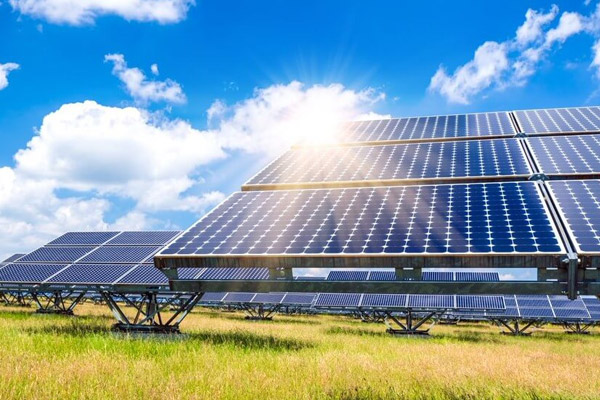
COVID-19: Spoiler alert for India’s solar industry
• India’s solar industry was enmeshed in a number of issues like low tariffs, sub-par quality and dependence on China for components. • COVID-19 has added to woes of the sector owing to cash flow crunch, recovery of payments from distribution companies and supply chain disruptions. • So far, the government’s approach towards the situation has been quite positive, thereby reducing the negative effects caused by the pandemic. • Going forward, however, the industry must develop a mitigation plan. Stakeholders must identify the supply chain, labour requirements and operational needs of current projects, assess what consequences may occur and manage risks that may emanate. As the effects of greenhouse gases & global warming effectuated by environmental pollution have become apparent, the international clamour to protect the planet has mounted up over the years. This has cascaded into milestone developments such as the Paris Agreement (COP21) of 2016. Like any other responsible country, India – reckoned as one of the world’s largest greenhouse gas emitters – too, did not shy away from making its share of contribution. One of the commitments made by India under the deal was to ensure that at least 40% of its electricity will be generated from non-fossil sources by 2030. In line with this international pact, India is planning to deploy 100 GW of solar power projects by 2022 through the National Solar Mission; of which it has already installed around 35 GW of solar projects. Industry estimates suggest that India even attained a fair amount of success when it came to solar exports. Thus, in 2019-20, India’s exports of solar modules and cells amounted to US$ 212.69 million, nearly doubling from US$ 121.08 million (₹ 847 crore) in the preceding year. In terms of volume, the country’s exports surged 175% to 6.9 million units in 2019-20, compared with 2.5 million in the year before. However, COVID-19 has derailed the progress significantly. Pre-pandemic headwinds In the last few years, slowly and steadily, India is embracing the transition to cleaner forms of energy, including solar energy. However, this is not to say that the domestic solar industry is not plagued with its own share of teething problems. These existed even prior to the onset of this global health exigency. One problem that the sector faces is that solar energy tariffs in India are among the lowest in the world, with state governments keen to reduce them further. While this may auger well for patrons, these dangerously low tariffs are turning unsustainable for some developers. Consequently, large banks like State Bank of India stopped lending to renewable energy projects that sell power at below ₹3 a unit. This leads to further bottlenecks such as the uncertainty in payments from discoms & paucity of working capital. Another ripple effect that will have repercussions far beyond the narrow interests of power sector incumbents, is the dismal quality of solar energy installations in India, most of which are sourcing cheaper panels from China to make the cut. Animesh Damani, Managing Partner at Artha Energy Resources, said that “there is enough data available to show higher-than-expected degradation levels in the solar modules that Indian developers are using.” Industry estimates suggest that India imports 90% of its solar cell and module requirements from China, Malaysia and Taiwan. According to India’s Renewable Energy Minister, Shri R K Singh, India imported solar cells and modules worth US$ 1.18 billion from China during April-December, 2019-20. Top 10 countries accounting for India’s solar cells imports in 2019 Source: ITC Trade Map Pandemic: The Pandora’s Box? COVID-19 has added to the woes of Indian solar sector. The first strike was the disruption in supply chain due to the outburst of COVID-19 in China – which was both the epicentre of the virus & accounts for 80% of India’s solar imports. The industry was hopeful that as China resumed production, raw materials would soon come in. However, the border turmoil and the widespread sentiment to ban imports from China has made the situation grim for the sector. India is planning to impose a 20% Basic Custom Duty (BCD) on solar modules, solar cells and solar inverters from August. This move is detrimental for the country, as per industry insiders, since it is not economically viable for most developers to switch to other countries, as they have bid for projects on the basis of the Chinese module cost structure. Another challenge that the industry is facing is that approximately 2.3 GW of solar plants are running behind schedule. This is because the deadline of commissioning projects was between June to August. Industry experts think that this situation is expected to further impact the capacity and future bids as it will alter the working capital cycle of the solar industry with deferred payments. States like Madhya Pradesh and Andhra Pradesh have already expressed their inability to pay to the generators as they are unable to collect dues from distribution companies. Industry experts believe that this can affect solar project developer ratings in the future and lead to higher costs of debt, causing dent in investor confidence. Further, speculations in the industry regarding the reneging of power purchase agreements (PPAs) are rife. This can seriously deter the solar industry at large in the long-term. The sunny side up COVID-19 has played a spoilsport when it comes to the country’s solar industry. Taking note of this situation, the Indian government took a timely decision to declare this as a force majeure situation for project developers, keeping in mind the deadlines and the related penalties. Another step in the right direction is the RBI’s announcement to allow a moratorium on the payment of installments for all term loans and working capital loans. Solar manufacturing in India needs to be incentivised to curb the excessive dependence on China. Explicating this situation, Gaurav Aggarwal, Vice Chairman, M/s. Sainik Industries Private Limited, opines: “We should start from manufacturing of small components to the bigger ones as smaller components manufacturing units are less capital incentive and requires
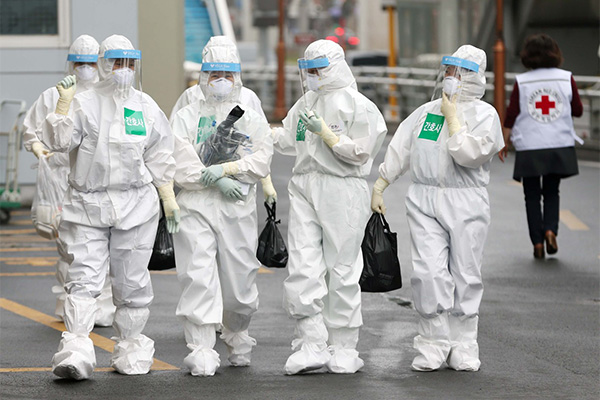
PPE industry: India’s moment in the sun?
India has emerged the second largest PPE manufacturer in the world, but can it also evolve into a major export hub? India Business & Trade analyses the growth prospects and challenges for India’s budding PPE industry, as it prepares for the COVID-hit global market. • Post-COVID, there has emerged a severe drought of PPE kits due to diverse factors including rising demand, panic buying, hoarding and misuse; compelling the WHO to ask governments to increase PPE manufacturing by around 40%. • The global personal protective equipment market was valued at US$ 50 billion in 2016, and is projected to reach US$ 58-60 billion in 2020 itself, particularly due to the surge in demand post-pandemic. • Compelled by the rising demand at home, Indian government and apparel industry have worked tirelessly to build a viable PPE manufacturing ecosystem from ground up in just two months. In fact, India has become the world’s second largest PPE manufacturer by volumes. • The government’s decision to progressively open up the sector to exports opens up exciting opportunities. While initial entry could be difficult due to high standards by countries like US and Europe, the present supply shortage provides India with a vital opportunity to penetrate a lucrative and stable market. Crisis situations are known to often bring about the best in people. Amidst the terrible human tragedy that has unfolded over the past few months, we have also been witness to numerous tales of human triumph – frontline healthcare workers fighting the pandemic; students and professors at leading technology institutes coming up with brilliant innovations; kirana stores serving our vital needs amidst the unprecedented lockdown or pharma players ensuring delivery of essential drugs despite severe supply chain disruptions. One such phenomenal success story that is unfolding before our eyes is that of a budding PPE industry in India. As of February 2020, India was an importer of PPE kits, and had no manufacturing capability. When COVID-19 struck, India was only able to import around 52,000 kits for its frontline healthcare workers due to a supply crisis. In a highly supplier driven market, concerns on quality also cropped up. Globally, there was a severe drought of equipment due to diverse factors including rising demand, panic buying, hoarding and misuse; compelling the WHO to ask governments to increase PPE manufacturing by around 40% . The government and the apparel industry, embarked on an all round effort to build indigenous capability. Industry bodies like Apparel Export Promotion Council (AEPC), Indian Technical Textiles Association and Tirupur Exporters Association were involved, and DRDO also did some extensive testing. As a result, a virtually non-existent industry has suddenly cropped up in a span of a few months. India is not just the world’s second largest manufacturer of PPE kits now, but has also developed the world’s first reusable PPE suit. Developed by Vadodara-based company Sure Safety, this kit uses the Positive Air Supply System technology, which is also used by developed countries in areas of high level infections like isolation wards or ICUs. Dr A. Sakthivel, Chairman, AEPC, affirms: “In the past two months, market dynamics have completely changed and PPE products emerged as a boon for the apparel industry of India. Now, most of the apparel manufacturers are developing their capacity to manufacture PPEs. Production of PPE has grown from 0 to 8 lakh pcs per day in 3 months.” Source: WTO Secretariat, figures for 2019 For a number of apparel companies around the world, the PPE shortage has been a blessing on two fronts. High street chains cancelled millions of garment orders that would have been serviced by factories in South and Southeast Asia, thereby leaving them with humungous spare capacity of both man and machine. Subsequently, a few prominently high end brands like Barbour, LVMH Moët Hennessy, Louis Vuitton, and Chanel shifted their supply chains to PPE. Chinese PPE exports declined by around 15% during January-February 2020, as it was fighing the panemic on its home turf. Meanwhile, Sri Lanka gained PPE supply orders upward of US$ 500 million during the crisis and Malaysia witnessed a huge surge in exports of rubber gloves, accounting for around 65% share in the category. A report by Frost & Sullivan observes that “the current Global COVID-19 outbreak has created an unprecedented demand for healthcare PPE products such as face masks, gloves, coveralls, gowns, goggles, and face shields”. According to its demand growth index estimates for various categories, face masks (200), gloves (200) clothing (225) and goggles/face shields (275) are all expected to experience substantial growth by 2021-22 (all figures assume 2019 as base year with value at 100). Companies like 3M, Ansell, DuPont, Honeywell Safety Products, Kimberly-Clarke Corporation, Lakeland, MoldexMetric, etc are trying their best to rise to the occasion. But for US and European countries, ramping up on supply is not easy, as 60-70% of their production is outsourced to Asian nations, particularly China. From the perspective of apparel makers, demand from healthcare, EMS and Lab workers during transportation, care, and testing of COVID patients is huge, and may remain at high levels even after the pandemic ends. The report further stresses on how this disruption could mean a more long term transformation in market dynamics. Governments and healthcare industry are likely to boost strategic stockpile of critical PPE supplies multifold, to ensure they are better prepared for similar situations in the future. This is expected to ensure steady demand in the next 18-24 months. Governments are also expected to enhance indigenous manufacturing capacities to cut down dependence on imports. On the other hand, the Indian government has opened up the market for exports with an initial quota of 50 lakh, showing confidence in the industry’s ability to fulfil domestic demand. But for a sector that has just sprung up in the very recent past in response to a crisis, it is worth analysing if exports will prove to be as fruitful given the well entrenched competition. Process easy, standards tough Primarily there are four products used in