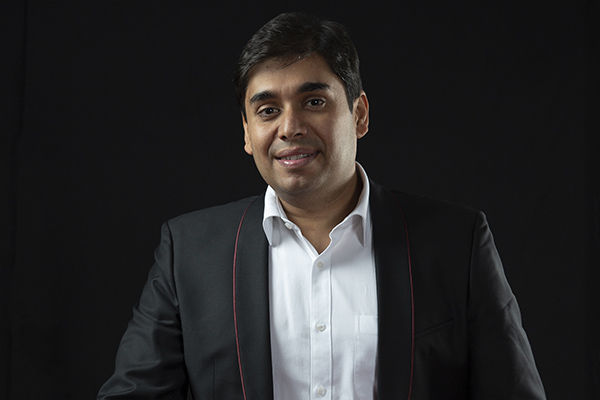
Naveen Tewari, Founder & CEO, InMobi Group, discusses the growth trajectory of Roposo, the company’s short video sharing app. He also explains that the onset of COVID-19, recent ban on Chinese apps and the push by the government towards an Aatma Nirbhar app ecosystem present a rare opportunity for homegrown app developers to shape India’s digital ecosystem in the coming years. IBT: What are the major attributes of Roposo as a content platform that led you to acquire it last year? How has it grown in the pre-COVID and post-COVID period? Naveen Tewari: Roposo is part of our Glance unit, which is a very large consumer platform for us. Glance has scaled massively in the past 12-15 months to be among the top 15 platforms on the lockscreen at a very high daily active user count. Around 100 million people use Glance everyday. As a part of that, we were a big believer in content that gets created by authentic influencers at any point of time and therefore we wanted to build that service ourselves. But before we started to build the service, we wanted to see if there are others who share that vision, when it comes to this whole social/community-based video platform. Then we stumbled upon Roposo and met the founders and really got aligned with the larger pieces of how they were trying to build such a platform. It is a very strong product and platform that has been around for around 5 years. And that led to the acquisition of Roposo by Glance last year. The idea was that we would be growing Glance despite the fact that there are players like Tik Tok in the market in the category. We were clear that we have a differentiating product, but we also have Glance, which is a great B2C platform and therefore we would be able to drive the business model of Roposo once we acquire it. We spent the first 3-4 months integrating Roposo with Glance. We started to then scale it from April 2020 onwards and have been seeing substantial growth with around 7 lakh new users a day in that time period. We upgraded our systems to ensure that anybody who is a creator or artist gets on to our platform, and also get the consumer to consume such content. We were getting 5-10 million users on a daily basis. Somewhere in the middle of June, we were seeing around 250 million video views. In the last week or so, that has gone up to 2 billion video views a day and people are spending around 35-40 minutes on the platform. IBT: What are your expansion plans for Roposo going forward? How will you ensure that monetization works for the platform as well as influencers, especially considering that the ban on Tik Tok has affected several influencers on the platform? Naveen Tewari: We have taken on the mantle of building India’s next entertainment platform that is created by the people and for the people. A huge differentiator for Roposo is that its content is very deeply entrenched into the philosophies and culture of India and its society. It is important for us that people can culturally connect with what they see through Roposo. That’s probably the most important thing that we are building with Roposo now. Glance is already a global platform, which we started in India and have scaled in Southeast Asia. Given that it is connected to Glance, Roposo will also follow the same trajectory. It will take time, but we have aspirations of doing that for sure. Monetization for us and the content creators is highly connected. As brands approach us, we ask them to connect with the influencers. The brands pay these influencers for representing them and then these brands also spend ad money on the platform. With this model, we will bring back the money that influencers are losing today. Influencers have a significant advantage from our platform because they find it a lot more stable and long term. IBT: What is your view on the two key developments that have happened recently – the PM’s push for an Aatma Nirbhar App Innovation Challenge and the ban on 59 Chinese apps in India? How will they impact the evolution of India’s app ecosystem? Naveen Tewari: These are two independent points. I think the ban is a sign of India’s digital ecosystem maturing and respecting its citizens. Any ecosystem scales independently in the beginning without regulation and that’s OK. But in the last five years, since the Prime Minister launched the Digital India program, India’s digital ecosystem has really scaled drastically. From a very small consumer base on the internet, we are among the largest countries today, where citizens spend disproportionate time on digital platforms. I feel that the time has come for us to essentially grow as an ecosystem in terms of regulating the digital platform. The ban was essentially in light of laws and rules that are deeply entrenched into society and you need to follow them to function in our country. If you see, it’s a ban on certain apps, and you will see a lot of apps which are still out there and are Chinese. Secondly, this opens up an interesting opportunity, because suddenly, there is a void in the market that can be filled by a lot of Indian entrepreneurs. The PM’s outreach for creating an Aatma Nirbhar Digital India can become a reality. I think such opportunities come very rarely in history, and when it has come, we have a responsibility to ensure that we fulfil it. I am sure many Indian entrepreneurs are working very hard to fill this so-called gap that has been created. IBT: India has been swamped by a number of foreign apps in the recent few years, particularly China. What are the reasons why our indingenous players are unable to compete, despite having the skillsets? Naveen Tewari: There is a very simple economic reason. Our borders are
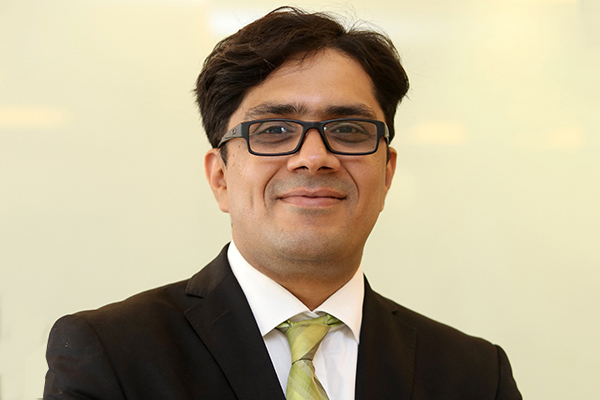
Marketing post-COVID requires substantive orientation to technology
Anand Ramanathan, Partner, Deloitte India, asserts that post-COVID, demand generation through digital marketing will be an important area of focus. There will be an increased need to drive effectiveness on business metrics such as traffic generation, click through rates and online conversions, which will determine the success of digital campaigns and investments. IBT: How has COVID-19 changed the business landscape and client expectations for B2B firms in your view? Anand Ramanathan: COVID-19 will accelerate the digitization of the B2B market landscape from both a domestic and global standpoint. B2B firms will invest heavily in remote sales enablement and will use technology to provide a seamless experience to clients across physical and virtual channels. One view of the product, one view of inventory and one view of the customer will be critical pillars for building this seamless experience to clients. Enriching human experience from both a customer and employee perspective will dictate business utilization of AR/VR, AI/Machine learning and other exponential technologies for transitioning “high touch” experiences in an office environment into the online digital world powered by e-commerce, mobile apps and other convergence platforms. IBT: In what ways does this landscape change expectations from the marketing teams of such companies and how could this reallocate marketing budgets? Anand Ramanathan: Demand generation through digital marketing will be an important area of focus. There will be an increased need to drive effectiveness on business metrics such as traffic generation, click through rates and online conversions which will determine the success of digital campaigns and investments. Upselling/cross selling to existing customers will be a more efficient means to grow sales in contrast to new customer acquisition, which will be relatively expensive in the context of resource scarcity of a post COVID-19 environment. Lead generation will be driven by investments in vertical platforms that are specialized for a specific sector eco-systems. Effective influencer outreach and management will be critical for the B2B sector as a means of enhancing trust from a sales and marketing viewpoint. IBT: Marketing professionals are compelled to embrace digital engagement due to travel bans across the world and major business events/conferences getting cancelled/postponed. What constraints does this forced shift place on customer networking and engagement, and what benefits does it offer? Anand Ramanathan: Digital influence across the customer journey from lead generation to conversion to after sales management will dramatically increase. Marketing professionals will need to adapt to this new environment by curating and orchestrating content carefully to influence pre-purchase behaviour, which will be influenced through testimonials and reviews that will be widely accessed through online searches. They need to drive greater levels of consistency in brand communication between virtual and offline channels. Digital channels will provide much greater measurability of outcomes, which will make it easier to align marketing strategies to the impact that they create from a visibility, awareness and communication perspective. IBT: The sales force has a major role to play in the customer outreach and engagement strategy of a B2B marketer. With rising adoption of digital channels, are some sales roles in B2B organisations under threat? Anand Ramanathan: Remote sales enablement will be a big driver to changes in the sales organization. CRM, Dealer management systems, salesforce automation and commerce platforms will help drive greater channel and salesforce effectiveness as metrics on utilization, productivity and conversion will be readily available for the sales organization to tactically respond to market requirements in an agile fashion. Clear visibility on sales and marketing performance will help align planning and forecasting methodologies for a more profitable and lean sales and channel organization. Gamification will also play a big role in enhancing productivity and performance of the salesforce. IBT: Also, as the digital space becomes more crowded, how can B2B brands stand out in terms of content approach, strategy, use of influencers, targeting, etc.? Anand Ramanathan: The millennial generation is a lot more driven by social and environmental responsiveness that brands demonstrate and COVID-19 has further accentuated the need for brands to actively promote sustainability as a theme. Empathy and a concern for the collective beyond individual gratification has resulted on the spotlight shifting to marginalized groups such as immigrant labour and domestic help in households. Brand imagery that promotes convenience, health, hygiene, inclusiveness and social responsiveness will be a lot more successful in the current environment. IBT: Harvard Business Review research estimates from an analysis of past recessions that 17% of companies didn’t survive, 80% hadn’t regained their pre-recession growth rate over three years while only 9% flourished (outperforming competitors by at least 10% in revenue and profit growth). What characteristics will separate the winners in the post-COVID period in your opinion in the B2B marketing space? Anand Ramanathan: The companies that will emerge stronger in a post-COVID world will be those that drive business outcomes on growth, market share and profitability through greater levels of technology enablement in the sales and marketing function. The immediate focus should be on sweating existing digital assets more efficiently to drive higher sales from existing customers. Critical foundational aspects, which will need to be strengthened include a CRM for having a 360 degree view of the customer and an online commerce platform to enable remote/virtual sales. Effective influencer management, campaign management and marketing/salesforce automation will be additional areas of investment that will be critical for surviving and thriving in a post-COVID world. IBT: How will the pandemic change the approach of B2B companies towards hiring young marketing talent in your opinion? What kind of skills could be in greater demand? Will contractual employment or gig economy rise? Please elaborate. Anand Ramanathan: Marketing will continue to play a very critical role in generating demand for products or services and building profitable brands that are trusted by customers, employees, partners and society. However, marketing in a post-COVID world will require a more substantive orientation towards technology. Customers will be more digitally engaged and higher levels of automation will make it easier to understand the impact of sales and marketing initiatives. Marketing talent in the
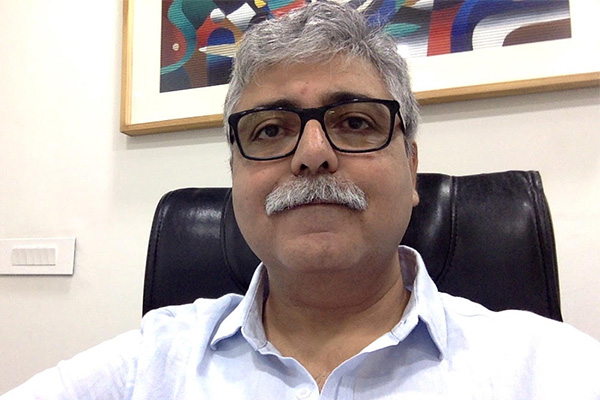
Footwear industry: Brand India has more credibility than Brand China
Arvind Soneja, Honorary General Secretary, Indian Footwear Components Manufacturer’s Association, opines that in order to make the Indian footwear industry self-reliant, domestic footwear components should be promoted. He also firmly believes that the industry must scale up production to promote Brand India abroad. IBT: What impact has COVID-19 had on domestic and international sales of footwear made in India over the last 3-4 months? How is this expected to impact growth in the coming years? Arvind Soneja: The impact of COVID-19 has been very distressing for the country. International sales are virtually nil as our clients themselves are in a bad shape; especially from UK, US and European countries put together. The domestic scenario is equally disturbed as most of the business centres are severely affected with very low retail sales and due to several restrictions and risk to production units and the work force, the production is very low. The industry should recover in six to eight months, once the country is on the path of recovery from this pandemic. IBT: Indian footwear industry is heavily dependent on raw materials imported from China. How can this import dependency be minimised? Arvind Soneja: As the footwear component industry is the backbone of footwear manufacturing in India, it should be the key focus area. We have been presenting data to the government indicating the kind of loss & downturn that our footwear components sector has been facing. The import dependency can be minimised by promoting the domestic industry in several ways: a) By scrapping Duty Free import schemes which footwear exporters normally misuse by importing substandard products and flushing the domestic market with cheap options. The country bleeds of its valuable foreign exchange with no revenue as duty and the domestic industry also takes a hit due to that. b) Technology transfer has to be incentivised, so that the domestic industry is prompted to invest and make world class products. c) For products where the footwear industry is solely dependent on imports, the first 5 units should be given a capital subsidy of 50% of the investment upon commencing production. d) Component sector specific capital subsidy scheme should be designed as the current scheme under IDLS does not help component sector due to the unrealistic conditions attached to it. As it appears, that the Government is putting its might to help the industry and we are hopeful of coming back to normalcy in the next 3-4 months. IBT: Now that different countries, including India, are gradually opening up their economies and borders, how are the markets responding? What are the challenges you face? Arvind Soneja: As per our observation, the demand all over is low & slow. Buyers tend to cancel their orders to a great extent. There is an acute pressure on the inventory front as the Summer 2020 season is totally lost and ready inventories might be sold at a huge discount or scrapped. The challenges are endless, our major task is to bounce back and shake up the economy in fuelling the growth of markets all around. But we have to wait till we get over with COVID-19 repercussions. Gradually the shape of market, which is fluid at this moment, will improve. IBT: How is India competitively placed in the global footwear market, and what does the industry need to do to raise its global stature and move up the value chain? Arvind Soneja: Indian manufacturers are not keeping any stone unturned to keep up the work process. However, matching up with China and becoming the global leader in the footwear industry is not possible at the moment. But yes, we can grow our share. In the post-COVID scenario, China is going to lose its share in the footwear market. This will create an opportunity for other countries to gain from this situation. Countries in the race for this market share include emerging footwear manufacturing hubs like Bangladesh, Vietnam, Indonesia & African countries. Speaking from the viewpoint of footwear component manufacturers, if you have to increase the share of your sales, then you have to make your presence felt in all these markets. One strategy that India could adopt to attain this objective is to participate in buyer-seller meets. For example, Bangladesh organises an annual fair for footwear industry in which many Indians take part. In India, IFCOMA organises numerous fairs for the footwear industry – both within the country and overseas. But at the same time we need support from the govt in giving our sector much needed exposure to the new international market which has potential for our sector. For instance, in case of these BSMS, there are costs like travelling, booking, shipping samples and meeting people. If the government subsidises these BSMs, the industry’s presence will be more noticeable. Brand India concept has to be given emphasis and the industry needs to be taken into confidence as at present, SME units need hand holding support from the government. If you compare Brand India with Brand China, our credibility is much more. However, our outreach is very less. In terms of value, if China thinks of 10 lakh pairs, we would think of 20,000 or 30,000 pairs. When we market Brand India more aggressively, we would churn out more numbers of footwear pairs & automatically, our production capacity will also improve. Consequently, your investments in new technology would also increase. Another thing is that there should be a survey of the footwear components industry. China has been flooding the market with cheaper footwear components and shoes. Most of them come to India as undervalued products. So, duty is saved on that. Plus, the government has imposed many duty-free import schemes, which exporters benefit from. They can import substandard undervalued Chinese products and sell them to the local traders, which disturbs the market. If we undertake a survey of what all is being imported and manufactured in India, you can easily find out how we can counter the imports from China. IBT: How do you view market
PPE exports: Proper guidance and compliance support critical
Dr A. Sakthivel, Chairman, AEPC is confident about the potential of India in the global PPE market. But he asserts that strengthening the supply chain, with input suppliers like fabric, tapes and other accessories also following the required standards, would be critical for the PPE suppliers to meet the technical requirements. IBT: What was your view of the global PPE market pre-COVID? How have the market dynamics changed in the past two months? Dr. A. Sakthivel: Apparel Export Promotion Council was studying the products in which we can diversify during COVID and technical textiles – PPE was one our focus products to diversify. I was very optimistic about the potential of PPE exports from India. In the past two months, market dynamics have completely changed and PPE products emerged as a boon for the apparel industry of India. Now, most of the apparel manufacturers are developing their capacity to manufacture PPEs. Production of PPE has grown from 0 to 8 lakh pcs per day in 3 months. IBT: India was not making any PPE kits prior to March 2020. Why were apparel manufacturers not looking at this opportunity at that time? Dr. A. Sakthivel: The ecosystem for PPE manufacturing like technology, raw material & market information was not there before March, 2020. However, all this has been put in place and the ecosystem for PPE manufacturing has been developed with policy support and driven by market demand. The government has now opened up a quota of 50 lakh PPEs for exports. Currently, with growing cases of COVID-19, PPE kits are required in almost every sector. IBT: What major adjustments are required in terms of the production process, raw material sourcing, adherence to standards, etc for apparel companies to pivot to PPE manufacturing? Dr. A. Sakthivel: Production process in the domestic industry had an internal capacity. However, India did not develop much testing capacities of PPE. But now BIS & institutions like SITRA have done commendable work and developed standards. However, the industry still needs to work on the international markets like the US & EU. The council is actively working with the Ministry of Textiles for better understanding and capacity building in this area. IBT: How do you view the potential for Indian players in the global PPE industry in the coming years, and how are they placed competitively at present? Dr. A. Sakthivel: The Indian apparel export industry has shown great agility in switching to production of Personal Protective Equipment (PPE) kits and scaling it up from zero units to 8 lakh per day in less than four months. We are now looking to grab market share of the US$ 60 billion global market. Major suppliers of PPE kits are China, Malaysia, Vietnam, Thailand and Germany, where China holds the largest share. Currently, we are placed in a very good position as we are ramping up our production and improving the quality. IBT: Furthermore, what should be the strategic approach and what kind of ecosystem support is necessary for India to compete in the global PPE market in your view? Dr. A. Sakthivel: The Council is of the view that PPE exports can be one of the biggest opportunities for India in the coming months. On the supply side, the major constraint is of the machines and inputs required for the production. Both are largely imported at the moment and policy support and indigenous capacity building would be important to increase supplies of these in the coming months. The industry wholeheartedly welcomes the decision of the Government of India for restricted opening up of PPE Medical Coveralls which is the need of the hour. However, the quota for 50 lakh PPE medical coverall exports is a first step towards a calibrated and gradual opening up of PPE exports. The Council’s assessment of the domestic production capacity for PPEs, including coveralls and masks, especially N95 masks, shows the potential for further opening up in the coming days. We have requested for gradual opening up, which will give India the opportunity to become a leader in exports of PPEs. IBT: What is the relevance of standards for this industry in the global context, and how well aligned are Indian companies with global standards? Dr. A. Sakthivel: An important element of the PPE market is the technical specifications, standards and certifications required. Strengthening the supply chain, with input suppliers like fabric, tapes and other accessories also following the required standards, would be critical for the PPE suppliers to meet technical requirements. Proper guidelines and compliance support for the whole value chain would be critical in strengthening the PPE manufacturing base in India. Also, awareness about international standards of PPEs to Indian suppliers would play an important role. We also request the government to have accreditation of Indian labs for PPE exports to major markets like US & EU. Dr. A Sakthivel has been elected as the Chairman of the Apparel Export Promotion Council (AEPC) by the Executive Committee for the year 2020 to 2021. He was first elected to the Board of Directors of Apparel Export Promotion Council in the year 1982 thus serving the council for almost four decades. Dr A Sakthivel has also served as Managing Committee Member of Federation of Indian Exporters organisation (FIEO) for more than a decade. He was also the President and Regional Chairman of FIEO, Southern Region. Dr A Sakthivel along with some exporters established Tirupur Exporters Association in 1990 widely known as TEA. He was the first President of TEA and with his dynamism, he held the post continuously for a period of 27 years. During his tenure as President of TEA, he toiled hard to develop the industry as well as Tirupur. During his tenure as President TEA, the export turnover of Tirupur industry increased to a whopping Rs 27,000 crores in 2016-17 from Rs 270 crores in 1990. Government of India recognised his unparalleled service to export sector specifically to apparel Sector and knitting industry, creation of infrastructure such as industrial parks, ICDs and his contribution to
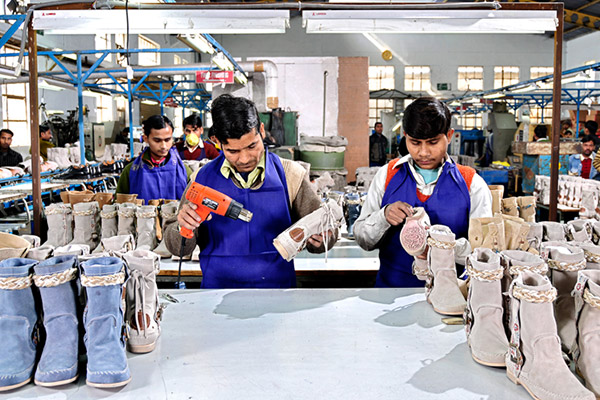
On a shoestring: COVID-19 & Indian footwear industry
• India has prided itself as being the world’s second largest footwear producer. The sector plays a major role in generating employment in the country, with about 400 jobs being created for every 1,000 pairs produced and sold in the country. • However, the onset of COVID-19 pandemic has sent the industry off track. This is owing to a string of demand factors such as weak consumer sentiment, closure of shops, depleting consumer incomes, and consequently, drop in revenues. • On the other hand, owing to the restrictions on imports, there was difficulty in obtaining raw materials. Further, the flight of labour is another factor that will affect the production. • The solution to overcoming these challenges lies in reassessing the current modes of production, supply and consumption. Credit: https://bit.ly/2AEbHZP For quite some time now, India has established itself as the world’s second largest footwear producer and consumer, after China. The sector accounts for 9% of the global annual production of 22 billion pairs and contributes significantly to the Indian economy. Leather footwear exports account for 49.23% of the total leather exports by India; with an annual production of 2,257 million pairs. The product mix is led by gents (55%), followed by ladies (35%) and children (10%). However, the COVID-19 contagion has led a string of demand and supply related challenges, which have dented the sector’s performance, primarily due to significantly subdued consumption. However, as COVID-19 proliferated across continents, key markets like US, UK, France & Italy became the global epicenters of this pandemic. To check the spread of this disease, these countries imposed nationwide lockdowns, which rendered a lot of shops being closed and significantly lowered the demand for shoes. Ramesh Juneja, Regional Chairman, Council of Leather Exports, informs: “Importers from US, UK, France, Italy, Spain and Germany have either cancelled orders or put them on hold. Some of them are also delaying payments. The loss is around US$ 1.5 billion and we do not know when we will be able to recover it.” The sales of footwear are down in the domestic market too. Ratings agency ICRA estimates a revenue loss of 10-15% owing to the closure of retail outlets and restriction of delivery of non-essential items in certain areas. For example, sales of iconic British footwear brand Clarks have been badly affected in India because of the COVID-19 outbreak. It is interesting to note that close to 55-60% of Clarks products are produced in India by players like Farida Group and TIL. India, too, like rest of the world, imposed a country-wide lockdown, which brought a halt to footwear sales in the country. After recording an 8% growth in January and February, the sales of Bata India Ltd plunged in March, leading to a 9% decline in the overall March quarter revenue to ₹620 crore. Relaxo Footwears’ sales also fell by 2.62% to Rs 643.80 crore. As unemployment rose during this period and the pandemic led to shrinking of disposable incomes in the hands of consumers, the demand for discretionary products nosedived too. Moreover, this period also facilitated a shift towards remote working. As per reports, even as malls in the country have opened, shoppers are staying away from them. Footfalls in stores selling non-essential items were down to 40%-50% of business-as-usual levels. Treading on slippery ground On the supply side too, the industry is struggling, particularly due to its heavy dependence on China for importing raw materials (about 30-40%). These include several components such as laces, shoe lining, buckles, ornaments, insoles, outsoles, cellulose board, shank board, foam and packing materials. The outbreak of the virus in China, the initial epicenter of this virus, meant the drying of supply chain. Ambud Sharma, Founder & CEO, Escaro Royale, explains: “China is also a major supplier of raw materials and components. The shutting of factories and production in China has wreaked havoc in the supply chain, leading to a sharp increase in the prices of various items.” In order to clear unsold stocks, there might be a marginal decline in the average selling price (ASP) due to the expected discounts owing to the companies’ inclination to convert the limited footfalls to shore up their cash flows while liquidating the inventory. Consequently, the capex outgo for the year FY 2021, both in terms of addition to the manufacturing capacity of plants as well as addition to the retail store network, is likely to be moderated. The sector is also impacted by the flight of labour and the break in production activities during the lockdown. The condition of raw hides lying in these factories has meant a further hit on business, as this is expected to impact production of leather shoes in the coming months. Gearing up for the future As markets revive post-COVID, Indian players need to look at reinventing themselves to overcome legacy challenges and boost their international standing, starting with the import dependence. Reducing this dependence will not only add to the turnover of domestic enterprises including MSMEs, but is also likely to translate to benefits through forward and backward linkages, better economies of scale along with cost competitiveness and importantly, enhancing the scope of employment in our country, according to Ambud Sharma. Arvind Soneja, Honorary General Secretary, Indian Footwear Components Manufacturer’s Association, adds: “As the footwear component industry is the backbone of footwear manufacturing in India, it should be the key focus area. The import dependency can be minimised by promoting domestic industry. ” Despite being the second largest producer, India is ranked 8th in exports of footwear with outer soles of rubber, plastics, leather or composition leather… (HS Code 6403). Moreover, India’s exports are overdependent on the European region with UK (17.1%), Germany (13.2%), France (7.4%), Italy (5.7%) and Spain (4.1%) being among its top 10 markets. This factor keeps it exposed to significant risk. Moreover, the predominant target audience for Indian footwear is the lower and middle income populations in target markets. There is a need to upgrade and serve more upmarket audiences. To enable this,
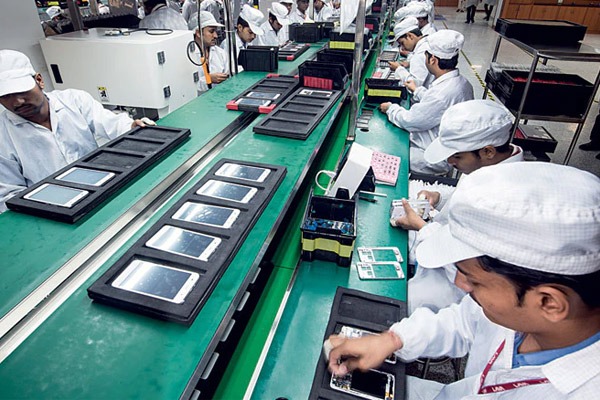
Cellphone industry: A case for holistic self-reliance
While ramp up in FDI is critical to the Indian cellphone industry, it must not come without a corresponing improvement in domestic capabilities. • COVID-19 provides an opportunity for India to attract greater investments from global lead firms in cellphone manufacturing for domestic scaling up as well as exports. • Recently announced policies including PLI, SPECS and EMC 2.0 are important interventions by the government in this regard. • The industry has laid out a post-COVID roadmap with an ambitious target of US$ 110 billion in mobile handset exports by 2025. • While the ramp up of FDI is critical to this technology-intensive industry in the near term, it should also lead to a rise in domestic capability with the build up of a strong component ecosystem. The US-China trade war laid the foundations for a growing sentiment in a lot of Western companies to reduce reliance on China, and either shift back production to their home country or look for alternatives across the world. The same thought reverberated across the ecosystem in 2020 when COVID-19, the virus that originated in China, made its presence felt across the globe. This has ensured a greater distrust towards China and strengthened the resolve among nations to diversify their supply chains away from the Middle Kingdom. While not country-specific, the Prime Minister’s Aatma Nirbhar Bharat initiative was launched as a clarion call to Indian industry to reduce dependence on imports. This, of course, has also acquired a China-specific dimension with the ongoing tensions at the border. However, the push for self dependence itself has to be based on a well planned, long term strategy, rather than a reactionary response to sudden crisis or geopolitical considerations. The Indian electronics industry is one example, wherein the government proactively led the call to promote indigenisation under the Digital India programme. With the active involvement of the industry, the initiative has met with considerable success, especially in the cellphone sector. In 2018, India managed to replace Vietnam and catapult itself as the second largest mobile phone producer in the world after China, according to Indian Cellular Association. The findings suggest that annual production of mobile phones in India increased from 3 million units in 2014 to 11 million units in 2017; while imports of devices reduced to less than half in 2017-18. Over the past 5 years, India has tried substituting imports by imposing duties on finished mobile phones and parts like batteries, chargers, wired headsets under the Phased Manufacturing Program by Ministry of Electronics and IT (MeitY). The country has consequently ended up becoming an assembling point for mobile phone devices like China & Vietnam. Lucrative global arena The amazing potential in networked products has been buttressed by the Economic Survey 2020-21 in the chapter on ‘networked products.’ The survey makes a case for export promotion over import substitution of networked products (including mobile handsets) and states, “By integrating ‘Assemble in India for the world’ into Make in India, India can create 4 crore well-paid jobs by 2025 and 8 crore by 2030. Exports of networked products, which is expected to equal US$ 7 trillion worldwide in 2025, can contribute a quarter of the increase in value-added for the US$ 5 trillion economy by 2025.” The domestic manufacturing of smartphones in India is expected to grow at a faster CAGR of 48.4% between 2017 and 2025, as per a Frost & Sullivan estimate. India Cellular and Electronics Association (ICEA) and consultancy major EY have set a huge target to take mobile handset exports to US$ 110 billion by 2025. It is a goal worth pursuing for strategic reasons as well, since electronics are among the top import product categories in most markets across the world. Morever, with 3x growth between 2018 and 2025, the Indian mobile handset market is expected to get relatively saturated. The COVID effect COVID-19 has proved to be a double edged sword for the mobile handset industry. On the not so bright side, market research firms International Data Corporation (IDC) and Counterpoint Research estimate that sales in the Indian smartphone market are likely to decline by 13-15%. This forecast is attributed to the recent spate of job and salary cuts leading to deferred purchases, companies unable to ramp up production impacting supply of models, and the recent increase in GST on smartphones from 12-18% making models pricier. On the brighter side though, the pandemic has created opportunities for the Indian mobile handset industry to replace China as the top mobile phone producer in the world. While PMP has helped in arresting the import of finished mobile phones partially due to shift of assembling operations to India, imports of parts and components have persisted due to lack of volumes within India. Nothing has made India’s dependence on other countries like China more apparent than the COVID-19 outbreak and the consequent supply chain disruption. A report by market intelligence firm Counterpoint Research predicts that India’s share in global smartphone production is set to fall to levels seen four years back due to the pandemic from 16% in 2019 to 9% in 2020. Apart from import dependency, there are other roadblocks affecting the sector’s performance. This is quite evident when India is compared to neighbours like Vietnam & China on a string of factors like corporate income tax exemptions; subsidies for machinery and equipment; R&D subsidy; labour subsidy; and so forth. If one looks at the overall subsidies offered by India (5.8%-8.7%), they are far lower than those offered by Vietnam (9.4%-12.5%) and China (19.2%-21.7%). Source: Mobile manufacturing in a post COVID-19 world, An ICEA-EY report On the road to the top Recently, the government unveiled guidelines for three electronics manufacturing schemes – PLI, SPECS & EMC 2.0. As per the fresh guidelines, the Production-Linked Incentive Scheme will extend an incentive of 4-6% on incremental sales (over base year) of goods manufactured in India and covered under the target segments, to eligible companies, for a period of five years subsequent to the base year. Meanwhile,
Cellphone sector: PLI, SPECS, EMC 2.0 have laid the foundation for something big
Pankaj Mohindroo, Chairman, India Cellular & Electronics Association (ICEA), elaborates on how Indian cellphone industry catapulted itself to being the second largest in the world. He also discusses how the industry is planning its progress towards an ‘audacious’ target of US$ 110 billion of mobile phone exports from the current level of US$ 3.6 billion. IBT: What key positive changes do you see in India’s electronics manufacturing ecosystem over the past 5-6 years? What role have government interventions under Digital India like M-SIPs, Electronic Manufacturing Clusters, etc. played in this regard? Pankaj Mohindroo: Digital India started in July 2015 and Make in India started in September 2014. Essentially, the one segment of electronics manufacturing which has performed brilliantly is mobile phone manufacturing, where the production has gone up by 1,100%. The rest of the electronics sector has not performed that well. In fact, our imports have gone up substantially. The success of the mobile phone industry in India is a combination of many factors. I think that the most important one of them was the role played by MeitY and ICEA in shaping the policies in a manner, which focuses on moving towards self-sufficiency and import substitution, while giving priority to exports and value addition. At the same time, they tried to make sure that they don’t create an industry which is dependent and uncompetitive. This step-by-step approach helped us to reach these humongous numbers. IBT: There is a view in the academic circles that although there is a remarkable improvement in the exports of the final product, our imports of components still exceed those of the finished product in value terms. So, what is the approach towards ensuring that greater value addition takes place within India? Pankaj Mohindroo: Currently, India manufactures over 1 lakh crore electronic components required to produce mobile phones. We are planning to increase the imports of components massively. If you look at the import of electronic components in China, it amounts to US$ 400 billion (INR 30 lakh crores). India has to import these components, add value and export them to the rest of the world. IBT: How is India currently placed vis-à-vis competing nations as a hub for electronics manufacturing? What are the key benefits and drawbacks of the ecosystem? Pankaj Mohindroo: In volume terms, we are the second largest producer in the world. The other leading producers in the world are China and Vietnam. Although our exports have grown very rapidly, currently they are worth US$ 3.6 billion (INR 28,000 crores); which is just about 1.5% of the world exports. So, that’s the major portion that we have to occupy and we are accelerating very rapidly. IBT: What role will the recently announced Rs 50,000 crore package including PLI, SPECS and EMC 2.0 play in helping India emerge as an electronics export hub by 2025? How will these initiatives help India build a strong component manufacturing base and what more needs to be done in this regard? Pankaj Mohindroo: We are not waiting till 2025 to increase; we have numbers to achieve till 2025 – US$ 110 billion of mobile phone exports from the current level of US$ 3.6 billion. It’s a very audacious target and we are determined to do it. After that, the overall electronics manufacturing target is around US$ 400 billion. So, bulk of it will be exports. The recently announced trilogy of schemes – PLI, SPECS and EMC 2.0 – have laid the foundation for starting something big. It fulfills the Hon’ble Prime Minister’s vision for making India a global hub for manufacturing. The impact of the PLI scheme will be visible before the end of FY 2020-21. PLI is a very critical policy for the growth of our mobile phone exports. It is the engine of growth for the entire electronics industry. IBT: How do you view the potential of India in terms of high end manufacturing and innovation-led growth in mobile handsets? What needs to be done to ensure that India stays in step with the curve in terms of quality and technology standards in this segment? Pankaj Mohindroo: This is an area where we have to add very substantially. This is particularly important because we have a lot of global R&D and development happening there, but we have to build an ecosystem to build our domestic companies. Only then can the domestic companies become global champions. We have to plan this strategically. Currently, India does not have in-house technology and R&D. Global lead firms (Samsung, Apple, Huawei, Oppo and Vivo) can bring in advanced and cutting-edge technology that may not only aid their production processes, but also that of domestic firms. Domestic companies can initially begin by becoming white label suppliers to some of the global lead firms and in turn, improve their production systems. With the right policy environment and stimulus, these Indian companies could reach global scale. IBT: The industry is dominated by a number of SMEs. How is the government planning to help them become more competitive and scale up production? Pankaj Mohindroo: The way the global electronics industry is structured, large companies lead the industry. The SMEs are second and third tier suppliers to these companies. So, the best thing for India to do is to build large global companies and automatically, SMEs will start getting built accordingly. IBT: How has the COVID-19 crisis impacted the supply chain and business turnover for the industry? Pankaj Mohindroo: The spread of COVID-19 and the subsequent lockdown of countries has brought economic activity to a standstill across the globe. As a result, supply chains stand disrupted globally. In addition, the ongoing crisis has also highlighted the vulnerability of the domestic mobile phone manufacturing system, being heavily dependent on import of parts and components for undertaking manufacturing/assembly operations in India. This calls for proactively seeking investments through global lead firms and re-orienting supply chains from being import-led to domestic production. However, it is also relevant to highlight the importance of exports in the creation of
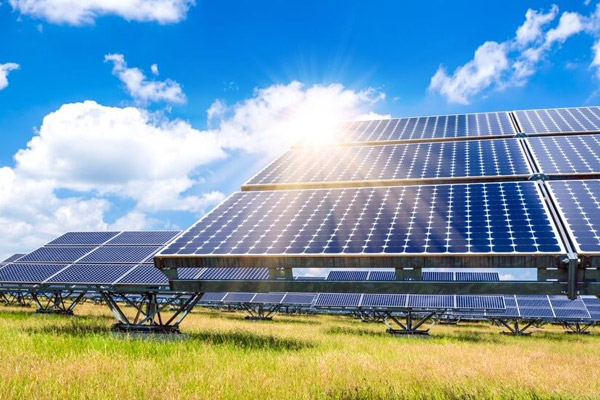
Solar sector: Cutting China dependence neither easy nor impossible
Gaurav Aggarwal, Vice Chairman, M/s. Sainik Industries Private Limited, opines that the COVID-19 pandemic is indeed a wakeup call for the solar industry as the sector has been severely impacted due to the shortage of solar components imported from China. He opines that the way to shun this import dependency on our neighbour is to start by manufacturing the less capital intensive solar components. IBT: What impact has COVID-19 had on your solar panel business? How is it expected to impact the demand for renewable energy in the country? Gaurav Aggarwal: Solar is a fast-growing sector in our country and we see tremendous potential there. However, just like most industries, the growth rate is impeded by the current situation. The COVID-19 pandemic is indeed a wakeup call for the solar industry as the sector has been severely impacted due to the shortage of not just cells and modules but also other ancillary products. There was restriction of work imposed on most of the COVID-19 affected provinces in China, which are hubs of solar panel manufacturing units. Off-late, India is the biggest importer of these modules as almost 80% of the solar cells and modules used in Indian projects are coming from China. Yes, for the time being, COVID-19 has slowed down demand for renewable energy in the country, as now we are more focusing on rooftop solar projects, which are the worst impacted by COVID-19. While the rooftop sector is expected to benefit household users, COVID-19 has impacted the spending capacity of every person, whether it is an individual or a company. IBT: What were some of the challenges that you faced during the lockdown? Do these challenges still persist and how are you managing them? Gaurav Aggarwal: Lockdown impacts are visible in the supply chain. Both raw material and labour were not available. Consequently, this resulted in a delay in production and ultimately a delay in commissioning of the projects. Yes, the challenges still persist, and I think we should be ready to embrace a more severe impact of this lockdown, which will be reflected in a couple of months ahead. But like I said above, this situation is a wake up call for us – we should accept these challenges and move ahead with more possible ways out to overcome this situation of shortage of raw material. We are managing with all our available resources and trying to complete our projects on time. IBT: How can the industry reduce India’s dependence on China for the import of solar panel components? Gaurav Aggarwal: It seems very simple in a manner of speaking that by restricting imports from China and starting manufacturing in India, the solar industry can reduce its dependence on China for all its component requirements. But it is neither that easy nor impossible. I think it can be done certainly, but only in phased manner with complete Government support, backing and favourable policies. We should start from manufacturing of small components to the bigger ones. As smaller components manufacturing units are less capital incentive and requires less time to setup. Once we complete this phase of small components, we should move to our next phase of bigger or core component like cells manufacturing units, which require a lot of capital. I think this standoff between India and China will definitely open new doors for Indian manufacturing industries to reduce their dependence on China. IBT: The MNRE is encouraging states to allocate land parcels ranging between 50 and 500 acres in size in their regions that can be used to set up renewable energy manufacturing and export services hubs. What is your take on this? What impact will it have in attracting foreign investors? Mr. Gaurav Aggarwal: Well, I think it is a good move by the Government to prioritise this sector and allocate land banks specifically for manufacturing and export service hubs. Apart from that, the government is bringing out several schemes to help manufacturers. It is an effort to meet the target of achieving 175 GW of installed renewable energy capacity by 2022. In my opinion, this step will certainly incentivise foreign investments as most of the non-Chinese companies want to move away from China due to the impact of COVID in their respective countries. This move of the Government is an open invitation to them to open their units in India in specifically allocated land banks. Apart from that, foreign investments in commissioning projects will prove to be saviours for project owners who are the worst affected due to this pandemic. COVID-19 led economic slowdown is expected to affect solar project installations in the first half of the current financial year and the sector is only likely to start recovering in the second half. The industry usually completes most of the projects before the monsoon season; however, most of these projects will now be initiated only after about six months. This will alter the working capital cycle of the solar industry with deferred payments. IBT: How will COVID-related disruptions impact India’s progress towards meeting its 175 GW renewable energy goal? Mr. Gaurav Aggarwal: Overall, the solar industry has been considerably affected due to the COVID-19 outbreak with issues like cash flow crunch, recovery of payments from distribution companies, working capital requirement, workforce availability and mainly supply chain disruptions. The rooftop solar segment will be adversely affected as these are small-size firms and lack the economic capacity to absorb losses. The government’s approach towards this situation has been quite positive to limit the negative effects on the sector. It will largely depend on how the industry bounces back once normalcy is restored. So far, we can say that FY 2021 will see week commissioning in Q1 and Q2. There is a project bunch up, but resolution of policy issues, availability of land and timely execution will determine future growth. Gaurav Aggarwal is a Chartered Accountant and Company Secretary. He is the Vice Chairman of M/s. Sainik Industries Private Limited and he is in the business

On-demand home services: Rich dividends, tough terrain
The opportunity for on-demand home services in India is huge, but effectively tapping it requires far greater organization on the supply side via an integrated, full-stack services approach to build customer demand and loyalty. • Customer propensity towards in-home delivery in pandemic times is a major positive for on demand home services providers like Urban Company, Quikr, Housejoy and MrRight. • The post-lockdown period has seen a fast rebound in core segments of beauty & personal care and repairs & maintenance. Apart from these, home cleaning and disinfection have opened up new business potential post-COVID. • On-demand home services has seen a visible surge over the past few years, largely led by increasing urbanization and disposable incomes, rise of the nuclear family, growing demand for various services and convenience and paucity of time. Post-COVID, the demand equation could prove even more lucrative. • However, the major constraints are on the supply side – relatively unorganised nature of the industry and difficulty in meeting customer expectations while managing unit economics. In the COVID-19 crisis period, where public places rarely witness ‘public’ presence, it is widely accepted that a lot of out-of-home consumption will move inside the house. Across merchandise categories, customers are now far more prone to give ‘touch and feel’ a break in favour of ‘contactless delivery’. A survey by LocalCircles across 231 districts affirms that around 36% of e-commerce customers have placed all their orders via e-commerce sites since lockdown restrictions ended – this includes gadgets, appliances, office/school supplies, toys, etc. Source: RedSeer; survey of users on a particular on-demand home services platform When you extend this analogy to services, it gets even more interesting. Times are dire for professions like barbers, beauty specialists, gym & yoga trainers, etc. Home services definitely do not compensate for the loss of physical in-store business, but can serve as a vital revenue stream in the present time. This is a major positive for the on-demand home services market in India, let by the likes of Urban Company, Quikr, HouseJoy and Mr Right; who provide them with vital avenues to retrieve lost business. Urban Company has confirmed a visible surge in business, acquiring at least 33% new customers since the lockdown began. Through its platform, the firm has serviced 5 lakh households, dominated by AC services and repairs (4 lakh households). Varun Khaitan, Co-founder, Urban Company, comments to IBT: “The business has rebounded strongly after the lockdown. There are segments like home repairs, which are close to pre-COVID levels and even those like men haircuts at home, which are already larger than previous levels. As more consumers prefer to consume services in the safety of their home and through organised platforms following safe practices, our business stands to gain.” QuikrEasy is seeing a rise in demand for services like appliances, internet broadband, inverter, and battery rentals since the lockdown as compared to pre-COVID months this year. HouseJoy also sees a rise in demand for home maintenance, fumigation and beauty services post-lockdown. So just like e-commerce in products is benefitting from higher in-home consumption, will ‘e-commerce in services’ also see sunnier days post-COVID-19? Could the pandemic in fact be just the push that this sector needs, given the expected uptick in demand? Lucrative market, but with riders On-demand home services market is projected to reach a size of US$ 1.6 trillion globally by 2024, indicating a growing interest from both startups and established players. In comparison, the market size of Indian home services industry as a whole is currently projected at US$ 100 billion, with an average annual spend of Rs 25,000 per household every year. The online home services market on the other hand is pegged at around US$ 200 million in 2019, and growing at around 100% annually. Factors including the increasing urbanization and disposable incomes, rise of the nuclear family, growing demand for various services and convenience and paucity of time are key markers driving immense potential for this market. And they have been relevant in pre-COVID times as well. A report by market research firm RedSeer released in December last year concluded that 56% of customers valued convenience as the key driving factor for choosing on-demand home services; 35% chose quality while only 10% felt price was the deciding factor. In the arena of beauty and salon services, skill of service professional counted as the most important driver for shifting from offline to online (81%), followed by service range (71%) and quality of products (64%). Price came 4th in terms of consideration with just 48% respondents. India’s trajectory of growth for this sector has actually been better vis-à-vis other parts of the world, particularly because of the way the services sector is structured. The two services sectors that have seen maximum growth and account for around 80% of the market are beauty/men’s grooming and repairs of appliances. There were significant gaps in these segments, given their unorganized nature, thereby providing an avenue for platforms like Urban Company to make an impact. Varun Khaitan affirms: “The existing service ecosystem in India had more gaps and the approach taken by Urban Company has been different. It’s a full-stack approach where the platform ensures end-to-end control and good quality experience as opposed to most platforms in the west, which only introduce you to service professionals.” He is confident that similar opportunities to build full stack services platforms exist globally, which would primarily imply “an entire ecosystem of capabilities including standardization of services, training, financing, an internal supply chain of products and a lot of industry-specific technology”. In line with this vision, Urban Company has expanded to international destinations including Australia, UAE and Singapore. When you look at how the industry has trended, however, a number of players have tried their hand at on-demand services and failed. The primary constraint is actually on the supply side, as Ujjwal Chaudhry, Associate Director, RedSeer Consulting, elaborates, “First is getting a quality supply of providers, ensuring that they have the right kind of training and things to
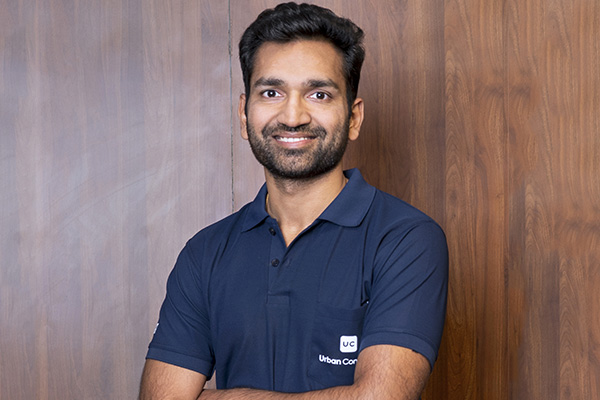
“Urban Company has developed a full stack services platform”
Varun Khaitan, Co-founder, Urban Company, is confident of grabbing market share in the company’s core services of home care and personal care post-COVID, besides expanding to new opportunities like disinfection of homes and offices. IBT: How has Urban Company’s presence in the on-demand home services market evolved since inception? What would you identify as key achievements by your company so far, in terms of competitive advantage, quality of the overall offering and business numbers? Varun Khaitan: When we started Urban Company back in 2014, we were one among 300+ startups entering the on-demand home services market. However, I can confidently say, over the years, we have consolidated our position in the market. Today, we are market leaders in the Beauty & Wellness and Home Repairs & Maintenance categories. The Beauty & Wellness category comprises salon and spa at home services for both men and women. The Home Repairs & Maintenance category comprises services offered by plumbers, electricians, carpenters, appliance technicians, home deep cleaners and painters. Our key achievement is the quality of experience we provide at scale to our customers and service partners. Across all services above, customers get trained professionals to come home on-demand and the entire end to end experience (booking, on-time arrival, service process, products and tool used, pricing) is controlled and guaranteed by us. The platform has no middlemen, service partners attach themselves directly as entrepreneurs and get more respect from customers, multiple times higher earnings and a well-balanced life with more family time. IBT: How is your business distributed geographically viz. urban centres vs tier 2, 3, 4 towns? How is this share expected to change in the coming 5-10 years and why? Similarly, how is it distributed by SEC class and who is your key target audience? Varun Khaitan: In the past 18 months, we have opened offices in 10 tier II cities – Bhubaneswar, Chandigarh, Indore, Jaipur, Lucknow, Ludhiana, Nagpur, Surat, Visakhapatnam and Vadodara. Of these, we launched services in Bhubaneswar, Indore, Nagpur and Surat very recently in February 2020. With this, we are now present in the top 18 cities of the country. The business is currently concentrated in the top 8 cities and I expect the new ones to have a larger share over time. Over the next 5 yrs we will expand our presence to the top 50 cities. We have also expanded internationally and currently operate in the UAE, Singapore and Australia. Our users predominantly have household income over Rs 10 lakh per year. IBT: How has the on-demand services market in India evolved in comparison to other parts of the world? What are the key takeaways in terms of growth potential and business strategy, based on this benchmarking? Varun Khaitan: While in some service industries like ride-hailing and food delivery, evolution in India is similar to other parts of the world, in home services the adoption of online platforms has been faster in India. This is largely because the existing service ecosystem in India had more gaps and the approach taken by Urban Company has been different. It’s a full-stack approach where the platform ensures end-to-end control and good quality experience as opposed to most platforms in the west, which only introduce you to service professionals. The opportunity to build a full stack services platform exists all over the world and that is the aim of our expansion. The full stack approach requires one to build an entire ecosystem of capabilities including standardization of services, training, financing, an internal supply chain of products and a lot of industry specific technology. IBT: What are the opportunities and challenges in delivering services via e-commerce in India (for the metroes and the hinterland)? To what extent have you been able to tackle these challenges, and what are the focus areas going forward? Varun Khaitan: The opportunities and challenges are much the same and so are the expectations in metros and elsewhere. The opportunity is to upgrade the quality of services and in a small meaningful way quality of life of the Indian consumer. With our personal and home services we want to help India take better care of self, be relaxed and have a happy home environment. The main challenge is that the service industry in India is informal – there is widespread lack of price transparency and skilled professionals. We see a large opportunity in this – we set right prices for our services and run over 100 training centers which up-skill close to 2,000 professionals a month and bring them onto our platform. The second challenge and core focus areas at Urban Company is trust and safety. We have a stringent 5-step onboarding process, wherein we do background verification of the potential partners, apart from skill and aptitude tests. With the COVID-19 outbreak, we have added an extra layer of safety and hygiene to our service delivery model. IBT: How is the COVID-19 pandemic and the subsequent lockdown affecting your business? How do you view the overall impact through this year and the recovery curve? Varun Khaitan: During the past 80 days of lockdown, we were closed for the first 20 days, then allowed to operate with some essential services such as home repairs and then all services since the beginning of June. The business has rebounded strongly after the lockdown. There are segments like home repairs, which are close to pre-COVID levels and even those like men haircuts at home, which are already larger than previous levels. As more consumers prefer to consume services in the safety of their home and through organised platforms following safe practices, our business stands to gain. To share some numbers, we have serviced and repaired appliances in 500,000 households since the lockdown was announced. We launched a wait list program during the lockdown and within 10 days, we had close to 1.5 lakh consumers sign up for those services. The overall recovery curve for the economy is likely to be slow and stretch to the end of the year at the least,