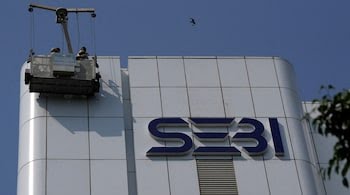
New Delhi, June 4: Shares of Rajesh Exports Ltd (REL), a leading player in the gems and jewellery sector, fell sharply on Thursday, hitting the 5 per cent lower circuit limit after the Securities and Exchange Board of India (SEBI) imposed restrictions on the company’s promoter and Chief Executive Officer, Rajesh Mehta.
On the BSE, the stock declined 4.99 per cent to ₹104.65, while on the NSE it slipped 4.99 per cent to ₹103.92, both reaching their respective lower circuit thresholds.
The market reaction followed SEBI’s interim order, which accused the company of significant financial reporting irregularities and alleged diversion of funds through related entities and personal accounts. The regulator has prohibited Mehta from buying, selling, or otherwise dealing in Rajesh Exports securities until further directions are issued.
SEBI has also instructed the company to ensure accurate and transparent disclosure of financial statements, related-party transactions, and other mandatory filings under the Listing Obligations and Disclosure Requirements (LODR) framework.
According to the regulator’s 109-page order released on Wednesday, the investigation uncovered multiple instances of alleged misrepresentation in the company’s accounts, along with complex fund transfers that lacked sufficient documentation and disclosure. SEBI noted that despite repeated notices and opportunities to provide complete financial records and explanations regarding the movement and end-use of funds, the company failed to furnish satisfactory responses.
The regulator further highlighted a lack of cooperation from the company’s statutory auditors. While the auditors had initially agreed to submit audit working papers during the investigation, they ultimately failed to provide the requested documents.
SEBI observed that such continued non-cooperation could indicate an attempt to conceal crucial information and hinder the regulatory process. Among the most serious findings, the regulator stated that preliminary evidence suggested that as much as 97-99 per cent of the company’s reported revenue may have been inflated, describing the scale of the alleged discrepancies as extraordinary.
The order also identified Rajesh Mehta as the principal authority overseeing the company’s daily operations and financial decisions, holding him responsible for significant aspects of the firm’s management and functioning.
Detailed Background
About Rajesh Exports Ltd
Rajesh Exports Ltd is one of India’s largest gold and jewellery manufacturers and exporters. Headquartered in Bengaluru, the company operates across the gold value chain, including refining, manufacturing, wholesale, and retail operations. It gained international prominence after acquiring Swiss gold refinery Valcambi in 2015, making it one of the world’s largest gold processing groups.
What Triggered the SEBI Action?
SEBI’s investigation focused on concerns regarding:
- Alleged inflation of reported revenues.
- Routing and layering of funds through connected entities.
- Insufficient disclosures related to related-party transactions.
- Lack of documentary evidence supporting large financial transfers.
- Possible diversion of corporate funds.
- Failure to provide complete records during the investigation.
The regulator indicated that several requests for clarifications and supporting documents remained unanswered or inadequately addressed.
Why the Allegation of Revenue Inflation Is Significant
SEBI’s observation that 97–99 per cent of reported revenue may have been overstated is among the most serious allegations in the order. If established, such inflation could materially affect investors’ understanding of the company’s actual business performance, profitability, and financial position.
Revenue is a key metric used by investors, lenders, analysts, and regulators to evaluate a company’s health. Any substantial misstatement can have far-reaching implications for market confidence and corporate governance standards.
Impact on Investors
The immediate decline in the company’s share price reflects concerns over:
- Regulatory scrutiny.
- Potential financial restatements.
- Corporate governance issues.
- Possible future penalties.
- Reputational damage to the company.
Investors typically react negatively when regulators question the reliability of a company’s financial statements, as it creates uncertainty about the firm’s true financial condition.
What Happens Next?
The SEBI order is currently an interim order, meaning the investigation remains ongoing. Rajesh Exports and Rajesh Mehta may be given opportunities to respond to the findings before the regulator issues a final decision. Depending on the outcome, further directions, penalties, or compliance requirements could follow.
The case is likely to remain under close watch from investors, analysts, auditors, and market regulators due to the scale of the allegations and their potential implications for corporate governance in India’s capital markets.