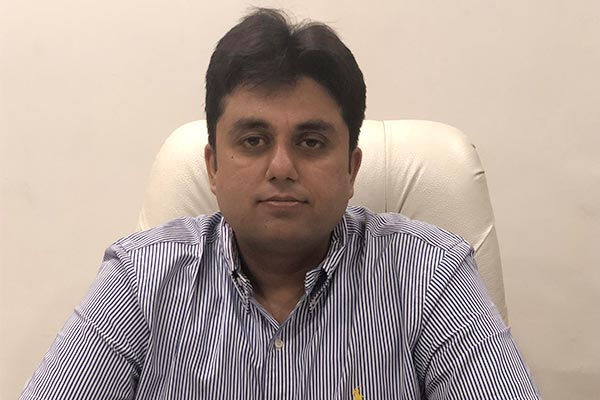
Rohit Sareen, Director – Marketing at Sareen Impex Pvt Ltd is carrying on a business legacy of three generations of his family in the food business. Entrusted to start value added healthy food products to the company, he recognised the treasure of 100% natural Himalayan pink salt ranges and started his own brand. which has made him the current highest importer and supplier of premium grade pink Himalayan salt in India and has expanded to export in almost all sides of the globe. His vision is to replace sea salt from every nook and corner of the world and shift people from unhealthy options to healthier life. In his exclusive interaction with TPCI, Rohit takes a walk down the memory lane to chalk out the journey of his entrepreneurial venture in rock salt from its nascent stages to its present form. Q: How did you come up with the idea of starting a business in this line of Pink Himalayan Salt? Mr. Rohit Sareen (RS): As we have seen a shift in the spending power of the youth of today, there is much more awareness about the health and well being of people. We are witnessing a generational shift of this century in the current era in which the youth of today which I consider as the age group of 25-40 have taken over the reins and are willing to spend more upon their experiences of life and their well being. Generations of our family have a background in the food industry since 1976, which propelled me towards the health food segment where I discovered that healthy alternatives were being found for almost every item but salt was still a taboo in the health of people and was a main ingredient of almost every food. So I decided to work upon salt. From there, I found about pink Himalayan salt from our Ayurveda literature, which has some distinct mention of this product multiple times. Q: What were the initial challenges you faced, and how did you overcome them? RS: The first and major challenge in this venture was a proper source of this product. Its mines are naturally present on earth and only available in Pakistan. This is a major bottleneck, and unfortunately the strained relations of our country with Pakistan have always cast a dark shadow on ease of trade between the two nations, which has been a bumpy ride all throughout. The second major roadblock was the major challenge of finding a right person in that country, which has had a negative reputation in the international trade arena. But thanks to some of my friends there, I was very lucky to find the right person who I could trust to work. The third major challenge was that most of the manufacturers of this product were producing it in a very unhygienic and unhealthy atmosphere, which actually gave the birth to the idea of having our own specific manufacturing plant, which would leverage proper hygienic and healthy production measures laid by myself. So my friend in Pakistan and I set up a new production facility that would be class apart, keeping in view international health and hygiene standards to produce a high quality product, which would solve the mission of spreading the blessings of the Himalayas in the form or pink Himalayan salt in its true and natural form and also setting up a retail packaging unit in Amritsar (India), which is geographically just 180 miles from the actual Khewra Salt Mines. So distance-wise, the Khewra Salt mines in Pakistan are nearer to Amritsar in India than Karachi in Pakistan. Q: Which markets did you tap for your product and why? What market penetration/promotion strategies did you follow? RS: Initially, we started with the Indian market, which we thought is a numbers market. So we initially started with supplying of bulk quantities to a number of companies who were into the market of health food. After India, we entered the international market where we now supply to number of countries like Canada, US, South America, Nigeria, Netherlands, Ukraine, Israel, Russia, UAE, Malaysia, Thailand and New Zealand. We followed the strategy of pitching it to health food/organic sector distributors and traditional Indian food distributors and met people by travelling across the globe through direct contacts and trade exhibitions. Q: Who are your key competitor countries, and what unique competitive advantages have helped you establish your business presence? RS: Our key competitor has only been Pakistan but the major advantage that we have over them is the reliability factor that people entrust upon us for our sheer quality, timely commitments and service. We walk to extra mile to facilitate the customer in all aspects we can and never ever compromise on our quality, which distinguishes us from the manufacturers in Pakistan (a country where people have had very bad experiences in terms of the quality and unethical and unprofessional people in the business). Till date, we boast of having built up our revenues on repeat orders, where a quality conscious customer is always happy with us and never thinks about trying out other suppliers, once he buys from us. Q: What are the major tariff/non-tariff barriers that you have experienced in the international markets? What should be the roadmap to overcome these challenges? RS: Salt has always been a product with a special tariff on it across the globe due to it being a main ingredient. If I talk about India, it was the famous Dandi March by Mahatma Gandhi Ji (that enabled this change). This Dandi March helped to remove all taxes on this product since the times of British India and the trend has followed since then in India. Even in international markets, this product has always been under the least category of tariffs due to it being one of the most common and main ingredients of all types of food. Q: What are the expansion opportunities you envision for yourself in the global market at present? How
Auto industry hits reverse gear
• Vehicle sales dropped by 12% YoY during April-June, 2019, the sharpest fall since FY 2008-09. • Over the past year, slowing economy, uncertain monsoons, high insurance and registration costs and reduced availability of credit have impacted consumer sentiment. • The industry is also suffering from credit constraints, advancing of the deadline for Bharat VI norms and ambiguities due to policies on EVs. • The government must look at demands for reducing GST and engage in a consultative roadmap to decide the future of the auto industry. India has been known as a haven for the global auto industry due to low vehicle penetration of 32 vehicles per 1,000 people (2015), young population and increasing disposable incomes. But the recent downturn in sales paints an alarmingly different picture. For the first time over a prolonged period, all the 17 carmakers in India reported negative salesin the first quarter (April-June’19) of the current financial year, according to the latest Society of Indian Automobile Manufacturers (SIAM) data. As per the findings, this is the steepest fall (12% year-on-year) since financial year 2008-09, when sales for two wheelers slipped by 17%.Passenger vehicle sales (PV) also dipped 18% year-on-year in terms of volume during the quarter. This has been the maximum decline since the 23% y-o-y fall seen in the third quarter of 2000-01. The declining yoy auto sales in the domestic Indian industry The 16th General Elections and uncertainty over the next government were cited as the reason behind the slowdown by some experts. This argument, however, may not be a very convincing one. For starters, as compared to other sectors like agriculture& real estate, the automotive industry is less likely to succumb to the pressures of political vicissitude. Secondly, even after the restoration to power of a robust government, the rebound in auto-sales has not happened. This clearly implies that there are other factors responsible. There seems to be a change in the consumption habits of the millennials. With the vast expansion of the public transportation network and the easy access to metros which criss-cross across the major nodal points of the city, there appears a decline in car ownership by young people. While studies suggest that this is a trend in the US & Europe, it could be a plausible reason for the decline in car sales in India as well. Possibly, an erosion of purchasing power has also led to the sharp decrease in the sales of vehicles. This could be explained as the result of a string of factors –delayed and unpredictable monsoons, stagnation in wages & dwindling prices of agricultural commodities – which has resulted in agrarian distress in the rural hinterland. The Indian economy is not in the best of its health and grew 5.8% in the fourth quarter of FY19 – the lowest growth rate over the last 5 years. The rise in vehicle prices due to higher financing costs also led to the muted growth of the sector. Sales were initially impacted as a result of demonetisation, due to a reduced propensity of consumers to make cash purchases. It got accentuated by the IL&FS imbroglio that has dried funds for NBFCs. Production costs have been driven up by the difficulty in obtaining credit owing to the high NPAs in the banking sector and the high rate of GST (28%). The cost of insurance has also increased since IRDA mandated that premium has to be collected for the entire term (3 years for cars and 5 years for 2-wheelers) at the time of getting insurance. Going the extra mile: The road ahead This downturn in the two wheeler and commercial vehicle sales is likely have several ripple effects. In the short run, according to Auto Component Manufacturers Association (ACMA) of India, about 1 million people could become unemployed if instant steps are not taken to stir up the sagging vehicle demand in India. The slowdown has already led to production cuts and closure of plants by major automakers to manage higher inventory costs due to weak demand. In the long run, this situation could hamper future investments in the sector. At the same time, the industry is also a victim of uncertainties in the regulatory framework related to emission norms. Owing to the growing levels of pollution, India has leapfrogged from BS-IV to BS-VI standards from 2020 as compared to 2024 earlier. The Supreme Court has also passed a ruling banning the sale of vehicles from April 1, 2020. Consequently, car companies in India will now have to comply with BS-VI four years prior to the original plan. The aggressive switch to electric vehicles being planned by the government is going to accentuate these ambiguities further. The industry is already feeling that the government is paying short shrift to the conventional auto industry in favour of EVs. According to them, it is a case of too much too soon in the EV space. A notification on hiking vehicle registration fees on both new and old vehicles on July 24 has further dampened sentiment and sent auto stocks into a tizzy. The government should consider the industry demand to reduce GST rate to a uniform level of 18% from 28% currently to boost demand. Bringing an element of certainty in designing the policies related to the automobile sector would also be a desired change. At the same time, the government needs to engage in a consultative process with industry for a smooth transition to e-mobility. An injection of liquidity to the banking sectoras proposed in the budget will help the industry navigate its way through the current cash crunch. Cost increases through registration fees and one-time insurance payments need to be looked at, since they are not financed and greatly influence purchase decisions.
BRICS: Can they block the unilateral wave?
• This year during their 11th Summit, BRICS nations are expected to discuss unilateral sanctions and its remedies and how they can collaborate to counter its threat. • BRICS will look at strengthening an alternative mechanism for currency reserve to facilitate a trade and payment mechanism amongst BRICS countries during November 13-14 of this year. • Projections indicate that the BRICS will continue to account for more than half of global economic growth by 2030, signifying their importance at global trade forums. • However, there is no major increase in the intra-regional trade among BRICS nations. Some harmonization is indispensable for achieving the unrealized trade potential. A wave of protectionism is clearly visible in global trade as there have been series of sanctions and counter-sanctions. This issue is actually acting as a deterrent in practicing liberal trade. This year in the run-up to the 11th BRICS Summit, unilateral sanctions and its remedies are a major agenda for discussion as emphasised by Russian Deputy Chief of Mission to India Roman Babushkin, “We are against unfair means of competition. What US is doing (against Huawei) is inappropriate.” The grouping will look at strengthening an alternative mechanism for currency reserve to facilitate the trade and payment mechanism amongst BRICS countries ath the Summit during November 13-14 of this year. BRICS countries have since traversed a remarkable journey together on their respective development paths ever since they came together 13 years ago. Currently BRICS as a region is consisting of 43% of the population, 29.3% of worlds GDP and 17.7% of world’s trade. For India, BRICS provides an auxiliary opportunity to discuss significant geopolitical concerns with Russia and China, as well as share its concerns about terrorism to a wider audience. For China, the grouping is vital to forge strategic ties with key partners in each region of the world. More importantly, BRICS is a key building bloc of a much larger project to adapt in terms of physically establishing manufacturing units. During the 10th BRICS Summit scheduled last year, major themes which were discussed included multilateralism, respect for international law, promoting democracy and the rule of law in international relations, addressing common traditional and non-traditional security challenges and various ways to bolster regional trade. While many observers still regard the BRICS Summit through an unhelpful ‘West vs. Rest’ lens, it will become increasingly cogent that successful intra-BRICS cooperation is to be welcomed and has a positive impact on global order. Making use of the untapped potential of trade between BRICS countries will be key to avoid “secular stagnation” and enhance trade between countries that are not as reluctant to embrace globalization as many Western powers. In addition to this, more effective strategic cooperation between India and China will be crucial to avoid geopolitical tensions or even armed conflict in Asia. No doubt, five countries alone, of course, are not enough to address such a monumental and long-term challenge but promoting intra-BRICS cooperation is certainly a step in the right direction. Projections indicate that the BRICS will continue to account for more than half of global economic growth by 2030. Continued implementation of structural reforms will enhance BRICS’s growth potential and balanced trade expansion among BRICS members will further contribute to strengthening international trade flows. Having said that, BRICS is not integrated as a block to the extent it should be. Intra-EU exports are 67% of total exports of EU to the world compared to 7.5% in the case of BRICS. So, while BRICS is not a common market, it desires to increase its exports to the world. The challenge lies in identifying & adopting the best practices in this arena as soon as possible. Source: ITC Trade Map Source: ITC Trade Map As per the data we can clearly see that there is no major increase in the intra-regional trade among BRICS nation. Some harmonization is indispensable for achieving the unrealized trade potential. Comprehensive framework to improve strategic cooperation in economic and trade issues among BRICS may include: i. Standardization amongst trade practices & maintaining customs cooperation. ii. Interbank local currency credit line agreement to boost financial system by common currency exchange regime iii. Developing transportation, logistics & communication infrastructure iv. Establishing Green corridors of easy access v. Transparency through exchange of information & data intelligence vi. Boosting confidence through enforced law arbitration A quick preview of trade marriers as NTMs in BRICS nations ECONOMY 2009 2010 2011 2012 2013 2014 2015 So Far NTMS Brazil 118 66 136 84 64 110 81 1406 China 26 17 43 09 No additional NTMs were implemented 377 India 32 50 73 15 No additional NTMs were implemented 272 Russia 07 78 27 82 92 109 78 & 71 (2016) 595 South Africa Non-Tariff Barriers imposed by South Africa is not reported in TRAINS, UNCTAD Database. Source: UNCTAD TRAINS Database Also BRICS discussions will pay major attention to transparent, non-discriminatory, open, free and inclusive international trade. It is planned to work constructively with all WTO Members on the necessary reform of the Organization, with a view to better addressing current and future challenges in international trade, thus enhancing its relevance and effectiveness. Currently, exporters of all the BRICS economies are facing tedious trade issues in the form of Non-Tariff barriers. Cooperating on establishing standardization and conformity through exchange of information based on requirements of the BRICS nations will certainly help to boost intra-regional trade within BRICS nations. Greater collaboration on intra-regional trade will strengthen their effectiveness as a counter to unilateralism.
Chinese economy: A miracle no more?
• China’s GDP growth reached 6.2% in the second quarter of 2019, the slowest since 1992 since it first starter recording data. • The world is coming to grips with the fact that the Chinese miracle growth story could be nearing its end, exacerbated by the global slowdown and the trade war. • If Chinese demand slows down as it is anticipated, its raw material requirement will be less, and India may not be able to take advantage of the Yuan devaluation. • On the other hand, India’s push for infrastructure development could get a push from cheap Chinese funds and resources. It’s a question that weighs heavily on the minds of policymakers, investors, businesses and academicians across the globe – is the much celebrated and even widely feared Chinese economic miracle nearing its end? The debate has got louder over GDP data for the quarter ending June 2019, when China’s GDP grew at a rate of 6.2% YoY. This is poor by the lofty standards of the Chinese economy, being its lowest growth rate in nearly three decades. China laid the foundations of its spectacular export-led growth story in the mid-1980s when it started opening up its economy, inspired by the success of its East Asian neighbours. After joining WTO in 2001, China was fully able to integrate into the world economy. After 2001, Chinese exports grew at a rate of 27.3% while the imports grew by 24.8%. Due to this growth rate, China was able to maintain a current account surplus after 2004 and still continues to do so. With the increasing trade volumes, China’s trade dependency also increased; total trade volume as a share of GDP reached 65% and exports as a share of GDP went up to 35%. GDP itself grew an average of 10% per annum from 2000-2013. The extraordinarily high trade volumes could be attributed to the undervalued Yuan and the double impact of fast-paced industrialization and rural-urban migration. But now, the middle-income trap seems to have finally taken over, led by the continued global slowdown, rising debt (due to the stimulus package launched in 2008), a housing bubble, declining cost competitiveness and of course the trade war with the US. The projected growth rate for 2019 is 6.6%, which is a clear reflection of plummeting growth and it is partially due to the repressed household consumption and diversion of household savings to investment. If we have a look at the debt of the Chinese economy it juxtaposes the slow projected growth rate as, it jumped from 148% of GDP in 2007 to 249% of GDP by early 2016 and now it has crossed 300%. Plausible reasons for a sullen outlook also include domestic structural factors such as the aging of the population, diminishing pool of surplus agricultural labor, declining return to capital, economic distortions such as preferential treatment of state-owned enterprises, factor price distortions, and excess capacity. Cyclical factors mainly include the slower growth of advanced economies in the wake of the global financial crisis of 2007–2009, the European sovereign debt crisis between 2009–2014 and Chinese self-goal of 2015-16, when Yuan was deliberately devalued. https://data.worldbank.org/indicator/NY.GDP.MKTP.KD.ZG?end=2018&locations=CN&start=2006 China’s total debt burden surged strongly in last six months as it permitted more loans and local government bond issuance to buttress the sluggish economy. The debt figure shot up at a whopping figure of 304% of its gross domestic product (GDP) in the first three months of the year, up from 297% a year earlier. The Chinese government has sought to abstain from corporate debt by restricting borrowing through informal channels, known as shadow banking. While the restrictions have prompted a reduction in corporate debt in non-financial sectors, net borrowing in other sectors has surged, bringing total debt to over US$ 40 trillion, which is equivalent to around 15% of overall global debt. Total debt has risen by US$ 2.9 trillion since the first quarter of 2018, bringing the overall debt mountain to an all-time high of over US$ 69 trillion in the first quarter of 2019. Also, Chinese workers are beginning to demand higher wages, and commodity prices are also driving costs up, which is increasing prices by an average of 5% a year (estimate by The Economist). As a trickle effect, higher wages will increase prices and workers will ask for even higher wages as prices are rigid. This makes it harder to control prices and inflation rates. If Chinese demand slows down as anticipated, its raw material requirement will be less, and India’s exports to that country will decrease to such an extent that we may not be able to take advantage of the Yuan devaluation to earn more dollars. Thus, it seems that little daunting for India as well to continue narrowing down its trade deficit with China in coming couple of years. The impact of Chinese economy has slowed down now, and is also going to affect the trade growth of EU, Japan and South Korea as it is major trading partner with these economies. Exports are unlikely to provide a major source of growth for China in the future, given the current state of global demand and China’s already-large share of global trade. As an increasingly important global and regional economic power, China’s slowdown may cause large spill over effects to its neighbouring economies including India. Compared to what imports, Indian exports to its northeastern neighbour are less diverse. Raw cotton and cotton yarn, petroleum products, iron ore, granite, raw aluminium, copper and other metal products along with some spices account for over 70% of our exports by value. It is estimated at over US$ 100 billion worth projects are under execution by Chinese companies in India. India’s big push for infrastructure development could get a boost from cheaper Chinese funds and resources. Chinese cooperation in the development of India’s high-speed rail network, renewable energy sector, smart cities and more importantly, the manufacturing sector, could become more feasible in the wake of reduced possibilities and opportunities for Chinese companies in
Product Profile: Pepper
HS CODE (including Black Pepper): 090411 • The global black pepper market is estimated to be valued at US$ 3.7 billion, estimated to grow at a CAGR of 6.1% over the forecast period to reach over US$ 5.7 billion by the end of 2024. • Global demand for pepper is increasing in a number of categories like cosmetics, bakery and confectionery products, essential oils, etc., making it tough for supply to catch up. • In 2018, pepper exports from India plummeted by approximately 35 per cent compared to 2016 to 16,840 tonnes, the lowest in recent times. • India needs to urgently boost its competitiveness in the face of the fierce challenge from exporters like Vietnam, Indonesia and Brazil. Black pepper, commonly called the King of spices or even Black gold, is the most germane and commonly used spice, which occupies an exclusive and unique position in the world. In India, Kerala is the native place of black pepper, contributing most of the country’s area under cultivation and production for the crop. US, UK, Germany, India, Vietnam, Netherlands, France, Egypt and Japan are the major global importers of black pepper. India ranked at the topmost position in global pepper production until the late 19th century, but lost its position to other nations like Vietnam, Indonesia and Brazil. Major exporting destination of India include US, UK, Sweden, Italy, Germany, France and Netherlands. The current supply is not able to meet the global demand, which has made exports more profitable. Conversely, this has led some of the countries to focus on black pepper export by increasing the area, output and yield. Increasing demand from Far East countries, which have started using more pepper in cooking, has been quite vital in influencing the global black pepper market. Growth in the cosmetics industry is also directly influencing the pepper market. Due to the antioxidant and antibacterial properties of black pepper, it is often used as an ingredient in skin care products. Also, black pepper is one of the healthiest spices relative to other seasonings. The currently surging usage of black pepper in bakery and confectionery products such as cakes, chocolates, and snacks is proliferating the global demand of the black pepper market. For instance, black pepper is used in rosemary bread, garlic bread and other bakery products. Manufacturers are also focusing on new product innovations such as pepper spray, essential oils and fragrances. They are also focusing on innovative packaging of black pepper powder as it has capacity to fetch higher prices. Unfortunately, the demand-supply mismatch has proved to be a major constraint in this market. This is majorly due to the intensive crop losses in various parts of the world, especially in India & Brazil. Sudden climatic changes and untimely rainfall have significantly led to the fall in the yield of black pepper. Top exporters of pepper incl. black pepper Exporters Exported value in 2016 Exported value in 2017 Exported value in 2018 World 2615.417 1964.62 1312.669 Viet Nam 1233.929 849.728 501.844 Brazil 246.501 273.889 194.834 Indonesia 416.581 228.357 147.389 Sri Lanka 68.052 79.126 85.783 India 98.396 69.336 51.086 Germany 73.978 65.839 45.492 Malaysia 98.772 58.201 38.076 UAE 63.041 55.613 31.542 France 27.07 34.333 22.676 Source: ITC TRADE MAP, figures in US$ million From this table it can be observed that economies like Sri Lanka, France, Germany and Brazil have experienced a positive exponential growth rate from 2011 to 2018. But overall, there is a sharp fall in the global exports of pepper including black pepper from 2017 to 2018. India too experienced a drop in exports of pepper worth US$ 18.1 million for that period, but more worrying are the continuous decline in exports of this product mainly after 2015. In fact, India’s exports of pepper including black pepper have declined by 10.4% exponentially since 2011. Also from the point of view of exports in quantity terms, India’s quantum is lower for 2017 and 2018 as compared to 2015 ad 2016. This clearly indicates that our processes are not competitive compared to those of Viet Nam, Brazil and Indonesia. In 2018, pepper exports from India plummeted by approximately 35% compared to 2016 to 16,840 tonnes, the lowest in recent times. In 2018-19, according to the Spices Board, export shipments fell over 25% year-on-year in the nine months up to December 2018. Majority of the shipments from India are value added exports of imported varieties, mostly from Vietnam. To be more specific, Vietnam is selling the commodity at US$ 2,800 per tonne, way less than US$ 6,000 per tonne commanded by the Indian variety. Top importers of pepper (incl. black pepper) Importers Imported value in 2016 Imported value in 2017 Imported value in 2018 World 2276.043 1817.613 1270.341 USA 490.205 383.254 221.393 India 183.172 164.898 136.105 Germany 241.562 188.827 108.735 Viet Nam 111.271 61.437 87.82 France 83.142 60.305 39.631 Egypt 54.219 55.568 37.503 United Arab Emirates 81.577 63.959 35.347 Netherlands 63.862 45.559 34.213 Pakistan 41.579 37.361 30.151 Japan 58.948 39.242 29.541 Source: ITC Trade Map, figures in US$ million The black pepper market demand for principal usage is increasing as manufacturers are speedily producing new varieties in seasonings and blends to increase their product portfolio. The demand for whole black pepper is more in the Asian region because of Vietnam, Indonesia and India having their own production and manufacturing centres, which are heavily working towards the production of high-quality black pepper and essential oil. The segment is expected to create absolute business opportunity of more than US$ 900 million between 2019 and 2024. Also, organic way of production is the one efficient method to save the environment and preserve the ecology. It is a commercially life-saving option for farmers because organic products will fetch a premium price at lesser production cost, which is being promoted through the agri-export policy as well. Pepper has become a valuable commodity in the international market as it is highly used in food as well as other products like pharmaceuticals and cosmetics. Exporting of processed goods from the
Gems & jewellery: Exports losing their bling?
• After the second successive year of de-growth in 2018-19, India’s gems & jewellery exports have continued to disappoint in the quarter ending June 2019, falling by 10.32% YoY to reach US$ 9.18 billion. • A general global slowdown, withdrawal of GSP and liquidity crunch are major factors impacting exports in the current milieu. • Besides these impediments, the gems and jewellery sector is also constrained by an inability to keep in step with global trends. • There is an urgent need for large-scale skilling initiatives, besides a strategic reorientation towards new potential markets. India’s gems and jewellery segment is among the largest in the world, contributing 29% to the global jewellery consumption. It contributes about 7% to India’s Gross Domestic Product (GDP), about 15% of India’s total merchandise exports and is a source of livelihood for over 4.64 million employees. Over the past few years, the India’s gems & jewellery exports are witnessing a decline. Exports dropped by 5.32% YoY to reach US$ 30.9 billion in 2018-19. The slump has worsened this year as well, and exports have fallen by 10.32% YoY to reach US$ 9.18 billion in the quarter ending June 2019. This has been traced to various factors including weak global demand, delays in getting GST refunds and liquidity crunch in the Indian market. Besides the general slowdown, the removal of GSP benefits is impacting gems and jewellery exports, since around 15% of these exporters took the benefit of GSP last year. But apart from these causes, there are a string of other structural challenges which are preventing India from reaching its true export potential and catapulting itself as the top gems & jewellery exporter. One of the major impediments to the growth of Indian gems and jewellery segment is the lack of skilled labour. Most of the workers are not adequately trained to adapt to the shift in production techniques from wax to metal moulds. Working with metal moulds tends to be tougher than working with wax techniques. Moreover, this kind of occupation tends to pass on from generation to generation, but needs to be complemented by addition of a fresh pool of talent. While the sector’s on-the-job training model is of great help to the new joinees, it leads to longer training time. Due to this, India’s labour force tends to be less efficient than those of its counterparts like China, USA & Sri Lanka. Countries such as China & US have emerged as the leading gems & jewellery producers owing to their superior technology, efficient labour and industry-friendly policies. Another major challenge faced by Indian gems & jewellery industry is the mismatch between demand & supply arising from the inability to keep up with changing jewellery trends. For instance, while in India there is a great demand for temple jewellery and jewellery made out of coloured gemstones, simple branded jewellery is the norm across the world. The lack of a brand value seriously depreciates the value of Indian jewellery makers in international markets. Lack of design development centres makes it challenging to meet the demands of international clientele. As Mr. Dharmendra of Gandhi Dhaam Jewellers Association affirms in his interaction with TPCI, “About 80-90% of the production of jewellery in India is done by craftsmen and manual labour. Not only does this drive the production cost up in India, there are also differences in terms of designs and quality.” Source: Department of Commerce; Data for 2018-19 for HS Code 7113 Articles of jewellery and parts thereof; of prcs mtl/of mtl cld wth precious metal The next major obstacle is the heavy dependency on other countries for raw materials. For instance, India imports rough diamonds & raw pearls from Belgium, UK, Israel and UAE. Gold jewellery is imported from Switzerland, South Africa, UAE and Australia. Measures such as the Union Government’s decision to hike import duties in the latest budget from 10% to 12.5% will have an adverse impact on demand for gold jewellery as the raw material will be costlier and buyer will face the brunt of it. Countries such as China & US have emerged as the leading gems & jewellery producers owing to their superior technology, efficient labour and industry-friendly policies. Injecting liquidity in the banking system would give the much-needed boost to this sector by addressing the problem of cash crunch and enabling it to indulge in capacity expansion. Another viable proposal is to allow duty-free sales of gems and jewellery from SEZs/EOUs to DTAs, as suggested by Baba Kalyani Committee. Technological interventions like establishing jewellery parks in manufacturing zones (e.g. Mumbai & Kolkata), having mega common facility centers & support by local government/institutions will go a long way in bolstering trade. We also need to focus on skill development of our labour and strengthening the approach to marketing of our products. The overdependence on few markets like UAE and US can be reduced by actively exploring new potential markets and adapting the product offering to meet their specific demands.
Cashew industry: Living in unpalatable times
• India’s cashew exporters have been struggling of late, with exports plunging to a two-decade low in 2018-19. • This trend has been attributed to external factors such as tough competition from Vietnam and other countries that have cheaper processing costs. • Domestic factors such as lack of access to institutional credit owing to the crisis in India’s banking sector are also weighing down India’s cashew exports. • Multiple challenges faced by the industry need to be addressed, while also looking at new growth avenues in processed cashew exports. India is one of the leading suppliers of cashew kernels to global markets. This is hardly surprising since it produces 6-7 million tonnes of raw cashew annually. In fact, India has the distinction of being the first country to develop the cashew processing industry. It was the leading cashew exporter for several years before being overtaken by Vietnam. From around 100,000 tonnes at one point, cashew exports from India have been falling steadily. In 2018-19, India’s cashew exports dropped to a two-decade low, falling by 20% YoY in volume terms to 66,693 tonnes and by 24% YoY in value terms to INR 4,434 crore. This is indeed surprising since the cashew industry is seeing sunny days globally. According to the International Nut and Dried Fruit Council, the international demand for the cashew kernel has increased by 53% since 2010. Impediments to trade Stiff competition from Vietnam and other countries that have cheaper processing costs is cited as the main reason behind this development. Currently, Vietnam constitutes about 76% of the cashew imports by US, for instance, where India was a top exporter earlier. Vietnam has completely mechanised cashew processing, and can process raw cashew into kernels at about Rs 900 per bag. In sharp contrast to this, cashew processors in Kerala do the same at a relatively much higher cost of about Rs 3,500 per bag. What drives up the cost of this operation is the high labour charges in Kerala. Even in other south Indian states, processing charges amount to about Rs 1,400-1,500 per bag. Misuse of the India-ASEAN FTA is another issue plaguing exports, according to the industry. This pertains to the inclusion of roasted and salted cashews in the list of items qualified for availing duty free status in FTAs/agreements with ASEAN. Importing the commodity by declaring it as roasted cashew or as cattle feed for zero duty is hampering competitiveness (surge estimated at 3,000 MT so far). On the other hand, the import duty for Indian cashew kernels is very high particularly in South Korea, Australia and China compared to competitors like Vietnam and African countries. What has compounded the problem further is the reliance on raw cashews imported from Western Africa due to the inadequate indigenous availability of the product. It is reported that India meets over 60% of cashew processing needs from imports. What has complicated the matter is the exorbitant raw nut prices, which typically range from US$ 2,100 to US$ 2,400 per tonne. This has forced many units in Kerala to shut down their factories due to non-viability of the trade. For instance, In Kerala’s Kollam district, 700 out of the 834 registered factories have closed their doors in the last 2-3 years due to the paucity of working capital and non-viable operations. The lack of access to institutional credit due to the crisis in banking sector (bad loans & NPAs) has prevented exporters from mechanizing the production process. Non-tariff barriers are another detriment to imports of raw cashew. “While importing raw nuts from LDCs, the customs are insisting for 100% inspection and checking each bag for markings to confirm the source country. As per the DFTP scheme, only the Country of Origin Certificate issued by the relevant authority, original Commercial Invoice, Bill of Lading and other supporting documents are required to be produced…. Since, the Raw Cashew Nut is an industrial raw material, normally; the seller uses the used bags of other products. Hence instances of marking about the consignee are not practical and harassment to the importers,” explains Mr. S. Kannan, Executive Director & Secretary of The Cashew Export Promotion Council of India in an exclusive interview to TPCI. On the home front, there are also challenges like higher valuation for the imported raw nuts and payment of duty at 2.5% even for the import from LDCs are the real hurdles in selected ports. For example, it has been observed in Mangaluru, a cashew hub, customs have arbitrarily fixed the floor price of imported raw cashew at almost 30% more than the present market price. This has also eroded the competitiveness of cashew exporters. Further, weak local prices in the domestic market have discouraged exporters from selling their product in India. Getting the sector back on its feet First of all, the sector is in urgent need of a strong liquidity infusion. The Indian government has already taken steps like a devising a comprehensive 4R’s strategy for PSBs, revising the Insolvency and Bankruptcy Code (IBC) & monitored high-value loans. Benefits of such measures need to trickle down to the cashew processing units in India. The government hiked import duty of cashew kernels to 70% from 45% in the recently announced Union Budget, a move that was welcomed by the industry. But they are also demanding for the removal of 2.5% customs duty on raw cashew to make domestic processing viable. Promoting cashew production so as to shun import dependence is another strategy to tackle the situation. Kannan feels that the government should set a target of achieving 20 lakh MTS of raw cashew nut production in India by the year 2025. The government must also grant some funds in order to facilitate the mechanization of cashew kernel production. While initially expensive, this will eventually bring down the production cost faced due to expensive labour charges. There is also the need to recapture our traditional markets – USA, Europe, and Australia – and to establish our mark in emerging markets like

“There is no appetite in the world for Mode 4 commitments”
In his exclusive interaction with TPCI, Dr Pralok Gupta talks about the various facets associated with the services trade, the different approaches to GATS commitments of developed & developing countries and more. Q. What commitments & obligations does India have to comply with in terms of GATS? Are there any challenges that India is facing in fulfilling these requirements? Dr. Pralok Gupta: As far as GATS are concerned, India’s commitments are very modest as compared to developed countries, which are at a relatively higher level. India’s commitments are only in selected services, and that too, mainly in Mode 3.Mode 1 (cross-border trade or online trade) is generally unbound, which implies that there’s no commitment by India as far as this category is concerned. Even in terms of challenges to fulfillment, there are no major obstacles. In fact, we have more autonomous liberalization than that committed in the GATS. For example, we have more liberalisation in retail services, insurance services, and so forth. We have a number of services where we have not made any commitments under the GATS, but these sectors are now open. Q. How & when will India be in a position to realize benefits under Mode 4 of services exports? Is there a possibility for India to leverage benefits from Mode 4 in the future or will it be a barrier due to the restrictions applied by other nations like labour mobility tests or economic need test? Dr. Pralok Gupta: It is very difficult to say how & when India will be able to realize mode 4 gains fully, because globally very few countries like Turkey are interested in these discussions, apart from India. Since there is no appetite in the world for Mode 4 commitments, it is very difficult to get commitments in this category. There is also a tendency to negate those commitments through other provisions. For example, the US has increased the fees on H1B visa to such an extent that it is a heavy cost burden on the company’s business model. So this is a really difficult time in terms of supplying services through Mode 4, since more & more countries are resorting to protectionist measures such as stricter visa conditions & higher visa fees. For instance, Australia has an occupational list for issuing short term working visas. The occupation list is being shortened over the years as many services are deleted from this list. Q. India enjoys the advantage of a positive demographic dividend and has made a name for itself in the global IT industry. What can India do to gain advantage of this favourable situation and give a boost to its services sector? Dr. Pralok Gupta: Focus can be given to selected sectors in order to boost the services exports. One such sector is the IT & ITES sector. Significant scope also exists in business services & professional services like accountancy & legal services. Potential can also be tapped in the health, education & tourism sectors. For example, we have nature tourism, eco-tourism, cruise tourism in our country. We have more number of World Heritage tourism sites than Turkey, Thailand and many other countries. But we receive lesser foreign tourists than say Singapore & Thailand. This can be attributed to macro- & micro-economic reasons like the rating of the country, its media perception as a travel destination, and the kind of marketing & facilities available for tourists. Q. Of late, India & US are witnessing some tensions in their economic relations, which are also impacting services exports. What repercussions do issues like totalisation& stringent visa norms of the US have for the services sector in India? Dr. Pralok Gupta: On H1B, US has made a commitment of 65,000 visas in the WTO. So, it’ll comply by its commitment. The only issue is that US is trying to impose other conditions, which will make H1B visa a little less attractive for the prospective applicants. For example, earlier, they could convert this visa into a green card. Now, there are media reports that this facility could be withdrawn. If this happens, many Indians will have to come back & that will create a lot of issues for the Indian economy. A few years ago, the application fees for the H1B and L1 visas were made so hefty that it may become difficult for many companies to bear that amount. Thus, the conditions associated with the H1B visa have become more stringent. The way these visa restrictions were drafted, they seem to be origin & company neutral. But the actual impact is going to be more on Indian companies. On paper, these provisions don’t seem to violate the commitments & obligations of US under the GATS. But in effect, US may not be fulfilling its commitments. India has filed a case in the WTO in this context. Q. Why is the Government of India focussed on bolstering India’s manufacturing sector over the services sector to become a leading economy in the world? Dr. Pralok Gupta: The focus on manufacturing is more from an employment perspective, since most of the economists describe India’s growth as ‘jobless growth’. If we go back to economic fundamentals, there are three stages of economic growth (agriculture to manufacturing to services). In India’s case, however, there has been a transition directly from agriculture to the services sector, skipping the second phase. Presently, while the share of agriculture has come down in the economy, the share of the services sector is increasing while the industrial sector is more or less stagnant. However, the number of people employed in agriculture is still more or less the same as before or reduced non-proportionately as compared to its share in the GDP. If we compare globally, for all those economies where the services sector contributes significantly to the GDP, it also contributes significantly to employment. That was the main challenge & therefore, the government was focusing on programmes like Make in India. Q. What is your take on the low focus
Trade vs food safety: Where the twain shall meet
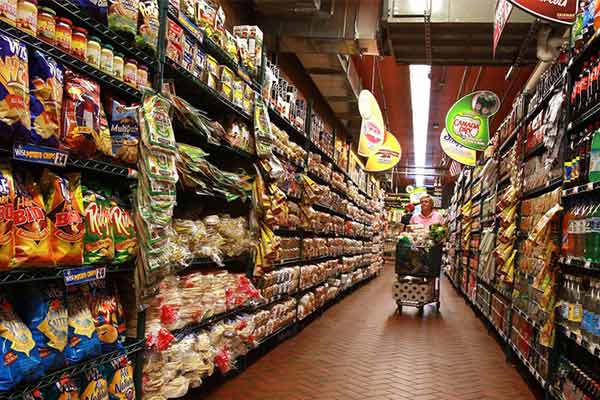
• The trade off between food safety standards & exports is at the forefront of policy debate on agriculture in the present milieu. • Rigid and divergent international standards on food safety are known to impact agricultural export prospects for developing and least developed countries. • Till date, 188 countries are CODEX members (187 countries and EU as a group), which participate annually to discuss food safety issues and methods to adapt it unanimously. • To be able to participate and engage in Codex work, countries need to invest resources on standardization of norms, besides ensuring effective coordination between all requisite sectors and stakeholders. The Agreement on the Application of Sanitary and Phytosanitary Measures (which is known as SPS Agreement of WTO) sets out the basic framework and standards for food safety, animal and plant health standards. It gives a platform to countries for framing their own standards. But at the same time, it also clarifies that regulations must be justified through science. They should be implemented only to the extent necessary to protect animal, human or plant life or health. And they should not arbitrarily or unjustifiably discriminate between countries where identical or similar conditions prevail. Member countries are encouraged to use international standards, guidelines and recommendations where they exist. However, they may use measures, which result in higher standards if there is a requisite scientific justification. Apart from this, they can also set higher standards based on appropriate assessment of risks so long as the approach is consistent and not arbitrary. Now the question is, which standards are practiced globally on food safety – Codex standards or individual country-specific standards? To better understand this, let’s go back to the acrimonious saga of 1989-90, when EU banned the imports of beef coming from US due to the quality of hormone! This incident clearly signaled that harmonisation of food safety standards is indispensable for spurring food trade across the globe in a more conducive manner. Thus when WTO was set up, the SPS agreement was framed to assure harmonisation, provide risk assessment and bring transparency under articles 3, 5 and 7 respectively. CODEX Alimentarius food safety standards are cited under the SPS agreement for practicing and designing trade polices, as these are scientifically justified. The Codex process involves broad international input and sound scientific support from panels of independent experts. It provides governments with guidance on the adoption of national food safety standards and regulations to enhance public health protection within their territories. Codex standards and other texts dealing with all aspects of food quality and safety also promote fair practices in food trade. But the irony is that even today, economies continue to digress from CODEX standards. Till date, 188 countries are CODEX members (187 countries and EU as a group), which participate annually to discuss food safety issues and methods to adopt them unanimously. To give a small illustration about this, maximum tolerance level of residuals or maximum residual limits (MRLs) of carbendazim in orange juice are different for each country. Country Accepted MRL for carbendazim in orange juice (parts per billion) Canada 500-600 EU 100-700 US 10 Apparently, the US claims that its high standards are necessary to ensure continued safety of orange juice so that it is fit for human consumption. However, this is a significant divergence from CODEX standards, which increases the impediments for developing and least developed countries. To maintain and satisfy each country’s food safety standards is too complex and expensive due to the high level of ambiguity for exporting economies. Due to strict demands on MRL acceptability for aflatoxins, African economies lost US$ 670 million worth of exports to EU. Furthermore, as per this stringent food safety measure, the risk on human health estimated was 1.4 deaths per billion per year. This is a trend, which each member country needs to address, otherwise agricultural trade looks headed for a protectionist wave. The harmonization of food standards is commonly viewed as a prerequisite to consumer health & safety as well as allowing the fullest possible facilitation of international trade. Harmonization can only be attained when all countries adopt the same standards. The General Principles of the Codex Alimentarius specify the ways in which member countries may “accept” Codex standards. While the emerging world’s interest in all Codex activities clearly indicates global acceptance of the Codex philosophy, which is embracing harmonization, consumer protection and facilitation of international trade; but in practice, it is difficult for many countries to accept Codex standards in the statutory sense. Differing legal formats and administrative systems, varying political systems and sometimes the influence of national attitudes and concepts of sovereign rights impede the progress of harmonization and deter the acceptance of Codex standards. Despite these difficulties, however, the process of harmonization is gaining momentum by virtue of the strong global desire to facilitate trade. An increasing number of countries are aligning their national food standards, or parts of them (especially those relating to safety), with those of the Codex Alimentarius. This is particularly so in the case of additives, contaminants and residues. Policy makers in the realm of food safety need to address and resolve the challenge of implementing holistic approaches and constructing bridges between different disciplines as well as different sectors, including agriculture, environment, public health, tourism and trade. This is of special importance with changing consumer behavior and international travel in addition to international trade taking place at all levels of the food chain. Today, non-transparent international supply networks often make it daunting to track the origin of all commodities and ingredients of food products. Individual governments have a crucial role in terms of adopting the vision for developing and facilitating the implementation of their national Good Agricultural Practices (GAP) standards that are consistent, germane with international requirements and have adapted to local policies and environment. Together, the public and private sector’s support are instrumental to deliver the skills and infrastructure needed for leveraging the safety and quality level of the agri-food chain, while simultaneously minimizing
“Jewellery promotion needs to be enhanced”
In this exclusive interaction with TPCI, Mr. Pramod Kumar Agrawal, Chairman, Gem & Jewellery Export Promotion Council, speaks about the opportunities and challenges faced by India’s gems & jewellery industry and necessary measures to boost exports in value terms. Q: How is India placed vis-a-vis competition in the gems & jewellery exports and what are the major market opportunities/competitive threats going forward? Pramod Kumar Agarwal (PKA): India enjoys a great position in the global gems & jewelry segment, when it comes to cutting & polishing of diamonds. However, it has not yet made great strides in the luxury or branded jewellery sector. When it comes to marketing plain gold jewellery, it needs to expand its presence from South Asia to the white skinned community (Europe). It should go beyond the US which imports about US$ 1.5 billion from India & establish itself in other markets also. At the same time, it needs to tap the international market for silver & imitation jewellery. It doesn’t even feature among the top 5 producers of imitation jewellery in the world; and faces stiff competition from China. Given the recent US-China trade tensions, US has emerged as a potential market for India since India can fill the void created by the China and has the potential to export jewellery worth up to US$ 3 billion to US alone. India’s market penetration into Middle East can also be a major source to enhance the exports of gems & jewellery. Some of India’s large gems & jewellery retailers have, in fact, established their presence in regions like the Middle East, Singapore, US & Far East. Q: What are the major market access/structural challenges faced by Indian exporters in international markets and domestically? How can they be addressed? PKA: One major challenge faced by Indian exporters is the low buying capacity in major part of Africa owing to the poor standard of living, sparse population & the dismal state of their economy. Another thing is that India’s GSP status has been terminated in the US. If India can somehow convince the US to restart the scheme, it will be of immense help to the gems & jewellery exporters. There’s also the problem of high local taxes like GST & VAT in countries like Italy, which needs to be addressed when doing FTA negotiations. Another major non-tariff barrier is that the Indian system of hallmark is not accepted in countries like the UK & Bahrain and the products have to be re-stamped according to the criteria prevalent there. Other regions like Dubai & Hong Kong are acting as intermediary markets for gems & jewellery. Also, India does not gain much in the FTAs signed for gold and these should be discouraged. Imported gold is often melted here, which changes its character. On the other hand, the FTAs signed with countries like Malaysia & Thailand have been advantageous for diamonds as they are markets for the same. Similar trade pacts need to be signed in the future for diamonds and colored gemstones. One of the hurdles in doing gems & jewelry trade in India is the difficulty in ease of doing business, owing to the kind of regulatory system present here. Another problem is that the jewellery is being made using imported raw materials, which drives up the compliance burden and thus the production costs and impacts our exports. At the same time, owing to problems like frauds, the banks in India have become reluctant to offer credit to the industry. Infrastructural bottlenecks, too, act as roadblocks to trade. Technological interventions like establishing jewellery parks in manufacturing zones (eg Mumbai & Kolkata), having mega common facility centers & support by local government/institutions will bolster trade. Q: What measures need to be taken to boost India’s gems exports in value terms across international markets? PKA: Jewellery promotion needs to be strengthened at an international level. Some steps are already being taken in this regard. For example, we’re reaching out to industry stalwarts like the World Gold Council in order to reach out to less tapped regions like China, US, Japan, Europe & Middle East. At the same time, we need to invest in the skill development of our craftsmen. We’ve collaborated with the National Skill Development Council. We’ve also set up a Gem and Jewellery Skill Council of India. There should be a ‘design connect programme’ to keep up with international trends & to add value to our gems & jewellery. There should also be exhibitions & store-based promotions of our gems & jewellery. Pramod Kumar Agrawal, started his career in Jaipur, in silver jewellery during the year 1986 with one artisan and one customer. He is also the Chairman of Derewala Industries Limited. With this humble beginning, his company has evolved into a multi vertical company. He has worked as a Member of Committee of Administration in GJEPC for several years and was Regional Chairman of GJEPC –Rajasthan Region before getting elected as Chairman at the national level. He has also looked after GJEPC’s institute – Indian Institute of Gem and Jewellery, Jaipur for almost 5 years as its Chairman.