
India Business & Trade (IBT) sat down with Mr. Gurinder Singh, Founder & CEO of RANCE FPS LLP and the exclusive India representative for some of the world’s leading food processing machinery manufacturers. With over a decade of experience bridging global technology with India’s fast-evolving food sector, Mr. Singh shares his insights on automation, quality control, sustainability, and the untapped opportunities in post-harvest processing. In this exclusive conversation, he discusses how precision tools, AI, and smart sorting systems are transforming the Indian food processing industry—and what it takes for businesses to stay competitive in a cost-sensitive, quality-conscious market. IBT: How has the Indian food processing industry evolved over the past decade, particularly in terms of automation and quality control? Mr. Gurinder: The Indian food processing industry has come a long way in the last decade, especially when it comes to automation and quality assurance. What was once largely manual and inconsistent is now becoming increasingly digitized, streamlined, and reliable. From peeling to packaging, automation is no longer just for the big players—even mid-sized companies are adopting smart machines to reduce human error and improve throughput. On the quality front, the shift from manual inspection to real-time monitoring, data logging, and vision-based systems has been transformative. These technologies help maintain hygiene, ensure consistency, and comply with both domestic and international food safety standards. IBT: What are the most critical inefficiencies in traditional food processing lines, and how do advanced technologies like optical sorting help address them? Mr. Gurinder: One of the biggest inefficiencies in traditional processing lines is the dependence on manual sorting and quality checks. It’s time-consuming, inconsistent, and difficult to scale. That’s where optical sorting technologies make a huge difference. Companies like Raytec Vision, Key, Tomra, Optimum, et. are using high-resolution cameras, sensors, and AI algorithms to detect defects, eliminate foreign matter, and grade produce based on size, shape, and color. These machines operate continuously with high accuracy, eliminating human fatigue and error. The result? Reduced wastage, consistent quality, and higher efficiency—enabling processors to meet stringent safety standards with confidence. IBT: In a cost-sensitive sector like F&B, how do you justify investing in high-end technologies while staying price competitive? Mr. Gurinder: In a price-sensitive market like food and beverages, advanced technology should be seen as a strategic investment—not just a capital cost. Yes, the initial outlay might be higher, but the returns are tangible: less product waste, lower labor costs, faster processing, and improved product quality. One of our clients who installed a Bigtem steam peeler saw immediate improvements in yield and reduced dependency on manual labor. Another who adopted a Raytec optical sorter significantly reduced customer complaints and improved export acceptance rates. When technology leads to higher efficiency and reliability, it quickly offsets its own cost and helps maintain competitive pricing in the long run. IBT: What lessons have you learned working with large-scale operations versus building your own venture? How does the decision-making differ? Mr. Gurinder: Large-scale operations teach you the value of structure, data, and long-term planning. Decisions are often slower but deeply thought-out, with clear alignment across departments. Running your own venture is a different game. It’s fast-paced, intuitive, and you need to be hands-on. You have fewer resources but more freedom to act quickly. The key difference? In large organizations, it’s about coordination and patience. In your own business, it’s about agility, adaptability, and the courage to take risks—even with limited information. IBT: With food safety and traceability under the spotlight, how are precision tools like AI and smart sorting systems shaping compliance and consumer trust? Mr. Gurinder: Precision technologies are redefining food safety and traceability. AI-powered sorters and real-time monitoring systems identify contaminants and defects with incredible accuracy—far beyond what manual checks can do. In terms of traceability, modern machines can now log data at every stage of production. If a quality issue arises, you can pinpoint its origin instantly, which is critical for audits and recalls. This kind of transparency and reliability builds consumer trust and ensures regulatory compliance. It’s a proactive, tech-driven approach to quality control—and it’s becoming the new standard. IBT: What are the key gaps or opportunities you see in India’s food tech ecosystem, especially in post-harvest and processing stages? Mr. Gurinder: Despite growth, India still faces major gaps—especially post-harvest. Supply chains are fragmented, cold storage remains inadequate, and massive amounts of produce are wasted before reaching processors. That presents real opportunities. Modular processing units, shared infrastructure models, decentralized cold chains, and AI-based grading tools can all bring significant value. There’s also room for innovation in by-product utilization—turning waste into alternative snacks, nutraceuticals, or even compostable packaging. Startups that can deliver scalable, affordable, tech-driven solutions in this space will have a major impact. The demand is huge, and the need is urgent. IBT: How can mid-sized food processors adopt sustainability without it becoming a financial burden? Mr. Gurinder: Sustainability doesn’t need to be expensive or overwhelming. Mid-sized processors can take small, practical steps that still yield big results. Investing in energy-efficient equipment or water-saving systems—while slightly costlier upfront—leads to long-term savings. Reusing process water, optimizing heat recovery, and reducing material wastage all improve margins while being environmentally responsible. It’s about embracing traditional values—using resources wisely, minimizing waste—and applying them through modern tools and smart planning. IBT: What are some overlooked elements in setting up an efficient, modern processing line? Mr. Gurinder: People often focus on headline machines but overlook smaller, equally critical aspects. Smart layout planning, seamless integration between equipment, and built-in provisions for future expansion can dramatically improve operational efficiency. Easy waste management systems, proper drainage, and clean-in-place (CIP) setups also enhance hygiene and uptime. Don’t underestimate the importance of operator training, local spare parts availability, and routine maintenance. Even basic digital dashboards for performance tracking can flag issues early and improve line efficiency. Ultimately, thoughtful design and planning are what differentiate a good plant from a great one. IBT: Is the Indian food industry receptive to global tech and best practices? What challenges remain in terms

India leads in AI adoption as OpenAI launches GPT-5
India is fast becoming a global AI leader, with OpenAI CEO Sam Altman predicting it could soon surpass the U.S. as the company’s largest market. With 96% of Indian professionals already using AI tools at work and 94% believing AI skills are essential for career growth, the country is witnessing widespread adoption. OpenAI’s launch of GPT-5, which now supports 12+ Indian languages, reflects this strategic focus on India’s fast-growing, AI-savvy user base. Image Source: Freepik OpenAI CEO Sam Altman has expressed confidence that India could emerge as the company’s largest market globally. His remarks coincided with the launch of OpenAI’s most advanced model yet—ChatGPT-5. Currently, India ranks as OpenAI’s second-largest market after the United States, but Altman emphasized the country’s potential to take the top spot, applauding the ingenuity and scale with which Indians are embracing artificial intelligence. “India is our second-largest market in the world after the US, and it may well become our largest market. It’s incredibly fast-growing, but what users are doing with AI, what citizens of India are doing with AI, is really quite remarkable,” Altman said during a media briefing. Reiterating OpenAI’s growing commitment to the Indian market, Altman shared that the company is placing significant emphasis on adapting its offerings to meet local needs. He highlighted ongoing collaborations with domestic partners aimed at ensuring that AI tools are not only effective but also widely accessible. “We’re especially focused on bringing products to India, working with local partners to make AI work great for India and make it more affordable for people across the country. We’ve been paying a lot of attention here given the rate of growth, and I am excited to come for a visit in September,” he said. The remarks come at a time when India’s professional workforce is demonstrating rapid and widespread adoption of AI technologies. According to the 2025 Global Workplace Skills study conducted by Emeritus, Indian professionals are leading the global AI adoption curve, with 96% of them already using AI and generative AI tools at work. This figure is significantly higher than the 81% in the United States and 84% in the United Kingdom. Of the Indian professionals using these tools, 95% have reported productivity improvements. The study also found that nearly 94% of the Indian workforce believes that mastering AI skills will accelerate their career growth. This strong belief in AI’s career-transforming potential is driving not only adoption but also a shift in learning and professional development priorities. “The workforce needs to keep up with the time and evolve their approach to work with new skills, mindsets and competencies. India’s workforce is not only adapting to AI but actively harnessing it to shape the future of work,” said Ashwin Damera, CEO and cofounder of Emeritus. The survey, which captured responses from 6,000 professionals, also revealed that 90% of them view AI and generative AI as crucial for future career success. In addition, 94% consider AI expertise to be essential not just for professional growth but also for enabling transitions across industries. It highlighted four major trends in how Indian learners perceive and use AI—namely, higher AI adoption in India compared to global peers, prioritization of AI and GenAI skills, recognition of AI’s transformative impact on the workplace, and emerging concerns about AI-driven job displacement. Reflecting this sentiment, 73% of employers in India have increased their investments in employee training over the past year to keep up with the changing demands. OpenAI’s GPT-5 tailored for India’s growing needs As part of its push to serve India’s rapidly expanding AI ecosystem, OpenAI has officially launched ChatGPT-5, which the company describes as its “best model yet for coding and agentic tasks.” The new model offers developers a variety of options through three different sizes—gpt-5, gpt-5-mini, and gpt-5-nano—enabling them to balance performance, cost, and response speed. “We’re releasing GPT-5 in three sizes in the API — gpt-5, gpt-5-mini, and gpt-5-nano — to give developers more flexibility to trade off performance, cost, and latency. While GPT-5 in ChatGPT is a system of reasoning, non-reasoning, and router models, GPT-5 in the API platform is the reasoning model that powers maximum performance in ChatGPT. Notably, GPT-5 with minimal reasoning is a different model from the non-reasoning model in ChatGPT, and is better tuned for developers. The non-reasoning model used in ChatGPT is available as gpt-5-chat-latest,” OpenAI explained in a detailed blog post. Nick Turley, head of ChatGPT, highlighted that the new model offers significant enhancements in multilingual understanding, particularly in Indian languages. “GPT-5 significantly improves multilingual understanding across over 12 Indian languages, including regional languages. So that’s really exciting because as Sam mentioned, India is a priority market for us,” Turley said. The rollout of GPT-5 began on August 7 for free-tier, Plus, and Pro users. Enterprise and Education users are scheduled to receive access a week later, broadening the reach of advanced AI capabilities across various user groups. Altman’s remarks and OpenAI’s actions align with broader trends that suggest India is rapidly emerging as a central hub for AI growth—driven by tech-savvy professionals, high demand for upskilling, and proactive employer investments. With tools like GPT-5 being localized for India’s diverse linguistic landscape and a workforce eager to harness its potential, the country appears well-positioned to become not just a major AI consumer but also an influential contributor to its global evolution.

Thali costs ease in July amid falling vegetable, pulse, and broiler prices
Indian households experienced a welcome drop in home-cooked meal expenses in July 2025, with the prices of both vegetarian and non-vegetarian thalis registering a notable year-on-year decline, as per the latest Roti Rice Rate report released by credit rating agency Crisil. According to the report, the average cost of a vegetarian thali fell by 14%, while a non-vegetarian thali became 13% cheaper compared to July 2024. This decline in thali prices is primarily driven by reduced costs of essential ingredients such as vegetables, broiler meat, and pulses — core elements of a typical Indian meal. Home-cooked meals became notably more affordable for Indian households in July 2025, as both vegetarian and non-vegetarian thalis saw a significant drop in costs on a year-on-year (y-o-y) basis, according to the latest Roti Rice Rate report by credit rating agency Crisil. As per the report, the cost of a vegetarian thali dropped by 14% and that of a non-vegetarian thali by 13% in comparison to July 2024. This relief in meal costs can be largely attributed to a sharp decline in prices of vegetables, broilers, and pulses — key components of an Indian thali. Monthly trends: Tomato prices spike, veg thali hits six-month high However, while the annual trend brought good news for consumers, the monthly picture was mixed. The cost of a vegetarian thali rose 4% from June to reach ₹28.1, the highest in the past six months. The increase was driven primarily by a 27% drop in fresh tomato arrivals, leading to a sequential price spike. Tomato prices, which had declined sharply from last year, rose again month-on-month in July, impacting the overall affordability of the vegetarian meal. Additional upward pressure came from marginal increases in potato and onion prices, which rose 2% and 5%, respectively, during the month. In contrast, non-vegetarian thali costs declined 2% on a month-on-month basis, reaching ₹53.5 in July. The drop was primarily the result of a 9% fall in broiler chicken prices, influenced by weaker demand due to monsoon season and the onset of the Shravan month, during which many people abstain from consuming meat. Since broiler meat constitutes about half the cost of a non-vegetarian thali, the decline significantly contributed to easing the overall cost of the meal. Key Ingredients See Yearly Price Fall A deeper look at thali ingredients shows significant year-on-year declines in several essential components: Tomatoes fell 36% to ₹42/kg compared to July 2024. Onions and potatoes also dropped 36% and 30%, respectively. Broiler prices were down 12% year-on-year. Pulses and rice saw declines of 14% and 4%, respectively. These declines were supported by improved agricultural output and favourable weather conditions, which enhanced market supply. However, not all ingredients contributed to the easing trend. Vegetable oil prices surged 20% year-on-year, despite a reduction in basic customs duty. Similarly, liquefied petroleum gas (LPG) cylinder prices increased by 6%, adding to kitchen expenses and somewhat limiting the cost relief from other falling food items. What lies ahead: A mixed outlook According to Pushan Sharma, Director – Research at Crisil Market Intelligence and Analytics, the moderation in thali costs went against the grain of typical seasonal price increases in July, a month that usually sees vegetable prices firm up due to monsoon disruptions. He added that the trend of lower y-o-y thali prices is likely to persist in the coming months, primarily due to the high base created by last year’s steep tomato inflation. An anticipated bumper pulse harvest may further ease prices in that segment. However, Sharma cautioned that potato and onion prices are expected to remain firm, which could limit the extent of thali cost reductions. Measuring meal inflation Crisil’s Roti Rice Rate report calculates the average cost of preparing a thali at home using prevailing input prices across North, South, East, and West India. It serves as a barometer of food affordability for the average consumer, accounting for the cost of cereals, pulses, broilers, vegetables, spices, edible oil, and cooking gas. The monthly data provides a snapshot of how food inflation is affecting household budgets — especially critical for lower-income families where food accounts for a large share of expenses. As India navigates through the monsoon season and prepares for the festive period ahead, food price trends will be closely watched — both for their impact on household consumption and the broader inflation outlook.

India’s composite PMI rises to 61.1 in July, fastest since April 2024
India’s services sector saw a modest improvement in July, with the HSBC Services PMI rising to 60.5 from 60.4 in June—marking the fastest growth rate since August 2024 and staying well above the long-term average of 54.2. Growth was driven by new export orders, strong advertising, and robust demand. International demand, especially from Asia, Europe, the US, and the UAE, also surged. Finance and insurance outperformed, while real estate lagged. Despite the rise in output and new orders, job creation remained weak, and inflationary pressures increased due to higher food, freight, and labour costs. The Composite PMI, which includes manufacturing, also edged up to 61.1, pointing to a strong private sector momentum despite soft hiring and capacity constraints. India’s services sector recorded a slight improvement in July, as reflected by the HSBC India Services Business Activity Index, or services PMI, which rose to 60.5 from 60.4 in June. This indicates another strong rise in output and marks the fastest rate of growth since August 2024. HSBC India Services Business Activity Index A reading above 50 signals expansion in the sector, below 50 indicates contraction, and 50 implies no change. The July PMI score stood well above its long-term average of 54.2. Survey respondents attributed the growth to strong advertising campaigns, onboarding of new clients, and robust demand. The increase in activity during July was marked as sharp and the second-fastest in nearly a year, just behind June. Pranjul Bhandari, Chief India Economist at HSBC, said, “At 60.5, the services PMI indicated a strong growth momentum, led by a pick-up in new export orders. Future optimism rose but remained below 1H25 levels. On the price front, both input and output prices rose a tad faster than in June but this could change going forward as indicated by the recent CPI and WPI prints.” Service providers also saw a stronger boost in international demand for their offerings. Most of the overseas orders came from regions including Asia, Canada, Europe, the UAE, and the US. The rate of expansion in foreign sales was also sharp and marked the second-fastest pace over the past year, just behind May. Among the sectors, finance and insurance recorded the highest performance in terms of both new orders and business activity. In contrast, real estate and business services posted the slowest growth in these areas. Service providers remained generally optimistic about their business outlook for the year ahead. They cited improved efficiency, increased marketing efforts, advances in technology, and a growing online presence as the main factors driving their confidence. On the pricing front, input costs and output prices rose at a quicker pace than in June, attributed to rising food, freight, and labour expenses. “The rate of inflation quickened from June, though remained mild in the context of historical data,” the report said. Anecdotal evidence pointed out that the surge in output prices stemmed from elevated cost pressures combined with strong demand. Consumer services saw the highest rise in input cost inflation during July, while the fastest increase in output prices was reported by Transport, Information & Communication firms. Work backlogs also rose significantly, reaching their highest level in nearly five years. Surveyed companies linked the increase in backlogs to capacity constraints caused by growing new business volumes and pending payments from clients. In terms of employment, July witnessed the weakest rise in services sector jobs in the past 15 months. The rate of hiring was slight and aligned closely with the long-term trend. The report mentioned that fewer than 2% of firms added new staff, with most respondents noting no change from June. The HSBC India Composite PMI Output Index, which includes manufacturing, ticked up marginally from 61.0 in June to 61.1 in July, indicating a sharp pace of growth—the fastest since April 2024. Overall, July’s PMI results presented a mixed outlook for India’s private sector. While new orders and output saw accelerated growth, hiring momentum slowed, and business optimism waned. Meanwhile, inflationary pressures continued to rise. On the composite level, the rate of sales growth reached a 15-month high.

India unveils first electric mobility performance index
NITI Aayog’s inaugural India Electric Mobility Index (IEMI) ranks Delhi, Maharashtra, and Chandigarh as the top performers, assessing the states and union territories across three-core themes- transport electrification, charging infrastructure readiness, and EV research and innovation. The index aims to guide policy decisions, promote healthy competition, and support a coordinated push toward India’s electric mobility goals. Alongside the index, Aayog’s report titled “Unlocking a US$ 200 Billion Opportunity” highlights key strategies to accelerate EV adoption. With over 2 million EVs sold in 2024 and 25,000 public charging stations, India is moving steadily toward its target of 30% EV sales by 2030. Delhi, Maharashtra, and Chandigarh have emerged as the top performers in the newly launched India Electric Mobility Index (IEMI), by NITI Aayog. According to NITI Aayog, the Index (first-of-its-kind) emphasizes the need for coordinated efforts at the state level, integrated planning, and collaboration across sectors to drive India’s electric mobility goals. It is designed to help states align with national targets while addressing their specific local challenges by identifying key strengths and gaps. The objective is to promote healthy competition, recognize effective practices, and highlight areas requiring improvement. This tool is designed to assist policymakers in making data-driven decisions and implementing focused interventions where necessary. Mr BVR Subrahmanyam, CEO of NITI Aayog, stated that the index represents another key initiative by NITI Aayog to accelerate India’s transition to a decarbonised and energy-secure future. It also underscores the importance of enhanced collaboration and strategic planning among states. The Aayog in it’s report titled ‘India Electric Mobility Index 2024’, evaluates and ranks the performance of 28 states and 8 union territories on a scale of 100, based on 16 indicators grouped under three core themes: Transport Electrification Progress – capturing the extent of EV adoption. Charging Infrastructure Readiness – assessing the development of supporting EV-charging infrastructure. EV Research and Innovation – measuring supply-side R&D efforts in the EV ecosystem. According to the index, Chandigarh, Delhi, and Maharashtra lead in transport electrification. Haryana, Karnataka, Ladakh, and Himachal Pradesh rank highest in charging infrastructure readiness, while Delhi, Tamil Nadu, Maharashtra, Karnataka, Haryana, and Telangana are the frontrunners in EV research and innovation. Currently, 29 states and union territories have notified EV policies, while four others have draft policies. These policies are key drivers of localized efforts, offering targeted incentives, regulatory support, and strategies tailored to regional needs and aligned with national objectives. India’s EV sector showed significant momentum in 2024, with electric two-wheelers and cars reaching a private adoption rate of 5.3%. Over 12 lakh EVs were registered during the year. As of December 2024, the country had more than 25,000 public EV charging stations. The IEMI is not just a monitoring tool—it functions as a platform for peer learning, policy enhancement, and ecosystem strengthening. It also provides international partners and peers with key insights into India’s policy environment, investment readiness, and innovation potential. Government led initiatives like the Faster Adoption and Manufacturing of Hybrid and Electric Vehicles (FAME) Scheme, the Production Linked Incentive (PLI) Scheme for Advanced Chemistry Cells, and focused efforts to localize battery production highlight India’s commitment to developing a strong and future-ready transportation ecosystem. NITI Aayog, in addition to the index, released a report titled “Unlocking a US$ 200 Billion Opportunity: Electric Vehicles in India,” which examines the current challenges in the EV sector and outlines key strategies to accelerate the shift to electric mobility. India has set an ambitious target of making 30% of all vehicle sales electric by 2030. EV sales in the country have grown rapidly—from 50,000 in 2016 to over 2 million in 2024. Globally, sales have jumped from 918,000 to nearly 19 million during the same period. While India’s EV penetration was just one-fifth of the global average in 2020, it has risen to over two-fifths by 2024. The report offers a comprehensive roadmap to drive progress—removing bottlenecks, fostering innovation, and providing practical, policy-aligned steps to scale adoption. It signals that India is on the verge of a major mobility transformation, with clear guidance to overcome challenges and accelerate growth. Conclusion The India Electric Mobility Index marks a significant step in driving coordinated, state-led efforts toward a cleaner transport future. Backed by policy support, innovation, and rising EV adoption, India is well-positioned to achieve its 2030 electric mobility goals. With clear benchmarks and strategic guidance, the country is accelerating toward a sustainable and energy-secure mobility ecosystem.

India’s advertising market crosses ₹1 lakh crore, digital takes centre stage
India’s advertising market has crossed the ₹1 lakh crore mark, with digital media now accounting for nearly 46% of total ad spend in FY25. The surge is fuelled largely by social media and short-form video content, reflecting changing consumer habits and platform preferences. Traditional media’s share continues to decline as advertisers increasingly opt for digital channels that offer sharper targeting and better cost efficiency. India’s advertising market has achieved a landmark milestone, crossing the ₹1 lakh crore mark in the last fiscal. What makes this achievement even more significant is the dominance of digital media, which now accounts for nearly 45-46% of total ad spend, up sharply from 24% in FY20. This shift underscores how both brands and consumers have transformed in their approach to media and content. Digital Advertising Outpaces Traditional Media The growth of digital advertising continues to outperform all other mediums. Digital ad spend is expected to grow by 9-11% this fiscal, a pace far ahead of traditional media channels, which are seeing stagnation or decline. In comparison, television and print—once dominant forces—have seen their combined share shrink from nearly 65% in FY20 to about 46-47% in FY25. The shift is visible across consumer-facing industries such as fast-moving consumer goods (FMCG), automobiles and e-commerce. FMCG companies now allocate 55-60% of their ad budgets to digital, up from around 30% in fiscal 2020, including influencer marketing, targeted campaigns and content collaborations. Automobile companies have increased digital ad spends to 35-40% in fiscal 2025, compared with 15-20% in fiscal 2020. For e-commerce players, digital now accounts for up to 60% of their total advertising budgets. Traditional Formats Feel the Pressure The digital boom has significantly impacted traditional advertising formats. Television ad revenues are increasingly being diverted to over-the-top (OTT) platforms, while direct-to-home (DTH) services lost over 10 million subscribers between December 2020 and 2024. Print media has also faced challenges, with stagnant circulation and advertisers shifting their budgets to digital platforms. Overall readership fell by nearly 500 basis points between FY20 and FY25. One of the biggest shifts in digital advertising has been in content formats. In FY20, search advertising dominated with a 40-42% share, while social media accounted for about 31-33%. By FY25, social media has overtaken search, climbing to 40-45%, powered primarily by short-form videos and influencer-led campaigns. YouTube’s share alone has doubled to 20-22% due to its extensive reach in both rural and urban India, coupled with affordable data plans and widespread smartphone penetration. India’s digital evolution has been central to this transformation. The number of smartphone users rose to 700 million in 2024 from 500 million in 2019. Mobile data in India remains among the cheapest globally at just $0.16 per GB, compared to a global average of $2.50. Daily screen time has jumped to over five hours from four in 2019, with OTT and social media accounting for nearly 60% of that usage. Much of this time is spent on short, engaging formats like reels and trending videos, reflecting a shift toward instant, immersive content. A Digital-First Advertising Future Digital platforms offer several advantages over traditional channels, including sharper audience targeting, cost efficiency and measurable performance metrics. As a result, brands—both established and new—are adopting digital-first advertising strategies. Even businesses traditionally reliant on television and print are strengthening their digital presence to stay relevant in a rapidly evolving landscape. While digital dominance is transforming India’s advertising ecosystem, most digital ad spends currently flow to foreign-owned platforms such as Meta (Facebook, Instagram) and Google. With India’s digital economy set to expand further, there is a growing need to develop and promote domestic digital platforms to retain value within the country and create a more self-reliant digital advertising ecosystem.
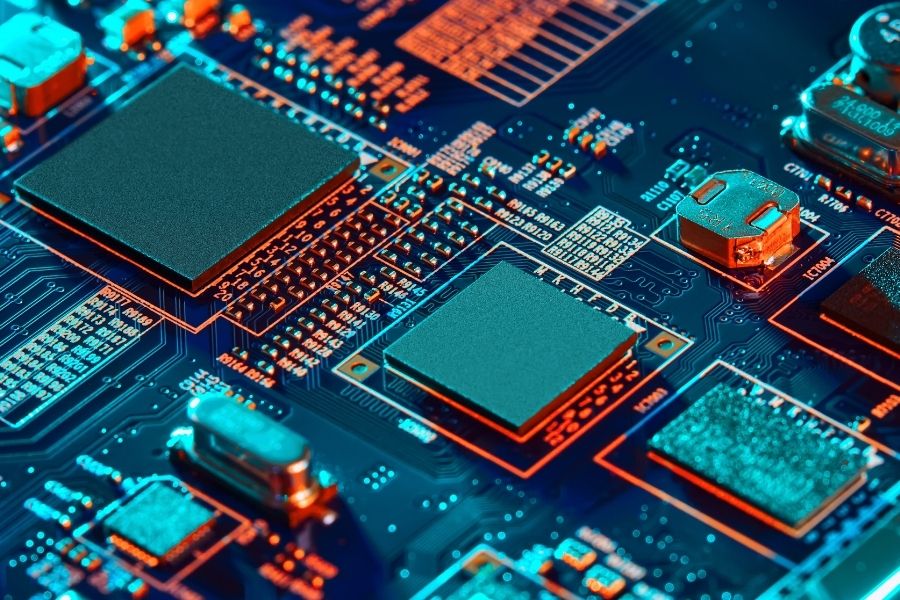
India’s strategic ascent in the semiconductor world
Semiconductors are the backbone of modern digital infrastructure, powering devices like smartphones, laptops, satellites, and electric vehicles. Recognizing their strategic importance, India launched the ₹76,000 crore India Semiconductor Mission (ISM) in 2021 to build a robust domestic ecosystem, including fabs, design units, packaging, and testing facilities. Key initiatives under ISM—such as the Design Linked Incentive (DLI) and compound semiconductor support—promote innovation, startups, and skill development. India’s chip market is expected to reach over US$ 100 billion by 2030. Strategic partnerships with global players like IBM, Micron, Lam Research, and Purdue University support R&D and workforce training. The flagship SEMICON India event serves as a global platform for collaboration and highlights India’s rising stature in the semiconductor value chain. From smartphones and smart TVs to satellites, computers and autonomous vehicles, semiconductor chips are the invisible force behind modern digital innovation. These chips, built on materials that can act as both conductors and insulators, enable everything from real-time communication to advanced data processing. Whether it is a computer processing millions of instructions per second or a satellite transmitting global signals, it all boils down to the capabilities of a tiny semiconductor chip — small enough to fit between two fingers, yet powerful enough to drive entire ecosystems. Semiconductors serve as the foundational elements of electronic devices. Their unique ability to alternate between conducting and insulating electricity makes them ideal for creating microchips that perform a wide variety of tasks. For instance, during India’s Chandrayaan-3 mission, the Vikram lander relied on AI and indigenous semiconductor-based systems to autonomously choose a safe landing site — showcasing how chips now act as decision-making units akin to a machine’s brain. Each chip comprises millions (or billions) of transistors that function similarly to brain cells, regulating electrical signals. Alongside other microscopic components such as resistors, capacitors, and intricate wiring, these transistors enable devices to store, process, and transfer data — allowing for operations such as calling, sensing, and live streaming. Significance of the semiconductor sector Semiconductors power not only consumer electronics but also vital infrastructure in healthcare, defence, telecommunications, and space. As digital transformation accelerates globally, semiconductors are no longer just a technological asset but a strategic necessity. The global chip shortage during the COVID-19 pandemic and the Ukraine-Russia war starkly revealed the world’s dependence on a fragile supply chain, disrupting the production of cars, smartphones, and other electronics. The key drivers for growth in the semiconductor sector include: Rising digitalization across industries; Increasing demand for high-speed, efficient, and compact components; Proliferation of smart devices and IoT; Growth of artificial intelligence (AI) and machine learning (ML), requiring real-time data processing at edge devices and cloud data centres. These factors have intensified the need for energy-efficient, high-performance semiconductor systems capable of managing vast and complex data flows. The global semiconductor market is expected to reach US$ 1 Trillion by 2030. Currently, the global semiconductor industry is dominated by countries like Taiwan, South Korea, Japan, China, and the United States. Taiwan alone accounts for over 60% of total global chip production — including nearly 90% of the most advanced chips. However, this geographic concentration has left global supply chains vulnerable to pandemics, natural disasters, and geopolitical tensions. To address these risks, nations such as the U.S., EU, Japan, and South Korea have launched ambitious strategies to build secure and diversified chip supply chains. India, with its skilled workforce and policy momentum, is emerging as a trusted and capable partner in this new semiconductor geography. India’s emerging footprint in the global semiconductor landscape India’s semiconductor market is expected to reach US$ 63 billion by 2026 and grow further to US$ 100+ billion by 2030 (up from US$ 38 billion in 2023; US$ 45-US$ 50 billion in 2024-2025). Key enablers of India’s semiconductor growth include: Abundant natural resources (chemicals, gases, minerals) for chip manufacturing Strong MSME base for equipment components World-class talent in AI, cloud computing, IoT, and big data In May 2025, India marked a milestone by launching two cutting-edge chip design centres in Noida and Bengaluru, focused on 3-nanometer designs — a global benchmark for next-gen computing. These centres follow earlier achievements in 7nm and 5nm chip design. The integration of Electronics System Design and Manufacturing (ESDM) into the Make in India initiative, combined with the launch of the India Semiconductor Mission (ISM) and the Semicon India Programme, has played a pivotal role in establishing a strong and resilient semiconductor ecosystem within the country. Approved in December 2021 with an outlay of ₹76,000 crore, the India Semiconductor Mission (ISM) is a strategic initiative by the Government of India aimed at making India a global hub for semiconductor design and manufacturing. The objectives of ISM include: Establish semiconductor fabrication (fab) plants Develop advanced packaging and testing facilities Support startups focused on chip design and innovation Train the next generation of skilled semiconductor engineers Attract global companies to invest in India The India Semiconductor Mission is led by the Indian government in partnership with industry associations, research institutions, and academic bodies. It functions under the supervision of the Ministry of Electronics and Information Technology (MeitY) and other key government agencies. Key schemes under ISM include: Semiconductor Fabs Scheme Display Fabs Scheme Compound Semiconductors & ATMP/OSAT Scheme Design Linked Incentive (DLI) Scheme Since the launch of the DLI Scheme in 2022, the government has committed ₹234 crore in support for chip design projects from 22 companies, with a total project outlay of ₹690 crore. These chips are intended for use in CCTV cameras, mobile networks, satellites, automobiles, smart devices, and more. The India Semiconductor Mission offers a wide array of skill development programs, including workshops, certification courses, and hands-on training, aimed at individuals looking to build expertise in the semiconductor industry. These initiatives provide practical experience, industry interaction, and mentorship to nurture skilled talent and support professional growth. Academic and research institutions play a vital role in advancing the mission. Through cutting-edge research, technology innovation, and talent development, they help strengthen the ecosystem. The mission also encourages strong industry-academia partnerships to

From roads to EVs: India’s green steel demand set to quadruple by 2030
Steel is the backbone of modern structure. It is in the bridges we cross, the homes we live in, and the cars we drive. But behind its strength lies a heavy truth: it’s also one of the world’s biggest carbon culprits. As the pressure mounts to meet global climate goals, this foundational material is facing a reckoning. A recent EY-Parthenon report pegs demand for green steel made using low-carbon technologies at 4.49 million tonnes by 2030, with construction and infrastructure leading the charge. It’s more than a sustainability term. Green steel represents a critical pivot point for industry, policy, and trade — a transformation not just of how steel is made, but how it’s valued, procured, and consumed in a decarbonizing world. Steel, the backbone of modern civilization, faces an undeniable imperative: decarbonization. For decades, its production has been synonymous with towering blast furnaces and significant carbon emissions, contributing substantially to global greenhouse gas output. Yet, a seismic shift is underway. A recent EY-Parthenon report projects that global demand for green steel will surge to 4.49 million tonnes (MnT) by 2030, primarily propelled by the burgeoning construction and infrastructure sectors. This isn’t merely an environmental aspiration; it represents a fundamental reorientation of a foundational industry, driven by evolving market forces and an urgent global commitment to sustainability. Traditional steelmaking, predominantly reliant on coal-fired blast furnaces, is one of the most carbon-intensive industrial processes. As nations worldwide commit to ambitious net-zero targets, the pressure on heavy industries to drastically cut emissions intensifies. Green steel, produced using methods that significantly reduce or eliminate carbon emissions—such as hydrogen-based direct reduced iron (DRI) or electric arc furnaces (EAFs) powered by renewable energy—offers a viable pathway to meet these environmental mandates. The projected demand figure isn’t just a number; it signals a tipping point where environmental responsibility moves from a niche concern to a core market driver. Companies that fail to adapt risk being left behind in a rapidly transforming landscape. Green steel demand: Construction and infrastructure The EY-Parthenon report’s emphasis on construction and infrastructure as primary drivers for this green steel surge is particularly insightful. These sectors, traditionally massive consumers of conventional steel, are now at the forefront of demanding low-carbon alternatives. Several factors contribute to this shift: 1.) Corporate Sustainability Mandates: Major construction firms and infrastructure developers are increasingly setting their own ambitious decarbonization goals. Using green steel allows them to significantly reduce their Scope 3 emissions (emissions from their supply chain), which are often their largest carbon footprint. 2.) Government Procurement Policies: Governments globally are beginning to implement “green procurement” policies, favoring materials with lower embodied carbon for public works projects. This creates a direct market incentive for green steel. 3.) Investor and Public Pressure: Investors are increasingly scrutinizing companies’ environmental performance, with sustainable portfolios gaining traction. Simultaneously, public awareness and demand for eco-friendly buildings and infrastructure are growing, pushing developers to adopt greener materials. 4.) Brand Differentiation: For companies in these highly competitive sectors, utilizing green steel offers a powerful brand differentiator, appealing to environmentally conscious clients and stakeholders. This dynamic creates a virtuous cycle: as demand from these powerful sectors grows, it incentivizes greater investment in green steel production capacity, further accelerating the transition. Market Implications and the road ahead The projected demand of 4.49 MnT by 2030 signals significant implications across the steel value chain. For steel producers, it necessitates substantial investment in new technologies and retrofitting existing plants. This transition is not without its challenges, notably the higher initial capital expenditure and potentially higher production costs compared to conventional steel. However, early movers stand to gain a competitive advantage, securing long-term contracts with sustainability-focused buyers and building a reputation as industry leaders. For nations like India, with ambitious infrastructure development plans and a robust steel industry, this trend presents both an opportunity and a challenge. India is a significant steel producer and consumer, and aligning its steel production with global green standards will be crucial for maintaining competitiveness in international markets and meeting domestic sustainability goals. The focus must be on fostering innovation, attracting green investments, and developing the necessary infrastructure for green hydrogen production and renewable energy integration. The shift towards green steel is more than just an environmental upgrade; it’s a strategic imperative for long-term economic viability and global competitiveness. The 2030 target is not distant; it requires immediate, concerted action from policymakers, producers, and consumers alike to unlock the full potential of a decarbonized steel industry. This transformation

Are plant-based omega-3s are the future of wellness?
Omega-3 fatty acids are essential for brain health, heart function, and reducing inflammation but our traditional reliance on fish oil is being questioned. Concerns around contamination, sustainability, and absorption are pushing a growing shift toward plant-based alternatives like algae and functional seed oils. Backed by science and aligned with modern wellness values, these sources are redefining how we think about nutrition. Image credit: Pexels Omega-3 fatty acids have transcended mere dietary supplements to become a foundation of modern health. Their critical role in cognitive function, cardiovascular health, anti-inflammatory processes, and even healthy aging is undisputed. For years, fish oil has dominated this vital segment, championed as the primary source of the highly bioavailable DHA and EPA. However, the market is undergoing a profound transformation, driven by mounting concerns over contamination, environmental sustainability, and consumer preferences. For forward-thinking businesses and health strategists, the strategic pivot towards plant-based solutions, particularly algae and functional seed oils, represents not just an alternative, but the future of this multibillion-dollar industry. Is fish oil good for you? While fish oil’s popularity stemmed from its rich DHA and EPA content, this benefit increasingly comes with significant trade-offs that demand a re-evaluation from a business and consumer trust perspective. Firstly, oxidation is a pervasive challenge. Fish oil is inherently susceptible to rancidity, often even before it reaches the consumer. Oxidized oils lose their nutritional integrity and, critically, can paradoxically contribute to inflammation – counteracting the very benefit omega-3s are intended to provide. This poses a direct risk to product efficacy and consumer satisfaction. Secondly, contamination remains a persistent concern. Larger marine fish, commonly used in oil extraction, can accumulate heavy metals like mercury, along with industrial pollutants such as PCBs and dioxins. Despite rigorous processing, completely eliminating these toxins is a complex and often incomplete endeavor, raising legitimate safety questions for health-conscious consumers. Lastly, beyond the strong aftertaste and potential for gastrointestinal discomfort that deter many, fish oil extraction contributes to unsustainable fishing practices. As global demand escalates, so does the ecological footprint, leading to depleted marine ecosystems. For businesses, this translates to supply chain volatility and growing consumer scrutiny over ethical sourcing and environmental impact. Plant-based omega-3: Sustainable & potent alternatives The tide is turning, and the answer lies directly at the origin of the marine food chain: plants. It’s a compelling, though often overlooked, fact that fish do not produce omega-3s themselves; they accumulate DHA and EPA by consuming algae. This positions algae not merely as a viable alternative but as the original, direct, and inherently sustainable source of these vital fatty acids. Today, algae-derived omega-3 supplements are rapidly gaining market momentum, offering a potent, clean, and environmentally responsible replacement for fish oil. For businesses, this offers a stable, scalable supply chain less prone to environmental shocks and ethical criticisms. Alongside algae, a diverse range of seeds — including flax, chia, hemp, and pumpkin — offer another robust plant-based source of omega-3s, primarily in the form of ALA (alpha-linolenic acid). While ALA requires conversion by the body into DHA and EPA, continuous innovations in extraction and formulation are significantly improving its bioavailability. Crucially, these seed oils are not just single-nutrient sources; they often come “bundled” with other beneficial compounds such as lignans, flavonoids, and phytosterols. These synergistic bioactives provide additional anti-inflammatory, antioxidant, and immune-modulating benefits, transforming them from mere fatty acid sources into functional oils. Functional oils: A holistic approach to wellness & bioavailability The discourse around plant-based oils is evolving beyond just omega-3 content. Today, oils derived from sources like black seed, fenugreek, moringa, garlic, turmeric, and pumpkin are increasingly recognized for their profound therapeutic value. These are not merely ‘cleaner’ oils; they are sophisticated functional ingredients, rich in phytonutrients and volatile compounds that actively support critical bodily systems: hormonal balance, digestive health, metabolic function, and even cognitive performance. A key business advantage lies in their delivery format. When these bioactives are delivered in their natural oil form — rather than as isolated powders or synthetic extracts — they exhibit superior absorption, enhanced stability, and greater compatibility with other fat-soluble nutrients like vitamins D and E. This translates directly into higher efficacy and reduced metabolic burden, offering a superior product proposition to the end consumer. Equally important for market differentiation is the delivery system itself. Modern plant-based supplements are increasingly utilizing hydroxypropyl methylcellulose (HPMC) capsules. These vegetarian alternatives to traditional gelatin are free from common allergens, preservatives, plasticizers, and residual solvents, ensuring a cleaner delivery. Furthermore, HPMC capsules help protect sensitive oils from degradation during digestion, safeguarding bioavailability and efficacy. For health-conscious consumers, and especially for vegans, vegetarians, and those with religious dietary restrictions, this clean-label approach is not just about ethics; it is about building fundamental trust and expanding market reach. Market opportunity for plant-based nutrition India is facing a fast-escalating lifestyle disease epidemic—rising rates of heart disease, early-onset diabetes, hormonal imbalances, and chronic fatigue are becoming increasingly common, especially among younger adults. These conditions are often tied to low-grade inflammation, poor diet quality, and widespread micronutrient deficiencies. In this context, functional oils rich in omega-3s and other bioactives offer more than just surface-level relief—they provide a meaningful, long-term solution to address these deep-rooted nutritional gaps. This isn’t about chasing quick fixes; it’s about building sustainable health from the inside out. For businesses, this shift presents a clear opportunity. The Indian omega-3 supplements market, currently valued between US$ 112 million, is expected to reach US$ 215 million by 2030, growing at 9–11% CAGR. A growing segment of consumers is now actively seeking plant-based and algae-derived omega-3s, both for ethical reasons and better tolerability. Globally, the algae-based omega-3 ingredient market is projected to more than double—from US$ 1.28 billion in 2023 to US$ 2.69 billion by 2030. In India, this subcategory is still emerging, but early indicators point to steady growth (~3.4% CAGR) driven by urban, wellness-focused, and vegetarian buyers. India’s plant-based nutrition space is ready for intelligent, integrative solutions that match modern consumer values. Companies that focus on clean-label, sustainably sourced, and scientifically backed products have the
“Beyond E20: Can India set the global standard in biofuels?”
India Business & Trade spoke with Mr. Dalbir Singh Mahal, Director & CEO at Jap Innogy to understand how India can transition from being a cost-competitive player to a true global innovation leader in biofuels. Drawing on key policy updates, global benchmarks, and industry insights, here’s a comprehensive look at where India stands—and what it will take to lead. IBT: Beyond cost, what global strengths must India build to lead in biofuel technology and innovation? D.S Mahal: India must go beyond affordability and focus on building a robust innovation ecosystem. This includes scaling up second- and third-generation biofuel technologies—such as cellulosic ethanol, algal fuels, and waste-to-fuel platforms—and fostering international tech alliances through the Global Biofuels Alliance (GBA). To lead globally, India must also ensure end-to-end traceability, digital integration, and international certification readiness. Market creation beyond domestic blending—especially in hard-to-abate sectors like aviation and shipping—is key. Coupled with deep research pipelines, skilled talent, and digital supply chains, these capabilities will define India’s leadership in the $200 billion global biofuel market. IBT: How does India’s E20/E30 readiness compare with global benchmarks like Brazil and the EU? D.S Mahal: While India has made rapid strides—achieving 20% blending in 2025 against a 2030 target—gaps remain compared to Brazil. Brazil already mandates E27, with 92% of new cars flex-fuel ready, and widespread consumer adoption. India’s fleet compatibility is still below 5%, and depot readiness for E20/E30 needs major upgrades. India must now align vehicle policies (mandating E20 compatibility for all new petrol cars from April 2026), upgrade over 2,000 fuel depots and 30,000 tankers to E20 standards, and introduce pricing incentives (₹1.5–2.0/litre) to encourage consumer adoption. IBT: Which global policies or financing models could India adopt to attract ESG and institutional investors? D.S Mahal: India can learn from Brazil’s RenovaBio program, which uses tradable CBIO carbon credits to reward lifecycle emissions savings. Similar mechanisms—like Green Ethanol Certificates—can mobilize ESG capital. Additionally, IFC-style blended finance, using concessional loans and first-loss guarantees, can de-risk 2G/SAF projects. India should also build transparent, verifiable impact frameworks aligned with UN PRI and integrate digital MRV (Monitoring, Reporting & Verification) tools to boost investor confidence. IBT: What international best practices can help India turn biofuel demand into a sustainable income for farmers? D.S Mahal: India must adopt integrated approaches that align with global best practices: Crop Diversification: Promote rotation of biofuel crops with food crops, as practiced in Brazil and the US, to increase land productivity and stabilize farmer incomes. Guaranteed Offtake: Introduce long-term offtake agreements with stable pricing to reduce risk. Ownership Models: Encourage farmer cooperatives with equity stakes in bio-refineries. Residue Monetization: Scale waste-to-energy programs like SATAT; provide equipment subsidies and guaranteed procurement for agricultural waste. CBIO Revenue Sharing: Brazil’s model of directing 60% of credit proceeds to farmers is a template worth replicating. Blockchain-enabled traceability: Ensures premium market access and compliance with global standards. IBT: How are AI, IoT, and blockchain transforming global biofuel supply chains, and how can India leverage them? D.S Mahal: Advanced digital tools are reshaping biofuel supply chains: AI and IoT are being used globally to optimize feedstock yields, predict refinery maintenance needs (cutting downtime by up to 20%), and improve algae-based fuel efficiency. Blockchain ensures full traceability of feedstock and production, a key requirement under EU and ICAO frameworks. India should accelerate pilot programs—like “Bio-Chain”—to digitally track SAF feedstocks, integrate soil data with carbon calculators, and use real-time analytics to improve efficiency and sustainability claims. IBT: What global standards should India meet to compete in Sustainable Aviation Fuel (SAF)? D.S Mahal: To compete internationally, India must align with: ASTM D7566 and D1655 standards for SAF production and blending. CORSIA guidelines requiring at least 10% lifecycle GHG reductions and traceability. EU SAF mandates (2% by 2025, 6% by 2030, 70% by 2050) that set the export benchmark. India has set targets of 1% SAF blending by 2027 and 2% by 2028. Fast-tracking certification for feedstocks like Jatropha and Pongamia and investing in HEFA-SPK and ATJ pathways at IOCL will be crucial. IBT: How can India align with international certification systems like ISCC or RSB to ensure sustainability credibility? D.S Mahal: India’s certification systems must align with the stringent standards of ISCC and RSB: GHG methodology: Adopt GREET-India calculator (in development) for lifecycle emission estimates. Social safeguards: Integrate fair labor, land rights, and FPO codes of practice. Digital traceability: Implement blockchain-based mass balance systems, like the proposed Bio-Chain ledger. Such alignment will be essential to access premium markets and comply with EU RED III and other import rules. IBT: What can India Inc. learn from global corporations adopting biofuels in their net-zero strategies? D.S Mahal: Leading global firms offer clear lessons: Asset repurposing: BP’s Kwinana refinery now produces SAF. Feedstock flexibility: TotalEnergies uses waste oils for large-scale SAF production. Flex-hybrid integration: Toyota’s E100 hybrid cuts well-to-wheel emissions more effectively than some EVs in Brazil. Indian corporates should invest in integrated 1G-2G hybrid biorefineries, next-gen feedstocks, and multi-sector partnerships that enable full value-chain transformation. Export readiness will depend on certification, circularity, and scale. IBT: How will global geopolitics—EU rules, grain bans—impact India’s biofuel security and exports? India faces real risks from: EU regulatory tightening (EUDR, RED III), which may block non-compliant biofuels. Grain export bans (e.g., rice, maize) by other nations, which have inflated ethanol input costs by up to 25%. India must: Diversify feedstocks toward waste and non-food biomass. Create a 5-million-tonne ethanol strategic reserve, akin to a petroleum buffer. Strengthen local supply chains to mitigate external shocks. IBT: Which global policy or tech shift could most disrupt India’s biofuel landscape by 2030? D.S Mahal: The convergence of digital traceability with carbon-intensity (CI) tariffs is likely to be the most disruptive. By 2030, global markets may impose CI ceilings, allowing only low-emission fuels. Countries with real-time CI scoring, blockchain-verified supply chains, and AI-optimized operations will dominate. India must act now to develop digital MRV systems, mandate low-CI production, and build capacity to meet these evolving trade standards—or risk being shut out of premium markets.