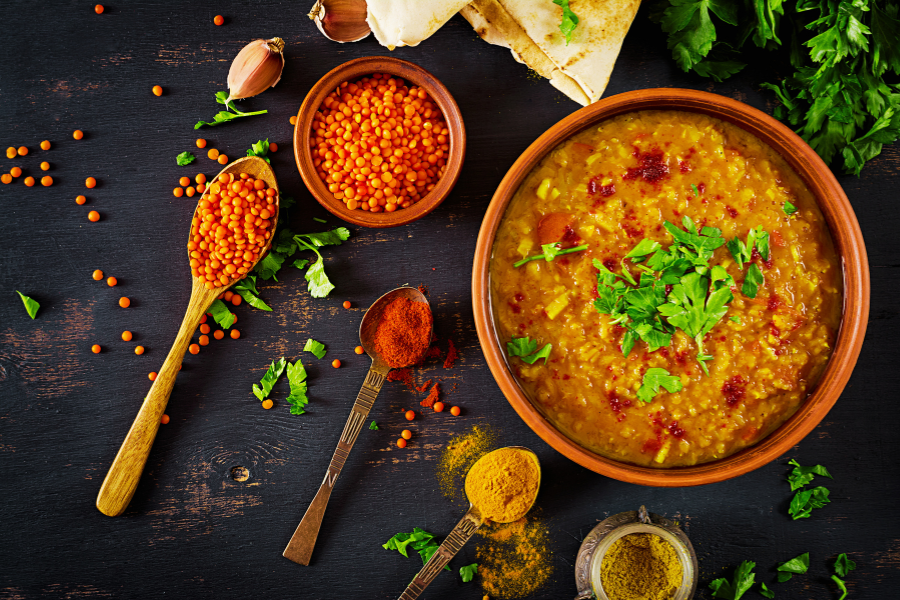
If food could tell stories, khichdi’s tale would span centuries, kingdoms, and cultures. This humble yet nourishing dish, made from rice and a range of lentils, finds its roots in the Sanskrit word Khiccha, meaning “a dish of rice and legumes.” For many of us, the mere mention of khichdi brings back memories of home, of warmth, and of that unspoken reassurance you get when you’re feeling under the weather. Image credit: Freepik What Makes Khichdi a Comfort Food Loved Across Centuries? If food could tell stories, khichdi’s tale would span centuries, kingdoms, and cultures. This humble yet nourishing dish, made from rice and a range of lentils, finds its roots in the Sanskrit word Khiccha, meaning “a dish of rice and legumes.” For many of us, the mere mention of khichdi brings back memories of home, of warmth, and of that unspoken reassurance you get when you’re feeling under the weather. Food has always been a reflection of the culture and history of the land it comes from, and khichdi is no exception. Everyone knows the famous story of Birbal ki Khichdi. A story where Birbal (advisor) cleverly demonstrates the impossibility of cooking a pot of khichdi from the heat of a far-off fire. The tale has almost become synonymous with the dish. So it is needless to say that the term isn’t exactly unfamiliar. Ask any Indian, and they’ll tell you it can even be called the ultimate comfort food. In fact, khichdi’s cultural significance extends far beyond legends. In 2017, it even made it to the Guinness Book of World Records when a team of 30 people, led by chef Sanjeev Kapoor, cooked 918 kgs of khichdi in a mammoth kadhai overnight, cementing its place in the hearts of millions. Why Is Khichdi More Than Just a Meal in Indian Culture? It is a simple yet soulful dish. Khichdi fuses together rice, lentils, and spices into a comforting meal the ingredients for which can be found in kitchens across India, each region adding its own unique twist. From the dal khichdi in the North to the pongal in the South, the dish has been cherished for generations. Today, whether you’re curled up on the couch with a steaming bowl of this dish or marveling at its enduring legacy, one thing’s for sure; khichdi isn’t just a comfort food, it’s a feeling. During the sacred Durga Puja, khichdi takes on a sacred role, turning into the revered bhog khichuri, served in pandals as an offering to the goddess. For countless devotees, this festive version of khichdi evokes the spirit of celebration and a deep sense of connection to tradition and the comforts of their homes. Though today it’s a staple comfort food across India, khichdi has a fascinating history that crisscrosses continents and dynasties. What Are the Legendary Tales Behind Khichdi’s Heritage? In Indian tradition, khichdi has always been more than just a meal. It’s often the first solid food given to babies. Its cultural significance dates back to the Mahabharata, where Draupadi is said to have fed it to the Pandavas during their exile. There’s even a tale of Lord Krishna calming the anger of Rishi Durvasha with nothing but a single grain of khichdi. The influence of Khichdi didn’t just stop here, it traveled far and wide, inspiring the Anglo-Indian dish kedgeree, a sophisticated concoction of flaked fish, boiled rice, parsley, hard-boiled eggs, and curry spices. This culinary crossover is proof that khichdi’s appeal transcended borders, adapting and evolving with time. How Did Khichdi Travel Through History and Geography? The dish has even charmed travelers for centuries. During his campaign in India around 305 BCE, Greek king Seleucus noted how rice and pulses were a staple among locals. Fast forward to the 14th century, Moroccan explorer Ibn Battuta marveled at “Kishri,” a dish of rice and moong beans buttered to perfection, which he described as a daily breakfast favorite. Nearly a century later, Russian merchant Afanasiy Nikitin documented feeding his horses khichdi mixed with sugar and ghee, highlighting its versatility even as livestock feed. By the 1600s, French traveler Jean-Baptiste Tavernier came across a rustic version of khichdi prepared with green lentils, rice, and ghee, marking it a peasant’s evening meal. Today with growing health-conscious choices, more and more people are rediscovering the comfort and simplicity of traditional foods. There’s something deeply satisfying about turning to meals that have nourished generations before us, and ‘the wholesome khichdi’ is one such dish that has found its place back in the spotlight. In recent years, it has evolved into a modern-day favorite, with businesses like Khichdi Express seeing a surge in demand as people rediscover this age-old comfort food. Its versatility and easy preparation have made it a go-to dish for many. As celebrity chef Ranveer Brar aptly put it, khichdi is an “emotional nirvana”. In What Ways Has Khichdi Influenced International Cuisine? The evolution of khichdi continues to surprise and delight, with restaurants now offering a range of gourmet varieties that would rival the most popular fast foods. Some have even reimagined it as a healthy, yet indulgent option. In cloud kitchens like The Great India Khichdi in Delhi NCR, customers can savor everything from Brown Rice Masala Dal Khichdi to Millet Dal Khichdi and Quinoa Khichdi. Other speciality outlets like Khichdi Hub, Mom’s Khichdi, and Khichdi Heaven have become havens for those seeking to relive childhood memories, offering everything from traditional thalis to more contemporary, millet-based versions as healthier alternatives. Even major brands are beginning to join the movement, offering ready-to-cook mixes. These promise to bring the nostalgia of home-cooked meals to your kitchen in minutes. It’s clear that khichdi has come a long way, remodeling itself from a simple home cooked meal to a modern-day culinary phenomenon. Whether you’re enjoying a steaming bowl at home or discovering a new gourmet variety, it continues to hold a special place in the hearts and kitchens of India. This story is one of constant reinvention – from

Indian airports to post 18-20% revenue growth in FY ’26
Indian airport operators are expected to post a strong 18–20% y-o-y revenue growth in FY26, driven by rising passenger traffic, tariff hikes, and growth in non-aeronautical revenues, according to ICRA. Total passenger traffic is projected to reach 440–450 million, supported by a ₹1 lakh crore investment in green-field and brownfield projects over the next 4–5 years. International travel growth, improved connectivity, and expanding access to tier II cities are key drivers. Despite capacity constraints and rising debt costs, the sector’s financial health remains robust, with stable profitability, healthy liquidity, and strong debt coverage ratios projected for FY26. Indian airport operators are projected to register a robust 18–20% year-on-year (y-o-y) growth in revenue this fiscal, driven by rising passenger traffic, tariff hikes, and a strong ramp-up in non-aeronautical revenues, according to ratings agency ICRA. The estimates by ICRA are based on a representative sample of airports, including those operated by the Airports Authority of India (AAI) and major public-private partnership (PPP) airports such as Delhi, Bengaluru, Hyderabad, and Cochin. Growth trajectory in the airport sector set to continue In FY25, international air traffic expanded by 11% while domestic traffic rose by 9%. According to the report, the growth was driven by enhanced connectivity to new destinations, a surge in international travel, and sustained growth in domestic leisure and business travel. Improved air access to tier II cities and major tourist hubs further fueled the momentum. This growth momentum is expected to persist, fueled by substantial investments, as the airport sector is projected to draw over ₹1 lakh crore in capital over the next 4–5 years, as per the ICRA report. This anticipated growth is driven by several key factors: Sustained Improvement in Passenger Traffic: ICRA estimates overall air passenger traffic to grow by 7–9% y-o-y, reaching 440–450 million in FY26. Tariff Hikes at Major Airports: Increases in tariffs at key airports, including Delhi, Bengaluru, and Hyderabad, are expected to contribute significantly to the revenue growth. Ramp-Up in Non-Aeronautical Revenues: Enhanced revenues from non-aeronautical sources, such as retail, food and beverage, and advertising, are anticipated to bolster overall income. Substantial Capital Investments: The sector is expected to attract investments exceeding ₹1 lakh crore over the next 4–5 years. These investments will focus on developing greenfield airports like Jewar (Noida), Navi Mumbai, Bhogapuram (Andhra Pradesh), and Parandur (Chennai), as well as expanding existing airports in Bengaluru, Hyderabad, Cochin, Mumbai, and Nagpur. News24 Growth in International Traffic: International passenger traffic is expected to outpace domestic growth, driven by strong international tourism activity and improved connectivity to new destinations. Mr Vinay Kumar G, Sector Head, Corporate Ratings, ICRA, said, “International traffic continues to outpace domestic traffic growth, driven by healthy international tourism activity, along with improved connectivity to newer destinations. The growth momentum is likely to sustain in FY26 as well, with expected YoY growth of 7-11% and 6-8% in international and domestic traffic, respectively.” Revenue Growth on the Rise ICRA noted that revenues among its sample companies are set to grow strongly in FY26, thanks to rising passenger volumes, tariff increases at major airports, and growth in non-aeronautical income streams. The credit profile of airport operators, , according to the rating agency, is expected to remain stable, supported by healthy accruals and comfortable liquidity. Despite rising interest costs and debt repayments related to large-scale infrastructure projects, ICRA expects profitability margins and debt coverage metrics to remain healthy and stable in FY26. The agency also stated that despite continued investments, the financial stability of the sector is expected to remain robust. In FY2026, debt coverage indicators are projected to stay healthy, with the interest coverage ratio exceeding 5 times and the debt service coverage ratio (DSCR) remaining above 3.5 times. However, the sector continues to face capacity constraints, prompting substantial capital expenditure. ICRA noted that the expected ₹1 lakh crore investment will fund both greenfield projects—such as Jewar (Noida), Navi Mumbai, Bhogapuram (Andhra Pradesh), and Parandur (Chennai)—and brownfield expansions at airports including Bengaluru, Hyderabad, Cochin, Mumbai, and Nagpur. Upgrades at AAI-managed airports are also part of this investment drive. The Indian airport sector is poised for significant growth in FY26, underpinned by increased passenger traffic, strategic tariff adjustments, diversification of revenue streams, and substantial infrastructural investments.

From Home Kitchen to Healthy Snack Brand: The Chocolat Corner Story
IBT interacted with Vandana, the founder of Chocolat Corner and Blissfully Yours, to explore her inspiring journey from a mother making healthy snacks at home to building a thriving homegrown brand. In this conversation, she shares the challenges of scaling with quality, the power of customer feedback, and the strategies that helped her grow from a modest Rs 20,000 investment to a Rs 32 lakh business—all while staying rooted in authenticity and wellness. IBT: How did your journey from making healthy snacks for your daughter turn into building Chocolat Corner as a business? Vandana: It all began in 2017 when I started crafting healthier snack options for my daughter using natural ingredients. As I experimented with recipes, friends and family began requesting my products. The growing demand inspired me to establish Chocolat Corner, initially focusing on cakes, brownies, and granola. Recognizing the need for healthier indulgences, I later launched Blissfully Yours—a brand dedicated to wholesome cookies made with oats, millets, and jaggery. IBT: What key challenges did you face in launching and scaling the brand, and how did you overcome them? Vandana: One of the biggest challenges was creating a balance between health and taste—ensuring our products were nutritious yet delicious. Another challenge was scaling production while maintaining quality, especially during the transition from a home setup to a commercial kitchen. Finding the right distribution channels was also tricky. However, we overcame this by partnering with retail stores and expanding our presence online. IBT: How do you balance maintaining product quality while expanding your offerings from cookies to chocolates and cakes? Vandana: Quality has always been at the heart of everything we do. From the beginning, we’ve been very particular about using high-quality, natural ingredients and completely avoiding preservatives or artificial additives. As we expanded our offerings—from cakes and chocolates under Chocolat Corner to healthy cookies and breakfast cereals with Blissfully Yours—we ensured that this commitment to quality remained consistent across all our products. Scaling while maintaining this standard wasn’t easy. Each new product required rigorous testing to strike the right balance between health and indulgence. We invested time in refining our recipes and setting up quality control checks at every stage of production. Whether it’s a chocolate truffle or a millet cookie, we want our customers to enjoy a treat they can trust. Our goal has always been to create feel-good, guilt-free indulgences, and that principle guides us as we continue to grow. IBT: In a competitive market, what strategies help Chocolat Corner stand out and attract customers? Vandana: In a competitive market, we’ve stayed true to our core values—authenticity, clean ingredients, and a strong health-first approach. That authenticity really resonates with our customers. We also focus heavily on brand storytelling, which helps people connect with our journey and mission. Our social media presence plays a big role in keeping that connection alive, and we’ve been fortunate to benefit from a lot of organic, word-of-mouth support from our community. On the ground, initiatives like corporate gifting, participating in pop-ups and events, and getting shelf space in retail stores have been instrumental in building visibility and trust. It’s been a mix of building genuine relationships and consistently delivering quality that sets us apart. IBT: With an initial investment of Rs 20,000 growing into Rs 32 lakh business, what financial and operational strategies drove this growth? Vandana: Our growth from an initial investment of Rs 20,000 to a Rs 32 lakh business has been the result of careful planning and a simple, lean model. We made sure to reinvest whatever we earned back into the business to grow steadily, instead of depending on outside funding. Choosing products with better margins also helped us grow without stretching our resources. Bulk corporate orders gave us a good boost, and we worked on sourcing raw materials smartly to keep costs low. Our retail expansion has been slow and steady—we’re now in over 30 stores across Gurgaon. This has helped us reach more people without putting too much pressure on our operations. IBT: How do you incorporate customer feedback into your product development and business decisions? Vandana: We stay closely connected with our customers by encouraging direct feedback, interacting on social media, and offering in-store sampling. Their suggestions have helped us improve our products, try out new flavors, and even make changes to our packaging. In fact, the idea for Blissfully Yours came from listening to customers who were looking for healthy snack options—so their voice really shapes what we do. IBT: What marketing and distribution strategies have been most effective in driving brand awareness and sales? Vandana: We’ve seen strong results from a mix of offline and online strategies. Expanding into over 30 premium retail stores across Delhi/NCR has really helped build our local presence. We also work with corporate clients—supplying snacks for offices and offering customized gifting solutions. On the digital front, platforms like Instagram and LinkedIn, along with influencer collaborations, have helped us connect with a wider audience. And through our D2C website, chocolatcorner.in, we’re able to reach customers directly and build stronger relationships. IBT: What are your future plans for Chocolat Corner? Vandana: We’re excited about the road ahead. Our plans include expanding to more cities and deepening our presence through stronger corporate partnerships. We’re also working on launching new, nutrient-rich snack options to meet growing demand for healthier indulgences. In the long term, we’re exploring opportunities in international markets and focusing on strengthening our e-commerce presence to reach a wider audience. IBT: What advice would you give to aspiring entrepreneurs in the food industry, especially those starting with a homegrown brand? Vandana: Start small and focus on getting the quality right. Test your products within your community, gather honest feedback, and improve from there. Never compromise on ingredients—customer trust is built on consistency and authenticity. Use social media and word-of-mouth to your advantage; they’re incredibly powerful, especially for homegrown brands. And above all, be patient and persistent. Growth doesn’t happen overnight, but with passion and consistency, you’ll get there.

Electronics value addition to reach 90% by FY27, exports rising
India is rapidly strengthening its position as a global manufacturing hub, with electronics value addition rising from 30% to nearly 70%, and projected to reach 90% by FY27, according to Axis Capital. Mobile phone exports have surged 77 times in a decade, while imports of fully built air conditioners have fallen from 35% in FY19 to just 5% in FY25. India is fast emerging as a key global manufacturing hub, with a significant rise in value addition across sectors like electronics, mobile phones, and consumer durables. According to a report by Axis Capital, the country’s value addition in electronics manufacturing has witnessed an impressive jump from 30% to nearly 70%, and is projected to touch 90% by FY27. The government’s focused push through policy interventions and incentive schemes has played a crucial role in driving this growth. “With a new components policy in place, the country is aiming to increase value addition from the current 15-16% to 40-50%.” This policy is expected to encourage domestic manufacturing of critical components, reducing the industry’s dependence on imports and strengthening the local manufacturing ecosystem. The mobile phone sector has particularly seen a phenomenal expansion over the past decade. “Mobile phone exports have grown 77 times in the last 10 years.” This sharp surge reflects India’s growing capability in not just assembling but also manufacturing and exporting devices at scale. Another critical sector where India has made notable progress is consumer durables, especially air conditioners. The country has successfully reduced its imports of completely built units (CBUs) over the years. “India has cut down its imports of fully built air conditioners (CBUs) from 35% in FY19 to just 5% in FY25.” This sharp fall in imports has been made possible by enhancing domestic manufacturing capacity for key components. “Key parts like compressors, copper tubes, and aluminum coils are now being made in India.“ The government’s efforts to promote self-reliance or ‘Atmanirbhar Bharat’ in manufacturing have resulted in a paradigm shift in how industries operate. Companies are increasingly investing in local sourcing, building new capacities, and developing supply chain linkages within India. This strategy not only reduces import dependency but also boosts employment generation and technological capabilities in the country. “With a new components policy in place, the country is aiming to increase value addition from the current 15-16% to 40-50%.” The emphasis on components manufacturing is crucial because while final product assembly has seen significant growth, a large share of components was still being imported until recently. The policy is designed to bridge this gap by encouraging investments in the domestic production of critical parts like semiconductors, displays, batteries, and other electronic components. Simultaneously, India’s mobile phone exports tell a story of successful scale-up and competitiveness in the global market. “Mobile phone exports have grown 77 times in the last 10 years.” This growth reflects both the expansion of manufacturing capabilities and the ability to meet global quality standards. The air conditioner segment is another example of this transformation. “India has cut down its imports of fully built air conditioners (CBUs) from 35% in FY19 to just 5% in FY25.” By focusing on manufacturing key parts like compressors, copper tubes, and aluminum coils domestically, India has been able to sharply reduce its reliance on foreign suppliers. “Key parts like compressors, copper tubes, and aluminum coils are now being made in India.“ Overall, India’s manufacturing landscape is undergoing rapid transformation, driven by supportive policies, increasing investments, and rising export competitiveness. The government’s vision to boost value addition and develop a robust components ecosystem is expected to play a pivotal role in further strengthening India’s position as a global manufacturing powerhouse over the next few years.

Building a sustainable future through low-carbon agriculture
As per the recent report “Low Carbon Footprint Agriculture” by ICRIER, agriculture is both a victim and contributor to climate change. With the sector responsible for nearly 19-29% of global greenhouse gas emissions, it highlights the urgent need to transition towards low-carbon farming. This approach ensures climate resilience, environmental sustainability, and future food security. Agriculture today faces the dual challenge of feeding a growing global population — expected to reach 9.7 billion by 2050 — while mitigating its environmental footprint. Alarmingly, the agriculture sector contributes around 19% to 29% of total global greenhouse gas (GHG) emissions, according to FAO estimates. These emissions stem largely from methane (CH₄) produced by livestock, nitrous oxide (N₂O) from fertilizers, and carbon dioxide (CO₂) from deforestation and land-use changes. Rice cultivation alone accounts for 10% of global agricultural emissions, while livestock contributes approximately 40% of methane emissions from agriculture, as per the recent report– Low Carbon Footprint Agriculture by ICRIER. With agriculture being a critical sector for livelihoods, especially in developing nations, a transition to low-carbon agriculture is essential. This approach minimizes emissions while ensuring sustainable food production, environmental conservation, and climate resilience. Low-carbon agriculture adopts climate-smart techniques, sustainable resource management, and innovative eco-friendly practices. It enhances productivity, conserves biodiversity, and builds resilience among farming communities facing climate risks like droughts, floods, and soil degradation. Key solutions driving low-carbon agriculture Sustainable land management : Sustainable land-use practices like conservation agriculture, agroforestry, and crop rotation help retain soil carbon, prevent erosion, and boost fertility. Integrating trees into farmlands enhances carbon sequestration while providing additional income sources for farmers. Efficient water and fertilizer use: Techniques such as precision farming, drip irrigation, and controlled-release fertilizers help reduce water wastage and minimize nitrous oxide emissions. These methods optimize input usage, reduce environmental pollution, and lower production costs. Adoption of renewable energy : Switching to renewable energy sources like solar-powered irrigation systems and biogas units from agricultural waste offers clean alternatives to fossil fuels, reducing carbon emissions from energy consumption in agriculture. Livestock management innovations : Improved animal feed, better waste management, and rotational grazing systems help in reducing methane emissions from livestock. Methane-reducing feed additives and efficient manure management are crucial interventions. Policy support and global initiatives Transitioning to low-carbon agriculture requires robust policy support, financial incentives, and knowledge dissemination. Governments and international organizations are playing a critical role in driving this change. Initiatives like carbon credits, green financing, and farmer education programs encourage the adoption of sustainable practices. Countries like Brazil, China, and India have introduced national action plans focusing on sustainable agriculture, resource efficiency, and climate resilience. Furthermore, global collaborations such as the Global Alliance for Climate-Smart Agriculture (GACSA) and Food and Agriculture Organization (FAO) programs promote sharing of best practices and innovations across regions. While the shift to low-carbon agriculture offers immense benefits, its success depends on inclusive participation from all stakeholders—farmers, policymakers, industries, and consumers. Bridging knowledge gaps, ensuring access to technology, and offering financial support will be key in accelerating this transition. Ultimately, low-carbon agriculture not only addresses environmental challenges but also paves the way for sustainable food systems that support both people and the planet. Embracing this model is vital for creating climate-resilient agriculture capable of feeding future generations sustainably.

Tipping the scale: How US tariffs could shake up India’s agri exports
The United States’ decision to impose reciprocal tariffs has injected fresh uncertainty into global trade, impacting multiple sectors—agriculture being one of the most exposed. As one of the top export destinations for food and agri-products, the US market plays a critical role in shaping India’s trade fortunes. In response, several countries are now accelerating efforts to secure bilateral trade agreements with Washington to safeguard their interests. For Indian exporters, the move signals potential headwinds in the form of higher costs and intensified competition. Yet, within this disruption lies an opportunity—to tap into segments of the US food and beverage market where India’s footprint remains minimal, and to build resilience through strategic diversification. This article explores the implications of the US reciprocal tariff regime on India’s agri exports, and outlines potential strategies for India to address this challenge. In a move that could reshape global agri-trade dynamics, the United States has announced a 26% reciprocal tariff on Indian imports—an action with far-reaching consequences for India’s agricultural export sector. This policy, unveiled under former President Donald Trump’s trade framework and recently revived, signals rising protectionist sentiment in the world’s largest economy. According to an analysis by Morgan Stanley, the tariff could shave off 30–60 basis points from India’s FY26 GDP growth forecast of 6.5%, highlighting the broader economic implications. For India, the stakes are particularly high. The US remains the largest export destination for Indian food and beverage products, including rice, spices, marine items, and processed foods. As India continues its push to expand agricultural exports, the imposition of such tariffs not only threatens its trade surplus in this sector but also calls into question the stability of global trade relationships amid rising geo-economic tensions. Top exporters of agri products to the US Exporters Imported value in 2019 Imported value in 2024 5-year CAGR Market share Mexico 30.6 48.4 9.6% 21.8% Canada 24.3 39.3 10.1% 17.7% Italy 5.7 9.0 9.8% 4.1% Brazil 3.7 7.7 15.6% 3.5% China 5.0 6.9 6.5% 3.1% Chile 5.5 6.9 4.9% 3.1% France 6.5 6.9 1.2% 3.1% India 5.1 5.9 3.0% 2.6% Australia 3.5 5.5 9.4% 2.5% Indonesia 4.0 5.4 6.1% 2.4% Source: ITC Trade Map; Import values in US$ billion The data in the table above shows that Mexico and Canada clearly dominate F&B exports to the US, accounting for nearly 40% market share. They are followed by Italy at 4.1%, Brazil at 3.5% and China at 3.1%. India is among the key players with a share of 2.6%. However, its 5-year CAGR shows room for improvement. Now let us do a more granular analysis of India’s F&B exports to the US. For the purpose of our analysis, we take the top products accounting for over 80% of India’s exports in 2024. India’s F&B exports to the US by chapter HS Code Product label Value in 2019 Value in 2024 5-year CAGR Market share Share in India’s exports Share in US imports 03 Fish and crustaceans… 2,159.7 1,974.7 -1.8% 35.6% 32.2% 9.4% 16 Preparations of meat, fish, crustaceans, molluscs… 361.8 605.5 10.8% 10.9% 81.5% 8.6% 09 Coffee, tea, maté and spices 289.6 441.1 8.8% 8.0% 8.3% 3.8% 13 Lac; gums, resins… 411.6 419.8 0.4% 7.6% 38.5% 23.1% 10 Cereals 210.9 391.7 13.2% 7.1% 3.2% 11.8% 21 Miscellaneous edible preparations 159.9 314.6 14.5% 5.7% 19.0% 2.5% 12 Oil seeds and oleaginous fruits… 205.4 265.9 5.3% 4.8% 12.1% 9.0% 15 Animal, vegetable or microbial fats… 121.0 189.7 9.4% 3.4% 9.5% 1.1% Source: ITC Trade Map We see that India is particularly vulnerable in the instance of HS 16, i.e. Preparations of meat, fish crustaceans, as the US accounts for 81.5% of our exports. In order of dependence, this is followed by HS 03 (Fish and crustaceans at 32.2%); HS 13 (Lac, gums, resins at 38.5%); HS 21 (Miscellaneous edible preparations at 19%) and HS 12 (Oil seeds and oleaginous fruits at 12.1%). On the other hand, US has relatively higher dependence on India for HS 13 (Lac, gums resins at 23.1%) followed by HS 10 (Cereals at 11.8%). Now let us look at India’s key competitors in these categories of strength. India’s position in US market in sectors of its strength Exporters Imported value in 2019 Imported value in 2024 5-year CAGR Market share Canada 9.4 14.8 9% 19% India 4.4 4.7 2% 6% China 3.3 4.7 7% 6% Indonesia 3.4 4.7 6% 6% Brazil 1.9 3.6 13% 5% Chile 2.7 3.6 6% 5% Mexico 2.0 3.4 12% 4% Vietnam 1.9 3.0 9% 4% Singapore 3.0 2.7 -2% 4% Italy 1.1 2.6 17% 3% First of all, it must be noted that US imports in these select HS codes account for US$ 77.8 billion in 2024, which is approximately 34.9% of US F&B imports. This shows that there is still much more in terms of import value that India can explore in the US itself, more specifically 65% of the market. Secondly, the 5-year CAGR of 2% is very low compared to competitors, even as India ranks 2nd in US imports of these categories. This makes competition intense for India, particularly with China that has a CAGR of 7% and almost neck to neck with India. Now with the tariff regime in place, India faces a significant challenge in its key export sectors. For instance, in the case of shrimps, India’s reciprocal tariff at 26% makes it less competitive to competitors Ecuador and Argentina, which also have a significant advantage of distance. In the case of rice, India faces a lower reciprocal tariff than its key competitor Thailand, which puts it at an advantage. However, for vegetable saps and extracts, India faces a higher reciprocal tariff than than competitors Mexico, France, and Spain, many of whom benefit from lower duties or FTA-based preferential access. An ICRIER report titled Trump’s Tariff Gamble: Likely implications for India and how to navigate it examines impact of the tariffs on various sectors including agriculture. India holds a dominant position in several key agricultural exports to the US, such as guar gum derivatives

Smarter Farming with ANELLO SiPhOG™
IBT interacted with Dr. Mario Paniccia, head of ANELLO Photonics, exploring the groundbreaking SiPhOG™ optical gyroscope technology that’s revolutionizing precision navigation in agriculture. Dr. Paniccia explains how this technology offers unmatched accuracy and low drift rates, allowing farmers to navigate under dense canopies without relying solely on GPS. He also highlights how silicon photonics and AI sensor fusion work together to create reliable, cost-effective solutions that could transform smart farming practices. IBT: What makes your optical gyroscope technology superior to traditional solutions? Dr. Mario Paniccia: The ANELLO optical gyroscope technology, SiPhOG™, is superior to traditional fiber optic- based solutions due to its Size, Weight and Power and Cost (SWaP-C). It delivers high precision with ultra-low drift rates (<0.5°/hr) and noise (<0.05°/√hr), while consuming less power and being resilient to shock, vibration, and temperature. Since it is based on integrated silicon photonics, the ANELLO SiPhOG ensures scalability and cost-effective high-volume mass production. IBT: How does the ANELLO SiPhOG™ enable precise navigation in GPS-denied farm environments? Dr. Mario Paniccia: ANELLO’s SiPhOG™ enables precise navigation in GPS-denied farming or Agriculture environments by combining silicon photonics optical gyroscope technology, intelligence (CPU) and accelerometers combined with ANELLO’s AI-powered sensor fusion software engine to deliver a full navigation solution. The ANELLO GNSS INS, for example, is a great solution for land vehicle applications in challenging agriculture and farming environments. Some of the key features include: Ultra-low drift: Our SiPhOG technology has a heading drift of <0.5°/hour and positional accuracy ~0.1 m over 0.8 km in orchards, even under dense foliage that blocks satellite signals. This allows the solution to operate using SiPhOG only when GPS is not available. AI-driven adaptation: Our algorithms automatically determine when we have good or bad GPS signal strength during any GPS outages. This allows our products to automatically port over to ANELLO when GPS is compromised or lost which then in turn enables short (2-3 minutes) as well as long (30-60 minutes) GPS-denied navigation. Dual GNSS + redundancy: Dual-band RTK-capable receivers and triple redundant sensors ensure fault tolerance, while spoofing detection guards against signal interference. Rugged design: Our GNSS INS is IP68-rated (waterproof) and is designed to operate in harsh conditions like salt spray, chemicals, etc. In orchards (e.g., almonds, walnuts), the system allows autonomous tractors to navigate narrow rows with 20 to 30 cm precision, to enable tasks like spraying, pruning and harvesting with no GPS signal. IBT: How can the ANELLO SiPhOG™ improve automation and precision in modern farming or smart farming? Dr. Mario Paniccia: The ANELLO SiPhOG™ – and the ANELLO GNSS INS in particular – improves automation and smart farming by enabling reliable navigation in GPS-denied environments, such as dense orchards. The ANELLO GNSS INS delivers 20-30 cm level accuracy using ANELLO optical gyroscope technology and AI-powered sensor fusion solution to maintain precise positioning even under heavy foliage. This technology enhances autonomous tractor operations, reduces human error, improves human safety and ensures increased efficiencies around tasks like spraying or harvesting. IBT: What makes the ANELLO SiPhOG™ a better alternative to standard IMUs in agriculture? Dr. Mario Paniccia: Our ANELLO SiPhOG™ is a superior alternative to standard IMUs in agriculture due to its high precision, low drift rates (<0.5°/hr), and centimeter-level accuracy in GPS-denied environments like orchards with dense canopy. Unlike traditional IMUs which are MEMS-based, the ANELLO tech combines optical gyroscope technology with AI-powered sensor fusion for reliable navigation. The unique optical gyro technology enables ANELLO products to be insensitive to vibration, temperature and EMI (Electro Magnetic Interference). This enables ANELLO products to operate with precision in harsh environments unlike traditional MEMS-based technology. IBT: What challenges have you faced in adapting the ANELLO SiPhOG™ for agricultural applications? Dr. Mario Paniccia: Adapting the ANELLO SiPhOG™ for agricultural applications has involved overcoming challenges such as ensuring precise navigation in GPS-denied environments like orchards, where dense tree canopies obstruct satellite signals. Some of these challenges are easy to overcome due to ANELLO’s standard interfaces and easy install solution. We are also able to optimize our algorithms for each specific agriculture use case and this provides an additional level of optimization for our customers. IBT: Beyond autonomous agriculture vehicles, can the ANELLO SiPhOG™ be used in drones or livestock tracking? Dr. Mario Paniccia: Due to its compact size, lower power and low weight, the ANELLO SiPhOG is ideal for applications involving Drones/UAVs, USV and UUV. By combining three SiPhOGs into a small compact cube of less than 8 in3 we create the world’s smallest optical-based IMU. I am referring to our ANELLO X3 which was announced at CES in 2024. The ANELLO X3 is currently shipping to customers to support their Drone and UAV applications. By incorporating cameras and motion tracking capabilities customers could also use this solution for livestock tracking. IBT: Could the ANELLO SiPhOG™ reduce reliance on GPS in smart farming, or will it work alongside it? Dr. Mario Paniccia: Yes, the ANELLO SiPhOG™ and our full INS products reduce reliance on GPS in smart farming and also work well alongside GPS. Actually, all our INS products offer integrated GPS engines. The way our products work is such that if you have good GPS signal you use that signal to navigate and once you start to lose that GPS signal, or once the GPS signal is compromised, our AI sensor fusion algorithms port over to ANELLO’s optical gyroscope for continued navigation. Our solutions check this every 10 milliseconds to ensure we provide consistent and reliable positioning in real time. This approach prevents poor GPS signals from disrupting our navigation system. IBT: Is the ANELLO SiPhOG™ scalable and cost-effective for widespread agricultural adoption? Dr. Mario Paniccia: Yes, the ANELLO SiPhOG™ is both scalable and cost-effective for widespread agricultural adoption. The SiPhOG is based on integrated silicon photonics technology. This technology is produced in same factories as high-volume semiconductors. In addition to this, the assembly of the SiPhOG is based on same pick and place equipment as PC boards and solutions. This enables ANELLO to produce the SiPhOG in very

Crimson treasure: Inside the enchanting world of Kashmiri saffron
Kashmiri saffron, often called “Red Gold,” is known for its deep-red color, rich aroma, and superior quality. Cultivated in the valleys of Pulwama, Budgam, Kishtwar, and Srinagar, this exquisite spice has been cherished for centuries for its culinary, medicinal, and cosmetic benefits. Granted a GI tag in 2020, it stands as a symbol of Jammu & Kashmir’s agricultural heritage and craftsmanship. With increasing global demand, Kashmiri saffron is exported to major markets like the UAE, US, UK, and Australia. Stringent quality control by the India International Kashmir Saffron Trade Centre (IIKSTC) ensures its authenticity. As consumer preference for premium-grade saffron grows, this Kashmiri Saffron continues to strengthen India’s global trade presence while preserving its rich cultural legacy. Kashmiri saffron has a history as rich as its deep crimson threads. Cultivated in the serene valleys of Kashmir for over 2,500 years, this prized spice finds mention in ancient Sanskrit texts, Persian chronicles, and Mughal records. It is believed that saffron first arrived in Kashmir through Persian traders or Buddhist monks traveling along the Silk Route. Over centuries, it became an integral part of Kashmiri culture, cuisine, and traditional medicine. Mughal emperors, particularly Akbar and Jahangir, revered Kashmiri saffron for its aroma, color, and medicinal properties, using it in royal dishes, perfumes, and therapeutic concoctions. Often called “Red Gold,” Kashmiri Saffron is known for its deep-red color, rich aroma, and superior quality. Cultivated in the valleys of Pulwama, Budgam, Kishtwar, and Srinagar, this exquisite spice has been cherished for centuries for its culinary, medicinal, and cosmetic benefits. Granted a GI tag in 2020, it stands as a symbol of Kashmir’s agricultural heritage and craftsmanship. Saffron is also recognised as the world’s most expensive spice. Premium saffron can go upto Rs 4.95 lakh per kg, equivalent to over 50 gms of gold! The global saffron market was valued at US$ 602.2 million in 2023 and is projected to grow at a CAGR of 7.1% from 2024 to 2030, reaching US$ 973.3 million in 2030. This rising demand presents a significant opportunity for this exotic spice. Saffron, known as Kong in Kashmiri, Zaffran in Urdu, and Kesar in Hindi, is a prized spice derived from the stigmas of the Crocus sativus plant’s purple flowers. Each flower contains three delicate stigmas, which are meticulously handpicked and dried to produce saffron. The spice is a powerhouse of essential minerals, including potassium, manganese, iron, calcium, and zinc, along with vitamins A & C, niacin, and riboflavin. Its safranal-rich oil possesses anti-cancer, anti-convulsant, and anti-depressant properties, while alfa-crocin enhances its medicinal value. Saffron is also used in perfumes and fragrances due to its distinct aroma. Kashmiri saffron is distinguished by its strong aroma, distinct bitterness, and high concentrations of crocin for rich color, safranal for enhanced flavor, and picrocrocin for its characteristic taste—all without chemical processing. It is the only saffron grown at an altitude of 1,600 to 1,800 meters above sea level, which further enhances its uniqueness. The saffron flower consists of three parts: petals, yellow strands, and red strands. The red strands are the most valuable, as saffron is derived from them. These strands have a tail that must be dried, moistened again, and then removed. The final red strand, without the tail, is known as ‘Mongra’ or A++ grade—the purest form of Kashmiri saffron. The precision and expertise required for this process highlight the exceptional skill of local farmers who meticulously handle each strand by hand. Types of Kashmiri saffron Kashmiri saffron is available in three types: Lachha Saffron: The stigmas are separated from the flowers and dried without further processing. Mongra Saffron: The stigmas are sun-dried and traditionally processed after detachment. Guchhi Saffron: Similar to Lachha but with the dried stigmas bundled together and tied with a cloth thread instead of being packed loosely in airtight containers. The origins of saffron in Kashmir remain a subject of debate, with many historical perspectives offering different accounts. Persian records suggest that Persian rulers introduced saffron to India by transplanting cultivars to enhance the beauty of their gardens. By the 6th century BC, Phoenicians were actively trading Kashmiri saffron along their vast trade routes, valuing it for its medicinal properties and use as a fabric dye. A widely accepted belief among Kashmiris attributes saffron’s arrival in India to two Sufi ascetics, Khwaja Masood Wali and Hazrat Sheikh Shariffudin. According to this account, they gifted a saffron bulb to a local chieftain as a gesture of gratitude for curing their illness. Many believe this led to the tradition of offering prayers in their honor. Another theory, based on ancient Buddhist texts, credits Indian Buddhist missionary Madhyântika with sowing Kashmir’s first saffron crop in the 5th century BC, from where its use spread across the Indian subcontinent. Recognizing its unique regional identity and exceptional quality, Kashmiri saffron was granted a Geographical Indication (GI) tag in 2020. This designation safeguards its authenticity, ensuring that only saffron grown in this specific region can be marketed as Kashmiri saffron. As it is deeply intertwined with traditional Kashmiri cuisine and symbolizes the region’s rich cultural heritage, the GI tag helps in preserving its legacy while providing global recognition. India has the potential to double its current production of 9.5 metric tonnes. Key export destinations for Indian saffron include the UAE, US, Australia, Saudi Arabia, and the UK. The UAE emerged as the largest importer, purchasing saffron worth US$ 129,000 in 2023. Hardik Garg, Director of Param Kesar (Kashmiri Saffron Exporter) said, “With the U.S. imposing sanctions on Iran, direct international trade for Iranian saffron is restricted. As a result, much of it is rerouted through the UAE, contributing to the rise in India’s saffron exports to the region.” Export of Kashmiri saffron The following steps are involved in the export of Kashmiri Saffron from India: Delicate picking of stigmas: Saffron requires a lot of human labour as the stigmas are plucked gently from the purple colored flowers. Quality control: So as to ensure that the saffron exported is of best quality, IIKSTC

“Roll-fed labels: More than a label, the smart edge in modern packaging”
In the race to capture consumer attention, packaging often speaks before a product does. While much focus is placed on design and materials, one element quietly driving both efficiency and impact is the label itself. Roll-fed labels have emerged as a strategic solution—balancing form, function, and cost in ways that elevate brand presence without compromising productivity. In this article, we’ll unpack the unique advantages of roll-fed labels and how they’re helping brands create lasting impressions in an increasingly competitive market. Image credit: Freepik In today’s competitive market, branding is more than just a logo-it’s about making a lasting impression. Packaging plays a crucial role in capturing consumer attention, and roll-fed labels have become a game-changer for brands looking to enhance visibility and appeal. From cost-effectiveness to design flexibility, these labels offer numerous advantages that help businesses stand out on the shelf. Let’s explore how roll-fed labels can elevate your branding strategy. Maximizing Value Affordability is always a top priority for businesses, especially in packaging. Roll-fed labels are one of the most economical labeling solutions available. Roll-fed labels are affordable, making them an ideal choice for large-scale production. Since these labels are applied using automated machinery, operational and labor costs are significantly reduced. This results in an efficient labeling process that maximizes output while minimizing expenses. For brands looking to maintain quality without inflating costs, roll-fed labels offer the perfect balance of affordability and high performance. By actively collaborating with BOPP film manufacturers, applicator manufacturers, and customers, significant innovation is being driven in the industry. Dedicated efforts are spearheading the development of cutting-edge films and advanced printing applications designed to maximize yield, enhance productivity, and elevate print quality. A strong commitment to excellence ensures significant cost savings without compromising on the highest standards of quality, making a lasting impact across the industry. High-Speed Application Time is money in manufacturing, and speed is a defining factor in meeting market demand. Roll-fed labels are designed for high-speed application, ensuring seamless integration into automated production lines. This efficiency is especially beneficial for industries that package thousands of products daily. By enabling rapid labeling with minimal downtime, roll-fed labels optimize production efficiency, reducing bottlenecks and improving overall productivity. Whether you are in the beverage, food, or personal care industry, the ability to label products quickly and accurately translates into a significant competitive advantage. Enhancing Brand Appeal Packaging is often the first interaction consumers have with a product. Roll-fed labels provide high-resolution graphics, vibrant colors, and intricate detailing that make products visually appealing on the shelf. Whether you need sharp logos, clear barcodes, or striking illustrations, roll-fed labels deliver superior print quality. The versatility of roll-fed labels allows brands to experiment with creative designs without compromising clarity. This ensures that product packaging is both eye-catching and informative, helping brands establish strong market presence and consumer trust. Customizable finishes, including gloss and matte options, further enhance visual appeal, making your product stand out in crowded retail spaces. Brand Representation Beyond aesthetics, durability is a crucial factor in labeling. Labels must withstand handling, transportation, and various environmental conditions while maintaining their integrity. Roll-fed labels are designed to resist moisture, scratches, and fading, ensuring they remain intact and readable throughout the product’s lifecycle. This durability is particularly beneficial for industries like food and beverage, where products are often exposed to refrigeration, condensation, and frequent handling. By maintaining a fresh and professional appearance, roll-fed labels help reinforce brand reliability and customer confidence. A label that stays pristine ensures that your brand message remains strong from the production line to the consumer’s hands. Why Roll-Fed Labels Are a Game-Changer? Roll-fed labels provide an ideal blend of affordability, efficiency, design excellence, durability, and sustainability. Whether you’re aiming to streamline production, enhance brand visibility, or embrace eco-friendly practices, roll-fed labels offer a versatile and practical solution. As consumer preferences evolve and demand for sustainable packaging grows, investing in roll-fed labels can help brands stay ahead of the curve. With their cost-effective application and high-quality performance, roll-fed labels are the ultimate choice for businesses looking to optimize their packaging strategy and elevate their brand presence. Shailesh Sheth, Chairman and Managing Director of Kris Flexipacks

Empowering Women Through Mushroom Farming | Han Agrocare’s Agritech Journey
India Business and Trade interacted with Dr. Hiresha Verma, Founder of Han Agrocare, to explore her inspiring journey from IT to agriculture, her mission to empower rural women through mushroom farming, and how she is leveraging technology to scale her business. With the global mushroom market projected to grow steadily due to rising demand for functional foods, medicinal mushrooms like Shiitake and Reishi are gaining popularity for their health benefits. Known as the “Mushroom Queen of the Himalayas,” Dr. Verma shares insights on sustainability in farming, the growing market for mushroom-based wellness products, and the future of agritech in India. IBT: What inspired you to start Han Agro-care and how do you empower women in rural areas with mushroom farming? Dr. Hiresha Verma: I was in IT before coming to mushroom farming. It all started in 2013 when flood hit Uttarakhand hills, I had an opportunity to visit there to distribute food, package and clothes to the villagers there. When I went there, I found that only women and children were left, that unsettled me and I couldn’t sleep after coming back home, I wanted to do something for them. It was not possible there, so I decided to do something which is very conducive to the climate of Uttarakhand. Somebody told me about mushroom farming and how it is very conducive to the climate of Uttarakhand and this is how the idea of mushroom farming came into my mind. I started with a small servant quarter for myself, and I invested 2000 rupees into mushroom farming and earned 5000 rupees. I thought to myself that this is a very good business and we can make it in a business model. That’s how the journey of mushroom farming started in Han Agrocare, from button mushroom, oyster mushroom to medicinal mushroom. Presently, we grow Shiitake, Lion’s Mane, Reishi, Cordyceps, Chaga, and Turkey’s Tail, a total of 6 types of mushrooms right now. IBT: What health benefits do medicinal mushrooms, like Shiitake, offer and how are they integrated into the wellness products? Dr. Hrisha Verma: These are called medicinal mushroom because these are super foods, anti-cancer, anti-viral, anti-inflammatory and antioxidant. They have all the bio compounds which have all these qualities, plus rich source of protein and Vitamin D, Vitamin D2 you will find only in sun after sun, only these mushrooms as vitamin D2 that is why we call them medicinal mushrooms. IBT: What are the challenges that women in rural areas face in mushroom farming, and how do you support them in overcoming these obstacles while ensuring quality? Dr. Hrisha Verma: Women in rural areas often face challenges such as lack of technical knowledge, financial constraints, and market access in mushroom farming. To support them, we provide comprehensive training, technical assistance, and financial aid, including subsidies. Additionally, we ensure a secure income by buying back their produce. With just an hour of care in the morning and evening, they can successfully cultivate mushrooms while receiving continuous guidance and support at every step. IBT: What trends in the food and wellness industries are driving demand for your mushrooms? And how is Han Agrocare positioning itself for future growth? Dr. Hiresha Verma:Post-COVID, there has been a growing awareness of health and nutrition, driving demand for functional foods like medicinal mushrooms. People are increasingly recognizing their rich bio-compounds and health benefits. Globally, mushrooms are well-established in wellness markets, and in India, awareness is steadily growing. At Han Agrocare, we are actively educating consumers while expanding our market presence. With rising demand, repeat customers, and strong word-of-mouth referrals, we are well-positioned for sustained growth in the food and wellness industries. IBT: Can you share more about your value at your products like the Shiitake, Ginger Ale and other snacks? How do they align with the customer demand for healthier options? Dr. Hiresha Verma: We have actually divided our products into functional food as well as nutraceutical food. We have mushroom coffee, mushroom tea, mushroom Cookies, chocolate, protein bar, ginger ale, marmalades all full of these medicinal mushroom extracts. We have customized our products and formulated them in such a way that they are according to the Indian taste so that they will love it and they will start eating it and they will get the benefit of these mushrooms. In nutraceutical foods, we have capsules, tinctures, and extract powders. IBT: How does your use of agricultural based compost contribute to sustainability in the mushroom farming and support farmers in the regions like Uttarakhand, UP and Himachal Pradesh, Dr. Hiresha Verma:Mushroom farming is a zero-waste process. After harvesting, the leftover substrate is repurposed as protein-rich compost, which farmers use to enhance soil fertility and improve crop yields. This sustainable approach not only reduces waste but also supports local farmers in Uttarakhand, UP, and Himachal Pradesh. Additionally, mushrooms can be cultivated year-round, with certain varieties thriving in summer temperatures (25°C to 40°C) and others flourishing in winter, ensuring continuous farming opportunities. IBT: While scaling your business, what were some of the key challenges that you faced, and how have you leveraged technology to address them? Dr. Hiresha Verma: Scaling our business came with challenges like maintaining quality, optimizing production, and expanding market reach. To address these, we have fully digitalized our operations, including accounts, production, marketing, and branding. We use IoT devices to monitor and control production quality, while AI and GIS technology help analyze satellite data to determine optimal mushroom-growing conditions. Additionally, we are incorporating nanotechnology and advanced drug delivery systems in our medicinal mushroom formulations. By leveraging technology, we aim to enhance efficiency, ensure quality, and increase awareness of the health benefits of mushrooms. IBT: What advice would you give to the aspiring warming entrepreneurs looking to enter the Agritech space? Dr. Hiresha Verma:My advice is simple—nothing is impossible for a determined heart. Don’t assume agriculture lacks opportunities or is too difficult to enter. Passion is the key; it drives discipline, perseverance, and success. Coming from an IT background, I transitioned into agriculture and