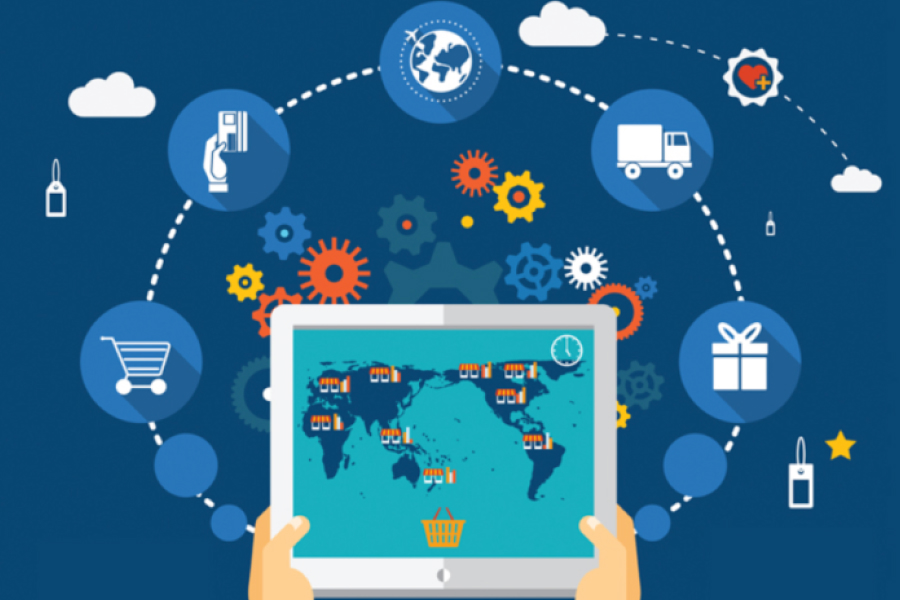
India’s e-commerce sector grew by leaps & bounds since April 2020 and is now 9th globally in cross border growth. Can India capitalise on this momentum and build e-commerce as a viable long-term channel to promote its exports? While the year spelt economic misery across numerous sectors all over the world (e.g. tourism, textiles & hospitality), it proved to be a blessing in disguise for India’s e-commerce sector. Cross- border e-commerce can lower entry barriers for Indian MSMEs and escalate their profits by saving their marketing and distribution costs. It is also a welcome move for the Indian government as it will make exports easy, increase GDP & spur employment. However, there are a few obstacles that are preventing India from realising its true potential. For example, there is ambiguity when it comes to things like a homogenous tax policy & data laws, quality issues, handling returns & payments etc. To enhance the seamlessness of the cross- border e-commerce purchase experience, the quality of Indian products needs to be enhanced & a skills training needs to be imparted to Indian retailers. Further, the government needs to negotiate with the WTO about issues like data protection and tax payments to have a uniform policy worldwide. Source: https://bit.ly/38I6lcP 2020 is an intriguing year indeed. While the year spelt economic misery across numerous sectors all over the world (e.g. tourism, textiles & hospitality), it proved to be a blessing in disguise for India’s e-commerce sector. A report by Payoneer states that India’s e-commerce sector is now 9th worldwide in cross border growth. Further, Amazon India‘s Black Friday & Cyber Monday sales also substantiate this point. The ecommerce platform said that Indian exporters had seen a 76% year-on-year growth in the total units sold during 2019’s Black Friday & 55% year-on-year growth in total units sold on Cyber Monday. (The brand is yet to release the corresponding figures for 2020.) ‘Made in India’ products across enjoy great demand in overseas markets like the US, the UK, UAE, Canada, Mexico, Germany, Italy, France, Spain, Netherlands, Turkey, Brazil, Japan, Australia and Singapore, it said. This article analyses what are the benefits of cross border e-commerce trade for Indian exporters, can India capitalise on this breakthrough and catapult itself to the top 5 nations in terms of cross border e-commerce, the obstacles preventing it and strategies to bypass them. Cross-border e-commerce: Unexplored territory A string of factors have led to the blossoming of global e-commerce market over the last few years – the rise in internet penetration across the world, the expansion of consumer base of digital buyers worldwide over the last 5 years & the convenience of buying things online. Industry body FICCI expects consumer base of digital buyers worldwide to grow from US$ 2.27 billion in 2015 to US$ 4 trillion in 2020. COVID-19 has also proved to be a blessing in disguise when it comes to driving e-commerce sales. Dr. Ashita Aggarwal, Professor of Marketing, S.P. Jain Institute of Management & Research explains: COVID-19 restricted travel and decreased mobility of consumers. Contactless delivery and convenience of obtaining products at home has played a positive role in helping foreign trade firms cushion the impact of COVID-19. The phenomenon of revenge shopping was another factor that gave boost to cross-border trade. This is an impressive achievement as cross- border e-commerce can make exports easy and accessible for MSMEs across India. This is attributed to the fact it can that it can lower the entry barrier for Indian MSMEs and help them to build and scale their exports. It is a welcome move for over 51 million MSMEs in the country producing over 6,000 products & employing around 117 million people as they can enjoy access to a larger customer base. Not only will this spur employment in the country, it will also be useful for businesses in saving marketing and distribution costs by up to 60% & watching their revenues rise by up to 27%. At the same time, it is also a win-win solution for the government as overseas e-tail will also contribute to its vision of augmenting exports. However, about 43% of India’s exports are limited to Asia, followed by Europe and America, with United Arab Emirates (UAE), United States of America (USA), Hong Kong and China being India’s key export destinations. Countries like Japan, the United Kingdom, Germany & Australia also have a huge cross-border e-commerce potential for the Indian MSMEs. Export markets with e-commerce potential Excellent High Medium USA China Middle East and Africa Japan Brazil Italy Germany Russia Mexico UK South Korea Argentina France Canada Indonesia Spain Australia Netherlands Denmark Source: FICCI Product-wise preferences for online purchase CBT Sectors/product traded CBT via online Online preference for foreign brands Clothing and footwear Russia Consumer electronics and computers Brazil, Mexico Books Australia, South Africa, Brazil Health and beauty Brazil Jewellery Thailand, South Africa Toys Chile, Brazil Sports goods Turkey Home accessories China, Poland, Russia Home improvement Malaysia Grocery China, Japan Source: FICCI Bumpy ride? One of the key challenges for cross-border e-commerce is building the requisite infrastructure, especially in the context of the disruptions caused by COVID-19. The issue of unavailability of containers has further complicated the situation for most Indian exporters. As Kausshal Dugarr – Founder and CEO of Teabox, India’s luxury premium tea brand states: Challenges do remain in terms of global disruptions in the supply chain, transportation, shipping and fulfillment capabilities which do tend to affect customer experience. Consumer brands need to ensure faster fulfilment of orders and ensure a seamless navigation & check-out experience every single time. Another issue is the lack of a uniform policy framework in terms of taxation and data privacy. The fact that in cross-border e-commerce the buyers and sellers operate from different countries create disparities and serious differences. To complicate matters further, each state in India has a different policy for local businesses. For example, some local bodies in Madhya Pradesh are seeking to impose entertainment tax on digital businesses! Further,
E-commerce helped our business survive the pandemic
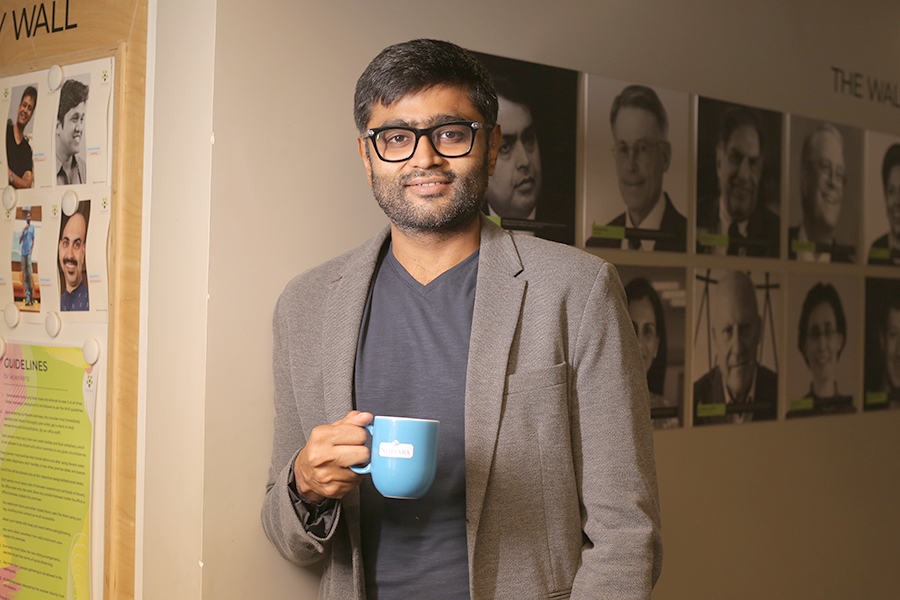
Dheer Shah, MD, Jivraj Tea Company reckons that when he decided to launch Samaara Tea only on e-commerce platforms, he faced questions like why will a consumer who is used to buying tea from local departmental stores would buy such an essential yet basic commodity online. The COVID-19 pandemic proved to be a blessing in disguise for the company, as it helped the company survive the economic uncertainty caused due to the pandemic. IBT: What role does e-commerce play in your business? What initial hiccups did you face while establishing your brand’s online presence? Dheer Shah: Our primary focus at Samaara Tea has been to strive forward with superior quality of product while adapting to the changing national & international market trends. After observing and analysing the shift of India’s trade market from offline platforms to an e-commerce marketplace, we at Samaara decided to establish ourselves in the present and future of trading in India i.e. e-commerce. Thus, Samaara Tea is available across India on e-commerce platforms such as our website, Amazon etc. In the process to make Samaara a renowned name in the e-commerce trade industry, we faced obstacles which were a bit different from what a tea manufacturer and trader generally faces in the traditional offline space. I distinctly remember being asked and doubted when we decided to launch Samaara Tea only on e-commerce platforms, that why will a consumer who is used to buying tea from local departmental stores would buy such an essential yet basic commodity online? Well one of the major challenges we faced while establishing Samaara’s presence online was breaking this mindset and making tea accessible online. IBT: How did e-commerce help you sustain your business during the pandemic? Dheer Shah: Businesses worldwide had faced the initial hit and panic raised by the pandemic. However, e-commerce helped our industry and Samaara surge forward comparatively easily. The pandemic led to closing of shops in India in a three month imposed lockdown. While all the local shops and offline trading channels were closed there was an influx in online sales on various e-commerce platforms. People started to rely upon online methods of buying essential FMCG goods to sourcing luxurious commodities. The fear of catching the virus while shopping from a crowded marketplace was highly inept; thus, there was a shift in majority of Indian’s buyers to try e-commerce channels. This played to our advantage and placed our product which is available online at an advantage. According to an economic report, the food and beverage industry saw a global rise of 23% in online sales. Thus, e-commerce has helped our business survive the economic uncertainty caused due to the pandemic. IBT: What are the key commodities that are traded across borders on your platform? Which are the main areas they are exported to? Dheer Shah: Some of the key commodities amongst the wide variety of teas we trade across borders are black tea and green tea. Apart from these two, we have a vast product range which includes flavoured green tea, masala CTC black tea etc. Major countries where our teas are exported to are the UK, USA, South Africa, UAE, Saudi Arabia, Italy, Oman, Qatar and several other parts of Europe and the Middle East. IBT: How does the cross border e-commerce trade work in terms of payment options, return and shipping policy, etc.? What challenges exist in its operations? Dheer Shah: Samaara is available across borders on offline stores thus eliminating the major payment issues, return and shipping hiccups. Our international consumers can find Samaara Tea at local departmental stores and buy without any discrepancies. We have a distributorship in place with our international markets in which we export our products and the payment channel is set through distributors. IBT: What are the opportunities/challenges do e-commerce sales have vis-a-vis retail? Dheer Shah: The opportunities that we face in e-commerce is the opportunity of up-scaling. We are able to reach more consumers easily and globally. The problem of setting up a trade network including distributors and salesmen is eliminated. Generation of influencer content creates testimonials, awareness and helps in building loyal consumers and generating quicker ROS. Another major advantage of e-commerce is that there is no cost of shelving. We can manufacture the product, store it in warehouses and then ship it to our end consumers easily. The challenges we face in e-commerce entail the tedious process of trust building of consumers on the quality and taste of our products. As the touch and feel of the product is absent, we often face the issue wherein the consumer hesitates before making a buying decision, as he/she is unable to decide the quantity and size of the products. Another major challenge is the return of orders, as in India we accept cash on delivery. Due to this, whenever there is return in orders the company faces additional cost for delivery and pickup for the same. IBT: How can the contribution of e-tail to India’s GDP be enhanced in the next 5 years? What can the government facilitate the same? Dheer Shah: The e-tail segment is facing a major boom in today’s market. For instance, in the pandemic Amazon’s sales increase by 300%. The significant shift in the choice of potential buyers and a change in their buying behaviour has increased the profits earned by the E-tail segment. Thus it’s a given that the industry will boom in India and enhance the GDP in next 5 years. The government can create schemes and policies that encourage the buyers to host their businesses online and choose e-commerce marketplace. Dheer Shah is the Managing Director of Jivraj Tea, a progressive company dating back to 1900’s and serving the global market with high quality Indian teas. He has a history of working in the food & beverages industry. He is skilled in Retail, Product Marketing, Retail Sales, Marketing, and Social Media Marketing. He has a Bachelor’s degree focused in Business Administration and Management, General from Christ University, Bangalore.

COVID-19 has opened vistas to new markets for Indian e-commerce
Kausshal Dugarr, Founder and CEO of Teabox, India’s luxury premium tea brand opines that Indian companies can connect with a global consumer base, which they may not have tried prior to Covid. He adds that for e-commerce to thrive in the country in this post-Covid world the Government needs to take a proactive approach and provide a broad framework. IBT: How can the contribution of e-tail to India’s GDP be enhanced in the next 5 years? What can the government facilitate the same? Kausshal Dugarr: India is poised for a big leap in e-commerce in the coming decade. With rising disposable incomes and increased internet access across Tier 2 & 3 cities in the country, there is strong growth potential for e-commerce in India. Greater access to the internet and widespread adoption of technology by SMEs and big industrial houses, particularly post-Covid has opened up huge scope to reach a diverse spectrum of customers across geographies and markets in a variety of ways. As per latest data available, e-commerce as a percentage of total sales is likely to become bigger in emerging markets across South-east Asia. As of now, online sales account for less than 1% of total retail sales in ASEAN region when compared to 6-8% of total sales in EU, US and China. So, the potential of e-commerce to contribute more to India’s GDP is huge, provided there is adequate information communication technology (ICT) infrastructure to support the robust growth in this sector. There are significant challenges to overcome ranging from poor internet connectivity, regulatory hurdles to logistics bottlenecks. Policies such as enhancing accessibility to the internet via smartphones, widening of smartphone coverage in rural belts, faster network speeds will help online retailers reach a new segment of previously underserved customer base. Foreign direct investment (FDI) rules in B2C online businesses need a change to encourage businesses to transform their business model to an online framework. This also needs a balanced approach in terms of taking brick-and-mortar stores into confidence and making them a part of the growth story as they presently feel threatened by the big online players and often demand protection from the government. Further, the existing laws governing taxation of online retail companies need some change; as they make it difficult for companies to become competitive against the giants in the field. IBT: How does the cross border e-commerce trade work in terms of payment options, return and shipping policy, etc.? What challenges exist in its operations? Kausshal Dugarr: We, at Teabox ship to more than 117 countries across the world and we strive to deliver a delightful experience every single time. In terms of e-commerce; we, at Teabox, offer a host of widely used international payment options such as Paypal, American Express, Visa, MasterCard, Rupay and others. This is to facilitate easier transactions from a customer’s viewpoint and less chance of payments getting stuck due to lower data speeds. We claim to market the freshest teas to our valued customers and logistics is integral to our core mission of delivering the freshest of teas to our customers every single time. Challenges do remain in terms of transport bottlenecks, shipments getting delayed at customs in various countries particularly in context of COVID-19, where the entire transport infrastructure got affected. However, we try and reach out to our customers at every step of the way. Right after they have made a purchase, they receive notifications regarding status of their shipment, location of their parcel, the date it reaches the destination country and date of delivery. We also have a dedicated customer experience team who calls up every single customer in case they are facing any difficulty or have any queries regarding their purchase. All this helps us avoid the gaps in communication and helps ensure customer trust and loyalty. In terms of shipping, we partner primarily with DHL/Fedex, EMS (India Post) and Air Mail to deliver our teas worldwide. Express service (DHL/FedEx) takes up to 5-8 working days for delivery in all major EU countries & US, EMS Speed Post takes up to 30-45 working days for delivery in CIS countries & & Air Mail takes up to 45-60 days for delivery. As for returns, we tend to receive very rare requests as we deal with high-end speciality teas. We take extra care to ensure an enjoyable tea drinking experience for our customers worldwide. However, since return requests are unavoidable and some requests do come through, we have clear policies in place. If any customer requests a return owing to damages in shipping or is dissatisfied with quality, we reach to the customers and address their concerns within a short span of time. If any customer were to receive a defective or damaged tea ware or gift box, they can raise a returns and replacement query by sending an email to help@teabox.com within 30 days of the purchase. They can attach an image of the item received so we can evaluate its condition and ensure that the product is unused and in its original condition in case of gifts. Products acknowledged as damaged or defective are reverse-picked by us free of cost. Once we receive the item at our facility, we verify its condition as per set quality protocols and initiate the process of refund/replacement accordingly. If any customer receives a package in damaged or broken condition, they are requested to send us images of the damaged carton within 24 hours of delivery and they should mention the same whilst acknowledging the delivery with our courier partner. IBT: What are the opportunities/challenges do e-commerce sales have vis-a-vis retail? Kausshal Dugarr: In e-commerce, there is a huge opportunity to reach out to a wide base of untapped customer base, which is not possible with an off-line model. Post-Covid, as most of the people were stuck at home, there is a huge shift in consumer behaviour as consumers are looking to purchase online on account of lockdowns in many places, closure of brick-and-mortar stores, shelves being empty

Reorienting SEZs for a self-reliant India
India’s SEZ policy has led to significant success for its IT industry, but under the new Foreign Trade Policy, it needs to be reoriented to both comply with WTO norms and promote India’s manufacturing competitiveness in focus sectors. Exports of SEZs in India have grown from Rs 463.77 thousand crore in 2014-15 to Rs 796.67 thousand crore in 2018-19. As India is in the process of finalising its Foreign Trade Policy for the next five years, it is pertinent to review its SEZ policy, especially considering that its SEZ policy has been deemed non-compatible with the WTO. Experts recommend deploying input subsidies with SEZs to ensure compatibility with WTO norms. At present, an exporter in an SEZ and a foreign exporter are at par when it comes to selling goods to a domestic tariff area (DTA). Instead, exporters within SEZs should be incentivised on the degree of value addition they bring to a product. Source: https://bit.ly/34S5Hs8 According to the World Bank, special economic zones (SEZs) are geographical areas within the national borders of a country, where business rules are different than for the rest of the economy. SEZs offer incentives in terms of infrastructure, duty exemption, tax incentives, etc that make it easier to conduct business. The condition for the companies in the SEZs is that almost all the output of these firms have to be exported. Currently, there are 262 SEZs operational in India, out of which 25 are multi-product SEZs. All other SEZs are sector-specific such as pharmaceuticals, IT/ITeS, textile, leather, food processing, etc. Exports of India’s SEZs have been continuously rising since 2015-16 with a year- on-year (YoY) growth of 13.62% during FY 2019-20. However, for FY 2020-21 (as of September 30, 2020), exports from SEZs have experienced a contraction of 8.52%, to reach Rs. 3.49 lakh crore. The contraction is attributed to the impact of COVID’19, with merchandise exports decreasing by 37.38% during April-August 2020. Furthermore, as of September 30, 2020, total investment in the zones amounts to Rs. 5.95 lakh crore and 22.34 lakh people are employed in these zones. With the purpose of promoting exports, investment, and employment opportunities, the Indian parliament passed the Special Economic Zones Act, 2005. The SEZ Act provides for simplification in procedures and single-window clearance for approvals of central and state governments. Furthermore, some of the incentives given by the central government to SEZs include duty-free import, phased tax holiday on export income, and exemption from Minimum Alternate Tax (MAT). Other facilities include exemption from central sales tax, services tax, and state sales tax, all of which are embodied under the Goods and Services Tax (GST). Export trends for SEZs in India Year Exports (in Rs. thousand crore) YoY growth (%) 2014-15 463.77 -6.13 2015-16 467.34 0.77 2016-17 523.64 12.05 2017-18 579.49 10.67 2018-19 701.18 21.00 2019-20 796.67 13.62 2020-21* 349.36 -8.52 Source: SEZ India, Ministry of Commerce & Industry; *As of September 30, 2020 Widening the scope As India is in the process of formulating its Foreign Trade Policy for the next five years, it is pertinent to review its SEZ policy, especially since it lost a case, in this context, against the US at the WTO. The latter had alleged that India’s subsidy schemes including Merchandise Export from India Scheme (MEIS), Export Oriented Units (EOU), Special Economic Zone (SEZ), Export Promotion Capital Goods (EPCG), and Electronics Hardware Technology Parks (EHTP) are harming American companies. India has argued against the ruling, stating that its SEZ scheme does not mandate export performance and thus does not violate WTO’s rules. Furthermore, while the SEZ policies have benefited the service based companies, the manufacturing companies in SEZs haven’t experienced similar export-led growth. Some reasons cited by Baba Kalyani report include policy uncertainty, procedural delays, infrastructural bottlenecks, and other complexities. Also, the advantage of duty free imports of inputs accrued to manufacturing companies in SEZs gets negated in many cases due to FTAs. Arpita Mukherjee comments, “Such a situation does not arise in other countries since their differential tariff rates are much lower than India”. Indian SEZs have attracted more IT firms than manufacturing companies due to tax incentives. Out of 262 operational SEZs, at least 150 belong to IT/ITeS services. The Baba Kalyani Committee has been set up by the Indian government to evaluate the SEZ policy and make it compatible with WTO requirements. Notably, the Committee suggested shifting the focus away from exports to more integrated hubs for employment and economic activities supported by quality infrastructure and ease of doing business. The quantum of initiatives should be based on investment committed, job creation, promoting women in job, value addition, technology differentiation, trade potential and priority industry. The committee also recommends that high-quality infrastructure, including shipping ports, warehouses, high-speed rail, cargo/passenger airports, etc is critical to enhancing export competitiveness of the zones. Also, other facilities such as improving access to finance and allowing long term borrowings would also facilitate development of SEZs. Tax exemption on export income for India’s SEZs has also been shortened to 5 years, after which developers in the zone would not enjoy complete exemption from tax payment. Other countries such as Indonesia and Costa Rica enjoy exemption for 12 years and in Thailand, it is more than 12 years. This affects the competitiveness of SEZ exports, thereby putting them at a disadvantage. Thus, the Baba Kalyani Committee report recommends an extension in the sunset date, which would help existing SEZs utilize the assets and secure investments in the zones. It would also boost investment earnings. However, the tax incentives are considered as a violation of WTO rules and as a result, many countries are imposing countervailing duties on India. Thus Arpita Mukherjee, professor at ICRIER, recommends availing input subsidies to the SEZs, which would comply with the WTO rules. India had 232 SEZs, of which 25 are multi-product ones and the rest are sector-specific ones, with 5,109 approved units, as of March 31, 2019. At present, an exporter in an SEZ and a foreign exporter are at

Mexico offers an amazing market opportunity as large as India
H. E. Federico Salas Lotfe, Hon’ble Ambassador of Mexico to India, discusses ongoing efforts to improve Indo-Mexican ties and the growing interest of the Mexican companies in the Indian market. He also welcomes Indian companies to invest in Mexico to take advantage of the mutual affinity and the huge market potential of the latter via 46 free trade agreements. IBT: First of all, I would like to know your overall perspective on how Mexico-India relations have evolved. And how do you see this relationship with India, from the trade perspective, especially post-COVID19? Federico Salas Lotfe: I think the relationship, historically speaking, has always been very positive: we’ve had long standing cultural and even trade exchanges that go back a few centuries. However, we tend to focus on the period since India became independent. Certainly, during the more modern times, we were the first Latin American country to recognize the independence of India, and afterwards we established diplomatic relations in 1950. So, this year we’re commemorating 70 years of diplomatic relations. And in terms of bonds, political, cultural, economic, trade, academic, and all other exchanges have multiplied in this past seven decades. In the past ten years, trade between the two countries has gone all the way through the sky. Two years ago, we became India’s largest trading partner after the US in the American region, with a trade volume exceeding US$ 10 billion a year. Last year, it was a little bit less, and we don’t know what the figures for this year will be. So, the challenge for the post-COVID19 world is how we can retake the momentum and pursue the trade relationship with a bigger strength, and from an institutional point of view, we have been doing it. At the beginning of October, we have had what we call a high-level meeting or vice-ministerial level meeting between Mexico and India, with a very broad agenda to discuss all economic issues on the table. And it seems that everything’s going very much in the right direction, with a MoU being signed between COMCE and FICCI here in India. We also have a couple of other agreements and MoU’s in the pipeline to be finalized, including one on protection and promotion of investments. Moreover, we have to meet some challenges like market access, so that they do not become a burden in the economic relationship. They may be compartmentalized to certain sectors or certain products. But overall, I think the perspective looks very good. It seems, at least from the numbers by the International Monetary Fund, that India will experience a somewhat speedy recovery after COVID-19 goes away. As you know, one important development in the past few months, even within the context of the pandemic, is the renewal of the free trade agreement between Mexico, the United States and Canada, which is called the USMCA. Of course, it has benefited Mexico tremendously as many countries see us as a good platform of opportunities to do business or to invest. So we’re hopeful that things will look bright, eventually, from the first semester of 2021. IBT: What would you like to say about the prospects of Mexico as a destination for Indian businesses and exporters? Federico Salas Lotfe: In the regional context, we are the second largest economy in Latin America after Brazil, and the first trade partner of India in Latin America. Very closely linked to that is the fact that we’re in the North American Free Trade Market, which has been, until now, the largest trading block in the world (before the signing of the RCEP). Moreover, Mexico has 12 free trade agreements that encompass 46 countries. As an Indian, you may say that “we’re such a big country with 1.3 billion people here and Mexico only has 130 million”. But in Mexico we have access to an equal size of population as that of India, which is 1.3 billion people, through our free trade agreements. Many Indian companies are already in Mexico (nearly 100), including the largest ones — like Tata, Mahindra and Uflex — in varied sectors like automotive, fertilizers, IT, pharmaceuticals and more. Regarding pharmaceuticals, even though they are already in Mexico, the other large pharma companies of India would like to have access to the Mexican market. Moreover, steel companies, which are very strong in India have a very good opportunity to access the Mexican market with the new terms of the USMCA. ArcelorMittal is already in Mexico, but a few other large steel companies in India can benefit from this agreement. As you know, we are one of the largest automotive producers and exporters in the world. IBT: As far as your business cooperation with India is concerned, would you like to mention some specific sectors where Mexican companies are highly interested to invest in India? What kind of issues do they face, in terms of making such investments? Federico Salas Lotfe: Well, we’re trying to encourage Mexican companies to come to India because they have enormous opportunities in this market and economy. India has a broad range of sectors, and we already have representations in quite a few of them. For example, we have Cinépolis, which is in the entertainment business. We also have Grupo Bimbo, which is the largest bakery company in Latin America. Besides this, we have others in IT and more technology-oriented areas. But we’re also looking at other sectors, certainly in the digital services and space innovation. Regarding innovation, this is a key field where we’re setting up high priority. I think what India is doing —and has been doing in terms of innovation— is very important. That’s something we can certainly benefit from. Mexico has also been doing quite a bit on it. So, I think there’s a lot that we can share, and maybe work together in areas like artificial intelligence and computer science. I think that one of the main issues affecting the presence of Mexican businesses in the world has been our closeness
Poultry industry: From the pandemic to the maize!
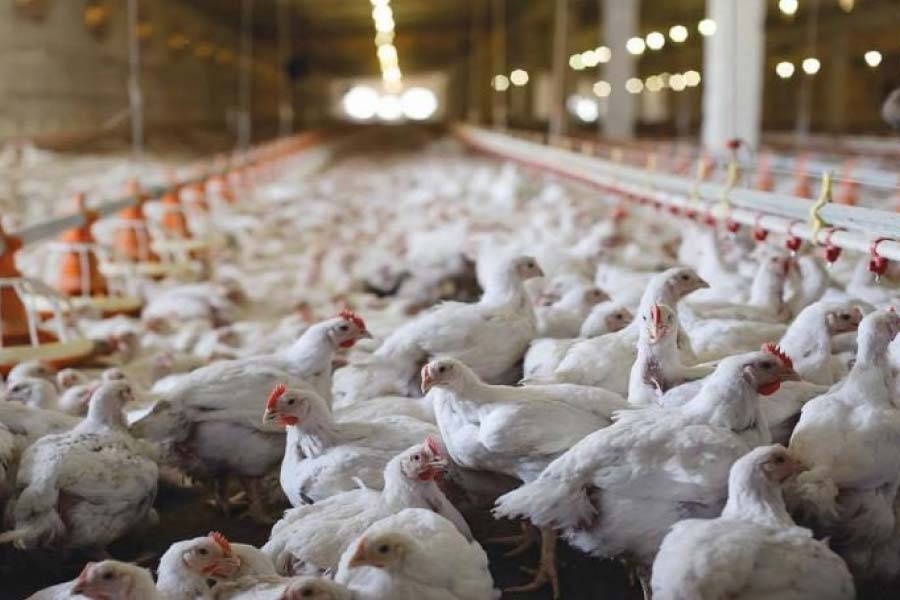
The poultry industry has recovered strongly from the near death scenario it faced in the initial period of the pandemic. In fact, the industry is expected to post healthy profits in 2020, even as rising maize and soya prices could cause a dent in profitability. The Indian poultry industry has experienced significant growth with production of eggs increasing at a CAGR of 6.49% during 2011-12 and 2018-19. During the COVID-19, the country faced a fall in demand for a brief period due to false rumors. This caused huge losses for the industry. In Q2 2021, the industry has shown signs of recovery with both high realizations and favorable input prices. However, the industry’s profitability still suffers from high feed prices with maize and soybean being the main raw materials for feed. Source: https://bit.ly/2LLSFWv The poultry industry involves animal husbandry and produces eggs and broilers as products. Globally, the US is the largest producer of poultry meat, accounting for 18% of the world’s output. In the case of egg production, China is the leading country with a share of 42% in the world’s total production of eggs. The Indian poultry industry produces live poultry, edible poultry meat, cuts and offal, and eggs.Growth in production of the Indian poultry industry in the past few years has been significant. Production of eggs has experienced a compounded annual growth of 6.49% between 2011-12 and 2018-19, increasing from 66.5 billion to 103.3 billion during the period. Total exports of poultry industry have actually decreased from US$ 117.38 million in 2015-16 to US$ 80.94 million in 2019-20, with major destinations being Oman (32.77%), Maldives (11.58%), Indonesia (8%), and Russia (7.29%). On the other hand, the domestic demand for poultry products has seen a rise over the years with the consumption of poultry meat rising from 2.8 million metric tons in 2013 to 3.9 million metric tons in 2020, increasing at a CAGR of 4.67% between 2013 and 2020. Furthermore, the per capita egg consumption in India is 70 eggs per annum. The poultry population in India has also seen positive growth, increasing at an exponential CAGR of 16.8%, with a population of 851.8 million in 2019. In the poultry industry, the raw materials that are used include grains, by-products of grains, vitamins, minerals, and various feed additives, which together constitute the feed for the poultry. Among these raw materials, soymeal and maize are the main products used in the feed. Fluctuations in the supply or price of these crops also affect the poultry industry. Emerging from the COVID shock In recent months, the poultry industry has been hit hard. At the beginning of the year 2020, a false rumor that chicken can lead to the spread of COVID-19 impacted the sales of the poultry industry significantly. As per Godrej Agrovet Ltd, the reduction was approximately 50%. However, Q2 has witnessed growth in profitability of the industry, supported by improvement in realization and moderate prices for feed stock. The prices of maize stand at Rs. 14-16/kg, less than the minimum support prices (MSP) of Rs. 18.5/kg. Soybean prices have seen a recovery after experiencing a decline between Feb-Apr 2020 following a decline in soybean prices globally due to the expectation of excess supply during COVID-19. The recovery has been as a result of a rise in poultry demand and the government and ICMR working to allay rumours on the possible links between chicken consumption and COVID-19. Also, crop damages in Maharashtra and Madhya Pradesh have resulted in a rise in the prices of soybean. Commenting on the outlook of credit profile of the industry, Ashish Modani, Vice President at ICRA, said: The credit profile of industry participants is likely to improve sequentially as most of them have plowed back H1 FY 2021 profits to de-leverage their balance sheets. The liquidity position, especially of large integrators has improved from March 2020 level, supported by healthy profits during H1, FY 2021 and undrawn bank lines. Furthermore, Suresh Chitturi, the vice-chairman of All India Poultry Breeders Association, opined that the industry may recover if prices continue to remain firm until March next year”. In general, the industry suffers when input price rises. A sufferer of high feed prices, Dharambir Narwal, a farmer from Phoosgarh village of Karnal district said that “I am getting Rs. 4.56 (profit) per egg, while last year it was sold at Rs. 5.50 each.” For instance, in April 2019, maize prices rose significantly to more than Rs. 2,100 per quintal; whereas in December 2019, the maize price was approximately Rs. 1,600 per quintal. The rise in prices of raw materials directly affects the cost of production in the poultry industry, which consumes around 60% of the maize produced in the country, which in turn affects their profitability. Due to the high feed price in FY 2020, the credit profile of poultry industry manufacturers was also strained, as the increased cost could not be passed on to the consumers. A possible solution to address this issue would be to use genetically modified seeds to increase production of raw materials, especially maize. Furthermore, creating an efficient marketing channel that would help producers get fair prices would help in uplifting the industry in long run and overcoming the threat to profitability.

EV battery: The roadmap to a greener future
In order to emerge a frontrunner in the EV race, India must first go back to the drawing board and create strong backward and forward linkages. For this, having a robust system of manufacturing EV batteries holds the key. The Government of India is moving towards accelerated adoption of electric vehicles (EVs) by 2030 so as to cut down its carbon emissions. However, India is not well prepared when it comes to having the right ecosystem needed for the success of EVs. For example, India depends on China, for its lithium-ion battery (LIB) requirements. This is significant as battery costs represent the largest single factor (up to 50%) in this price differential. As far as becoming self-reliant in the production of EV batteries is concerned, there are quite a few things where India lags behind such as the availability of ample supply of raw materials & limited investment in R&D. The idea of battery swapping further complicates the situation. This can be fixed by an array of solutions like offering incentives to spur production & demand, promoting R&D and looking for ways to secure the supply of raw materials. Image credit: https://bit.ly/3apxJ1T The Government of India is moving towards accelerated adoption of electric vehicles (EVs) by 2030 so as to cut down its carbon emissions. This effort has already started bearing fruits. According to Society of Manufacturers of Electric Vehicles (SMEV), there was a 20% year-on-year rise in the sales of all EVs (except e-rickshaws) in 2019-20 from 1.3 lakh units to 1.56 lakh units. Any discussion on EVs, however, will gravitate towards the fact that India is not well prepared when it comes to having the right ecosystem needed for the success of EVs. For example, India depends on China, for its lithium-ion battery (LIB) requirements. According to ITC Trade Map, in 2019, India imported LIBs worth US$ 1.2 billion (up from US$ 384 million in FY17). This is significant as battery costs represent the largest single factor (up to 50%) in this price differential & are likely to play a vital role in the highly-electrified transport sector of the near future. According to industry estimates, the annual LIB market in India is estimated to increase at a CAGR of 37.5% to reach 132 GWh in 2030. Thus, India needs a robust component supply chain with a strong emphasis on domestic production of battery. As Road Transport and Highways Minister, Nitin Gadkari, says: We are importing EV parts—lithium-ion battery, magnets—from China…Whatever we are importing, need to find out the swadeshi alternative in the country, without compromising the quality and cost. That is the main mission of Aatmanirbhar Bharat. This blog attempts to explore the hurdles that LIB industry faces in India and how can a sound environment be created for their local production. Source: ITC trade map. All values in US$ millions. Domestic battery production: A rocky ride ahead? One of the main reasons why India is forced to import lithium-ion batteries is the scarcity of raw materials needed to produce EVs – lithium, cobalt, manganese & nickel. India’s estimated lithium reserves – about 14,100 – tonnes are lower than those of Chile (8.6 MT), Australia (2.8 MT) and Argentina (1.7 MT). This figure is quite low considering the fact that if India has to meet its EV targets through 100% domestic manufacturing of batteries, it would require at least 3,500 GWh of battery storage at a wholesale cost of US$ 300 billion. The cost of imports drives up the cost of the vehicle. Another issue when it comes to EV battery production in India is the lack of ample investment to promote research and development. Research directed towards developing break through technology which can make products using recycled materials or other substances (e.g. aluminium) and developing more efficient batteries are the need of the hour to compete with global prices and efficiencies. China, for instance, has an upper hand in the area due to its heavy early investments in R&D. There are also some challenges related to performance of LIBs. These relate to maintaining the operational temperature. This could affect the performance and efficiency of the battery, along with lifetime and safety in exploitation. Added to this is the fact that even a small amount of moisture in the battery can ruin it completely as lithium is highly aggressive, corrosive and hygroscopic in nature. At the same time, the EV battery makers need to take into account that the Ministry of Road Transport and Highways has decided to allow automobile makers to sell EVs without batteries at their discretion. Consequently, the batteries could be sold separately to the vehicle owner, or the owner could buy the battery from some other service provider. While this move will lead to the mushrooming of new batteries on lease business models and thereby facilitate greater adoption of EVs in the country, battery swapping has its own set of limitations. For example, battery swapping is reliant on predicting, managing and extending the battery life. What adds to the complexity of this process is the ability of one swapping station to cater to all types of EVs made by various companies. There are also concerns pertaining to safety & operations of these batteries. Questions related to cross platform / brand compatibility and how does any issue due to the battery impact the warranty benefits for the customer arise in this context. Another challenge relates to infrastructural inadequacies in the country. Battery swapping stations exert the same demand on the grid as in charging stations and they must have sufficient inventory to meet demand. Further, it raised the question of ownership – does it lie with the vehicle owner or the OEM? Lastly, the country will also have to give a thought to the question of the disposal of EV batteries as the country transitions to them. Concerns pertaining to the contamination of ground water and heavy metal pollution seriously question the relevancy of LIBs as an eco-friendly mobility option. Charging up the domestic battery landscape In order to give fillip to EV battery manufacture ecosystem in the country, the government has taken quite a few initiatives.
Printed Circuit Board Assembly: Key to catalyse India’s electronics manufacturing
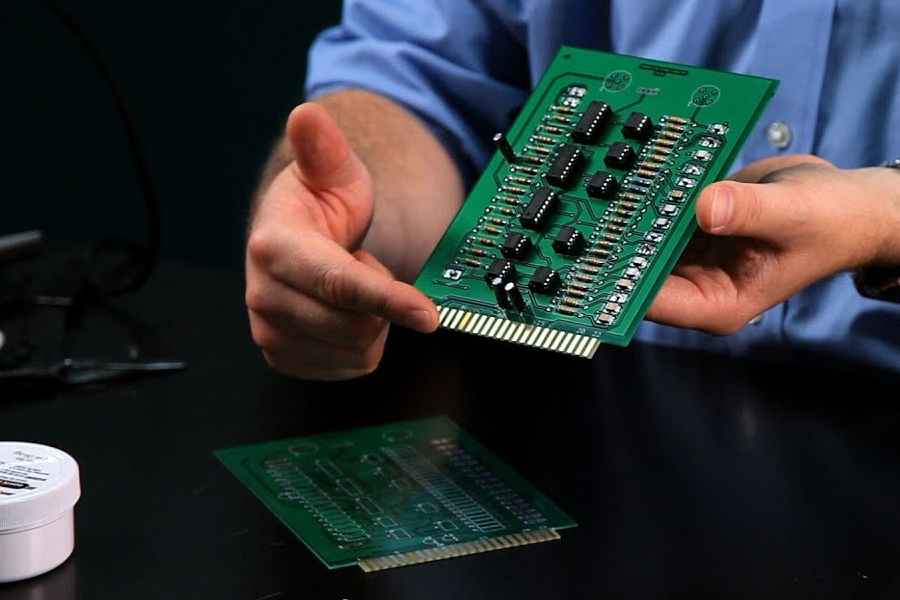
India needs to strengthen its manufacturing ecosystem for printed circuit board assembly, since it is the heart of every electronics device. Doing so will help facilitate much needed backward integration, and help reduce India’s huge imports in the sector. In order to become an electronics hub, India must focus on the domestic production of printed circuit board assembly (PCBA), the heart of every electronic device. This is important as not only will it facilitate backward integration, it will also lead to the creation of jobs, bolster India’s exports and reduce its import bills. The government is already taking steps to facilitate an electronics ecosystem such launching Production Linked Incentive Scheme, Component Manufacturing Scheme, and Modified Electronics Manufacturing Clusters Scheme. However, to become a US$ 100 billion global manufacturing and export hub for PCBA by 2026, India needs to fix issues. These relate to domestic supply chain and logistics; high cost of finance; inadequate availability of quality power and limited design capabilities. In January 2020, the Economic Survey of India cited the example of China, which successfully carved a niche for itself as the world’s manufacturing hub. What catapulted China to global fame was its image as a destination for assembling imported components. Not only did it become the epicentre of international electronics manufacturing, but it also created employment at an unprecedented scale. It stated that India should emulate this model and emerge as the world’s next factory. This is in consonance with the National Policy on Electronics (2019). Resonating with this sentiment, IIFT’s professor Sunitha Raju opines that while India has the capability to integrate with global value chains in electronics, the focus should be on building a robust component ecosystem. Building India as the nucleus of production of printed circuit board assembly (PCBA) by 2026 holds the key to realising this vision. This blog explores how India can enhance the domestic production of PCBAs and its export potential. Printed Circuit Board Assembly: The queen of hearts A PCBA mechanically supports and electrically connects electrical or electronic components and constitutes as much as up to 50% of the cost of manufacturing. It is the heart of every electronic device such as mobile phones, tablets, computers, routers, televisions, washing machines, refrigerators and air conditioners. The global PCBA market is estimated to be around US$ 600 billion, with China (14.2%) being the world’s largest PCBA exporter. South Korea (11%), Singapore (10.7%), Malaysia (6.2%), USA (5.6%), Japan (3.9%), Vietnam (3.6 %) and Philippines (2.6%) are the other major exporters of the product. Country Export value in 2019 (US$ bn) Hong Kong 134.5 China 102.2 Taiwan 100.4 South Korea 79.1 Singapore 76.9 Malaysia 44.8 USA 40.1 Japan 27.8 Vietnam 26.1 Philippines 19 Source: Worldtopexports.com India currently, forms a very small part of this ecosystem – in 2019, its PCBA exports to the world were pegged at just 0.29 million (as per the ITC trade map). Promoting domestic production of PCBAs is a win-win situation for the country as India can be an option for de-risking the global supply chain, while shedding its own heavy import dependence on China, with which it currently has strained ties. It will also narrow down India’s trade deficit with China, which is estimated to be US$16.55 billion in April-June 2020-21. At the same time, it can trigger the establishment of an electronics component production ecosystem, boost technology & innovation and spur employment in the country. According to a recent report by ICEA & EY, become a US$ 100 billion global manufacturing and export hub for PCBA by 2026. ITC Trade Map reveals that the destinations for enhancing its electronics exports include: USA (untapped trade potential in electronics exports: US$ 632.7 million), Germany (US$ 210.8 million), Netherlands (US$ 123.7 million) and UK (US$ 162.4 million). Source: ITC trade map. All values in US$ mn. India’s ticket to global success In order to promote the electronics industry, the government has taken a few positive measures. For example, in June’20, it launched three schemes with an outlay of around US$ 7 billion to encourage domestic production of electronics – Production Linked Incentive Scheme, Component Manufacturing Scheme and Modified Electronics Manufacturing Clusters Scheme. However, there are quite a few obstacles that India needs to overcome, if it doesn’t want to lose out to its Asian peers. These have been noted by MEITY: “The domestic electronics hardware manufacturing sector faces lack of a level playing field vis-à-vis competing nations. The sector suffers disability of around 8.5% to 11% on account of lack of adequate infrastructure, domestic supply chain and logistics; high cost of finance; inadequate availability of quality power; limited design capabilities and focus on R&D by the industry; and inadequacies in skill development”. These factors compromise the ease of doing business in India, which secured 63rd rank last year. But when it comes to parameters like enforcing contracts, registering a property, starting a business and tax payment, India secured 163rd, 154th, 136th & 115th rank out of 190 nations. The country needs to fix these issues if it wants to become the linchpin of global PCBA production. Factor resulting in cost-reduction India Vietnam China Corporate income tax exemption/reductions 0.73-0.95% 1.5-2% 2% Subsidy for machinery and equipment Nil 0.20% 3% State subsidies in India for capital investments 0.6-1.2% NA NA Cost of power 0% 1% 1% Interest subvention on working capital 0% 1.5 – 2% 3 – 3.5% R&D subsidy 0.15% 0.4 – 1% 2% Incentive for supporting industry 0% 0.5 – 1% 0% Exemption/reduction of land rental 0% 0.50% 0.60% Industrial land development support 0.40% 0.50% 0.60% Building (or plug and play) Negligible 0.30% 1% Labor subsidy Negligible 0.50% 2% Logistics 0% 0.50% 1% Factors affecting “Ease of doing business” – 1.5 – 2.5% 2 – 3% Duty free imports for creating fixed assets, and of inputs not available domestically 0% 0.50% – Incentive schemes – 0% 1 – 2% Total 1.88- 2.7% 9.4 -12.5% 19.2 -21.7% Source: Atmanirbhar Bharat: Making India the global hub for Printed Circuit Board Assembly, ICEA &

Privacy Paradox: Lessons for SMEs
Marketing is emerging as a data-driven, algorithmic exercise and as we say, more of a science than art. Rather than relying on just one stream of data, firms are relying on disparate data sources. The collection of this huge data exposes individuals & organisations to concerns of privacy. These privacy concerns impact small and medium enterprises differently than their larger counterparts. Further, governments and policy makers are increasingly pressing for regulations regarding privacy and data usage. To deal with this, SMEs can solve this ‘Privacy Paradox’ by designing unique and innovative products, competitive advertising and building transparency. Marketing is emerging as a data-driven, algorithmic exercise and as we say, more of a science than art. These benefits of collecting, analyzing and storing cheap data has led to the use of data across many areas of marketing. Whenever we think about privacy, an individual’s brush with privacy is restricted to the assent page that pops up at the time of downloading or upgrading an app. We propose that there’s more to privacy than the consent forms. Further, these privacy concerns impact small and medium enterprises differently than their larger counterparts. First, Data Fusion: Rather than relying on just one stream of data, firms are relying on disparate data sources (website activity data, mobile phone based location data, actual purchase data etc.). All these data sources are fused and analyzed together. This can lead to grave privacy concerns. For example, research has documented that publicly available data can be used to predict social security numbers and publicly available Facebook profile pictures can be used to predict one’s sexual orientation. Therefore, on one hand, data fusion can be advantageous to firms in terms of gaining consumer insights not possible before and at the same time, pose significant privacy threat if not handled properly. SMEs (Small and Medium Enterprises) can be at a disadvantage here as data driven marketing is an algorithm driven function and privacy sensitive algorithms require trained and expert data scientists to aid marketers – a privilege not necessarily available for resource constrained small and medium businesses. Second, Regulatory Frameworks: Governments and policy makers are increasingly pressing for regulations regarding privacy and data usage. Though, tech giants (Facebook, Google and Amazon) remain in the news and face intense media scrutiny, still, we can’t deny the fact that SMEs are at a disadvantageous position than the tech-giants. For example, European Union Parliament has backed a call for tighter regulations on behavioral ads in favor of less intrusive, contextual forms of advertising. If implemented, these regulations will definitely impact the business models of Facebook, Google but one shouldn’t forget that these giants are better equipped than SMEs to handle the challenge. Big firms are at an advantage as they have invested heavily in building sophisticated algorithms (e.g. transfer learning) that work on less data but are highly predictive of consumer behavior. The most recent regulatory framework is ’General Data Protection Regulation’ in May, 2018. First, GDPR encompasses any information that directly or indirectly relates to an identified or identifiable natural person (e.g. IP addresses) as personal data. Further, GDPR requires firms to obtain consent for the usage of their data through simplified forms and any infringement will attract significant monetary penalty. GDPR’s influence on data will have an impact on targeted advertising, personalized recommendations and use of consumer data. Also, India’s equivalent of GDPR – Personal Data Protection Act(PDPA) is set to become legislation soon. Third, Ivory Towers: Large firms can respond to privacy concerns by building closed ecosystems, controlled by a single operator. For example, Apple nudges users to access apps from the Apple store, that hosts apps curated by Apple. Further, Apple has introduced tracking block on Safari (Apple’s own internet browser) limiting ad agencies’ ability to collect consumer data. Google went a step ahead and decided not to provide log-level user data to marketers, therefore, limiting their ability to leverage this data to power their own apps, independent from Google. Rather, firms have to rely on ad exposure data from Google’s in-house Data Hub that further connects to Google’s own attribution, analytics and data management solution. This can protect privacy but also strengthens the monopoly power of tech-giants like Google and Facebook. Though all these factors favor large incumbent firms, there are ways in which SMEs can bounce back and solve this Privacy Paradox. 1. Designing unique and innovative products: Search engine, DuckDuckGo, distinguishes itself from other search engines by not collecting or sharing its users’ personal information and shows each user the same results for a given query, as if this is user’s first visit to the search engine. This is the unique proposition offered by DuckDuckGo. Similarly, open source web-browser Brave is targeted towards privacy-conscious users. Brave’s users can leverage private tabs with Tor – a novel feature that lets a user browse internet anonymously through the Tor network8. 2. Competitive advertising: Microsoft has accused Google of misusing consumer information in its advertising campaigns and small firms can promote their privacy-preserving nature as a way to differentiate them from the giants. Though one must be cautious about outright vile attack, especially during these tough times – i.e. learn from the Microsoft’s Scroogled 9 campaign against Google. 3. Privacy versus Accuracy: If firms are forced to account for privacy (and therefore, leverage less accurate) AI-algorithms, this can lead to biased and unfair decisions. This can act as leveler for small firms, as their resource constraints force them to opt for less accurate algorithms for their business decisions. 4. Transparency and Trust: Research has proven that consumers are more likely to share their data with firms that they can trust and provide a stable consumer experience. Smaller firms should focus on providing a trust worthy experience and gain consumer trust as well as their data. We believe that privacy paradox favors large firms but small and medium enterprises are at advantage if they look at privacy regulations as an opportunity and take deft actions. _______________________________________________________________________________ Anuj Kapoor is
Export volume of Basmati to Iran has dipped
Gurnam Arora, Joint Managing Director, JMD – Kohinoor Foods Ltd, states that the Government of India should institute a system whereby payment transactions between India & Iran can be entertained in any internationally free trade currency. Alternatively, there should be a 3rd Party payment mechanism which would help Indian exporters to secure their long overdue remittances. IBT: What role does Iran play as a market for you? How do you view the potential of the market? Gurnam Arora : For Basmati rice, Iran has been a prominent market and accounted for 34% share in the exports from India in 2018-19. In quantity terms Iran imported 14.83 lakh tonnes of basmati rice in 2018-19, which came down marginally in 2019-20 to 13.19 lakh tonnes (30% share). But during the period April-October 2020, the export volume to Iran has been a mere 4.43 lakh tonnes out of a total export of 27.44 lakh tonnes, reflecting a phenomenal dip in share to 16%. Iranians prefer Indian Basmati rice to any other rice. Discounting for the problems that persist in export of Basmati rice to Iran, I would say that there is tremendous potential and the export could grow up to 20 lakh tonnes over the next three years. This is because if we look at year on year growth since the export to Iran has grown at a CAGR of 14% over 5 years from 2015-16. Thus the importance of Iran as a market for Indian basmati rice with high potential cannot be over-emphasized. IBT: How has the imposition of sanctions on Iran by the US affected trade with your Iranian clients? Gurnam Arora : The genesis of the current set of problems in trade of Basmati rice with Iran is a result of the imposition of sanctions on Iran by US. Because of these issues, India has not been able to import crude oil from Iran since May 2019. Both countries have an agreement to transact business in Rupee terms and accruals from oil imports would be utilized for remittances against export of Basmati rice apart from other non-sanctioned essential items. IBT: Why is the Rupee-Rial payment mechanism not helpful in retrieving payments from Iran? Gurnam Arora : As mentioned, both countries have an agreement regarding trade in Indian Rupees and the system has been functioning very well since its inception. It has been suggested to the Government of India to institute a system whereby payment transactions can be entertained in any internationally free trade currency. As an alternative we have been suggesting the implementation of 3rd Party payment mechanism which would help Indian Exporters to secure their long overdue remittances against stuck up cargo at Iranian ports which amounts to around INR 1750 crore approximately. IBT: What challenges are you facing in routing payments through other countries? Gurnam Arora : The present system is bound by the mutual agreement between the two countries under which only rupee payments are the accepted norm. The Government of India has nominated UCO Bank and IDBI Bank for handling transactions. Today the situation has come to a pass where remittances are not forthcoming from Iran because the Central Bank of Iran is not issuing currency allocations to local Iranian rice importers. Because of this large number of consignments have got stuck at Iranian ports for last several months and the funds of exporters are blocked. This has created an uncertainty because of which exporters are constrained to withhold further shipments for the time being. IBT: How can the Government of India/banks step in to resolve this issue? Gurnam Arora : The present crisis, as mentioned earlier, is aggravated by two factors: (a) There is accepted rupee payment norm through the two nominated Indian Banks and from Iranian side Central Bank of Iran (b) Due to non import of crude oil from Iran, the accumulations in the two Indian Banks have depleted to a drastically low level and cannot take care of the volume of Basmati trade. From trade side, the only solutions that can be foreseen are, I reiterate, that either third party payment mechanism is instituted or the mutual agreement is immediately amended to incorporate a mechanism for payment in any internationally freely traded currently. But for the moment we are keeping our fingers crossed till a workable solution emerges. Gurnam Arora, Joint Managing Director of Kohinoor Foods Limited, is widely acknowledged for changing the way people look at commodity business. A Graduate in Business Management from Amritsar University, not only did he made ‘Kohinoor’, the most trusted & preferred brand in the industry, but also gave the Basmati Rice industry a line of innovations like convenient packaging options and many more value additions for universal consumers that most of the companies today follow. Single minded in his zeal, Mr. Gurnam Arora is also a member of the Basmati Development Fund, APEDA, Indo American Chamber and Ministry of Commerce and has officiated earlier as the President of All India Rice Exporters Association. He is also a part of various industry associations like FICCI, ASSOCHAM, to name a few. Recently, he was also awarded as “Corporate Leader of the Year” among selected few at the PowerBrands Hall of Fame Awards in London. With a keen interest in brand, in the current capacity, Mr. Arora takes care of Kohinoor’s brand development in all the 65 countries where the brand is presently available.