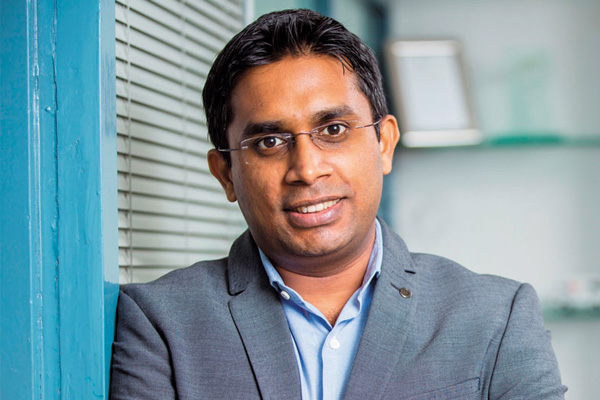
Kausshal Dugarr, founder of Teabox, opines that there’s no reason why the industry together cannot come and create a platform where they get an opportunity to sell directly to buyers; even to those based outside India. He also sheds light on some of the company’s innovative strategies like connecting with customers every week on social media to address their concerns in these testing times. TPCI: What are the key markets that Teabox caters to? What effect has the onset of COVID-19 had on the demand of premium tea in the domestic & international market? Kausshal Dugarr: The key markets that Teabox caters to predominantly are North America (US), certain countries in Western Europe & India too. Honestly, we did not see any significant drop in demand from COVID because the category of product which we are catering is pretty much the habit of people. In fact, with people staying at home and consuming more tea, the demand only rose. However, the area where we definitely did face some challenges was our ability to fulfil and ship these products, because the supply chains had been affected; the courier companies had been shut. Due to that, for a significant period of time, we were not able to ship our products. Now, I think we are pretty much back in shape from a supply chain perspective as well. TPCI: A number of foreign buyers have not been able to make it to India owing to the curbs on movement of people and the ceasing of international travel? What are the possible business models that the industry can explore in this scenario? Kausshal Dugarr: Right now, a lot of people come, they taste their teas and ship things out. Everything requires a physical touch, feel, look of that product. We are selling B2C. There’s no reason why the industry together cannot come and create a platform where they get an opportunity to sell directly to buyers, even to the buyers outside India. At times, especially during COVID, you can’t tell buyers to come and taste your product. At teabox.com, our customers don’t come and taste the product. They look at the product, read all the description and purchase it. If the industry could create a way of looking and understanding the product, then COVID or no COVID, you have the ability to reach a much larger audience because physical travel is possible only by a certain amount of people; not everyone who is ending up buying. Many of these guys who come are big wholesalers and not buyers themselves. The moment you move things digitally, you have the ability to not just reach the big wholesaler, but even the smaller wholesalers and retailers who are willing to pay a higher price in the market. This would hopefully lead to a better value realisation. If the industry adopts this model, it could be a game-changer. TPCI: According to media reports, the imposition of lockdown has led to serious compromises with the quality of tea? How is Teabox gearing up for this challenge? Kausshal Dugarr: Teabox is all about direct-from-source, and thankfully we are able to be direct-from-source because we are at the source. Prior to the lockdown, decent amount of teas had been already manufactured. In the usual scenario, many of the samples would have gone outside India as well. But given that everything – shipping, courier, etc. – was going to get stuck, we were able to access and purchase the tea, which was pre-COVID and which could not go out. So, from our perspective, we didn’t even have to compromise on the quality. We were able to get the best teas when the lockdown was lifted of the ones which were manufactured during the pre-lockdown period. Also once the estates started manufacturing post-lockdown, given that we were at the source, our team was able to go to the gardens on a daily basis and we had the ability to get the best from the gardens. We have been fortunate enough because of our business model and our presence at the source. So irrespective of an overall drop in the quality of tea, which would have happened at a certain time, we got the best tea because we had immediate access and proximity to our states. TPCI: Earlier during our conversation, you mentioned logistical difficulties and the consequent delays in shipping your products to your clientele. Did this in any way endanger the quality of the tea manufactured before COVID? Kausshal Dugarr: Not really. Whenever we sell teas out, our tea is protected in all forms from all the major its major enemies like moisture, heat and the presence of oxygen. Once the tea comes into our facility, it is kept in a climate controlled environment. We maintain temperature and humidity, remove all the impurities and vacuum pack it. So, when the tea leaves our facility, it is in the form of vacuum packed loose long leaf tea. Vacuum packaging ensures that there is no air, and hence, no oxygen and that ensures that the quality of the tea is not compromised. We ensure that the quality of tea is preserved by packaging it within a day or two. So, there’s no loss of quality. Quality loss happens after a week of the tea being produced. With our presence at the source, we stop any deterioration in the quality of tea through our packing process and when it leaves our warehouses, we ensure that there is no quality deterioration whatsoever. TPCI: Industry experts opine that tea plantations are quite crowded and the workers can be found in unhygienic conditions. This is a cause of alarm for consumers and can seriously jeopardise tea sales? How do you plan to dispel such concerns among your consumers? Kausshal Dugarr: I don’t agree with this that the tea plantations are quite crowded. Plantations themselves are so big that there is a lot of space. Even if there is a crowd so to speak, there is enough distancing
Cross selling opportunities for services will remain a key focus area
Pranay Chulet, Founder & CEO of Quikr, affirms that the on-demand home services industry is witnessing a strong uptake across categories post-lockdown. However, he also admits that there is a need for drastic transformation measures in this fragmented sector. Training and hiring of service providers by/via the organized sector can help play a big role. IBT: How has Quikr’s presence in the on-demand home services market evolved since inception? What would you identify as key achievements by your company so far, in terms of competitive advantage, quality of the overall offering and business numbers? Pranay Chulet: Right from the get-go, Quikr revolutionized the digital classifieds business and we marked our leadership in a market where there exists none. Over the last five years we have gone deeper in some of the high demand and high growth categories such as Goods, Blue Collar Jobs, Real Estate, Auto along with QuikrEasy, our services category. Being an India-focused player, we could clearly see that was the right way to create a market leading horizontal, results of which are clear, specifically during these times. With QuikrEasy, we went beyond buying and selling to organize the unorganized and connect customers with service providers through verified location-based services, reducing the time and effort taken to find technicians or experts in a given area. Our goal is to make day-to-day life easier for our consumers by helping them save time, effort and money as they go about their chores or try to upgrade their lifestyles. In achieving this goal, we would have created a platform that benefits thousands of service providers (individuals and Small and Medium Businesses) across the country and would have also simultaneously helped build their business in a predictable and sustainable manner. We believe that QuikrEasy is uniquely positioned to deliver on this vision and build a viable and profitable business model by leveraging the vast user base and strong connect built by Quikr over the years. There is also an added advantage of deriving natural synergies with the other verticals such as QuikrHomes, QuikrCars and Doorstep. Current unprecedented times have been tough on businesses, especially small and medium service providers that are now seeing much value coming from a broad-based platform like Quikr where they can list themselves and get leads too. IBT: How is your business distributed geographically viz. urban centres vs tier 2, 3, 4 towns? How is this share expected to change in the coming 5-10 years and why? Similarly, how is it distributed by SEC class and who is your key target audience? Pranay Chulet: The platform allows individual service providers to get listed and become discoverable to the young and urban population for home services. Based on the demand for different types of services, we see increasing traction in metros as well as non-metros. Overall our platform caters to a wide range of sectors, for e.g., luxury cars and high-end homes would have a different target audience than jobs. Goods and services are more need-based. In general, the share of monthly users on our platform is 50:50 for metros v/s non metros. IBT: How has the on demand services market in India evolved in comparison to other parts of the world? What are the key takeaways in terms of growth potential and business strategy, based on this benchmarking? Also, how has its growth been different from e-commerce in goods? Pranay Chulet: The typical urban consumer has a wide range of needs from interior design to carpentry, from home cleaning to pest control, from computer repair to leaking taps and many other such daily needs. Home services are seeing increasing adoption among urban consumers. Given the paucity of time and the high level of stress in their everyday lives, these consumers are looking for convenient and reliable solutions to their daily household needs. In fact, studies show that Indian households spend Rs. 25k annually on home services. Globally, the on-demand services market has leapfrogged in terms of its evolution as what was an entirely unorganized market earlier, is now, according to studies, poised to grow by US$ 1,500 bn during 2020-2024. For India specifically, some of the categories like Beauty, Plumber, Electrician, Pest control can benefit from the full stack model as long as the unit economics for those work in favour of businesses adopting it. At Quikr, we see the natural cross-category advantage unique to us. Whether it is our goods vertical, QuikrBazaar or QuikrEasy, our verticals have turned us into India’s true horizontal leader. IBT: What are the opportunities and challenges in delivering services via e-commerce in India (for the metroes and the hinterland)? To what extent have you been able to tackle these challenges, and what are the focus areas going forward? Pranay Chulet: We verify service providers that we on-board in a non-full stack model, something that helps ensure the quality of delivery. Services, by its nature, is hard to standardize beyond a certain point, but we do our best to recommend the right service providers to our users. We are on-boarding more service providers in new markets (Tier 2 cities) and also adding new sub-categories. There is a need for drastic transformation measures in this fragmented sector – given the importance of services in our society, training and hiring of these service providers by/via the organized sector can help play a big role. IBT: How is the COVID-19 pandemic and the subsequent lockdown affecting your business? How do you view the overall impact through this year and the recovery curve? Pranay Chulet: While there was a lot of uncertainty in the industry when the world was first hit by COVID-19; with people learning to live with it, governments going in for gradual relaxation in lockdowns, classified marketplaces like Quikr are beginning to see positive signs of growth. In fact, QuikrEasy has been seeing an increase in the demand for services like appliances, internet broadband, inverter, and battery rentals since the lockdown as compared to pre-COVID months this year. This shows that the industry is bouncing

E-commerce players have realised limitations of deep discounts
Sanjesh Thakur, Partner, Deloitte India, opines that in recent times, e-commerce players are trying to leverage Kirana stores as a part of their distribution chain. So, the future for the kirana stores looks exciting with the fusion model of being a direct to consumer outlet plus offering a last mile fulfillment. IBT: What is your view on the unique attributes of the Indian kirana store ecosystem? What has enabled it to survive the test of time, even as the Indian retail landscape has been in a state of constant flux? Sanjesh Thakur: The Kirana store ecosystem has stood the test of time and is an important channel that cannot be ignored by manufacturers. Even with the hyper growth of e-commerce and organized trade, Kirana stores have found a way to co-exist and still be relevant to most FMCG manufacturers. By industry estimates, there are about 12-15 million Kirana stores in India and a large share of the consumer spend (90%+) still resides with Kirana stores. When it comes to consumption of daily grocery items, Kirana stores cater to ~137 cr Indians vs ~12-15 cr Indians who rely on e-commerce and modern trade formats. Convenience (order on phone, same day free delivery, credit for long term customers), highly localized assortment relevant to the catchment and a deep understanding of customer needs are some of the unique value propositions of Kirana stores that are highly valued by consumers. These value propositions have helped cement the position of Kirana stores as front runners, when it comes to trade in India and build a loyal consumer portfolio. IBT: What are the key issues that kirana stores are facing with the entry of e-commerce players? How has it affected their business model and sustainability? Sanjesh Thakur: To attract customers, e-commerce platforms started offering deep discounts. However, over time, they have realized that to retain customers, offering deep discounts might not be the best way forward given the huge cash burn. Manufacturers also realized that over time, price disparity between e-commerce and brick and mortar was not helping them maintain a consistent brand experience. In recent times, e-commerce players are trying to leverage Kirana stores as a part of their distribution chain. Two leading e-commerce players recently have onboarded 10K+ retail outlets to help with order collection and last mile fulfillment. A recent deal between a social media platform and an Indian mobile service also banks on empowering 3 crore Kirana stores by connecting them to consumers via a popular chat application. So, the future for the kirana stores looks exciting with the fusion model of being a direct to consumer outlet plus offering a last mile fulfillment. Further, a growing number of hyper-local, local and regional aggregators have also helped kiranas broaden their customer base. These aggregators connect consumers to their preferred store or let consumers order what they want and the aggregator finds the closest store where the product is available. IBT: What advantages do Kirana stores have vis-a-vis e-commerce players? How has the Indian customer pattern transformed across economic classes over the years, when it comes to buying daily essentials? Sanjesh Thakur: E-commerce and the increase in internet penetration has definitely impacted consumer behaviour globally and in India. Buying decisions are made by consumers even before they visit retail outlets to purchase products. When it comes to buying essentials, the young working middle class population has adopted e-commerce faster than any other strata of Indian consumers. One of the prime reasons for this adoption is the flexibility and convenience offered by e-commerce platforms. The Indian consumer is extremely price sensitive and hence an e-commerce platform is the first place that consumers visit to explore offers and discounts. Due to COVID, there is also a shift in consumer behavior and spending patterns. According to Deloitte’s global consumer tracker survey, the spending patterns of the consumers have changed over the last twelve weeks with 55% of respondents willing to spend a lot more on less discretionary items like groceries and 52% on everyday household goods. Also, intent to use digital services has seen a rise with 44% respondents very likely to use it for groceries IBT: What technological interventions and operational changes can help kirana stores be in sync with the times, be more responsive to consumer needs and effectively compete with the larger players (online and offline)? Sanjesh Thakur: Majority of the Kirana stores hardly use any technology. The biggest drive in POS modernization was Kirana stores adopting mobile wallets during demonetization. E-commerce players partnering with kirana stores will enable a scaled digital platform across India that will enable: (1) Development of localized and regional consumption insights (2) POS management (3) Inventory management and visibility (4) Digital payments (5) Integration with the wholesale Suppliers and FMCGs for a lean B2B Supply Chain (6) Allow store owners to monitor and manage business performance easily through a mobile app (7) Enable them to participate in e-commerce by becoming a seller on the integrated digital retail platform of India This would be a win-win situation for both e-commerce players and kirana stores. IBT: What will be the challenges and critical success factors for e-commerce companies looking to partner with these kirana stores in a big way? Sanjesh Thakur: E-commerce players will need to invest time and capital to digitally enable a sizeable population of kirana stores. Given that kirana shop owners are still reluctant to use technology, a significant amount of training and hand holding would be required to streamline operations. E-commerce players will also need to build trust by offering a great value proposition to the kirana store owners. IBT: How has e-commerce aligned with traditional retail in the developed world? How will India’s journey be different? Sanjesh Thakur: In developed countries, large format/big box retail made it difficult for local mom and pop shops to survive. However in India, government regulation, paucity of space and the USPs offered by Kiranas have helped kiranas survive and thrive. Given the large consumer base and high degree

“IT budgets could fall by a minimum of 10%”
Naveen Mishra, Senior Research Director, Gartner, believes that Government, education and e-commerce will recover more quickly from the effect of the pandemic. Despite overall decline in budgets, IT areas such as BCM, remote working, collaboration, automation, AI, ML, Cloud, supply chain, security are expected to see growth in this fiscal. IBT: What impact is Covid-19 pandemic likely to have on the growth of the Indian IT industry this year? How long do you expect the industry to take in order to recover from its impact? Naveen Mishra (NM): With a revised spend of US$ 83.5 billion in 2020, overall Indian IT expenditure is expected to register a year over year decline of 8.1%. Devices (PCs, laptops and others) and data centre systems (Server, storage, network and others) will see a double digit decline, while other areas such as software, IT services, etc will see modest decline. 2021 is expected to witness positive growth and it should take mid to end of next year to reach pre-COVID-19 IT end user spend levels. IBT: How exactly are the demand side factors (eg. global slowdown, drop in fuel prices, drop in international travel and its impact on hospitality sector, and halt in manufacturing activity) going to impact the IT industry in India? NM: It has a net negative impact on the IT industry. Impacted industries such as hospitality and manufacturing won’t have the same pre-COVID budget to invest into IT. Fuel economies with bad demand scenario will also reduce their all expenses including 2020 annual budgets. Freeze on travel will lead to temporary hold on the digital transformation of airlines. This in turn will have an indirect negative impact on IT services revenue, given that deep consulting assignments will shrink. IBT: In India, a lot of IT corporations have reduced their major expenses. How will this affect the country’s journey towards the adoption of advanced technologies like AI, robotics and cloud computing? NM: As per Gartner’s recent webinar polling on April 20, 89% of the polled Indian audience is estimated to reduce their IT budget by a minimum of 10% or more. Indian CIOs have to play the balancing role of accelerating cost optimization initiatives that can deliver on expected cost reduction targets, while staying invested in the strategic (and digital) imperatives of the business. Cloud has earned credibility during COVID-19 and its advancement is expected to advance with specific use cases such as artificial intelligence (AI) and robotic process automation (RPA). IBT: COVID-19 caught the country by surprise, forcing a lot of IT companies to switch to remote working overnight. Do you think that this WFH culture is likely to continue in the future? Is the country equipped to handle this switch in the long run in terms of having a robust digital infrastructure and data protection policies? NM: Indian enterprises have embraced WFH positively. In the same polling, 13% of the polled respondents indicated that they will consider permanent WFH after COVID-19 scenario. As part of new normal, enterprises will invest less in offices and incentivise people to work from home. Certain IT services roles will still be fulfilled from offices (those which are governed by strict internal data privacy and protection laws). I am optimistic about the improving state of digital infrastructure. IBT: What are the major turnaround strategies that would define success for the industry going forward in your view? NM: Gartner believes that India (like many other countries) is in second stage of this pandemic and the transition from Stage 2 to Stage 3 will define the early signs of rebound. Success of impacted industries and enterprises will be based on their ability to optimize their cost structures and align with revenues coupled with their ability to digitally engage with their customers. Education, Government and e-commerce are expected to quickly recover and transition to Phase-3. These sectors are rapidly working on transforming their customer engagement and experience models, while keeping an eye on current challenges. Financial institutions have already invested in digitization. E-commerce is rapidly aligning with this paradigm now. Education has been transitioning towards a digital pedagogy. IBT: What opportunities does the crisis present for the Indian IT sector in the coming fiscal? Which sectors are expected to boost their share of revenues and why? NM: IT areas such as BCM, remote working, collaboration, automation, AI, ML, Cloud, supply chain, security are expected to see growth in this fiscal, despite overall decline in IT spend in 2020. For example, security will grow as enterprises investing in WFH and cloud, need to secure their users and data. AI, ML will help strengthening the touch-less digital engagement for various businesses. Naveen Mishra is a Senior Director, Analyst focusing on Digital Business and its impact on IT infrastructure and data centers. His 2019 research area focuses on integrated systems and Public cloud. Mr. Mishra is writing research papers subjects such as Data centers, public cloud and hyperconverged systems (HCIS). Clients seek his advisory assistance on areas such as hyperconverged systems, data center planning and consolidation, virtualization and Cloud. In addition, Mr. Mishra has the privilege of being inaugural conference chair of the Gartner’s Data Center and Cloud Strategies Summit in India and a regular speaker at Gartner events in the Asia/Pacific region and the Middle East. He is often consulted by CIOs and IT leaders in government and the banking industry while they create digital ready infrastructure.
Designing Import Substitution policy for Developing Furniture Cluster in India
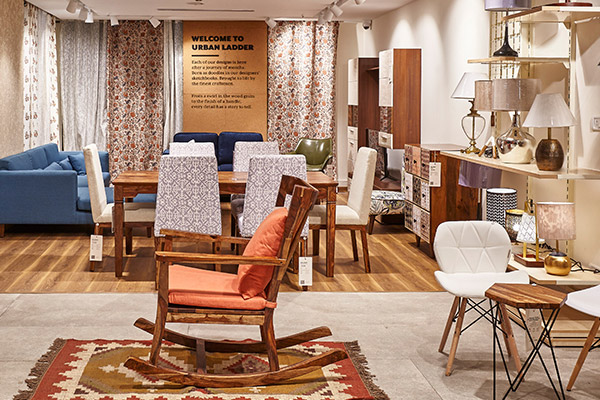
• India’s furniture sector is one of the promising industries with high export potential, though its market share in exports at present is barely 1% of the Global Furniture Market. • Restricting imports may be the only viable option to provide support the domestic industry already in place. This will also help in setting up of proposed clusters as also the transformation of the unorganised sector to a more viable and prosperous organised segment. • Initially, there could be an increase on the import tariff of those raw materials and intermediate products whose only usage is in furniture sector and does not have any intersection in usage with other sector. • Restricting imports and bringing them under a licensing regime without a valid reason may be a difficult, if not impossible proposition. However, quality is one major aspect to facilitate imposition of NTMs. Image credit: Urban Ladder The furniture sector in India is grossly under-developed and is largely dominated by the unorganised segment. Increase in domestic demand, however, is also driving growth in the organised segment. The Indian furniture market is projected to reach a size of US$ 61.09 billion by 2023; registering a CAGR of 13.38% during 2018-2023. Technological advancements including the availability of high speed internet networks and proliferation of smartphones and low cost data are boosting the e-retail space. Players such as Pepperfry, Urban Ladder, etc are increasingly capitalising on these channels. The key factors driving an increase in demand for furniture are: a. Growth of housing and commercial construction b. Increase in income levels that influence customers to match global lifestyles, especially in urban affluent Indians. The modernization of this sector with machine & technology is bound to facilitate growth of this sector. The Indian furniture market is now more customer friendly and moving as per their preference and supplying readymade, branded furniture with low maintenance, quickly installable and customisable options. The Indian furniture manufacturing sector mainly caters to home use and office & hospitality sectors. Though they try to meet domestic demand, India’s imports are growing at a rapid pace. With the rapidly growing and transforming retail sector, it is expected that large retailers will continue to expand their presence, leading to consolidation in furniture retailing in urban markets. INDIA’S TRADE SCENARIO Furniture is one of the promising industries with high export potential, though India’s market share in exports at present is barely 1% of the global furniture market, which is estimated to be US$ 258 billion. The global furniture market is estimated at US$ 1.1 trillion, out of which the Indian market size is less than 5% (approximately US$ 32 billion). Currently China is the leading exporter of furniture products with global share of 37.5% followed by Germany, Poland, Italy and USA. Currently India’s top export destinations include US (39.2%), Germany (7.4%), France (6.6%), UK (6.3%), Netherlands (6%), and Australia (2.8%). The idea of setting up furniture clusters in India seems pragmatic to escalate India’s furniture exports and also increase the acceptability of high-end finished furniture products among developed nations. According to ITC HS CODE, all tariff lines under HS Chapter 94 are finished products of the furniture and furnishing industry. All these tariff lines are mentioned along with its description in the last section of this document. Apart from the finished furniture products, several raw materials and intermediate products are categorized under HS Chapters 39 (plastic), 44 (wood) and 83 (metal). Setting up of specialized furniture clusters in states where governments are willing to provide basic amenities and business incentives is important for the furniture sector. Government also needs to consider creation of SEZs with proper amenities required for the furniture players – wooden, plastic & metal alike – to develop a brand culture. Industry cluster for furniture should also be innovation-driven to encourage manufacturers to use latest technology that can pave the way for the industry to be more competitive globally. The setting up of furniture clusters will not only be able to meet local furniture demand in India, but also have huge scope of enhancing exports of finished products, especially to developed countries. Approach to limit furniture imports Restricting imports may be the only viable option to support the domestic industry already in place. This is also going to help in setting up of proposed clusters as also transformation of unorganised sector to a more viable and prosperous organised segment. To provide required cushion to Indian furniture sector, it is required to introduce certain kind of restriction instruments like increase in import tariff or introduction to NTMs. There are two kinds of approaches: one is top-down implementation of restrictions and second is bottom-up implementation of restrictions on furniture & furniture-related products. For example, if import restrictions are implemented on finished furniture products in ready to use form, it will be a top-down approach. If import restrictions are implemented on intermediate products like plastic, bamboo, metals, it will be a bottom-up approach. Out of these two policies, top-down will be more efficient as it will restrict those products, which are meant for manufacturing at furniture clusters, mainly end-use furniture products. These products are majorly categorized under HS Chapter 94. There are, of course two viable alternatives to consider for restrictions, i. WTO compatible Tariff Barriers ii. More stringent Non-Tariff barriers. i. Increasing the Tariffs from MFN to Bound Rates. This is possibly easier to achieve considering the fact that India does not have a commitment to restrict the upper limit in terms of imposing tariffs on desired segments of the industry. It is interesting to note that apart from HS Code 940490, which includes {Articles of bedding and similar furnishing, fitted with springs or stuffed or internally filled with any material or of cellular rubber or plastics (excl. mattress supports, mattresses, sleeping bags, pneumatic or water mattresses and pillows, blankets and covers)}, all other HS Codes for furniture under Chapter 94 are unbound category. This means that out of 39 products in the six-digit HS category under chapter 94, 38 are categorized

Accelerating progress towards self-sufficiency in pharma
• India’s pharma exports have steadily increased from US$ 10.23 billion in 2010-11 to US$ 18.75 billion in 2017-18. • However, this growth trajectory in exports is critically dependent on the availability of APIs (Active Pharmaceutical Ingredients) for which India is dependent on China to the extent of almost 70% of the domestic needs. • COVID-19 crisis has amplified is the need to bring about self-sufficiency in domestic API production. Last month, the government has announced a US$ 1.3 billion package for boosting the production of APIs. • Scaling up of the domestic industry is necessary, especially in the domains of patented products, consumer healthcare, biologics, vaccines and public health. The COVID-19 crisis has exposed the fragility of the Indian pharma sector, one of the major export earning industries. Over the last ten years, pharma exports increased from US$ 10.23 billion in 2010-11 to US$ 18.75 billion in 2017-18. Structurally, about 77% of Pharma exports are Drug Formulations and Biologicals followed by Bulk drugs and Intermediates accounting for 21%. However, this growth trajectory in exports is critically dependent on the availability of API (Active Pharmaceutical Ingredients), for which India is dependent on China to the extent of almost 70% of domestic needs. Any disruption in the availability of APIs can result in a fall in the production of drug formulations. When China closed API units due to pollution regulations 3 years ago, prices of APIs increased by 20%, which naturally led to an increase in price of formulations. This should have sounded a warning for India’s overdependence on API imports. Recognizing this impending threat, the Katoch Committee (2015) has proposed measures like setting up parks for API, providing capex and subsidised loans to boost domestic API production. Unfortunately, these policies are yet to be implemented. What COVID crisis has amplified is the need to bring about self-sufficiency in domestic API production. Last month, the government has announced a US$ 1.3 billion package for boosting the production of API. However, to translate these proposals into concrete actions, coordination between government policy and industry requirements is necessary. The policy framework should address the emerging trends, both globally and domestically, and not merely focus on the pricing issues. Emerging Global Trends India is the largest supplier of cost-effective generic drugs to developed countries. However, for sustaining this demand, the foreseeable challenges are as follows. First, with a number of drugs going off-patent, demand for cost-effective generic manufacturing will rise exponentially. As such, global pharmaceutical players/innovators will be looking for outsourcing the manufacturing to manage costs for which India would emerge as a major hub. The expected rise in this segment is above 50%. And second, the growth of exports of formulations is likely to be high at 14-16% given the loss of patent protection and exposure to generic competition. As such, to meet the projected market growth, the scaling up of the domestic industry is necessary. The potential for scaling up will largely fall in the domain of patented products, consumer healthcare, biologics, vaccines and public health. It is in this context that Research and Development (R&D) would be vital for pharmaceutical industry particularly in the area of modifications of existing drugs. The R&D cost per molecule has increased significantly due to technological complexity in drug development and greater specificity in diseases targets. As such, encouraging private investment in R&D necessitates appropriate incentives and concessions. Policy and Regulatory Regime Historically, the development of pharmaceutical industry in India was with the objective of self-reliance and meeting the domestic requirements. Heavy public sector investments and the policy regime covering licensing, pricing and patents were aimed at reducing the import dependence on APIs. We did achieve this objective of meeting the domestic demand for APIs till the early 1990s. Prior to the 1991 liberalisation, the patent law provided the domestic firms to treat the patented drug as generic for the domestic market with process re-engineering. This not only has aided in increasing the domestic production of APIs and formulations, but also enhanced the chemical engineering skills of the domestic firms. The immediate fallout was an increase in the production of formulations, where units set up their own API production facilities. However, post-1991 liberalisaton and the enactment of Indian Patent Law of 2005, which recognised product patent, the shift was to promote private research for new drug development. The immediate effect was the deprivation of the opportunity of working on patent-protected APIs. Combined with the liberalisation of industrial policies, domestic production of APIs become uneconomical, thereby forcing the pharmaceutical units to import APIs and intermediaries. The 2002 Pharmaceutical policy was a clear indication of a liberalised regime of withdrawal of price control, although price restrictions on essential drugs continued. In the DPCO of 2013, the price control was restricted to formulations only and not API. These policies, which were a radical departure from the earlier controls, had an adverse impact on the bulk drug industry, with import duties falling and the withdrawal of administered pricing resulted in the closure of many API manufacturers. Under this market-driven economy, Indian units were unable to compete with subsidised API production in China and thereby imports rose. Road Ahead For self-sufficiency in API, augmenting existing facilities and setting up new facilities need to be incentivised both in private and state-run bulk drug manufacturers. The proposals of Katoch Committee, viz., setting up mega pharma parks need to be implemented on a priority. Furthermore to provide a level playing field with China, soft loans, tax holidays, land at concessionsal rates, electricity subsidies and tariff protection are needed. These support measures need to be time bound with defined outcomes. Lastly, the Government’s Umbrella Scheme directed at establishing Common Facility Centre, assistance for Cluster development and Technology upgradation scheme need to be made effective for developing next generation APIs. Such support will revive the investment into this sector and integrate the SMEs into main stream.

Good prospects for warehousing, data centres & reasonably priced office space
Vijay KR, Partner, Deloitte India, predicts that the new normal in commercial real estate could have limited and mature commercial real estate developers with deeper pockets and greater focus on safety, security, and transparency and occupier wellness. TPCI: What is the expected impact of the COVID-19 pandemic on India’s commercial realty during 2020 (cost of inputs, demand, prices and profitability), considering weaker prospects for hotels and restaurants, malls, cineplexes, tourism, etc.? Vijay KR: India’s commercial real estate segment largely comprises of the office space portfolio with significantly lesser percentage space being occupied by malls, restaurants and other public entertainment areas. The public entertainment businesses are not likely to see many takers given the social distancing norms and other restrictions. It will take at least 4 to 5 quarters for the commercial realty demand cycle to come back to 2019 levels. There are also likely to be some structural changes to the real estate demand cycle, for example restaurants are likely to see significant uptake in the home delivery business, which may lead to location-agnostic operations. Similarly, tourism is like to see a sharp dip in customers in the next 12 month time frame, both due to customers’ desire to conserve cash as well as safety concerns and consequently hospitality assets will be under stress. In the short term, malls and cineplexes are likely to see a drop in demand considering customers would prefer DTH online entertainment coupled with e-shopping. These changes will most likely lead to a dip in demand and pricing in prime areas and high street zones. TPCI: How does this hamper prospects of projects under construction? Also, what impact will the exodus of migrant labour have and what solutions are being worked out? Vijay KR: Under construction projects may see a reduction in their sales due to the downturn in the economy leading to challenges in completion of works. There are also likely to be significant cancellations and re-negotiation of leases even for completed projects – a phenomenon, which we are already beginning to see across the country today. This will have a significant impact on under construction projects, as they will come under far greater pressure due to increase in unsold/unleased inventory and the fact that they will have to compete with existing real estate space. We may see developers willing to offer different models to entice occupiers by offering enhanced revenue share models, increase in rent free period, lower security deposit etc. Developers will begin to look at innovative pricing models that would require lesser amount of upfront payment and offer greater flexibility. However, attracting footfalls to new malls, restaurants and hotels may not be easy in the next 6 months. The exodus of migrant labour is a major concern for the real estate industry, given its significant reliance on traditional construction methods that are largely labour-intensive. There are typically two types of labours used in a construction site, one being unskilled labour such as lifters, unloaders and skilled labour such as crane operators, masons, carpenters etc. Unskilled construction workers are generally migratory in nature and will hopefully come back soon after the monsoon season when construction activity picks up. Skilled construction labour are generally not involved in farming activities and will be most willing to return as soon as they feel the situation has stabilised and the fear and panic subsides. As we approach the monsoon period that typically starts some time in mid-June, construction activity slows down significantly across the country due to the harvesting season. In recent times, labour availability has been a challenge in a construction project and this time around, it may lead to contractors increasing the use of technology (shear walls, mechanical lifting etc.) and alternate materials (steel buildings, dry walls etc.), to reduce the dependence on labour. TPCI: What is the revival strategy that commercial real estate players are contemplating, and what are the possible scenarios (in terms of time taken for recovery and the trajectory it will take) being considered? Vijay KR: We can safely assume that overall demand will reduce significantly in the next 4-6 month time frame with a plateau in sight only in early 2021 and growth in later part of the next year. Demand uptake will be slow and will entirely depend on the overall health of the economy and the expendable income available with the general population. While the ultra-luxury segment is unlikely to see any change, the survival and growth of mid-segment commercial estate will depend on strong customer retention and attraction strategies. Commercial real estate has a significant leasing component associated with it and hence cash inflows are spread over longer periods in time, with large amounts being invested at the beginning. We may see significant deferment of new projects due to the lower demand. In case of operational commercial assets, such as hotels and restaurants, malls and cineplexes the strategies could involve one or a combination of the following: • Rental deferrals and waivers schemes: Over the last few months we have seen significant resistance from property owners in this area, which is driven by their own liabilities aside from the fear of cash losses. While this may hurt in the short term, one has to remember that this crisis too, shall pass. What will remain is the experience brands and outlets had with the property owners in difficult times and translate into loyalty in the future. • Increase in rent-free period and/or lower security deposit: In case of new commercial projects, it would be a good to entice brands and outlets with higher rent free period and lower security deposits or even agreeing to revenue share model and in a way linked to the outlets cash flow. • Re-hashing the design and layout: Commercial real estate spaces might see a fair bit of space optimisation in the next few months. For examples, restaurants could see an increase in take away business with limited dine-in customers. Similarly, food courts and common dine-in areas would have fewer footfalls for
Digital makeover of kiranas: Just a tap away?
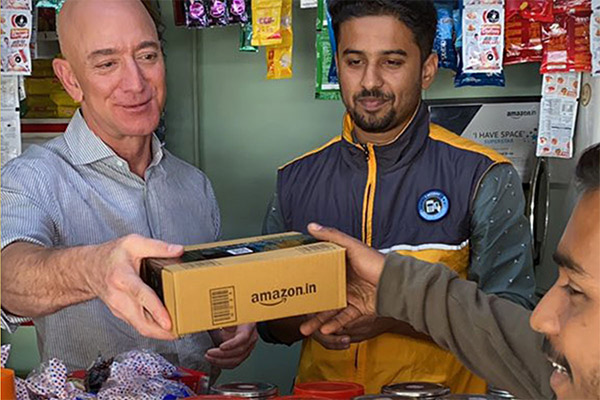
• When the country found itself in the grip of the nefarious Covid-19 pandemic and subsequent lockdown, kirana stores played a major role in tackling demand for essentials, while e-commerce firms had to cease operations. • As the country enters Unlock 1, digital majors like Facebook-Jio, Google and Amazon are exploring collaborations with kirana stores • India is at the cusp of an e-commerce revolution, with the market projected to reach US$ 84 billion in 2021 from US$ 24 billion in 2017. Also digital consumption is rising across categories post-lockdown. • On the other hand, kirana stores offer their own unique advantages, especially pertaining to the strong personal interface in their localities and understanding of customer needs. Therefore, both sides should explore possibilities of synergies to help each other. On 25th March’20 when the Prime Minister announced the imposition of a pan-Indian lockdown to prevent the rampant spread of Covid-19, it suddenly brought a halt to the e-commerce operations of numerous players all over the country. The government, however, was making all possible efforts to ensure that people in the country are not left stranded when it came to essential needs. Interestingly it was the local kirana stores that saved the day. Meanwhile, after this brief hiatus in their operations for nearly two months, a number of online platforms decided to join hands with neighbourhood mom-and-pop stores. Striking cases in point are names like Google, Facebook-Jio & Amazon. Google’s local inventory ad programme in India & 14 countries such as the US, UK, Japan, Brazil and few European nations can list products available at a store level on a real time basis in the search page itself. This Google endeavour allows consumers searching a product to see the variants available and their price in the nearest store. Simultaneously, it also helps brick-and-mortar stores in India adapt to changes in shopping behaviour in the post Covid-19 lockdown scenario. Similarly, Amazon, the world’s largest e-commerce firm has launched “Local Shops on Amazon”. While customers benefit from access to greater selection, faster deliveries and additional value-added services, local shops can transform themselves into digital stores. The e-commerce firm can tap local neighbourhoods at a time when people in India are only buying essential commodities. Another major development that grabbed a lot of eyeballs in this regard was the move by Facebook to invest ₹43,574 crore for a 9.99% stake on a fully diluted basis in Jio Platforms. The intention behind this strategic partnership was to mobilize India’s 10 million kirana stores through Facebook’s messaging app, Whatsapp. The synergy plans to tap on WhatsApp’s ubiquity (-400 million users) and Jio’s connectivity (-388 million subscribers). AN IDEA OLDER THAN THE INTERNET While this idea of collaboration between local retailers and virtual platforms might seem quite to be quite avant-garde, it is in fact older than you can imagine! For example, in 1989, two gentlemen in USA Andrew and Thomas Parkinson, pioneered advancement in grocery ecommerce space, Peapod. The company required customers to physically download software from CD-ROMs onto their computer to place a grocery order. Peapod would shop for your groceries at Jewel and deliver them to your home. This platform became the first grocer to launch digital coupons, personalized specials and online lists and was a frontrunner in the internet revolution. With 1.3 billion customer transactions, over 500 million digital offers and more than 3 billion personalized communications, Peapod has morphed into one of the best examples of grocery e-commerce in the nation. Another interesting international example is of Shoplink. Headquartered in Dublin, the platform brings together category management services and the promotional offers available to retailers, making it easier than ever to have the right range available at all times for their shoppers. India, too, is replete with such examples. Startups like METRO Cash and Carry and Jumbotail too have been trying woo kirana stores. METRO Cash and Carry, a German B2B retailer which entered India in 2003, allows store owners to buy wholesale goods, either online or from a store, and also offers point of sale devices, modules on how to run store operations more efficiently and simple analytics to better serve customers. Meanwhile, Jumbotail, India’s leading wholesale food and grocery platform, provides full-stack services for kirana stores, including storefront delivery and payments collection for its sellers. The startup also has a fintech platform that provides payment solutions and access to working capital credit from third-party credit providers to its patrons. Thus, while the conditions for such digital collaborations already existed in the country, COVID-19 and the consequent lockdown provided the added impetus. One thing that became apparent during this crisis was that albeit ‘branded’ categories such as fashion, consumer electronics, appliances have gone online, 90% of the Indian population still shops for a wide variety of their daily essentials from their neighbourhood bazaars, according to market research firm Nielsen. The firm estimates that there are 6.65 million kirana stores in the country and online grocery has only 0.1% penetration in the overall food and retail sector. However, India is also at the cusp of a revolution. According to a Deloitte India and Retail Association of India report titled ‘Unravelling the Indian Consumer’, the e-commerce market in the country will touch US$ 84 billion in 2021 from US$ 24 billion in 2017. The study attributes this to an increase in online shopping, smartphone usage and internet penetration across semi-urban and rural segments. TIME FOR NEW BEGINNINGS This partnership between kirana stores (alternatively local mom-&-pop stores in international lingo) and e-commerce players is a propitious situation for all the stakeholders involved. A recent analysis by research firm McKinsey elucidates that one in five Australians and more than half of all Thais are afraid to go outside to shop for groceries in light of the pandemic. The study adds that consequently, across countries, the frequency and share of online spending on food is rising between 16% and 70%. While the imposition of the lockdown dealt a crippling blow to the online grocery deliveries, this

“Office space absorption may decrease by 30-50% for 2021, with rents to see marginal decline”
Chintan Patel, Partner and Leader – Building, Construction and Real Estate, KPMG in India, contends that commercial realty/office space sector will witness short term disruptions, especially with social distancing and the rise of the work-from-home (WFH) phenomenon. He adds that it will be difficult to make reasonable projections for recovery before the last quarter of 2020 or till a vaccine is found. TPCI: What is the expected impact of the COVID-19 pandemic on India’s realty during 2020 (cost of inputs, demand, prices & profitability), considering weaker prospects for hotels and restaurants, malls, cineplexes, tourism, etc? Chintan Patel: Unlike other businesses, which are related to discretionary spends, be it malls, retail stores, restaurants, gyms, clubs – offices are different. Offices are an integral part of the economy, so there is no question of them getting completely closed. There will now be material change from the way commercial offices operated in the past. Discussions are taking place between the tenants and landlords on how to reduce their occupancy costs. Various mechanisms are being considered – waivers, deferment, abatement, adjustment, etc. The second point to consider, which will be a paradigm shift, is the entire work-from-home phenomenon. The margin of work-from-home is going to differ from organisation to organisation, sector-to-sector. There are companies doing 20-25% and at the same time, there are organisations that are planning for 70-75% of work-from-home (WFH). Whether this becomes a permanent phenomenon, that only time will tell. Definitely in the immediate future, we see WFH becoming a norm at least until a vaccine is available. TPCI: How do we look at the scenario for commercial real estate which in 2019 had a record high absorption and growth in rent? Chintan Patel: If you look at an estimate, 55-60 million sq ft of space got absorbed. Given that there will be a potential focus on managing the current business rather than growth, I think people will hold back from decisions pertaining to taking additional real estate space. Largely companies that have given commitments for space that could have been made in the pre-COVID-19 scenario, may take up new space. Experts project that there will be a decrease in absorption by 30-50% for the next year and the rent is expected to remain flat or decline marginally. When it comes to hospitality, hotels are continuing to function, albeit at a very low occupancy level. My sense is when the lockdown ends and business starts coming back, especially the go to destinations or the local market where people can drive to for domestic leisure/business, will start to see some uptick happening. This will largely be in the 2/3 star category, followed by 4/5 star category. Last on the list will be the large convention centres/MICE hotels or your resort and leisure destinations that they have to fly to. 2020 will be a subdued year for hotels, but we see things starting to improve in the next 12-18 months. This largely depends on whether a vaccine is found. Given the current situation, staying at a hotel will be more of a psychological decision as well. Until and unless people feel comfortable leaving their homes and staying in places, unless they believe that there can be in an environment that is completely sanitised or there is a vaccine, there can be no real uptick. But I see the urge of people to travel for leisure/business coming back in the medium to long term. There are serious challenges on the restaurant front as the government is not allowing them to open. Once they do open fully, the entire question will be around social distancing. Time will tell whether you are able to open with 50 per cent of the seats or more, or if it will be less than 50%. The second aspect is how comfortable will people feel eating outside. Cases of cooking/delivering staff testing positive for COVID-19 has even scared people from ordering/take out from these restaurants. Even the larger restaurant chains are facing this problem. Unless, they are able to give complete confidence to their patrons that they are operating in a very hygienic environment, it will be difficult for people to trust them. One of the things that I can see from malls and large restaurants chains is that they are asking their landlords to move from a fixed rental to a revenue sharing model to the extent possible. In times like this, at least they are not burdened with a fixed rental. TPCI: How does this hamper prospects of projects under construction? Also, what impact will the exodus of migrant labour have and what solutions are being worked out? Chintan Patel: Projects under construction face a two-pronged challenge. They have to be content with labour shortage as well as supply chain disruptions. So, the ability to procure steel, cement, tiles, electricals, fitouts, etc has been hampered. The constraints apply not only to their labour, but their suppliers’ labour as well. That is going to lead to a lot of delays in projects. Hon’ble FM has proposed that this event be considered under the ambit of force majeure under RERA, which is largely for the residential sector where people have to abide by the RERA timelines that they have given. There is a potential suggestion to extend the period by 6 months. That is a good suggestion, but my sense is that we will need more than 6 months to get over the whole thing. Part of the problem with labour going back is also the timing issue. We are headed for the monsoons, so the labour that went back will look to stay there, do their farming. MNREGA is there to support as well. As long as they return back post monsoon, this may not be much of a problem for real estate developers as it already slows down in the monsoon season, and new projects are anyways not getting launched. TPCI: What is the revival strategy that commercial real estate players are contemplating, and what are the
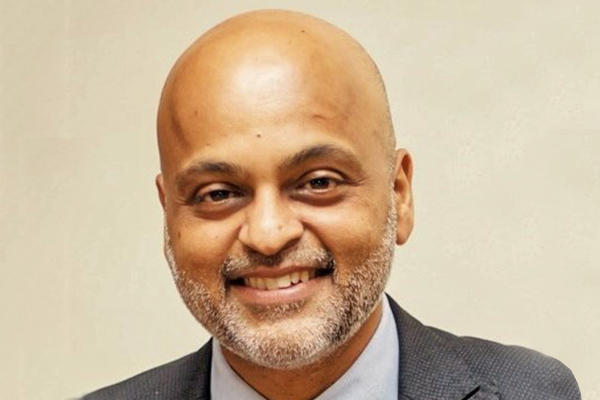
“Commercial realty slowdown will not last long”
Anshul Jain, Managing Director – India and South East Asia, Cushman and Wakefield assures that there is no structural issue with commercial real estate, despite the setback from the COVID-19 pandemic. It is actually a postponement of demand, rather than cancellation. He also points out to a major positive vis-à-vis the 2009 crisis – that the sector is sitting on far less vacancies at present. TPCI: How will weaker prospects for hotels and restaurants, malls, cineplexes, tourism, etc due to the COVID-19 pandemic impact India’s realty sector in 2020? Anshul Jain: Travel and tourism, I think will remain subdued until the fear of the virus stays. We have seen a lot of conflicting views in the market, vis-à-vis medicines coming in, etc. It seems that till the time the medicines or vaccinations are developed, market will remain subdued. Once the lockdown gets over with, retail could see a rather different scenario. Two things are going to happen in my view. Firstly, retailers are going to push an online-offline model more aggressively. While you have retail stores, there will be a lot more proclivity towards online. But I also think that you will probably see people coming back to retail, though it may take 3-4 weeks post the lifting of the lockdown. In China, as soon as the lockdown lifted, people thronged to retail stores, which was called revenge shopping. We were also talking to our South Korean counterparts. They say that in a span of around 4 weeks, retail trading was back at about 85-90% of what it was last year. This shows that the retail bounce-back has been faster. It may not necessarily happen in India in the same way, but that is the limited evidence I can offer. Non-F&B retail will bounce back faster in my view. It may not be at the same levels as last year, but it will probably be somewhere near. F&B is kind of harder. In China, people started going out to eat when the lockdown was lifted, but not in the same numbers. India may see a slower recovery in this segment compared to China, where the infections went down to zero, and people had the confidence to move out. If we see the curve flattening for COVID-19 strongly or the numbers dying down, you may see people going back to F&B in a big way. It is a tough environment for malls. A lot of larger mall owners are working towards solving it. They are partnering with retailer clients of theirs to see how they can resolve the 2-5 month problem. These mall owners are also working with banks on debt and interest payments, etc. The government also gave some leeway to the banks, then it’s upto individual negotiation. It is also not in the interest of the banks to let the retail mall owner go bust. TPCI: How has COVID-19 impacted the commercial realty segment and what are the challenges to its recovery? Anshul Jain: 2019 was probably one of the best years for commercial realty in India, while the present year is probably going to be one of the worst since 2009. When the worst comes after the best, the comparison gets tougher. The demand is obviously off, and this year, the demand is expected to fall significantly compared to last year. It is not really demand being cancelled; rather it is merely a postponement of demand. Right now, there is uncertainty on factors like how long the virus will continue, how it will impact the business, whether the recovery will be U-shaped/V-shaped, etc. Once the lockdown is finished and businesses come back and reassess, we will get a more accurate projection of demand for this year and next year. But this year will be tough. We also need to watch the recovery in the US, because the Indian realty market has a strong dependence on how the US economy performs. If the US economy starts lifting up sometime say in the third quarter, we can have a lag of 3-6 months in terms of demand returning back in commercial realty. I see a lot of rhetoric around work from home, but if you see in the last two weeks, a lot of articles are beginning to emerge on a range of issues on this trend. Millennials will face problems, because most of them are living in shared accommodations and joint families. Once the market opens up, there are a lot of distractions. It is hard to measure productivity in 80-90% of the industry. The remaining 10-15% is very tech-based. In Asia generally, the house setting is not ideal. While the bandwidth is good in India, there are challenges like electricity, etc. Work from home right now is a big rhetoric. I do think that companies will provide more flexibility going forward. Also as a result of social distancing, you may end up requiring more real estate, not less. There are some predicting the demise of offices. Companies like Twitter can ask their employees to work from home forever. That is OK for Twitter, they do not have those many employees. The kind of work that they do may be different. But it is not possible in 80-90% of the industries. I think the nature of demand will change. Less people may be required to come to office. More space would be provided per person for those coming to office. So I do not think WFH be a norm. It’s a hard thing to be at home 24/7. There are a lot of mental issues that people are not talking about. And if I am asking a person to work from home, I should also be paying for their home office furniture, broadband, etc. So all that may ultimately be costly. The good part about this particular time is that this is unlike 2008-09, when the supply was massive and the vacancy was high. In 2019-20, the vacancy is pretty low. I suspect that some firms will probably