• As compared to the other major agricultural exporting countries, India’s transportation and marketing costs are relatively higher. • Good transport and marketing systems would promote best possible returns to farmers, incentivise prices, increase profit margins and reduce price differences. • Transport and Marketing Assistance Scheme (TMA) by the Government of India provides financial assistance for transport and marketing of agriculture produce to boost export of agricultural commodities in specified target markets. • In the long term, establishment of a robust multimodal transportation system to connect India’s hinterlands will go a long way in making agri-exports competitive. Agriculture products are essential components in domestic as well as in international market because they are sources of food for human beings. Agriculture products include raw and finished products from various plants, animals and other live forms. Cost competitiveness is very essential factor in international market. In Indian agriculture, internal as well as external transportation costs are high, which directly impact agriculture exports. They also have an impact on the profit margin of farmers and affordability to consumers. As compared to the other major agricultural exporting countries, India’s transportation and marketing costs are higher. Distribution of agricultural produce from farm to market is critical as they are perishable commodities and situated at remote locations from the market. Therefore, a good transport system is important for agricultural marketing. Efficient transport influences the final market prices of the agricultural commodity. Good transport and marketing systems would promote the best possible returns to farmers, incentivise prices for agricultural produce, increase the profit margins and reduce price differences between the primary producer and end consumers. They will ensure availability of products at regional time and regional costs. Indian agriculture is shifting form product-based to market-based economy, where agriculture has to be a very competitive on the global platform. Hence transport and marketing issues of agriculture are catching the attention of policy makers. Transport and Marketing of Agri Products in India: Boosting agriculture exports is a necessity for doubling farmer’s incomes. In this setting, the Modi government introduced a new scheme for agriculture exports i.e. Transport and Marketing Assistance Scheme (TMA). Under this scheme, financial assistance will be available for transport and marketing of agriculture produce to boost export of agricultural commodities in West Africa, EU, Gulf, North America, ASEAN, Russia & CIS, Far East, Oceania, China and South America. This scheme reimburses a certain portion of freight charges and it also covers freight and marketing assistance for export by air as well as by sea. Transport and Marketing issues of Agri Products in India: Various experts have mentioned that transport costs have a serious role in recognizing the link between accessibility and agricultural development. For competent marketing of agricultural produce, it is imperative to have a good transportation system. Transport creates a good market for agricultural produce, advances interface among geographical and economic regions and unlocks different areas to economic focus. Transportation costs are dependent on various components such as commodity type, efficiency of the transport and marketing sectors and travel distance. High transport costs also affect the working capital cycle of exporters. The present policy focus indicates the relevance of transport issues to India’s agricultural competitiveness. Potential impact of the scheme on Farm Products: The scope for exports of agricultural products from India is very high. India is an agricultural economy and thus has abundant agro products and resources. On the other hand, countries like the US, Canada and Europe import agro products on a large scale from India and other Asian countries. Since export destinations are far away, hence transportation cost is always making an impact on product costing and ultimately on product competitiveness. Definitely, there will be a positive impact of the Transport and Marketing Assistance Scheme (TMA) on Indian farm produce. It will help make the goods more competitive in foreign markets, reduce transportation cost of agriculture products, stimulate Indian farm exports, help meet India’s agri export potential, enable farmers to get the best possible returns, enable brand recognition of Indian products in the world market and ensure expansion of the agri trade export basket. TMA would mitigate the hindrance presented by higher costs of transportation for exports of identified agriculture products due to transhipment. In the long term, establishment of a robust multimodal transportation system to connect India’s hinterlands will go a long way in making India’s agricultural produce competitive in world markets. Dr. Parashram Jakappa Patil is currently an Advisor/Consultant at APEDA. He has also served as the President of The Institute for Natural Resources, Kolhapur. He is an export policy consultant for the Ministry of Commerce and Industry. He has received many awards and accolades lately; some of which include Young Researcher Award and Best Citizen of India Award.

Automobile sector: Looking ahead to 2020
• Two decades of robust growth have propelled India from a net importer to a prominent exporter of automobiles. • Indian automobile exports witnessed strong double-digit growth of 14.5% in 2018 to reach 4,595,000 units. • All sectors within the automobile sector reported a positive growth in exports during 2018 excluding passenger vehicles • The slowdown in demand and production of automobiles is expected to be temporary, and the sector is projected to pick up with improvement in the economy. At the beginning of the 21st century, the Indian automobile sector was at its nascent stage. It is now recognized as one of the main pillars of the Indian economy. The industry contributes majorly to the growth and development of the Indian economy and provides direct as well as indirect employment for both skilled and unskilled labour. The Indian automotive industry has undergone a significant transformation in terms of profitability and sustainable growth. Currently, the industry contributes around 7.5% in the country’s Gross Domestic Product (GDP) and this contribution is projected to increase to 12% by 2026 and generate an additional 65 million jobs as per the Automotive Mission Plan (AMP) 2016–26. The key factors which have contributed to the industry’s growth include rise in aftermarket sales, improved consumer sentiment, easier access to credit and rising exports. Two decades of robust growth have propelled India from being a net importer of automobiles to a leading manufacturer and exporter of vehicles and components. In India, the growth of the automobile sector is also attributed to strong government support. Initiatives like Make in India, NATRIP, FAME and other conscious policy interventions over the past few years have helped the Indian automobile market in becoming competitive, brought several new players, increased the capacity of the industry and have elevated India’s position in the global automobile market. The Indian government encourages foreign investment in the automobile sector and allows 100% FDI under the automatic route. According to the Department for Promotion of Industry and Internal Trade (DPIIT) data, the automobile industry has received FDI worth US$ 21.38 billion from April 2000 to March 2019. Currently, the automobile industry manufactures nearly about 25 million vehicles out of which 3.5 million vehicles are exported. Globally, India being the largest manufacturer of the tractors, the second-largest manufacturer of buses and third-largest manufacturer of heavy trucks, holds a strong position in the international market. Indian automobile exports witnessed strong double-digit growth (14.5 per cent) in fiscal 2018, exporting a total of 4,595,000 units. The growth was mainly driven by commercial vehicles and three-wheelers. Automobile exports account for 4.3% share in India’s total exports. The overall automobile exports have increased from 4.04 million in FY 2017-18 to 4.63 million in FY 2018-19. Due to factors like low-cost steel production and availability of skilled labour, India is able to produce automobiles at low cost and has become one of the major automotive export hubs in the world. Table 1: Exports of Indian Automobile Industry Units: In thousands 2015-16 2016-17 2017-18 2018-19 Exports 3,643 3,480 4,042 4,629 Growth % 1.95 -4.47 16.15 14.5 Source: SIAM The demand for automobiles, which has increased over the years, is linked to both economic growth and rise in income levels. It is inversely related to the interest rates and fuel prices as a majority (around 85%) of the total vehicles are bought on credit. However, the Indian automobile industry is experiencing a slowdown in the domestic demand for the past few months resulting in a massive inventory pile-up, even as the rise in export demand (by 26% in Q1 FY 19) has given some relief to manufacturers. The overall production of the automobile industry has declined by 18.29% to 24,06,640 units in September 2019 while exports rose by 0.68 per cent to 4,17,232 units. Sales declined for 11 consecutive months as of September 2019, with a marginal increase in October due to the festive season. Sensing the stress from the supply side of automobiles industry in the domestic market, the Indian government has stepped-up on stimulus measures like easing the liquidity in the banking system, reducing corporate tax and announcing SOPs to exports. According to data released by the Society of Indian Automobile Manufacturers (SIAM), all the segments within the automobile sector reported a positive growth in exports during 2018 excluding passenger vehicles (See table 2). The two-wheeler sector registered a growth of 23% while the three-wheelers sector recorded 55.96% growth. Trend in automobile production and exports in India EXPORTS PRODUCTION EXPORTS PRODUCTION Category 2017-18 2017-18 2018-19 2018-19 Passenger Vehicles 7,48,366 40,20,267 6,76,193 40,26,047 Commercial Vehicles 96,865 8,95,448 99,931 11,12,176 Three Wheelers 3,81,002 10,22,181 5,67,689 12,68,723 Two Wheelers 28,15,003 2,31,54,838 32,80,841 2,45,03,086 Quadricycle* 1,605 1,713 4,400 5,388 Grand Total 40,42,841 2,90,94,447 46,29,054 3,09,15,420 Source: SIAM, figures in actual units Between January-December 2018 around 701,157 passenger vehicles were exported from India as against 740,095 passenger vehicles recorded during 2017, a decrease by 5.26%. The top five passenger vehicle exporters were Ford India, Hyundai Motor, Maruti Suzuki, Volkswagen India and General Motors with an aggregate contribution of around 83%. These top five exporters experienced a slump in exports except Hyundai Motor whose in total exports increased to 22.8% in FY 18, registering a growth of 2%. The slowdown in passenger vehicles exports last year was mainly because the shipments to major markets like Indonesia and Sri Lanka had reduced. Though the commercial vehicle exports have increased in 2018-19, but they are facing challenges to expand exports in the last few years due to disruptions such as the implementation of GST, NBFC crisis, increase in axle load norms and the BS VI transition. The slowdown in demand and production of automobiles in India is expected to be temporary, and the sector is projected to pick up with improvement in the economy. With an increasing population and rising disposable incomes, India is expected to have one of the fastest-growing automobile markets. Moreover, the rapidly globalising world is further opening up newer avenues for India’s automobile sector to develop
MSMEs need protection from foreign players
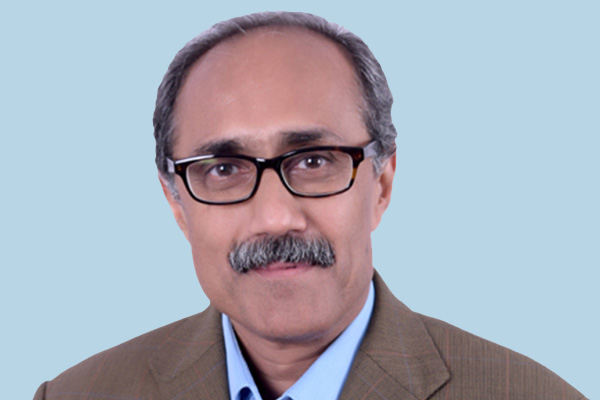
Samir V Limaye, President, Institute of Packaging Machinery Manufacturers of India, tells TPCI that the economic slowdown has tremendously impacted the capacity utilisation of each factory. He also speaks about the need to monitor the import of equipment from countries with which we have an MFN treaty, since it could be a channel to reroute goods from China. TPCI: What kind of considerations does the packaging industry have when catering to the different needs of the customers in India & abroad? Mr. Samir V Limaye (SVL): In terms of packaging machinery, the considerations are fairly simple. In terms of the speed, sophistication and styling – most of this equipment is high value equipment. These machines typically have a productive life ranging between 10-20 years, where an end user (food/pharma/beverage company) is using these machines. So, maintenance, life of the equipment, spare parts as well as service support are primary consideration. In terms of the buying behaviour of the customer (it is an industrial customer & this is a B2B sale), the speed, sophistication and style are the main considerations. TPCI: What are the dynamic trends emerging in technical standards pertaining to packaging? How does the institute help in generating awareness about the same? SVL: As a part of an institute, which is representing machinery manufacturers in India, we work very closely with institutes like Indian Institute of Packaging or SIA School of Packaging in Mumbai; as well as various other institutes which deal with GMP requirements, USFDA requirements, or in terms of certification or accreditation and consultancy. More specifically, for food, there are different standards and there’s a long list for that. Pharma & beverages industries also have specific standards. In fact, as we see, as machine manufacturers, most of these standards are going to converge and eventually all human consumption items – be it food, beverages, pharma or cosmetics – are going to have one unified standard, which will emerge over a period of time. Currently, our association has not made any checklist/standard, which we can issue. We mostly follow the global standards and ask our member companies to follow those standards, which are dictated by the international community in terms of design qualification documents, process qualification documents, & insolation qualification documents. TPCI: What are the major challenges faced by the Indian packaging industry in India? How does it fare on an international scale? Does it face any significant tariff or non-tariff barriers? SVL: Since the nature of the business is building capital machinery, the capital machines need to have perspective w.r.t. the kind of application, product packaging, cost parameters, safety standards, etc. that they need to meet. Ultimately, it boils down to innovation and R&D and understanding the life cycle of an individual product. I am referring here to a packaging machine – a coffee packing machine or a rice packing machine or a machine which is used for packing ginger/tomato paste. We need to understand the behaviour of the product, which needs to be packed, in line with the speed & sophistication to deal with that product. A huge amount of investment is needed for R&D in terms of developing pictures, fabrication, tooling, having small & medium enterprise who act as our vendors. So, there is a huge value chain that actually helps machine manufacturers to make machines and sell in international market. So, managing that supply chain and manufacturing those investments for innovation & R&D are the main challenges that we see for Indian companies. TPCI: What impact has the slowdown of the economy had on the packaging industry? How is the industry trying to tackle it and what suggestions does it have for the government? SVL: All the members of IPMMI are in the business of providing capital machinery. Capital machinery is purchased only when there is a capacity expansion being planned. It is purchased only if there is a new variant or an SKU (stock keeping unit) or a new product being launched and the current machinery is not being able to support that. Thirdly, capital machinery is only purchased when the life of the equipment is already over and you would like to replace it. Economic slowdown, in terms of the human consumption, as we see in the last few months, has tremendously impacted the capacity utilisation of each factory. If food, pharma, beverages & cosmetics industries are just operating at just 50-60% of the capacity utilisation, no one is going to think of capex. Typically, capex gets triggered the moment it reaches 75-80% of its utilisation. So, companies plan in advance, keeping in mind the current scenario & situations. In the context of tariff and non-tariff barriers, I would like to say that there was a time, when we would have tremendous pressure from Chinese imports of packaging machines. Currently, however, we do not see those problems; but we need to review that list once again. There are specific categories where privileges were given by our government to Chinese machinery manufacturers, which impact our MSME & SME machine manufacturers. TPCI: While other industries like steel, pharma, textiles and electronics have expressed reservations on India’s entry into RCEP (which is temporarily on hold), what is the viewpoint of the packaging industry? SVL: If the situation changes, where we have the Most Favoured Nation relationship with ASEAN or a South East Asian country and a dominant player like China gives equipment to those countries, and they send the equipment to India because of the MFN treaty, it is definitely going to impact us. A few days ago, we were very seriously reviewing that list where the import duty and the landed cost of some of the machines for food and processed food related industry were so low that it was a threat to India’s MSMEs & SMEs in this sector. Since MSMEs are the backbone of our country, they need protection from foreign players. Samir V Limaye is currently serving as the President of Institute of Packaging Machinery Manufacturers of India and

Cluster approach to textile sector
• The Scheme for Integrated Textile Parks (SITP) was launched in 2005 to encourage private investments and employment generation in textile sector. • The scheme targets industrial clusters/locations with high growth potential, which require strategic interventions by way of providing world-class infrastructure support. • A total of 59 textile parks have been sanctioned under SITP by the Ministry of Textiles, out of which 22 textile parks have been completed. • Under the Scheme for Integrated Textile Park (SITP), some 26,282 people in Gujarat got employed in textile parks followed by Maharashtra (22,910), Andhra Pradesh (19,137) and Tamil Nadu (9,995). The Scheme for Integrated Textile Parks (SITP) was launched in 2005 to encourage private investments and employment generation in textile sector by facilitating world class infrastructure for common facilities, such as roads, water supply treatment and distribution network, power generation and distribution network, effluent collection treatment and disposal system, design centre, warehouse, first aid centre, etc. SITP would create new parks of international standards at potential growth centres. This scheme envisages engaging of a panel of professional agencies for project identification and execution. Each Integrated Textile Park (ITP) under the scheme would normally have 50 units. The number of entrepreneurs and the resultant investments in each ITP could vary from project to project. However, aggregate investment in land, factory buildings and Plant & Machinery by the entrepreneurs in a Park shall be at least twice the cost of common infrastructure proposed for the Park. The new ITPs being set up under the Scheme may be excluded from the SEZs. The scheme targets industrial clusters/locations with high growth potential, which require strategic interventions by way of providing world-class infrastructure support. The project cost will cover common infrastructure and buildings for production/support activities (including textiles engineering, accessories. packaging), depending on the needs of the ITP. There will be flexibility in setting up ITPs to suit the local requirements. The Government is implementing the Scheme for Integrated Textile Park (SITP) which provides support for creation of world-class infrastructure facilities for setting up of textile units, with a Government of India (GoI) grant of up to 40% of the project cost subject to a ceiling of Rs. 40 crore. However, GoI grant is up to 90% of the project cost for first two projects (each) in the States of Arunachal Pradesh, Assam, Manipur, Meghalaya, Mizoram, Nagaland, Tripura, Sikkim, Himachal Pradesh, Uttarakhand and Jammu & Kashmir; with ceiling limit of Rs. 40 crore for each textile park. The Scheme is demand driven. A total of 59 textile parks have been sanctioned under SITP by the Ministry of Textiles, out of which 22 textile parks have been completed and rest are under various stages of construction. The details are given below at Annexure I. The slow progress in implementation of the textile parks under the Scheme has been attributed primarily to delay in obtaining land and other statutory clearances to the parks from State Governments and slow fund mobilisation by the textile parks. Regular meetings are held at senior levels in the Ministry of Textiles with various stakeholders of the textile parks and State Government representatives to resolve any issues faced by them. Regional conferences are also conducted by the Ministry of Textiles on periodic basis. Two textile parks have been sanctioned in Uttar Pradesh so far, under the Scheme. The details are given at Annexure-II. However, no fresh proposal for setting up textile parks in Uttar Pradesh and Bihar under SITP is pending for consideration in Ministry of Textiles. ANNEXURE- I S.No. Name of the Park Location State 1 Islampur Integrated Textile Park Islampur Maharashtra 2 Latur Integrated Textile park Latur Maharashtra 3 Amitara Green Hi-tech Textile Park Ahmedabad Gujarat 4 Karanj Textile Park Surat Gujarat 5 Shahlon Textile Park Surat Gujarat 6 Palsana Textile Park Surat Gujarat 7 Shanti Integrated Textile Park Surat Gujarat 8 Satyaraj Integrated Textile Park Ichalkaranji Maharashtra 9 Dhule Textile Park Dhule Maharashtra 10 Shree Ganesh Integrated Textile Park Dhule Maharashtra 11 Aalishan Eco Textile Park Panipat Haryana 12 Guntur Textile Park Guntur Andhra Pradesh 13 Tarakeaswara Textile Park Nellore Andhra Pradesh 14 Brandix India Apparel City Private Limited Vishakhapatnam Andhra Pradesh 15 Gujarat Eco Textile Park Limited, Surat Gujarat 16 Mundra SEZ Textile & Apparel Park Limited, Kutch Gujarat 17 Fairdeal Textile Park Pvt. Ltd., Surat Gujarat 18 Vraj Integrated Textile Park Limited , Ahmadabad Gujarat 19 Sayana Textile Park Ltd., Surat Gujarat 20 Doddabalapur Integrated Textile Park, Doddabalapur Karnataka 21 Metro Hi-Tech Cooperative Park Limited, Icchalkaranji, Maharashtra 22 Pride India cooperative Textile park Limited, Icchalkaranji, Maharashtra 23 Baramati Hi Tech Textile Park Limited, Baramati, Maharashtra 24 Purna Global Textiles Park Ltd. Hingoli Maharashtra 25 Lotus Integrated Tex Park Barnala, Punjab 26 Rhythm Textile & Apparel Park Ltd, Nawanshehar, Punjab 27 Ludhiana Integrated Textile Park Ltd, Ludhiana Punjab 28 Kishangarh Hi-Tech Textile Weaving Park Limited , Kishangarh, Rajasthan 29 Next Gen Textile Park Pvt Ltd , Pali, Rajasthan 30 Jaipur Integrated Texcraft Park Pvt Ltd, Jaipur, Rajasthan 31 Palladam Hi-Tech Weaving park, Palladam, Tamilnadu 32 Komarapalayam Hi-Tech Weaving Park Ltd. , Komalarapallyam, Tamilnadu. 33 Karur Integrated Textile Park, Karur Park Tamilnadu 34 Madurai Integrated Textile Park Ltd, Madurai, Tamilnadu 35 The Great Indian Linen & Textile Infrastructure Company, Uthukuli, Tirupur District Tamil Nadu 36 Pochampally Handloom Park Limited, Bhuvangiri Telangana 37 White Gold Textile Park, Rangareddy Andhra Pradesh 38 Hosiery Park Howrah West Bengal 39 Prag Jyoti Textile Park Darang Assam 40 Hindupur Vyapar Apparel Park Limited Ananatpuram Andhra Pradesh 41 MAS Fabric Park (India Ltd Nellore Andhra Pradesh 42 Surat Super Yarn Park Limited, Surat Gujarat 43 Kejriwal Integrated Textile Park, Surat Gujarat 44 J&K Textile Park, Kathua J&K 45 Gulbarga Textile Park, Gulbarga Karnataka 46 SIMA Textile Processing Centre, Cuddalore, Tamilnadu 47 EIGMEF Apparel Park Ltd., Kolkata West Bengal 48 Asmeeta Infratech Ltd. Thane Maharashtra 49 Deesan Infrastructure Pvt. Ltd. Dhule Maharashtra 50 RJD Integrated Textile Park Pvt. Ltd. Surat Gujarat 51 Kashmir Wool and Silk Textile Park Ghatti J&K 52 Farrukhabad Textile Park Farukkhabad Uttar Pradesh 53 Eco-Tex

Technology, the fuel for employment
• Technological transformations create significant value for producers, consumers & other stakeholders, thereby reshaping value chains across the globe. • While technology has definitely made our lives easier, there are fears that it has become a threat to the human race as automation might lead to mass unemployment. • However, such fears are misplaced as it is quite implausible for automation to annihilate complete occupations. According to EY, digital technology will contribute 20% to India’s nominal GDP, sustaining 60-65 million jobs by 2025. • To navigate this dynamic business environment & tap the abounding opportunities that these technologies offer, we need to impart new skills & training to workers. Medicine, health, banking, agriculture, logistics, education, retail, energy – there’s hardly any sector that has not been smitten by the zeal for innovation or left unimpacted by the imprints of technology. In fact, with the advent of a wave of interesting technologies like automation, artificial intelligence, Internet of Things, cloud computing, robotics and blockchain technology, staying abreast and adapting to dynamic technology trends is the linchpin to the success of any economic/scientific venture. What makes this a stepping stone for any commercial enterprise’s success is the fact that technological transformations create significant value for producers, consumers & other stakeholders, thereby reshaping value chains across the globe. For example, travelling the world is now literally just a click away as various things such as visa appointments, making hotel reservations and buying tickets to visit prominent destinations on your itinerary can be conveniently done through the internet. Similarly, thanks to the GPS, commuting on an unknown route has become easier. Also, the proliferation of laptops, tablets, and smartphones has created flexible work environments like freelancing, work-on-demand, and work-from-home. While technology has definitely made our lives easier, propelled economic growth and enhanced our standard of living, there are some who fear that technology has become a threat to the human race. One of the apprehensions cited for this is that technologies like automation and robotics might lead to job destruction and technological unemployment. However, such fears are misplaced according to the Global Commission on the Future of Work (ILO, 2017). As the organisation explains, such assessments tend to overestimate the potential adverse effects of automation by ignoring the economic feasibility of these options. Further, it is quite implausible for automation to annihilate complete occupations. There are quite a few examples to validate this observation. One oft cited example is the introduction of ATMs in US in the 1970s. Albeit it was widely anticipated that ATMs would put an end to the need of bank tellers, in reality, there was an increase in the number of bank tellers in America. Similarly, in France, within 15 years of the introduction of internet, about 1.2 million new jobs were created. According to ILO, the shrinking operational & transactional costs owing to these technological innovations can stimulate the demand for a range of tasks; for example a financial services advisor. This is something which was even evident in Henry Ford’s assembly line production – not only did the division of labour create an efficient system of production which brought down the number of working hours & the cost of production significantly; it also led to the creation of new types of employment opportunities (white collar jobs) like supervisors and managers. Closer home, it is estimated that digital technology will contribute 20% to India’s nominal GDP, sustaining 60-65 million jobs by 2025. Thus, India can be a major game-changer in this global digital ecosystem, provided it nurtures this fledgling system. When translated into numbers, according to the reports, just over 40% of the population has internet subscription today. At the same time, this seismic shift will require retraining, reskilling and redeploying workers since some occupations will be rendered obsolete and some new ones will be created. But overall, this job creation will compensate technological unemployment, provided this shift is effectively managed. To navigate the labour market & tap the abounding opportunities that these technologies offer, India needs to evolve education systems and learning, which is well suited to the changing needs of the workplace. Imparting knowledge and quality education in Science, Technology, Engineering and Math (STEM) fields is one of the first and foremost ways of doing this. The government could take a cue from United Kingdom’s Technical & Vocational Education & Training, launched in 2016 to integrate skills and higher education at the level of policy, funding and implementation. In India, a similar model is being practiced by the Tata Institute of Social Sciences (TISS) – TISS ’s School of Vocational Education (TISS-SVE) started in 2012, with a Rs 10 crore grant from the Ministry of Human Resource Development. Over the years, the programme has enabled employment for over 5,000 students. An investment in skilling youth is an investment in the future of India. A research by Simplilearn & People Matters covering over 100 leading enterprises across sectors revealed that while 87% of companies agreed on the importance of digital skilling of their workforce, 65% did not have a clear roadmap to achieve this goal. Companies should be active stakeholders in imparting training & education to workers to prepare them for the digital age, by orchestrating training sessions, seminars, internship programmes and workshops for their employees. They could also motivate employees to undertake such short term courses by linking training outcomes to career progression.

Diaspora can get us closer to India
India and Australia are looking for ways to expand their bilateral relationship. In his interaction with Trade Promotion Council of India, Stephen Manallack, Chairman, Genesis India-Australia Horticulture Project and former President, Australia-India Business Council had constructive discussion on major avenues of Australia-India collaboration, especially in the food processing sector. Following are a few excerpts from the interview: TPCI: India recently decided to opt out of the 16-nation RCEP agreement. What is your view on India’s specific concerns pertaining to safeguards for its domestic industry? Stephen Manallack: I am very disappointed to say that the RCEP negotiators have not adapted to make it possible for India to stay; that’s my view. RCEP negotiators should have created some conditions where India could have been the part of the agreement. Moreover. RCEP as a deal would make India vulnerable to Chinese products. Everything would be made in China and dumped here, virtually. That is a genuine concern. To me, I would like to see the negotiators to make some allowance for the differences between the two countries. I would like to see great flexibility by the RCEP countries to make India back; and PM Modi back, because he is an innovator. He is an energizer. TPCI: What are the reservations being expressed by other countries regarding India’s demand for services mobility within the RCEP bloc? What is a possible consensus for this issue? SM: Well, it is a bigger issue for Australia specifically and I will explain it this way: Whenever we have been negotiating an agreement with India, which we have never been able to finalize, I think we have not been flexible enough. However, we are already open to Indian services. For instance, in Melbourne, you will see offices of TCS, Infosys, Wipro, HCL etc. It is more like a downtown in New Delhi. It is just the same! The smell of the Indian food available there is just sensational. Thus, very evidently, we are open to the services sector of India. Australia outsources a lot of back office work to India, as well. I think it is a mutually beneficial relationship. I don’t think we need to make any major consensus on that. TPCI: Over the years, Australia’s exports to India have grown, but been largely dominated by mineral fuels and education services. What are the major sectors where you see potential for Australia to expand its exports? Conversely, what opportunities does Australia offer Indian companies for bilateral trade and investment? SM: Education, I think, even though it has been very successful, is not very sophisticated as a relationship. It is purely transactional. The two countries need to build deeper and meaningful relationships. I think there should be more collaboration rather than transactions. We should think as to how we both can collaborate as two countries. Therefore, we need a closer approach for better outcomes. Furthermore, we are happy with our exports to India. However, we have enormous amount of agri-business in Australia. That is where we can expand and also look for some potential collaborations with India and come out with some fruitful innovations altogether. TPCI: Considering that around 700,000 people of Indian origin are now Australian citizens, what role can they play in enhancing bilateral business relations in your view? SM: India is a topmost source of migrants and international students at any given time. Worth mentioning, India is fast growing its tourism industry. That is enormous. You won’t believe that Diwali is celebrated hugely in Melbourne. We have an Indian film festival happening in Australia that brings all the Bollywood stars. In fact, some of the films are made as a joint productions between Australia and India, which is a great mark of creativity. Moreover, if we talk of the Indian migrants or diaspora present here in India and the potential associated with it, I think this can definitely help us get closer to India, as they are well connected with the homeland and understand the market better. I think, it is up to us. It is we who have to think over this and not the Indians. TPCI: Agriculture is an important area for potential collaboration between the two countries. How does Australia view the potential of India’s food processing sector, and what kind of win-win collaborations are they seeking? SM: Australia brings diversity in its production and niche marketing with F&B products. This is something which is growing in the Indian market as well, probably owing to the fact that it generally has a stronger base of middle class population. India sources cherry tomatoes, tomatoes and other processed foods in bulk quantities. Thus, I think we can do a lot of things together. It is just a matter of finding it out that how we can make it work. TPCI: The negotiating positions of India and Australia are deemed too far apart for an early conclusion to the CECA. What are the major reasons for the impasse and how can it be resolved? SM: Both sides have their own reasons for delay. I am not happy about that. I want more flexibility from Australia. I am not fully confident that Australia and India can resolve a complete economic free trade agreement. However, I opine that let us not wait to a situation where we can grieve politician to politician about the closer economic cooperation agreement. Let us just find the ways of doing business together. When it is legal to do it now, let us just do it. TPCI: India-Australia relations are defined as being largely characterized by Cricket, Commonwealth and Curry. What is your view on the evolution of cross-cultural relations between the two countries and how they have panned out in the business sphere (i.e. bilateral business engagements, people management, etc.)? SM: Cross-cultural understanding is the key to the future of these two countries. My view is, we don’t understand each other very well right now. We think we do, but I think, particularly for the Australian side, we need to learn
“India needs more preparedness”
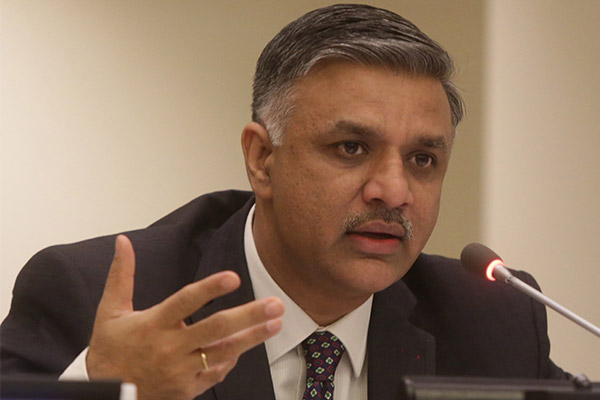
Prof Sachin Chaturvedi, Director General at the Research and Information System for Developing Countries (RIS), feels that India needs to carefully reassess its approach to RTAs as well as the specific fears of domestic industry. Ques: How do you view the recent development on RCEP, where 15 countries have concluded negotiations on all the 20 chapters? How does India’s opting out affect the larger objectives of the RCEP? Prof Sachin Chaturvedi: It was not easy for the government and for the Prime Minister, in particular, to keep away from the joining of RCEP. It was an extremely difficult moment. It was courageous on the part of the PM to come out of it. As a nation, we should acknowledge this move, realizing that more preparedness would be required for global competitiveness. Explicitly, it was not an easy decision. India’s withdrawal from RCEP does not bring down the quality of the agreement, given that all other members except India were in some sense committed to regional FTAs with each other and additional commitments as part of the RCEP deal would be readily absorbed. India also has bilateral agreements with ASEAN, Singapore, Japan and South Korea. India has not signed any trade agreement with China, Australia and New Zealand so far. Also, India’s review of its trade agreements in the region and working closely with the partners should enable it to leverage the commitments it seeks from the RCEP members. Ques: India has not signed on the RCEP due to certain concerns like rising imports from China, protection of domestic industry and mobility for services professionals. Are these concerns addressable? If so, what is the possible roadmap for satisfactory redressal of these concerns in your opinion? Prof Sachin Chaturvedi: Systemic course correction is required. There were 28 rounds and two heads of state level summits. Our preparedness through resolving the issues with the sectoral agencies should have been up to the mark and full proof. A main area of concern for competitiveness of Indian products is post-production costs. We should also asses our ability to meet our infrastructure deficit. Ques: Given India’s unique economic trajectory and business ecosystem, what is your view on how the RCEP would benefit India, despite these concerns? Prof Sachin Chaturvedi: There are two to three tracks to remain engaged with RCEP member countries. The first and foremost is to engage them bilaterally. Much more diplomatic efforts are required to remain engaged with the process of RCEP itself for arriving at a solution in the near future. In no circumstances, India should give out any impression that we are withdrawing from one of the most dynamic regions of the world. Ques: What is the blueprint for India in global trade agreements if it indeed stays out of RCEP? Should India negotiate its trade issues bilaterally now like US? Prof Sachin Chaturvedi: India should revisit its policy of free trade agreement. The trade quantum has gone up; imports and exports have also gone up in the case of all the FTAs that India has signed in the past. FTAs are a good instrument for enhanced connect with other economies. They have also enhanced effectiveness and efficiency. India should review its FTA policies. However, having faced difficulties in leveraging the RCEP, it is natural that India needs more preparedness and assessment of its sectoral competitiveness and gains when it comes to negotiating FTAs with advanced country markets. Ques: As it has moved out of RCEP, which key trade agreements should India pursue aggressively in the current context for enhancing its external trade, and why? Prof Sachin Chaturvedi: It is not true that India has moved out of the RCEP and is only buying time. India is not looking at disengaging from the RCEP as a region. Equally important is to see how Indian institutions have fallen in line with global commitments that have geostrategic and geopolitical implications. Production and post-production competitiveness of Indian products has to be boosted to promote exports, which remain critical to maintain a favourable balance of payment situation and creating jobs. Ques: There is a general consensus that the window is fast closing for Indian industry to boost its competitiveness if it stays out of any major trading blocs? What is your view on this and how can this be addressed? Prof Sachin Chaturvedi: Within the country, open dialogue consultation should be held with the sectoral interlocutors such as, dairy industry, automobile components, IT industry, agriculture commodities, etc. We should draw out clear lessons out of the consultations and understand the precise scope and contours of their fears. We also need to identify ways and means to come out of that. Prof. Sachin Chaturvedi is Director General, Research and Information System for Developing Countries (RIS), a New Delhi-based policy research institute, supported by the Government of India. He was Global Justice Fellow at the MacMillan Center for International Affairs at Yale University. He has done his Ph.D. in Economics. He works on issues related to development economics, involving development finance. He is also on the board of the Reserve Bank of India. Prof Chaturvedi has authored/edited 10 books, apart from contributing chapters in edited volumes and publishing several research articles in various prestigious journals.

Policy prescriptions for cashew economy
• India is a global leader in world cashew economy. At present cashew farmers are getting a below standard price for their agriculture produce due to the cashew import policy. • Further, cashew is imported to meet the domestic needs of the country. Imported cashews are cheaper than those that are domestically produced. To make matters worse, unfortunately, the Cashew Export Promotion Council of India has decided to charge NIL import duty on cashew. • This will drastically increase import of raw cashew and reduce the demand for domestic cashew. This is the reason for low prices this season in Indian cashew market. • At the same time, the government should frame farmer’s centric policies such as promoting Geographical Indication of cashew, value added products like cashew apple wine, juice, candy etc. For doubling farmer’s income by 2022, agriculture commodity-specific policies are required. One instance of this is India’s cashew sector. India is a global leader in world cashew economy. But at present, cashew farmers are getting a below standard price for their agriculture produce due to the cashew import policy. For the current year, cashew farmers are supposed to receive a MSP (cost of production + 50% profit) of Rs 161.70 per kg. Last year, the rate was Rs 164 per kg. However, at present, this year (2018-19), the rate is Rs 125 per kg. This is not a good sign for the Indian cashew industry generally and cashew farmers in particular. Cashew Import and Export Policy Though, India is one of largest cashew producing countries in the world, domestic raw cashew production is not sufficient to meet the demand of processing units and hence they have to import raw cashew. Import duty has been reduced from 5% to 2.5% so that units could get the raw material (raw cashew) at cheaper prices. Imported cashew price is cheaper than the domestic cashew price by Rs 27.65 per kg. Furthermore, the Cashew Export Promotion Council of India has decided to charge NIL import duty on cashew. This will drastically increase the imports of raw cashew and reduce the demand for domestic cashews. This is the reason for low prices in this season in the Indian cashew market. India has its own brand in world cashew economy because Indian cashew has unique taste, which is not found anywhere in the world. This unique rich taste of Indian cashew brand has great demand in world market. However, using of imported raw material hampers the Indian cashew brand, as it differs in taste and at the same time, it is disturbing the rural cashew economy. Thus, there is need to relook at the cashew import policy, which will maintain the fine balance between farmers and cashew processors. Farmer-centric policies At the same time, the government should enact some farmer oriented policies in order to check this demand deficit. Indian cashew business is very sensitive and complicated because 50% of cashew processing units depends on imported raw material and also there is a need to protect the Indian brand of Cashew (Indian taste) and welfare of cashew farmers. India is dictating the world cashew economy in terms of production, processing, export and import. It plays a major role in the rural economy by providing employment, uplifting socio-economic backward class and developing small and micro cashew enterprises. Cashew harvesting season just has been passed and farmers have got low prices for their produce due to cashew processing units imported raw material at large quantity from outside. It has badly affected on livelihood of cashew farmers. Hence farmer-centric policies are needed such as promoting Geographical Indications of cashew, value added products like cashew apple wine, juice, candy etc. At present, around 90% of cashew apple is wasted, which could provide an alternative income source to farmers if it is processed. Minimum support prices of cashew should also comprise climate change expenses, labour costs, damages done by wild animals, etc. Dr. Parashram Jakappa Patil is currently an Advisor/Consultant at APEDA. He has also served as the President of The Institute for Natural Resources, Kolhapur. He is an export policy consultant for the Ministry of Commerce and Industry. He has received many awards and accolades lately; some of which include Young Researcher Award and Best Citizen of India Award.

Assam tea industry faces economic crisis
• Assam tea industry is at the peak of an economic distress and on the verge of a crisis. It’s a big economic setback for the agricultural economy of the nation. • The cost of production of tea has been growing by a compounded annual rate of 10% for the last 10 years, while the tea prices are increasing by a compounded annual rate of 6% only. • Specific issues plaguing the tea industry include the inability to meet international quality standards and high labour wages. • Strategies like a sound certification mechanism, aligning of wages to market prices and active promotional strategies to promote Indian tea worldwide will go a long way in remedying the problem. The Assam tea industry is at the peak of an economic distress and on the verge of a crisis. Presently, Assam Tea is not as economically profitable as it used to be earlier on account of rising production costs and stagnant prices of production. The cost of production of tea has been growing by a compounded annual rate of 10% for the last 10 years, while tea prices are increasing by a compounded annual rate of 6% only. This drastically reduces the profit margin. Assam and West Bengal produce nearly 80% of India’s tea, and so this situation would impact not only India but tea consumers globally. The Assam government has announced a hike in tea workers’ wage rate to counter this situation, but this is not solution. It needs aggregate effort at the micro and macro level. Challenges: It has been observed that there are specific reasons, which are causing problems for the tea industry, such as: 1. Indian tea, especially Assam tea, has been rejected by global players because of the high content of nitrogen and pesticide residues. When there is a shortfall of green leaves, tea gardens procure from small tea farmers, who use excessive fertilisers and manures to boost production; thereby failing to live up to international standards of quality. 2. Increase in the cost of labor is reducing the profit margins of growers and producers massively. Labour cost accounts for almost 60% of production cost. 3. Workers are having health issues. The state government asserts that sanitation and health facilities in some tea plantations are poor; because of which they are suffering from tuberculosis, anemia, hypertension and leprosy. 4. Tea workers who are agricultural labourers are hit the most in these crises, because they don’t have another alternative source of income with limited skill sets. 5. Closing down of small tea gardens, which are being taken over by large corporates. Strategies: The Assam tea industry is playing a significant role in the state. It is imperative to find solutions to the present crises. The following remedies should be pursued: 1. There must be a certification mechanism, facilitated by establishing green leaf analysis centres for chemical analysis at the time of procurement. 2. Increase in labour cost must be in proportion with tea prices in the market, which is necessary to produce quality tea having a better price. 3. There is a need to shut down tea estate operations by December 15 every season. This would remove about 35 million kg of tea from the market, which are considered bad teas. (Pullock 2018). 4. Tea gardens must focus on high yield and a genuinely premium quality profile, coupled with a moderate cost of production. 5. There must be active promotional strategies to promote Indian tea worldwide like Sri Lanka’s Tea. 6. Tea promotion campaigns should be undertaken in potential export countries. 7. Activation of Ancient Tea Horse Road route and export of tea to China. 8. Export promotion of tea actively in global market. Assam has more than 850 big tea estates and thousands of small tea gardens. Four million people are directly earning a livelihood from the industry. It’s a big economic setback for the agricultural economy of the nation, if the Assam tea industry is not running well. Hence, the revival of the Assam tea industry is in the interest of the nation generally and the Northeast economy in particular. Dr. Parashram Jakappa Patil is currently an Advisor/Consultant at APEDA. He has also served as the President of The Institute for Natural Resources, Kolhapur. He is an export policy consultant for the Ministry of Commerce and Industry. He has received many awards and accolades lately; some of which include Young Researcher Award and Best Citizen of India Award.
“Indian exporters are quite organised and competitive”
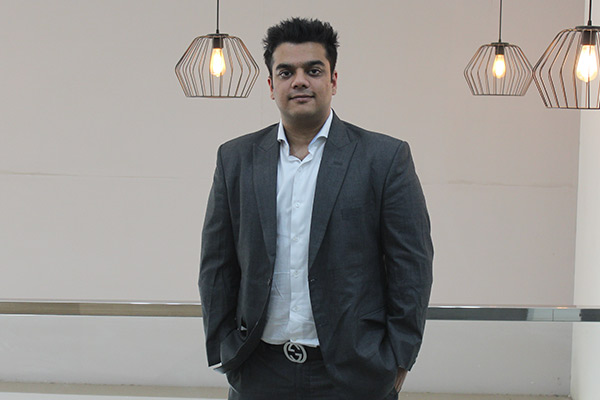
Ashwani Gupta, Director, Vividh Metaltech shares his thoughts on the plight of the stainless steel industry in India, and why some Indian exporters are compelled to relocate their facilities abroad. TPCI: How did you come up with the idea of starting a business in the area of stainless steel wires? Mr. Ashwani Gupta (AG): Basically, we have been in the steel business for about 40 years. This stainless steel wire plant, which we have recently started is a kind of backward integration for us. This was a natural move for us, considering the fact that it is a raw material for our existing factories. Also, most of the existing stainless steel plants in the country are a bit old and we felt that we could do something better. Hence, we decided to set up a modern stainless steel wires plant in India. TPCI: Which markets did you tap for your product and why? What market penetration/promotion strategy did you follow? AG: Currently, most of our domestic market is concentrated in North & West India. Our exports are mainly focused on Russia & South Asia as of now. We’re also doing a trade show in Brazil and Dusseldorf in the near future. Bombay’s Nhava Sheva port is a major export hub for the same. In the short-term, our target is to shift about 30-40% of our production towards exports, considering there is a higher value addition available. The penetration strategy that we are looking at is that of a ‘pull marketing strategy’, as opposed to pushing the products onto the customer. Our marketing strengths are quite minimal and since day 1, the idea has been to produce a quality product through which we attract customers. The pricing is very rigid in steel. So, the idea is to give out the best quality product so the customers come to us through the word of mouth. This also pushes the other players in the industry to produce a better product and gives us a competitive edge. TPCI: Who are your key competitor countries, and what unique competitive advantages have helped you establish your business presence? AG: The key competitive country for stainless wire products is China. India is a dominant player internationally in this field. Everything is internationally certified to meet the needs of the buyers. The unique advantage that we have is that we have a good established industry and a good quality product. We’re at par with China, if not better. The only thing that it comes down to is some special relationships with customers & the capacities and the orders. So, there might be cases where China is a step ahead of us. But otherwise, it’s quite likely that a major competitor for us would be a fellow Indian company than any foreign competitor. TPCI: What are the major tariff/non-tariff barriers that you have experienced in the international markets? What should be the roadmap to overcome these challenges? AG: A big challenge for exports is the anti-dumping duties that are currently being levied in some European countries and the US. In fact, I know a couple of Indian companies that have set up a plant abroad so that they can overcome those hurdles because a lot of these exports get hampered once these anti-dumping limits are crossed. The roadmap is that if the government is able to work out a deal with some of these countries, it will help Indian companies to overcome these hurdles. I don’t know how feasible that will be because these countries will want to protect the interests of their domestic industry as well. TPCI: What are the expansion opportunities you envision for yourself in the global market at present? How do you plan to tap them further? AG: As of now, we are already doing a capacity expansion in our plant. We’re doubling up our production. In the medium term, we plan to set up another unit, specializing in bright bars, which are in great demand in the European market. US, Europe and Russia are three of our major markets in the next 3-5 years. The only thing is that we need to offer a quality product; as long as we’re doing that, we’re at par with international standards. TPCI: What is your view on the general competitiveness of Indian exporters in this sector? How can it be further enhanced? AG: I feel that Indian exporters are quite organized and competitive. There are several Indian companies in the sector that are exporting their products to other countries. The market is growing year-on-year. In India, one big drawback that we have is that the economy (per capita) is not at par with the other developed nations. Steel consumption in India is one-third of the global average. So, there is a good potential for growth in the Indian market as well. In terms of value, Indian exports are growing year-on-year. So, if we’re given greater access to global markets and have a way to deal with the restrictions in the other countries, we can enhance our exports by 10-20%, because the manufacturing capacity is already in place and the material would definitely be shipped abroad. Also, if the government is able to set up some drawbacks and some more incentives for the exporters, it will draw further investments in the industry and encourage them to do better. Also, if the government comes up with a green energy incentive for the industry, it will encourage the players to invest in their company. So, it will be good for India as well as the exporters. Ashwani Gupta is the Director of Vividh Metaltech. Vividh Wires Limited is the Stainless Steel wire division of the diversified Vividh Group. This ultramodern stainless steel wire company is based in Greater Noida, with an installed production capacity of 6,000 MT per annum.